
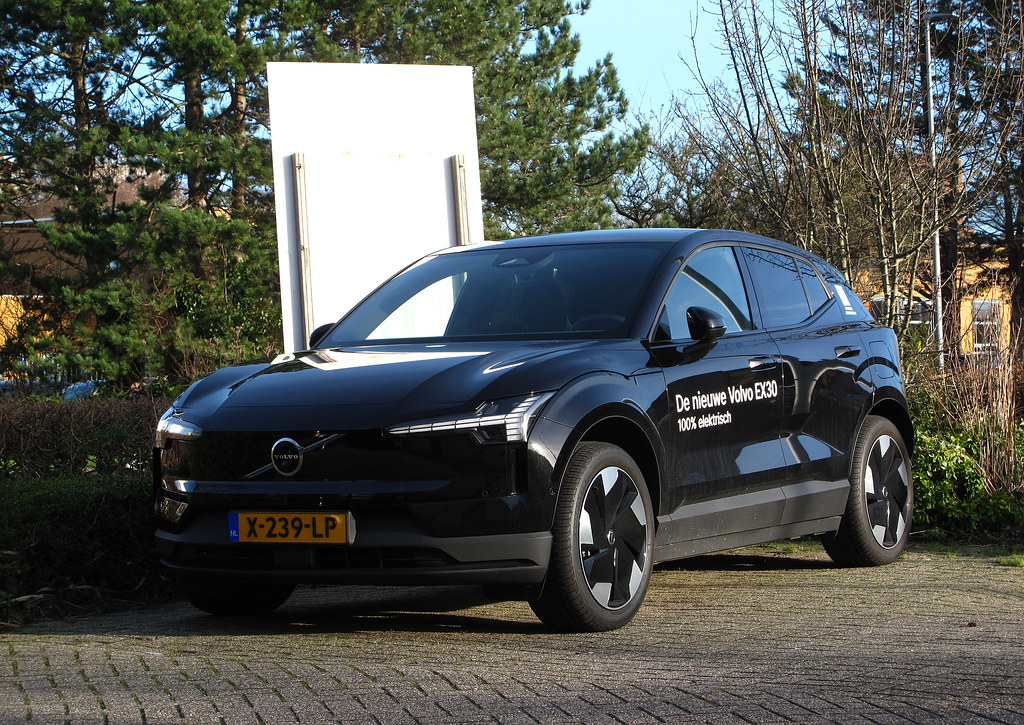
Volvo EX30 vs Hyundai Tucson 2.0: Which Should You Buy in 2025?
Considering switching to an EV? This comprehensive comparison between the Volvo EX30 and the Hyundai Tucson 2.0 will help you make the right decision for your wallet and lifestyle in South Africa. While EVs promise lower running costs, the numbers reveal a more complex picture when you factor in purchase price and total cost of ownership.
📊 Quick Comparison Overview
| Feature | Volvo EX30 | Hyundai Tucson 2.0 |
|---|---|---|
| Purchase Price | R950,000 | R650,000 |
| 5-Year Fuel Cost | R55,523 | R122,475 |
| 5-Year Maintenance | R15,000 | R40,000 |
| Total Cost of Ownership | R1,020,523 | R812,475 |
| Winner | Petrol wins by R208,048! | |
💰 The Real Cost: 5-Year Ownership Analysis
The numbers tell an important story. While the Volvo EX30 costs R950,000 upfront compared to the Hyundai Tucson 2.0’s R650,000, understanding the total cost of ownership over five years is crucial for making an informed decision.
The R300,000 purchase price difference is substantial. Even though the EV saves money on fuel and maintenance, these savings don’t offset the higher upfront cost within the typical 5-year ownership period most South African buyers consider.
Fuel Costs Breakdown
- Volvo EX30 electricity cost: R11,105/year = R55,523 over 5 years
- Hyundai Tucson 2.0 petrol cost: R24,495/year = R122,475 over 5 years
- Fuel savings with EV: R66,952 over 5 years
Based on 15,000km annual driving, R24/litre petrol prices, and R2.50/kWh electricity rates, the EX30’s efficiency advantage is clear. You’ll spend R925/month on electricity versus R2,041/month on petrol—a R1,116 monthly saving on fuel alone.
Maintenance Costs
- Volvo EX30: R15,000 (minimal – no oil changes, less brake wear)
- Hyundai Tucson 2.0: R40,000 (regular servicing, oil, filters, etc.)
- Maintenance savings with EV: R25,000
EVs require dramatically less maintenance. No oil changes, no exhaust systems, no timing belts, and regenerative braking means brake pads last 2-3 times longer. Over 5 years, this translates to R25,000 in avoided maintenance costs.
The Total Picture
Despite saving R91,952 on fuel and maintenance over five years, the EX30’s R300,000 higher purchase price means the Tucson 2.0 remains R208,048 cheaper overall. This works out to the petrol SUV costing R3,467 less per month when you factor in everything.
Breaking it down per kilometre (based on 15,000km/year):
- Volvo EX30: R13.61/km total cost
- Hyundai Tucson 2.0: R10.83/km total cost
The R2.78/km difference adds up significantly over time. For a typical driver covering 15,000km annually, the petrol Tucson saves R41,610 per year in total ownership costs.
🔋 Understanding the EV Value Proposition
The Volvo EX30 doesn’t win on pure economics over 5 years, but it offers compelling benefits that extend beyond the spreadsheet. The question becomes: are these intangible advantages worth R208,048 to you?
Where the EX30 Excels
- Environmental impact: Zero tailpipe emissions prevent approximately 12,301kg of CO₂ over 5 years
- Home charging convenience: Wake up to a “full tank” every morning without visiting petrol stations
- Future-proofing: As petrol prices rise and EV technology improves, the value equation shifts
- Driving experience: Instant torque, silent operation, and smooth acceleration
- Technology: Over-the-air updates, advanced safety features, modern infotainment
- Energy independence: Pair with solar panels to generate your own “fuel” at minimal cost
The Crossover Point
The economics shift in the EV’s favour if you:
- Keep the vehicle beyond 5 years (maintenance cost gap widens dramatically)
- Drive more than 20,000km annually (fuel savings compound faster)
- Install solar panels (reducing electricity costs toward zero)
- Experience petrol price increases above historical averages
- Benefit from potential future EV incentives or petrol taxes
At 25,000km/year, for example, the fuel savings alone reach R111,587 over 5 years, bringing the total cost gap down to R166,461. At 30,000km/year with solar charging, the EV can actually become cheaper overall.
🎯 Who Should Buy the Volvo EX30?
The Volvo EX30 makes sense despite the higher total cost if:
- 🌍 Environmental priority: Zero tailpipe emissions and reduced carbon footprint justify the R208,048 premium
- 🏠 Home charging available: You can install a charger and wake up to a “full tank” every morning
- 🌆 City/suburban driving: Your daily routine fits comfortably within the 480km range
- 🔧 Low maintenance appeal: You value the simplicity of no oil changes, no exhaust systems, minimal brake wear
- ⚡ Modern technology: Latest infotainment, over-the-air updates, and advanced safety features matter to you
- 💰 Long-term thinking: You plan to keep the vehicle 7+ years when cumulative savings improve
- 🔋 Solar panels: You have or plan to install solar, dramatically reducing charging costs
- 📈 High annual mileage: You drive 25,000km+ per year, accelerating fuel savings
- 🚗 Premium experience: The superior driving dynamics and refinement justify the cost difference
🎯 Who Should Buy the Hyundai Tucson 2.0?
The Hyundai Tucson 2.0 is the smart choice if:
- 💵 Total cost priority: R208,048 cheaper over 5 years (R3,467/month less) is significant to your budget
- 💰 Upfront budget constraints: R300,000 less to purchase initially frees capital for other priorities
- ⛽ Long-distance flexibility: You regularly drive 400km+ in a day and need quick 5-minute refuelling
- 🚗 Heavy towing/off-road: The 2.0L engine provides proven capability for trailers or rough terrain
- 📍 Rural/remote areas: You live or travel where charging infrastructure is limited
- 🔋 No home charging option: You rent, live in a complex without charging, or lack dedicated parking
- 👴 Familiar technology: You prefer traditional vehicle ownership without range anxiety
- 📊 Cost-per-kilometre matters: R2.78/km cheaper to run overall is your key metric
- ⏱️ Short ownership period: You typically trade vehicles every 3-5 years
- 🔧 Established service network: Hyundai’s extensive dealer network provides peace of mind
💡 Key Decision Factors
Choose the Volvo EX30 if you:
- ✅ Drive less than 400km per day on average
- ✅ Have access to home charging or workplace charging
- ✅ Prioritize environmental impact over total cost of ownership
- ✅ Want minimal maintenance hassles and complexity
- ✅ Value cutting-edge technology and features
- ✅ Can comfortably absorb the R208,048 higher 5-year cost
- ✅ Plan to keep the vehicle beyond 5 years (when EV savings compound further)
- ✅ Drive high annual mileage (20,000km+) that accelerates fuel savings
- ✅ Have or plan solar panels to reduce charging costs dramatically
Choose the Hyundai Tucson 2.0 if you:
- ✅ Need maximum flexibility for long-distance travel
- ✅ Don’t have reliable charging access at home or work
- ✅ Drive more than 400km daily regularly
- ✅ Need to minimize both upfront and total costs
- ✅ Prefer the familiarity and convenience of petrol stations
- ✅ Live in an area with limited charging infrastructure
- ✅ Want the most economical option overall (R208,048 less over 5 years)
- ✅ Require towing capacity or off-road capability
- ✅ Plan to sell or trade within 5 years
🔋 Charging Infrastructure in South Africa
South Africa’s EV charging network is growing rapidly, with over 500 public charging points nationwide as of early 2025. Major cities like Johannesburg, Cape Town, Durban, and Pretoria have excellent coverage, making daily EV ownership increasingly practical for urban and suburban drivers.
Home charging transforms the experience: Installing a home charger (R15,000-R30,000) gives you a “full tank” every morning at a fraction of petrol costs. For many EV owners, this convenience factor—never visiting a petrol station for daily driving—is worth the investment even before considering the cost savings.
However, if you don’t have dedicated parking or your landlord/body corporate won’t approve installation, the EV ownership experience becomes significantly more challenging. Public charging works for occasional top-ups, but relying on it exclusively adds time and inconvenience that undermines the EV value proposition.
Check ChargePoint SA’s live EV charging map to see coverage in your area and along your regular routes before making your decision.
📈 Long-Term Value Considerations
Over 5 years of ownership (15,000km/year), the financial picture is clear:
- Hyundai Tucson 2.0 total advantage: R208,048 cheaper
- Monthly cost difference: R3,467 less for the petrol option
- Cost per kilometre – Volvo EX30: R13.61
- Cost per kilometre – Hyundai Tucson 2.0: R10.83
However, the equation shifts significantly if you:
- Keep the vehicle beyond 5 years: Maintenance costs diverge further (EVs need almost nothing, petrol cars need increasingly expensive repairs)
- Drive more than 15,000km annually: At 25,000km/year, fuel savings reach R111,587 over 5 years, narrowing the gap to R166,461
- Have solar panels at home: Reducing electricity costs to near-zero can save an additional R50,000+ over 5 years
- Face petrol price increases above inflation: Every R1/litre increase adds R8,163 to the Tucson’s 5-year fuel bill
- Benefit from future EV incentives: Government rebates or tax breaks could reduce the purchase price gap
The 5-year timeframe favours the Tucson, but the 10-year picture often favours the EX30—especially for high-mileage drivers with home charging. Consider your realistic ownership timeline when making this decision.
🌍 Environmental Impact
By choosing the Volvo EX30 over the Hyundai Tucson 2.0, you’ll prevent approximately 12,301kg of CO₂ from entering the atmosphere over 5 years (based on 15,000km annual driving). That’s equivalent to planting roughly 560 trees or taking another car off the road for 1.5 years.
For environmentally conscious buyers, this benefit may justify the R208,048 premium. You’re essentially paying R16.91 per kilogram of CO₂ prevented—a personal carbon offset that also delivers a superior driving experience.
South Africa’s electricity grid is gradually incorporating more renewable energy (currently about 6% solar and wind, targeting 20% by 2030), meaning your EV’s carbon footprint will improve over time even if you don’t change anything about how you charge it. Pair the EX30 with home solar panels, and your carbon footprint approaches zero.
🚗 Real-World Ownership Experience
Beyond the numbers, daily ownership differs significantly between these vehicles:
Volvo EX30 Daily Reality
- Morning routine: Unplug and drive with a full charge—no petrol station detours
- Running costs: R925/month electricity vs R2,041/month petrol saves R1,116 monthly
- Maintenance schedule: Essentially just tyre rotations and cabin air filters for years
- Road trips: Requires planning around charging stops (30-40 minutes every 350-400km)
- Resale value: Unknown in SA market; EV depreciation patterns still emerging
Hyundai Tucson 2.0 Daily Reality
- Refuelling: 5-minute stops at any of thousands of petrol stations nationwide
- Running costs: R2,041/month petrol plus R667/month maintenance average
- Maintenance schedule: Service every 15,000km with oil, filters, and inspections
- Road trips: Zero range anxiety; refuel anywhere, anytime
- Resale value: Established depreciation curves; strong used market
🏁 The Verdict
The Hyundai Tucson 2.0 Wins on Pure Economics
Looking strictly at the numbers, the Tucson 2.0 is R208,048 cheaper over 5 years (R3,467/month). It costs R300,000 less to buy, R2.78/km less to run overall, and offers unmatched refuelling convenience across South Africa. For budget-conscious buyers or those without home charging access, this is the clear winner.
But the Volvo EX30 Offers Compelling Intangible Benefits
The EX30 delivers zero emissions, minimal maintenance, home charging convenience, and cutting-edge technology. For buyers who value these factors—and especially those planning to keep the vehicle 7+ years, driving high annual mileage, or pairing with solar panels—the premium may be worthwhile. The superior driving experience and environmental benefits represent real value that doesn’t appear in the cost spreadsheet.
Your decision should weigh:
- Choose the Hyundai Tucson 2.0 if total cost of ownership, maximum flexibility, and proven technology are your top priorities. You’ll save R208,048 over 5 years while enjoying the convenience of South Africa’s extensive petrol station network.
- Choose the Volvo EX30 if environmental impact, modern technology, home charging convenience, and long-term ownership justify paying R208,048 more over 5 years. The running cost savings (R1,116/month on fuel alone) are real, but they don’t offset the higher purchase price within the typical ownership period.
Both are excellent vehicles serving different priorities. The Tucson wins on economics; the EX30 wins on experience and environmental impact. Your choice depends on which factors matter most to your specific situation.
💰 Calculate Your Own Costs
Want to see how these numbers change based on your specific driving habits, electricity rates, and annual kilometres? Use our EV Cost Savings Calculator to input your exact situation and get a personalized comparison. You might find that at 25,000km/year with solar panels, the EX30 actually becomes cheaper—or that at 10,000km/year, the gap widens even further.
🚗 Ready to Make the Switch?
If you’ve decided on the Volvo EX30 despite the higher total cost, you’ll need a home charger to maximize the ownership experience and realize those R1,116/month fuel savings. Get a free quote for professional EV charger installation anywhere in South Africa—we’ll help you set up convenient, cost-effective home charging that makes EV ownership practical and enjoyable.
For more information on EV charging infrastructure across South Africa, explore our live EV charging map to plan your routes and understand coverage in your area.
Last updated: December 2024
Continue Reading

Deprecated: File Theme without comments.php is deprecated since version 3.0.0 with no alternative available. Please include a comments.php template in your theme. in /var/www/wordpress/wp-includes/functions.php on line 6085
Leave a Reply