
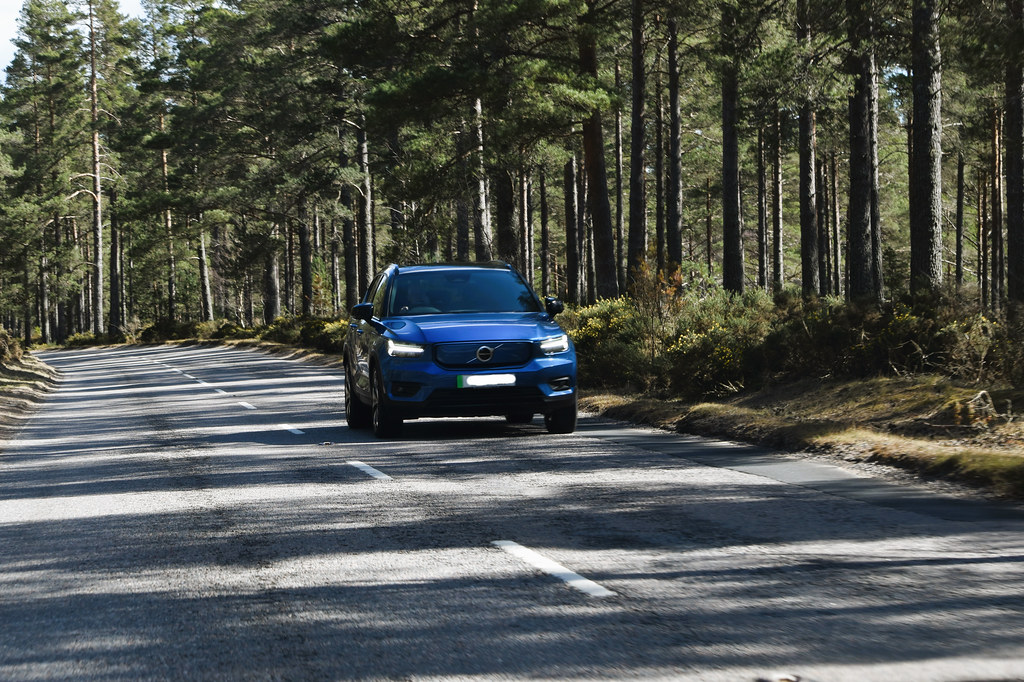
Volvo XC40 Recharge vs VW Tiguan 2.0 TSI: Which Should You Buy in 2025?
Considering switching to an EV? This comprehensive comparison between the Volvo XC40 Recharge and the VW Tiguan 2.0 TSI will help you make the right decision for your wallet and lifestyle in South Africa. We’ve analysed five years of ownership costs, from purchase price through fuel and maintenance, to show you the real financial picture.
📊 Quick Comparison Overview
| Feature | Volvo XC40 Recharge | VW Tiguan 2.0 TSI |
|---|---|---|
| Purchase Price | R1,299,000 | R800,000 |
| 5-Year Fuel Cost | R72,075 | R124,200 |
| 5-Year Maintenance | R15,000 | R40,000 |
| Total Cost of Ownership | R1,386,075 | R964,200 |
| Winner | Petrol wins by R421,875 lower total cost | |
💰 The Real Cost: 5-Year Ownership Analysis
The numbers tell a clear story. While the Volvo XC40 Recharge costs R1,299,000 upfront compared to the VW Tiguan 2.0 TSI’s R800,000, that R499,000 purchase price difference is the key factor in total ownership costs. Over five years, the petrol SUV maintains a R421,875 advantage despite higher running costs.
Fuel Costs Breakdown
- Volvo XC40 Recharge electricity cost: R14,415/year = R72,075 over 5 years
- VW Tiguan 2.0 TSI petrol cost: R24,840/year = R124,200 over 5 years
- Annual fuel savings with EV: R10,425/year (R52,125 over 5 years)
Maintenance Costs
- Volvo XC40 Recharge: R15,000 (minimal – no oil changes, less brake wear)
- VW Tiguan 2.0 TSI: R40,000 (regular servicing, oil, filters, etc.)
- Maintenance savings with EV: R25,000 over 5 years
The Purchase Price Reality
The EV saves you R77,125 in combined fuel and maintenance over five years. However, the R499,000 higher purchase price means the Tiguan still comes out R421,875 cheaper overall. This gap narrows significantly if you:
- Keep the vehicle longer than 5 years (running cost savings continue)
- Drive more than 15,000 km annually (fuel savings increase)
- Have access to cheaper off-peak electricity rates
- Factor in potential petrol price increases
🎯 Who Should Buy the Volvo XC40 Recharge?
The Volvo XC40 Recharge is perfect for you if:
- 💰 Long-term ownership planned: Running cost savings of R1,285/month compound over time
- 🏠 Home charging available: Wake up to a full battery every morning for just R1,201/month
- 🌆 City/suburban driving: Perfect for the 418 km range on a single charge
- 🔧 Low maintenance priority: No oil changes, no exhaust systems, minimal brake wear
- 🌍 Environmental responsibility: Zero tailpipe emissions in SA’s cities
- ⚡ Modern technology: Latest infotainment, over-the-air updates, advanced safety features
- 📊 Higher upfront budget: Can absorb the R499,000 premium for future savings
🎯 Who Should Buy the VW Tiguan 2.0 TSI?
The VW Tiguan 2.0 TSI makes sense if:
- 💵 Lower upfront cost needed: R499,000 cheaper to purchase
- ⏱️ Short to medium ownership: R421,875 total cost advantage over 5 years
- ⛽ Long-distance flexibility: Refuel anywhere in 5 minutes with petrol stations everywhere
- 🚗 Heavy towing/off-road: 2.0L engine provides proven capability
- 📍 Rural/remote areas: No charging infrastructure concerns
- 🔋 No home charging option: Petrol stations remain more accessible for now
- 👴 Familiar technology: Comfortable with traditional vehicle ownership
💡 Key Decision Factors
Choose the Volvo XC40 Recharge if you:
- ✅ Drive less than 418 km per day on average
- ✅ Have access to home charging or workplace charging
- ✅ Want to save R1,285 per month on running costs
- ✅ Prioritize lower maintenance and fuel expenses
- ✅ Want zero tailpipe emissions
- ✅ Can manage the higher upfront cost
- ✅ Plan to keep the vehicle 7+ years (break-even point)
Choose the VW Tiguan 2.0 TSI if you:
- ✅ Need maximum flexibility for long-distance travel
- ✅ Don’t have reliable charging access
- ✅ Drive more than 418 km daily
- ✅ Need to minimize upfront costs
- ✅ Prefer the familiarity of petrol stations
- ✅ Live in an area with limited charging infrastructure
- ✅ Want the lowest 5-year total cost of ownership
🔋 Charging Infrastructure in South Africa
South Africa’s EV charging network is growing rapidly, with over 500 public charging points nationwide. Major cities like Johannesburg, Cape Town, Durban, and Pretoria have excellent coverage. GridCars operates the largest public network, while shopping centres and hotels increasingly offer destination charging.
Home charging transforms the ownership experience: Installing a home charger (R15,000–R30,000) gives you a full battery every morning at a fraction of petrol costs. Most owners charge overnight on off-peak rates, further reducing electricity expenses. Check out our live EV charging map to see coverage in your area.
Load-Shedding Considerations
Load-shedding remains a reality in South Africa, but most EV owners adapt easily. Charging typically takes 6–8 hours on a home wallbox, so you can schedule charging during non-load-shedding windows. Many newer homes have battery backup systems that can charge your EV during outages. Public fast-chargers often have backup generators or battery storage.
📈 Long-Term Value and Break-Even Analysis
Over 5 years of ownership (15,000 km/year):
- Tiguan total cost advantage: R421,875
- Monthly running cost savings (XC40): R1,285
- Cost per kilometre – Volvo XC40 Recharge: R18.48
- Cost per kilometre – VW Tiguan 2.0 TSI: R12.86
The break-even point arrives around year 7 of ownership. If you drive more than 15,000 km annually, break-even comes sooner. At 25,000 km/year, the XC40 Recharge breaks even in approximately 5.5 years.
Understanding the Cost Per Kilometre
While the Tiguan’s R12.86/km appears cheaper than the XC40’s R18.48/km, this figure includes the purchase price amortised over 75,000 km (5 years × 15,000 km/year). The running costs alone tell a different story: the XC40 costs just R1.16/km in electricity and maintenance, while the Tiguan costs R2.19/km in petrol and servicing. The higher cost per kilometre for the XC40 reflects its premium purchase price, not its operating expenses.
Resale Value Considerations
EV resale values in South Africa remain uncertain due to the small market size. However, AutoTrader data suggests premium EVs like the XC40 Recharge hold value reasonably well in urban markets. The Tiguan benefits from VW’s established dealer network and strong brand recognition. Factor in potential battery degradation (typically 10–15% over 8 years) when estimating EV resale values.
🌍 Environmental Impact
By choosing the Volvo XC40 Recharge over the VW Tiguan 2.0 TSI, you’ll prevent approximately 12,474 kg of CO₂ from entering the atmosphere over 5 years. That’s equivalent to planting roughly 570 trees. Even accounting for South Africa’s coal-heavy electricity grid, EVs produce 40–60% less lifecycle emissions than equivalent petrol vehicles.
Beyond carbon emissions, EVs eliminate local air pollution in cities. No tailpipe means no nitrogen oxides, particulate matter, or volatile organic compounds—pollutants that contribute to respiratory illness in urban areas. For families concerned about air quality, especially in high-traffic areas, this represents a significant health benefit.
🔧 Maintenance and Reliability
The Volvo XC40 Recharge’s simpler drivetrain means fewer things can go wrong. There’s no engine oil to change, no timing belt to replace, no clutch to wear out, and no exhaust system to corrode. Brake pads last significantly longer thanks to regenerative braking, which uses the electric motor to slow the vehicle and recover energy.
The VW Tiguan 2.0 TSI requires regular servicing every 15,000 km or 12 months. Oil changes, air filters, spark plugs, and transmission fluid all add up over time. However, VW’s extensive dealer network across South Africa means service is readily available, even in smaller towns. Volvo’s dealer footprint is smaller, though mobile service options are expanding in major metros.
Warranty Coverage
Both vehicles come with comprehensive warranties. The XC40 Recharge includes an 8-year/160,000 km battery warranty, covering degradation below 70% capacity. The Tiguan offers VW’s standard 3-year/120,000 km warranty with optional extensions available. Factor warranty coverage into your decision, especially if you plan to keep the vehicle beyond the standard period.
🏁 The Verdict
The Tiguan Wins on Total Cost—But Context Matters
The numbers are clear: the VW Tiguan 2.0 TSI costs R421,875 less over 5 years, primarily due to its R499,000 lower purchase price. However, the Volvo XC40 Recharge saves R1,285 monthly on running costs, meaning longer ownership tips the scales toward the EV.
- Choose the Volvo XC40 Recharge if you plan to keep it 7+ years, have home charging, prioritize environmental impact, and can absorb the higher upfront cost
- Choose the VW Tiguan 2.0 TSI if you need lower purchase price, maximum refuelling flexibility, or plan to sell within 5 years
Both are excellent SUVs. Your decision should align with your budget, driving patterns, and ownership timeline. The Tiguan delivers proven versatility and lower total cost for typical ownership periods. The XC40 Recharge offers cutting-edge technology, minimal running costs, and environmental benefits that compound over time.
💰 Calculate Your Own Savings
Want to see how much you could save based on your specific driving habits? Use our EV Cost Savings Calculator to input your exact annual kilometres, electricity rate, and ownership period. The calculator accounts for load-shedding, off-peak rates, and regional electricity costs across South Africa.
🚗 Ready to Make the Switch?
Need help installing a home charger for your new EV? Get a free quote for professional EV charger installation anywhere in South Africa. Our certified installers handle everything from electrical compliance to municipal approvals, ensuring your home charging setup is safe, legal, and optimized for your electricity tariff.
Last updated: December 2025. Prices and specifications subject to change. Fuel costs based on R23.50/litre petrol and R2.50/kWh electricity (average SA rates). Always verify current pricing with dealers.
Continue Reading

Deprecated: File Theme without comments.php is deprecated since version 3.0.0 with no alternative available. Please include a comments.php template in your theme. in /var/www/wordpress/wp-includes/functions.php on line 6085
Leave a Reply