
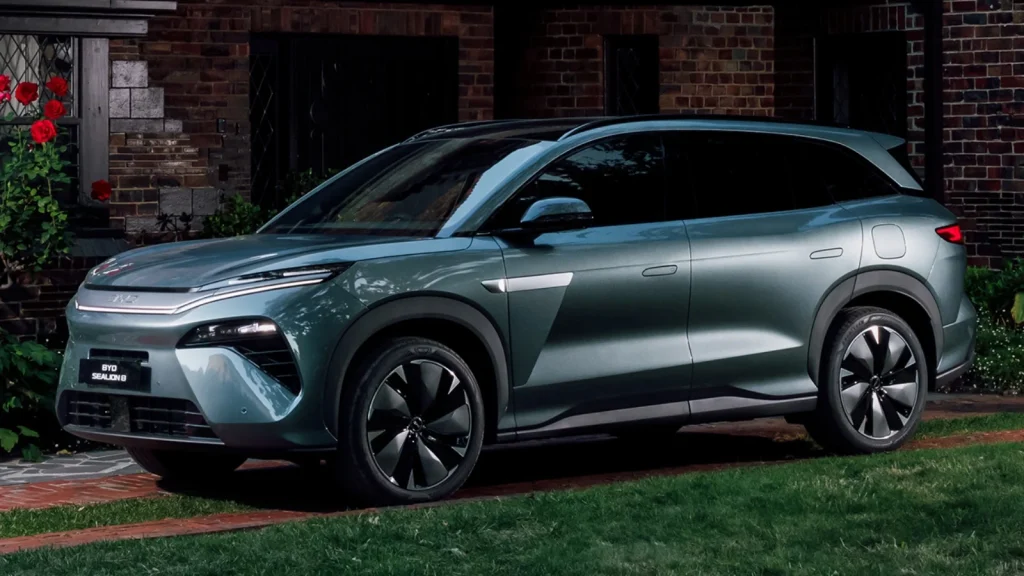
The BYD Atto 8 PHEV — launched in South Africa on 15 April 2026 — is the first plug-in hybrid seven-seater to directly target Toyota Fortuner buyers at close to the R1-million price point. The Atto 8 is priced from R1,059,900 for the Premium and R1,259,900 for the Performance AWD. The Fortuner 2.8 GD-6 4×4 sits between R900,000 and R1,009,000 depending on variant. On paper, the Fortuner is cheaper. But with diesel now at a wholesale price of R25.35 at the coast and R26.11 in Gauteng — and rising fast — the real question is whether the Fortuner’s lower sticker price survives contact with your actual running costs.
It probably doesn’t. And that’s exactly the opening BYD has been waiting for.
This is a full head-to-head: specs, running costs, five-year total cost of ownership, off-road capability, and the V2L (vehicle-to-load) backup power question that nobody in the Fortuner camp has a good answer to. If you’re spending around a million rand on a family SUV right now, read this before you sign anything.
The Diesel Crisis Context: Why This Comparison Matters Right Now
Significant diesel price increases could be on the cards for May if the Middle East war does not end soon. South Africans were already hit with unprecedented increases in April following a significant oil price spike caused by the war in the Middle East — motorists were faced with diesel increases of between R7.37 and R7.51 per litre. That is not a normal fuel cycle. That is a structural shift.
Data from the first full week of April shows under-recoveries that were projecting a R17/L diesel hike at their peak. The R3.00 “relief” reduction in the General Fuel Levy is currently set to expire on 5 May 2026, and if the National Treasury does not extend this, you must add an automatic R3.00/L on top of the already high under-recovery figures.
Under Scenario A — the full cliff — the R3.00 levy is added back in full on May 6, which would push petrol toward R30/litre and diesel past R37/litre. Even the moderate scenario is brutal. Assuming the fuel levy relief is extended and that the ceasefire holds, South Africa’s diesel prices, at a retail level, are likely to average around R33 to R35 in May. If you drive a Fortuner, that is your problem. If you drive the ATTO 8, it largely isn’t.
Specs Head-to-Head: What You’re Actually Buying
The Atto 8 measures 5,040 mm in length, placing it above several established three-row SUVs — slightly exceeding the fully electric Volvo EX90 and sitting close to the Audi Q7 in size. This is not a compact crossover pretending to be a proper family hauler. It is genuinely large. The Fortuner at 4,795 mm is slightly shorter, but both offer seven seats in a 2-3-2 configuration.
At the heart of the ATTO 8 is BYD’s fifth-generation DM Super Hybrid Technology, pairing electric motors with a 110 kW/220 Nm 1.5-litre four-cylinder turbocharged petrol engine. The Premium model develops a combined system output of 205 kW and 315 Nm, sent to the front wheels via a dedicated hybrid transmission (DHT).
The Performance AWD derivative features twin electric motors for combined power and torque outputs of 359 kW and 675 Nm. The Fortuner makes 150 kW and 500 Nm from its 2.8-litre turbodiesel. Torque is the diesel’s strong suit — but 675 Nm from the Atto 8 Performance makes that point moot.
Here is where it gets uncomfortable for Toyota: the Performance AWD accelerates from 0 to 100 km/h in just 4.3 seconds. The Fortuner does that run in roughly 10.3 seconds. If you have seven people and their luggage on the N1 needing to merge into highway traffic, you want the ATTO 8.
| Specification | BYD Atto 8 Premium | BYD Atto 8 Performance AWD | Toyota Fortuner 2.8 GD-6 4×4 |
|---|---|---|---|
| Price (April 2026) | R1,059,900 | R1,259,900 | ~R900,000–R1,009,000 |
| Powertrain | 1.5T + single e-motor (PHEV) | 1.5T + dual e-motors (PHEV AWD) | 2.8L turbodiesel |
| Combined Power | 205 kW | 359 kW | 150 kW |
| Battery | 19.0 kWh LFP Blade | 35.6 kWh LFP Blade | None |
| EV-only Range | ~75 km | ~130–150 km | 0 km |
| Combined Range (WLTP) | Up to 728 km | Up to 1,000+ km | ~800–900 km |
| 0–100 km/h | ~7.5 sec (est.) | 4.3–4.9 sec | ~10.3 sec |
| Seats | 7 (2-3-2) | 7 (2-3-2) | 7 (2-3-2) |
| V2L Capability | Yes | Yes | No |
| Warranty | 5yr/100,000 km + 8yr battery | 5yr/100,000 km + 8yr battery | 3yr/100,000 km |
How Much Could You Save With an EV?
Use our free calculator to compare your current fuel costs with EV charging costs.
Running Costs: Where the ATTO 8 Changes the Conversation
Let’s be honest about how most South African families use a seven-seat SUV. School runs, weekend trips to the Midlands or the Cradle, the occasional Durban run over December. Most daily driving is under 80 km. That matters enormously for the ATTO 8’s economics.
The Premium’s 19 kWh battery enables a claimed WLTP combined range of 728 km, of which 75 km can be done all-electric. Do the school run and back on pure electricity every day, charge at home overnight, and the petrol engine barely touches the fuel. The Performance model’s AWD powertrain adds a second electric motor and increases the battery to 35.6 kWh, netting up to 150 km of electric-only range and more than 1,000 km combined (WLTP). Real-world range will vary based on driving style, terrain and climate control use, but the electric-only capability remains the key advantage for daily urban driving.
Meanwhile, the Fortuner is burning diesel every single kilometre. At current Gauteng retail diesel prices of around R26 to R28 per litre, driving 15,000 km per year at a real-world 9 L/100km costs you roughly R35,100 to R37,800 per year. That is before May’s price adjustment hits. If diesel averages R34/L through 2026 — a conservative forecast given the trajectory — you are looking at R45,900 per year in fuel alone. For a vehicle that was supposed to be the “sensible” choice.
Want to see exactly what your own commute would cost you in each car? Calculate your personalised savings with the ChargePoint SA EV Calculator — plug in your daily distance and electricity rate and it does the maths for you.
Five-Year Total Cost of Ownership: The Number That Settles It
Purchase price is a terrible way to compare these two vehicles. TCO is the only honest metric. Here is what five years of ownership actually looks like, based on 15,000 km per year, with the ATTO 8 Premium as the comparison point against the Fortuner VX 4×4.
| Cost Component | BYD Atto 8 Premium (5 years) | Toyota Fortuner 2.8 GD-6 4×4 (5 years) | Difference |
|---|---|---|---|
| Purchase Price | R1,059,900 | R1,009,000 | +R50,900 (Atto 8) |
| Home Charger Install | R15,000 | R0 | +R15,000 (Atto 8) |
| Fuel/Energy (15,000 km/yr) | R40,000–R50,000* | R229,500** | −R179,500 to −R189,500 (Atto 8) |
| Scheduled Maintenance | R0 (included) | R75,000–R100,000 | −R75,000 to −R100,000 (Atto 8) |
| Total 5-Year Cost | R1,114,900–R1,124,900 | R1,313,500–R1,338,500 | −R188,600 to −R223,600 (Atto 8 saves) |
The ATTO 8 Premium starts at R1,059,900. Add a 22 kW three-phase home charger installation — call it R15,000 — and you are at R1,074,900 all-in. Included with the price as standard are a five-year/100,000 km vehicle warranty, eight-year/200,000 km battery warranty, and a five-year/100,000 km maintenance plan. Zero scheduled maintenance costs for five years. That is significant. The Fortuner will cost you around R10,000 to R14,000 per service, roughly every 10,000 km — so R15,000 to R20,000 per year in servicing alone, with no maintenance plan on base variants.
At R34/L diesel averaged over five years, the Fortuner costs roughly R188,600 to R223,600 more to run than the ATTO 8 Premium over the full ownership period — despite costing R50,900 less to buy. If diesel stays above R32/L on average (which is now highly likely given current wholesale pricing and geopolitical instability), the ATTO 8’s higher purchase price is recovered through fuel and maintenance savings well inside the five-year ownership cycle. If the R37/L diesel scenario plays out through winter — which remains possible if the fuel levy relief expires and Middle East tensions persist — the crossover point arrives even faster. Want to run your own numbers on the savings calculator with your actual electricity tariff? It takes about two minutes and the results are usually eye-opening.
Ready to get a home charger installed? Get a free quote for a three-phase 22 kW charger — the ATTO 8 Performance’s larger battery justifies three-phase if you have it available.
The V2L Question: Your SUV as a Load Reduction Solution
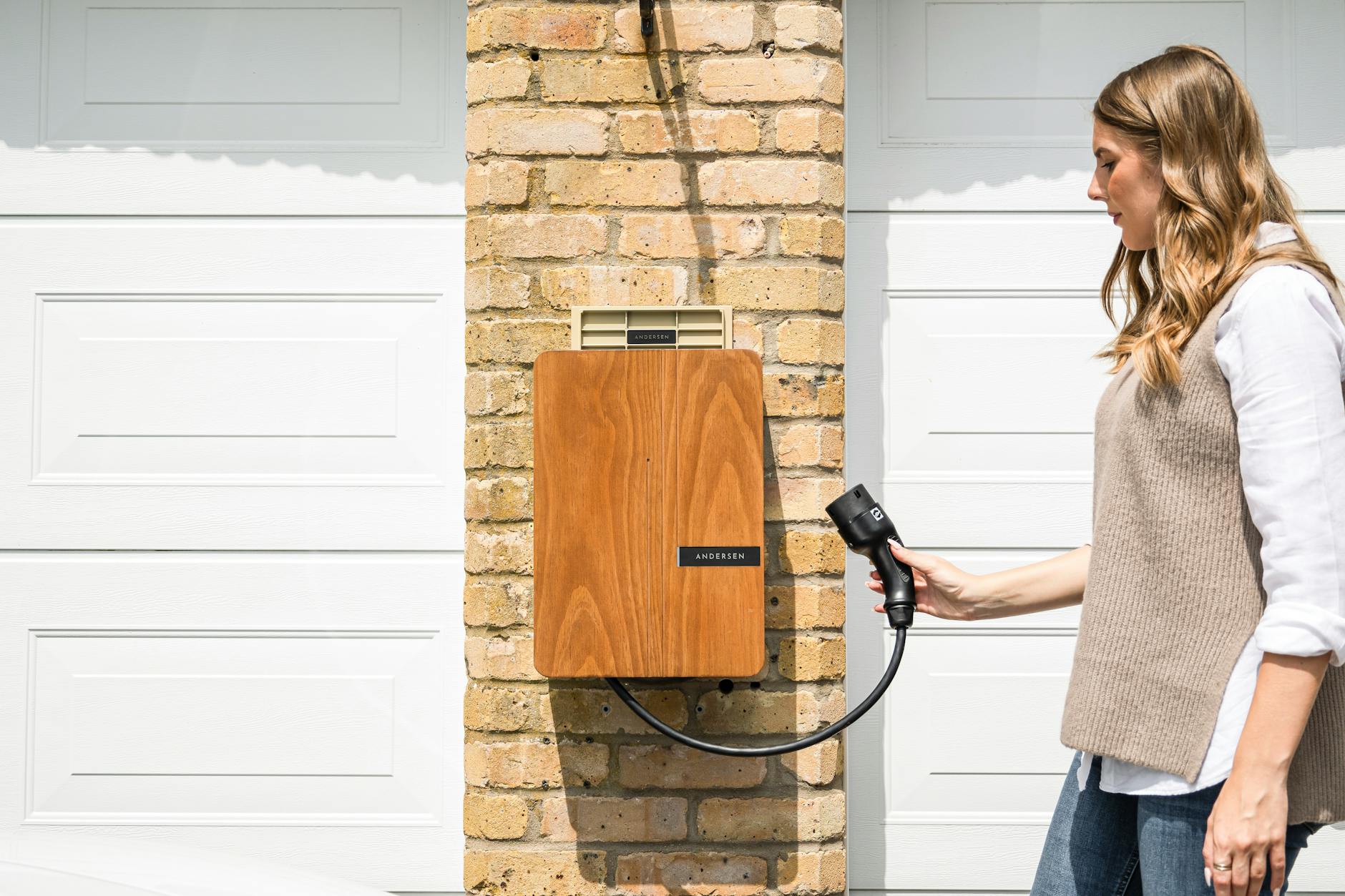
Here is something the Fortuner cannot do: power your house. The ATTO 8’s V2L (vehicle-to-load) capability is not a gimmick in South Africa — it is a genuine, practical feature that replaces or supplements an inverter or generator during load reduction periods.
The Performance model’s 35.6 kWh battery, used at V2L, can supply a typical South African household consuming 10 kWh per day with roughly 3.5 days of backup power. Run only critical loads — fridge, a few lights, the router and a couple of phone chargers — and you are looking at 10 to 11 days of coverage. Most load reduction schedules run for two to four hours per slot. The ATTO 8 handles that without breaking a sweat, and you recharge the battery on your drive in the next morning.
During a Soweto or Tembisa load reduction evening slot — 5 PM to 9 PM, which is when every South African family needs power most — you park in the garage and plug the house into the car. The Fortuner owner is firing up a generator or sitting in the dark. That is a real lifestyle difference worth real money, when you consider that a quality inverter-battery backup system runs R15,000 to R40,000.
For comparison, if you’re looking at other EVs that offer backup power, our guide to EV vs petrol running costs in South Africa covers how this changes the ownership equation across multiple models.
Ready to Install a Home Charger?
Get a free, no-obligation quote for professional EV charger installation in South Africa.
Off-Road: The Fortuner’s One Unbeatable Argument
Let’s not pretend the ATTO 8 wins everything. It doesn’t. The Toyota Fortuner 2.8 GD-6 4×4 is a body-on-frame ladder-chassis SUV with a proper low-range transfer case, around 225 mm of ground clearance, and decades of proven reliability in conditions that would make most crossovers weep. If you braai at a bush camp accessed via 20 km of rutted dirt track, or you farm in the Karoo, the Fortuner is your vehicle. Full stop.
The ATTO 8 is a monocoque crossover with AWD via dual electric motors. It will handle gravel roads comfortably and manage light off-road tracks with composure — the torque vectoring from the dual motors is genuinely impressive on loose surfaces. But it has no low-range, and its ground clearance and off-road geometry are not in the same conversation as the Fortuner’s. Take it to Baviaanskloof or the Sani Pass and you will be the most stressed person on the trail.
So the off-road question is binary: if you need it, buy the Fortuner. But be honest with yourself about how often you actually leave the tar. For the majority of Johannesburg and Cape Town families buying a seven-seat SUV for school runs, holiday road trips and the occasional game reserve with a paved access road, the Fortuner’s off-road advantage is largely theoretical. You are paying a massive diesel penalty for capability you might use twice a year.
If you want a real off-road breakdown before making a call, check out our deep dive into charging infrastructure on South African road trips — including which N-routes now have rapid charger coverage.
Technology and Interior: Different Planets
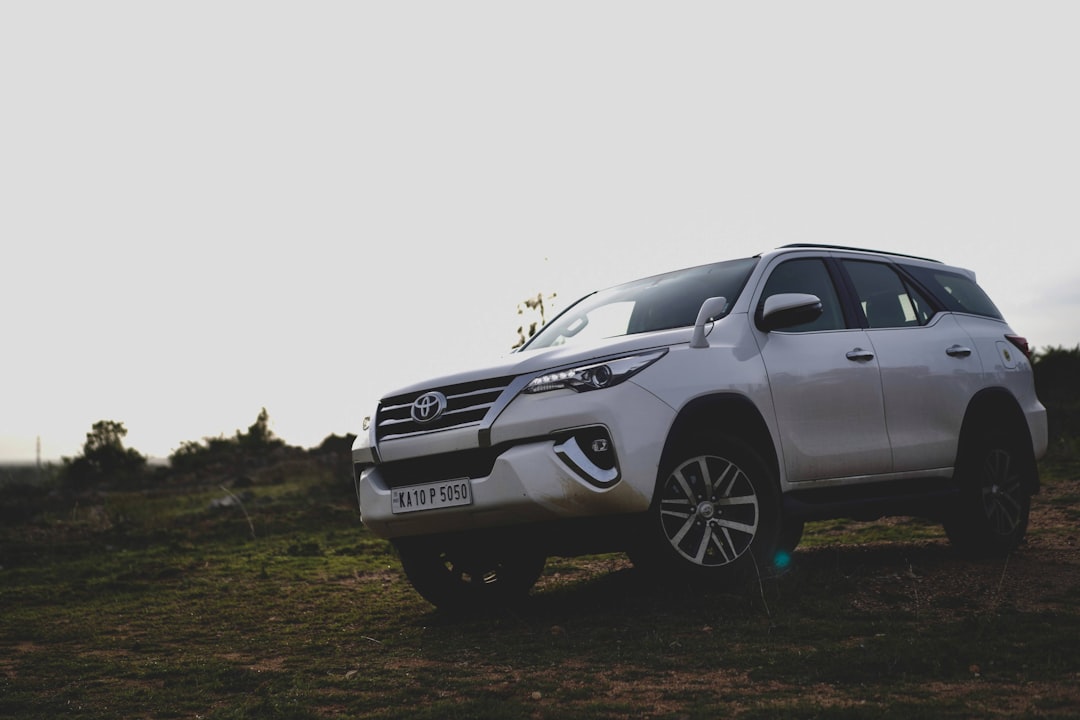
The Fortuner is a thoroughly decent, well-built interior that has not fundamentally changed in years. Solid switchgear, good seat comfort, a reasonable infotainment system. It feels like a proper Toyota — which is a compliment. It does not, however, feel like R1 million.
The ATTO 8 does. Inside, the seven-seat layout is complemented by a 15.6-inch infotainment display, a 21-speaker high-fidelity audio system and Level 2+ DiPilot 300 driver-assistance technology, supported by laser-based sensing.
Standard features for the Premium include a 10.25-inch digital instrument cluster, a 15.6-inch touchscreen infotainment unit, a 10-speaker sound system, wireless smartphone charging, three-zone climate control, a panoramic sunroof and a suite of advanced driver-assistance systems.
Premium finishes such as leather upholstery, bamboo-wood trim, 21-inch wheels and a full 360-degree camera system further elevate both comfort and confidence behind the wheel. The Performance model upgrades to active dampers and the full suite. For families who spend a lot of time in the car, the ATTO 8’s cabin quality is a genuine step above what the Fortuner offers at any trim level.
Built on an advanced 1,000-volt “Super E” platform, the vehicle enables ultra-fast charging capabilities, adding over 400km of range in as little as five minutes in BEV configuration. That is the BEV variant, but the platform underpins the PHEV too, and the 35.6 kWh Performance battery charges at a rate the Fortuner’s fuel stop cannot match on cost per kilometre. Find public charging stations near you on the live map — coverage along the N1, N2 and N3 has expanded significantly in the past 12 months.
Find Charging Stations Near You
Explore our live map of EV charging stations across South Africa — updated in real time.
The Warranty and Ownership Cost Nobody Talks About
Included in the Atto 8’s price are a five-year/100,000 km factory warranty, a five-year/100,000 km maintenance plan, and an eight-year/200,000 km battery warranty. An eight-year battery warranty. That is BYD putting serious money where its mouth is on the longevity of LFP Blade Battery chemistry. LFP batteries have better thermal stability, longer cycle life and no cobalt — they are genuinely more durable than NCM chemistry in hot South African conditions.
The Fortuner’s standard warranty is three years or 100,000 km. Service costs on the 2.8 GD-6 are meaningful — filters, diesel fuel system components and the timing belt all add up. Over five years, Fortuner owners typically spend R50,000 to R70,000 in scheduled maintenance. The ATTO 8 Premium owner spends nothing on maintenance for the same period. That is a real cost difference, not a marketing claim.
The Verdict: Who Should Buy Which Car
Buy the BYD Atto 8 Premium if: you do most of your driving in and around a city or suburb, your daily distance is under 100 km, you want to eliminate fuel bills during the diesel crisis, you have load reduction in your area and want backup power without a separate inverter, and you value tech, interior quality and performance in an SUV over off-road bragging rights. The five-year ownership maths is firmly in the ATTO 8’s favour at any diesel price above R30/L — and we are already there.
Buy the Fortuner 2.8 GD-6 if: you regularly leave tar roads, you travel to destinations that require genuine 4×4 low-range capability, your working life depends on a vehicle that any rural Toyota dealer can service with parts on the shelf, or you genuinely need the peace of mind of 25 years of proven reliability in harsh conditions. Just go in clear-eyed about what diesel will cost you over the next five years. Investec Chief Economist Annabel Bishop has warned that these fuel hikes are no longer just a motoring issue — they are an inflation disaster, with the projected May hike expected to add 0.6% to monthly inflation. That trend is not reversing anytime soon.
The hard truth is that for the majority of South African premium SUV buyers — living in Joburg, Cape Town, Pretoria or Durban, doing school runs and highway trips — the Fortuner’s off-road advantage is rarely called upon. You are paying for it with every litre of diesel, every month, for years. The ATTO 8 is not perfect — BYD’s dealer and service network is still maturing in SA, and the PHEV’s real-world EV range needs honest testing on SA roads. But as a value proposition in a diesel crisis? It is genuinely compelling.
FAQ
Can the BYD Atto 8 go off-road like a Toyota Fortuner?
No, not to the same level. The ATTO 8 is a monocoque crossover with dual-motor AWD, which handles gravel roads and light tracks well. But it has no low-range transfer case and its off-road geometry is not comparable to the Fortuner’s body-on-frame ladder chassis with proven 4×4 low-range. For serious bush driving, river crossings or farm access tracks, the Fortuner remains the better tool.
How much does it cost to charge a BYD Atto 8 PHEV at home in Cape Town?
The Premium model’s 19 kWh battery costs approximately R35 to R47 to charge from flat using Cape Town off-peak electricity rates (roughly R1.89 to R2.45/kWh). That gives you up to 75 km of electric-only range. The Performance model’s 35.6 kWh battery costs around R67 to R87 for a full charge, delivering up to 150 km of electric range. Compare that to the R234 you would spend on diesel to cover the same 150 km in a Fortuner at current Gauteng prices. Calculate your exact home charging cost using our EV savings calculator.
Will the Atto 8’s V2L really power my home during load reduction?
Yes, practically. The Performance model’s 35.6 kWh battery is large enough to power a typical South African household’s critical loads — fridge, lights, Wi-Fi, phone charging — for 10 or more hours per charge cycle. Standard load reduction slots of two to four hours are easily covered. You recharge the battery on your next drive. It does not replace a full solar-inverter system, but it eliminates the need for a generator for most suburban families.
Is the BYD Atto 8 cheaper to run than a Fortuner with R40/L diesel?
Yes, dramatically. At R40/L diesel, driving 15,000 km per year at 9 L/100km in a Fortuner costs approximately R54,000 per year in fuel. The ATTO 8 Premium, with 70% electric driving charged at home, costs an estimated R8,000 to R10,000 per year in combined electricity and petrol. That is a saving of R44,000 to R46,000 per year — enough to recover the Atto 8’s higher purchase price in roughly three to four years even before accounting for its free maintenance plan.
How long does it take to charge the Atto 8’s 35.6 kWh battery at home?
On a standard 7.4 kW single-phase home charger, the Performance model’s 35.6 kWh battery takes approximately five hours for a full charge — overnight charging is ideal and costs less using off-peak tariffs. On a 22 kW three-phase charger, the same charge takes under two hours. Get a free installation quote for a three-phase home charger to maximise the ATTO 8’s convenience. Public DC fast chargers, where available, charge significantly faster — check the live charging map for fast charger locations near you.