May 2026 Fuel Price Shock: Why Switching to an EV Just Became R57,000+ Cheaper Over 5 Years
South Africans will wake up on Wednesday, 6 May 2026 to petrol at around R25.21/L inland and R24.38/L coastal — and those are the cushioned numbers. These levies will be re-added over two months — half in June and in full for the price adjustment in July. That means by July 1, without any relief buffer, petrol inland could sit at R30+/L and diesel at R35-40/L. For South Africans who’ve been doing the EV-versus-petrol maths and concluded that battery cars are still too expensive — that calculation just blew up. At R30-36/L sustained fuel prices, electric vehicles don’t just pay for themselves eventually. They beat the total cost of ownership of petrol and diesel cars decisively over five years.
This is not a temporary blip driven by a weak rand. While global oil prices continue to surge, the South African rand has shown relative resilience, stabilising around R16.50 to R16.64 per US dollar. Despite this stability, the exchange rate contributes only a minor portion — approximately R1 per litre — to fuel price increases. The overwhelming pressure stems from global oil costs rather than currency movements. This is a structural oil crisis with no clear resolution date. And that changes everything about how you should be thinking about your next car purchase.
We’ve recalculated the 5-year total cost of ownership for three real-world comparisons using the new May 2026 fuel prices, the July cliff, and a range of scenarios for where petrol lands if the Iran-US standoff drags on. The results are stark. At certain price points that are already baked into the forecast, EVs beat equivalent petrol cars by tens of thousands of rands. The tipping point has arrived. Calculate your own savings with our EV cost calculator — and then read on for the full breakdown.
The May 6 Shock: What’s Actually Happening at the Pump
As of April 20, 2026, the fuel situation in South Africa has evolved into a critical economic event. While mid-month data suggests a slight easing from the “doomsday” scenarios predicted in early April, motorists are still facing a historic increase scheduled for Wednesday, 6 May 2026. The relief only goes so far. South African motorists are facing a petrol price increase of approximately R2.09 per litre for 95-octane fuel from Wednesday, 6 May 2026, even after government extended its temporary fuel levy relief to June.
The diesel situation is considerably worse. Diesel customers are still facing a diesel increase in the region of R4.10 in May. Wholesale diesel prices are expected to rise to about R29.35 at the coast and just over R30 inland. Once retail margins are added, consumers could be looking at pump prices between R32 and R33 per litre. And that’s WITH maximum government intervention on the levy.
Here’s what the government has actually committed to doing — and stopping:
The Minister of Finance proposes that the R3 per litre reduction in the general fuel levy for petrol is extended until Tuesday 2 June 2026. Given the large expected increases in the price of diesel, the Minister of Finance proposes that the temporary relief for diesel is increased by 93 cents to R3.93 per litre, reducing the levy to zero, from Wednesday 6 May 2026 to Tuesday 2 June 2026. Then it starts unwinding fast.
These levies will be re-added over two months — half in June and in full for the price adjustment in July. This means motorists can expect a R1.50 and R1.97 baseline increase for petrol and diesel in June, and a R1.50 and R1.96 baseline increase in July. Stack those on top of whatever global oil prices do between now and then, and the July number gets ugly very quickly.
By July 1, 2026, the full fuel levy returns: R4.10/L for petrol and R3.93/L for diesel — on top of whatever the global oil price is doing. At Brent above R1,650/barrel (approximately $100 USD), that puts inland petrol well above R30/L with no protection left.
Why This Crisis Has No Quick Fix
The root cause isn’t Eskom. It isn’t the rand. It’s the Strait of Hormuz — and that strait is not going to reopen on a schedule anyone can predict. Global energy markets remain under intense strain as ongoing disruption in the Strait of Hormuz continues to destabilise one of the world’s most critical oil supply routes, keeping fuel prices elevated and placing growing pressure on import-dependent economies like South Africa. The strategic waterway, which normally handles around 20% of global oil and gas shipments, remains heavily affected by military tensions and shipping restrictions linked to the escalating United States-Iran standoff.
Brent crude has surged more than 55% since the Iran war began, hitting nearly R1,980/barrel (approximately $120 USD) at its peak, amid fears of disrupted oil flows through the Strait of Hormuz. March marked one of the largest monthly oil price jumps on record, with Brent gaining 51% as Gulf output fell and exports stalled. That’s not a technical correction. That’s a structural repricing of global energy. According to the World Bank’s April 2025 Commodity Markets Outlook, energy prices are projected to surge by 24% this year to their highest level since Russia’s invasion of Ukraine in 2022.
Energy flows through the Strait of Hormuz — which carries about a fifth of the world’s oil and liquefied natural gas — remain severely disrupted, with roughly 20 million barrels per day of crude, fuels and petrochemicals affected. Even if hostilities ended immediately, a return to normal market conditions would take months, citing the need to clear mines, ease tanker congestion and gradually restart production and refining. Factoring in shipping and distribution lags, it would take at least four to six months for oil markets to stabilise.
Citi analysts said Brent prices could reach R2,475/barrel (approximately $150 USD) if oil flows remain disrupted through the end of June. That’s the range we have to plan around — not a return to R1,155/barrel ($70 USD) any time soon.
South Africa is fully exposed to every rand of that price movement. International petroleum product prices account for 99.5% of the current under-recovery, making them the primary driver of domestic fuel hikes. We import almost all of our refined fuel. There’s no buffer, no local production to cushion the blow. When Brent spikes, our pumps follow within weeks. If you’re still planning your next 5-year car purchase around R20-22/L petrol, you’re planning for a world that no longer exists.
How Much Could You Save With an EV?
Use our free calculator to compare your current fuel costs with EV charging costs.
The Household Numbers: How Much MORE You’re Already Paying
Let’s make this concrete. A typical 60-litre sedan tank in April cost around R1,440 to fill inland. After May 6, you’re looking at roughly R1,512 — and after July, when the full levy returns and no relief is left, that same fill will cost R1,800 or more. That’s R360 extra. Every single time you fill up.
A 15,000 km/year driver filling up twice a month sees their annual fuel bill climb from approximately R20,500 in April to R27,000-R30,000 by July-August. Investec Chief Economist Annabel Bishop has warned that these fuel hikes are no longer just a motoring issue — they are an inflation disaster. The projected May hike is expected to add 0.6% to monthly inflation, potentially pushing May’s CPI to 4.2%. And that’s just the direct fuel cost. Add the knock-on into grocery prices, logistics, and transport, and the actual household impact is significantly higher.
For diesel fleet operators and bakkie owners, diesel motorists would see something between a 496 and 497 cents per litre increase in May alone — before June and July’s further upward steps. The maths for diesel users is simply catastrophic at this point.
TCO Comparison 1: BYD Atto 3 Extended Range vs Toyota Corolla Cross 1.8
This is the mid-size family SUV comparison most South Africans in the R500K-R700K bracket are wrestling with. The BYD Atto 3 Extended Range sits at R699,900. The Toyota Corolla Cross 1.8 petrol (non-hybrid) is around R565,900. The Corolla Cross is R134,000 cheaper upfront. But let’s do the actual five-year maths at three different petrol price scenarios. For the EV calculation, we’re using 15,000 km/year (75,000 km total), off-peak electricity at R1.89/kWh (Cape Town) and a real-world consumption of 16.5 kWh/100km. Add R12,000 for a home wallbox installation — because getting a charger installed properly is a once-off cost that changes your monthly fuel spend permanently.
The BYD Atto 3 five-year total comes to roughly R815,244 — that covers purchase, charger installation (R12,000), electricity over 75,000 km (R23,344), minimal EV servicing (R8,000), insurance at R1,100/month (R66,000), and one tyre set (R6,000). The Corolla Cross at various petrol price averages tells a very different story. At R28/L average over five years, Corolla Cross TCO lands at around R738,200 — still R77K cheaper than the BYD. Fair enough. But then petrol keeps moving.
| 5-Year Avg Petrol Price | Corolla Cross TCO | BYD Atto 3 TCO | Winner | Gap |
|---|---|---|---|---|
| R28/L | R738,200 | R815,244 | Corolla | -R77,044 |
| R30/L | R744,650 | R815,244 | Corolla | -R70,594 |
| R32/L | R751,100 | R815,244 | Corolla | -R64,144 |
| R34/L | R757,550 | R815,244 | Corolla | -R57,694 |
| R36/L | R866,488 | R815,244 | BYD | +R51,244 |
The crossover happens at approximately R36/L average petrol over five years. At R34/L, the Corolla Cross still wins by R57,694 — the BYD is more expensive at that price point. But once petrol crosses R36/L average, the BYD Atto 3 becomes R51,244 cheaper over five years. Given that May prices sit at R25.21/L WITH R3/L relief, and July forecast is R30+/L WITHOUT any relief, a blended 5-year average of R32-34/L represents the moderate scenario. If the Iran crisis persists into 2027, or if Brent touches R2,145-R2,475/barrel ($130-150 USD) as Citi has forecast, pushing the 5-year average to R36/L or higher, the BYD wins by R50,000+. Every year you delay buying the EV while burning petrol at R30+/L is money you’re leaving on the forecourt. If you’re comparing models right now, also read our full EV vs petrol running cost breakdown for 2026 for the detailed methodology.
Ready to Install a Home Charger?
Get a free, no-obligation quote for professional EV charger installation in South Africa.
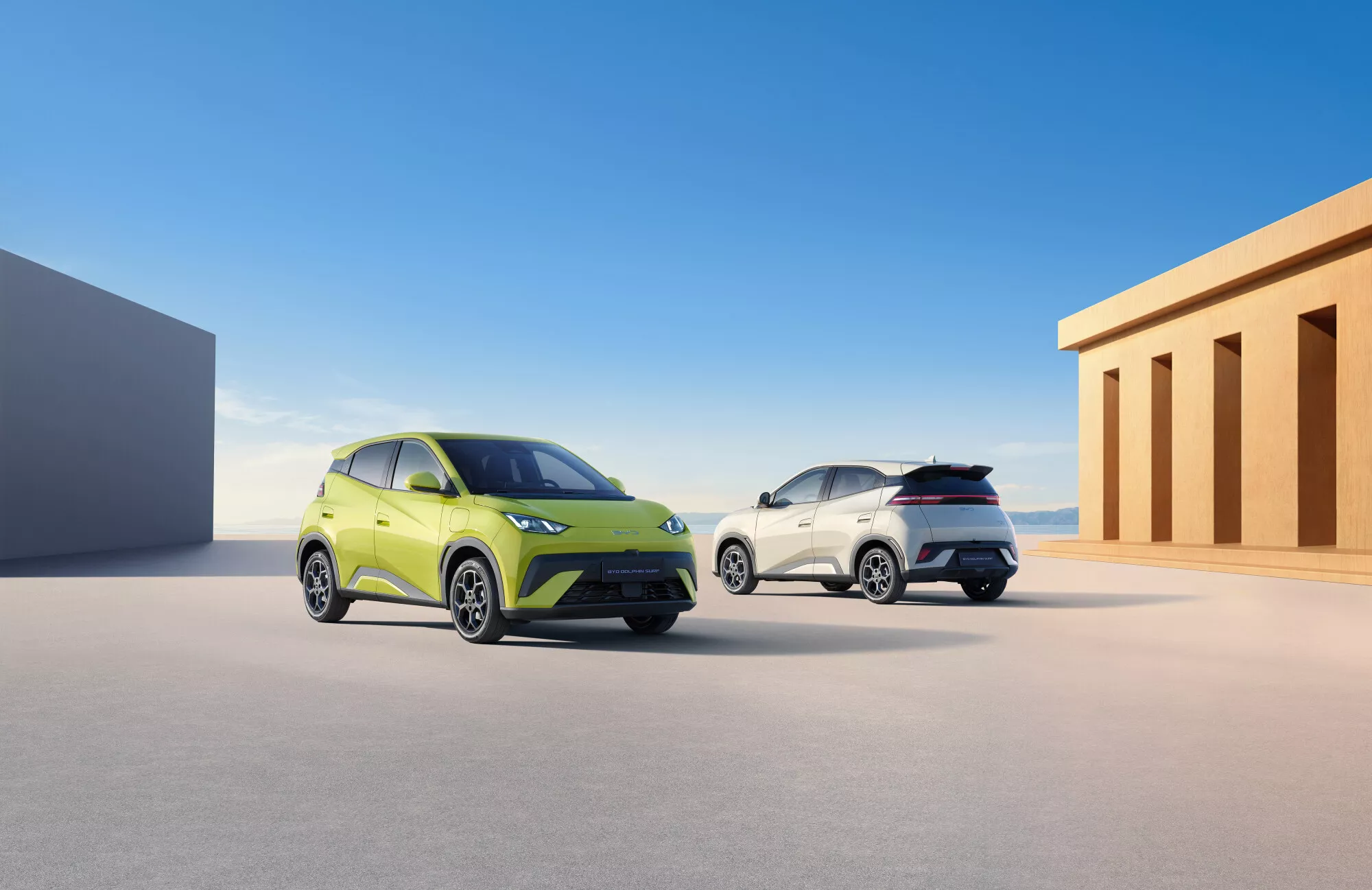
TCO Comparison 2: BYD Dolphin vs VW Polo 1.0 TSI
This is where it gets interesting for the R380K-R540K buyer — the entry-level hatchback segment that makes up the bulk of new car sales in South Africa. The BYD Dolphin Standard Range is priced at R539,900. The VW Polo 1.0 TSI Comfortline sits at roughly R380,000. That’s a R159,900 difference in purchase price. The Polo looks like a no-brainer — until you factor in five years of petrol at R32-36/L.
Over 75,000 km, the Dolphin uses approximately 13.8 kWh/100km. Charged mostly off-peak in Joburg at R1.75/kWh, that’s R18,113 in electricity over five years. Add R12,000 for a home charger, R7,000 servicing, R51,000 insurance (R850/month), and R5,000 tyres: total Dolphin TCO is R633,013. The Polo at R28/L petrol (5.5L/100km) racks up R115,500 in fuel over 75,000 km, plus R20,000 servicing, R39,000 insurance, R5,000 tyres: total R559,500. The Polo is R73,513 cheaper at R28/L. But watch what happens as we move up the fuel price scale.
At R32/L — the realistic July 2026 inland pump price — the Polo’s total climbs to R576,000, narrowing the gap to R57,013. At R36/L (the worst-case diesel-equivalent that multiple analysts are now quoting for late 2026 if levy relief is gone and Brent stays above R1,815/barrel or $110 USD), the Polo TCO hits R592,500, and the BYD Dolphin wins by R40,487. The Dolphin crossover point is around R35-36/L average over five years. Not a fantasy. A realistic trajectory given where Brent is trading right now.
And here’s the thing people miss: even at R32/L where the Polo technically wins on paper, the gap is closing so fast that any slight fuel price upside tips it the other way. You’re buying the Polo as a five-year commitment. You’re not betting R57,000 — you’re betting on petrol staying below R35/L for 60 months. Would you take that bet today? Looking at oil prices, which turned on a report that the U.S. military would brief President Trump on potential action against Iran, with Axios reporting that the U.S. Central Command was set to present Trump plans for a possible military action — and Trump had reportedly rejected Tehran’s proposal to reopen the Strait of Hormuz, signaling the naval blockade will remain in place until a broader nuclear agreement is reached — that’s not a bet I’d be comfortable making. At sustained high fuel prices, the Dolphin’s lower running costs compound month after month, eventually overcoming the upfront premium and delivering meaningful five-year savings.
The Diesel Crisis: R35-40/L is Already in the Forecast
Bakkie and commercial diesel users are in a category of their own — and it’s not a good one. Diesel levy relief has been increased to R3.93 per litre for May, effectively reducing diesel’s general fuel levy to zero. That sounds helpful until you realise from July 1, 2026 onward, the South African government plans to reinstate the general fuel levy rates to pre-relief levels, with petrol returning to R4.10 per litre and diesel to R3.93 per litre.
Stack R3.93/L levy back onto R30/L wholesale diesel and you’re looking at R34-36/L at the pump by July — with zero relief left. A Hilux or Ranger owner doing 15,000 km/year at 9L/100km will spend approximately R243,000 on diesel alone over five years at R36/L. That’s just fuel. Not service, not insurance, not tyres. That’s R48,600 per year sitting at a forecourt.
Here’s the brutal truth: there is no EV bakkie in South Africa right now. The BYD Shark 6 has been announced but isn’t on sale yet. Ford and Toyota are years away from electrifying the Ranger and Hilux for our market. If you need a bakkie for towing, payload, or farm work — you’re stuck in the diesel world for now, and the pain is real.
But if you’re a two-vehicle household — which describes a huge chunk of South African middle-class families — the smart play is surgical. Keep the diesel bakkie for the 20% of trips that actually need it. Replace the daily commuter sedan with an EV. A Hilux stays in the garage for weekends, site visits, and the occasional trip to Builders Warehouse. The BYD Dolphin or Atto 3 handles the Joburg morning commute, the school run, the Woolies trip. That combination cuts your total household fuel bill by R50,000-R70,000 over five years compared to running two petrol/diesel vehicles. Check the live charging map to see how well covered your regular routes are — it’s denser than most people expect.

Find Charging Stations Near You
Explore our live map of EV charging stations across South Africa — updated in real time.
The Upfront Cost Objection — and Why It’s Weaker Than It Looks
Yes, EVs cost more upfront. The Dolphin is R160K more than the Polo. The Atto 3 is R134K more than the Corolla Cross. That’s real money and it’s disingenuous to pretend it isn’t. But let’s look at the monthly payment picture, because this is actually where the story gets interesting for anyone using vehicle finance.
Finance the Polo at R380,000 over 72 months at current prime-linked rates (roughly 11%): you’re looking at approximately R6,800/month. Add petrol at R32/L for 15,000 km/year: that’s another R2,200/month. Total monthly cost of owning and running a Polo: roughly R9,000/month.
Finance the Dolphin at R539,900 over 72 months: approximately R9,600/month. Add electricity at off-peak Joburg rates for the same distance: R300/month. Total monthly: R9,900. The gap between the two at R32/L petrol is just R900 per month — and if petrol hits R36/L (July’s projected pump price once relief ends), the Polo’s monthly fuel climbs to R2,640, making the total R9,440/month. At that point, the Dolphin is only R460/month more expensive. And you’re protected from every fuel spike for the next five years. Your electricity rate isn’t going up R5/kWh overnight because of a war in the Middle East.
For those who genuinely can’t stretch to the upfront price, the used EV market in South Africa is growing. BYD Atto 3 units from 2023-2024 are now appearing in the R450K-R550K range. And in 12-18 months, as more units age into the second-hand market, that number will drop further. The EV premium won’t last forever — but neither will R20/L petrol. One of those trends is clearly more permanent than the other. If you want to get into the right home charging setup before making the switch, get a free installation quote so you know exactly what a home charger will cost you — it’s a once-off spend that transforms your monthly running costs.
The Verdict: R36/L Is the Tipping Point, and We’re Almost There
Let me be direct about this, because I think the automotive media has been too wishy-washy. At May 2026 prices WITH government relief, petrol EVs are still more expensive over five years in most comparisons — but the margin is shrinking rapidly. The Corolla Cross still beats the Atto 3 at R28-34/L. The Polo still beats the Dolphin at R32/L. But the EV advantage flips decisively at R36/L average over five years.
Given that for motorists and businesses, the message is clear — while relief measures may soften the impact, higher fuel prices remain an unavoidable reality in the months ahead, and given that South Africa’s temporary general fuel levy reduction, which has kept petrol prices significantly lower since it was introduced in April 2026, will be phased out before the end of June, with the full levy reinstated from 1 July — we are guaranteed to see materially higher pump prices from July 1 regardless of what oil does. Stack that against the World Bank’s projection of Brent oil prices averaging as high as R1,897/barrel ($115 USD) in 2026 in a scenario where critical oil and gas facilities suffer more damage and export volumes are slow to recover — and R34-36/L average petrol over a five-year ownership period looks less like a worst-case scenario and more like a planning assumption.
The EV buyer is locking in R18,000-R23,000 in electricity costs over five years. The petrol buyer is locking in a minimum of R100,000-R130,000 in fuel costs over the same period, with significant upside risk. Even accounting for higher EV purchase price, the total five-year difference at realistic fuel price trajectories now favours electric by R40,000-R57,000 in the hatchback segment and R51,000+ in the SUV segment once petrol crosses R36/L. That’s not a rounding error. That’s a meaningful financial decision, and May 6, 2026 is the date the arithmetic changed permanently. Run your own numbers on our EV savings calculator — plug in your actual km/year and tariff, and see exactly where your crossover point sits.
FAQ
Will petrol prices really stay this high, or will they drop once the Iran crisis resolves?
Even if the Strait of Hormuz fully reopens tomorrow, analysts estimate it would take four to six months for oil markets to normalise — and Brent would likely settle in the R1,320-R1,485/barrel ($80-90 USD) range rather than returning to pre-crisis levels below R1,238/barrel ($75 USD). Supply chain bottlenecks, infrastructure damage and lingering production outages would keep the market tight, likely anchoring Brent in the R1,320 to R1,485/barrel range rather than a full return to pre-crisis levels. R30+/L petrol inland from July 2026 is effectively the floor, not the ceiling.
What if I can’t afford the higher upfront cost of an EV right now?
You have two practical options. First, use balloon-payment finance to reduce the monthly payment gap to R500-900/month — at which point you’re near-parity with an ICE car’s monthly total (payment plus fuel). Second, wait 12-24 months and buy a used BYD Atto 3 or Dolphin — prices are already softening as more units age into the second-hand market. Just know that every month you delay at R30-36/L petrol costs you R2,000-R3,000 more in fuel than an EV driver pays in electricity.
Do these TCO calculations include battery replacement costs?
No, because they shouldn’t need to. BYD offers an 8-year/160,000 km battery warranty on both the Atto 3 and Dolphin. Real-world data from the global fleet shows lithium iron phosphate (LFP) batteries — which BYD uses — retaining 90%+ capacity at 100,000 km. Over a five-year, 75,000 km ownership period, battery degradation is a non-issue.
What if electricity prices spike the way petrol has?
Possible, but structurally very different. Eskom’s tariff increases are regulated, announced in advance, and historically run at 8-12% per year. Petrol just spiked 50%+ in six weeks because of a war. Your EV electricity bill at worst increases R50-80/month per year from tariff hikes. Your petrol bill just increased R400-600/month in a single adjustment cycle. The asymmetry is enormous.
Should I wait for EV prices to drop further before buying?
Possibly — but this is a false economy if you’re already in the market for a car. BYD prices have been relatively stable in 2025-2026 and are unlikely to crater 20-30% in the next 12 months. Meanwhile, you’re burning R2,200-R2,640/month on petrol while you wait. Over 18 months, that’s R40,000+ in fuel spend that a Dolphin driver pays just R5,400 in electricity for. The longer you wait, the worse the maths gets at current pump prices.
Continue Reading