Charging a BYD Atto 3 Extended Range in Johannesburg costs approximately R651 per month for the average commuter covering 1,200 km — compared to R2,205 for an equivalent petrol crossover. That is a saving of R1,554 every month, or R18,648 a year. But before you sign the papers at your nearest BYD dealer, there is a more complicated story buried in those numbers. The five-year total cost of ownership shows the Atto 3 costs R314,260 more than a Hyundai Creta at typical mileage — the R414,000 purchase price gap simply cannot be closed by fuel savings alone in five years at 1,200 km per month. Yet for high-mileage drivers covering 2,000+ km monthly and diesel refugees watching pump prices climb toward R32–R35 per litre, the equation flips entirely: breakeven arrives by year six or seven, with substantial savings beyond. Joburg’s City Power tariff structure, a surging fuel crisis, and that R414,000 purchase price gap all matter enormously to your bottom line. We have crunched every rand so you do not have to.
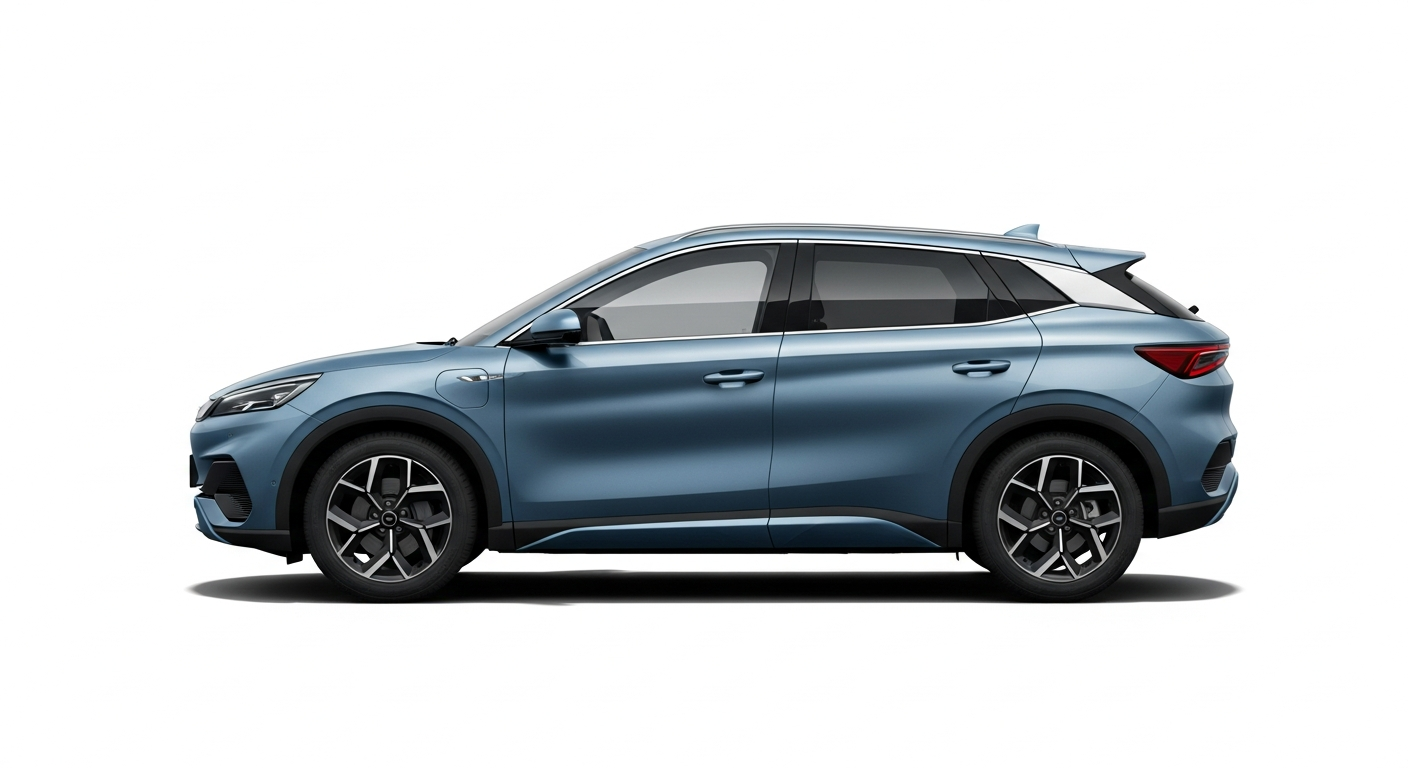
The BYD Atto 3 Extended Range is the model most South African buyers choose. It carries a 60.5 kWh Blade Battery, manages roughly 420 km on the WLTP test cycle, and retails for R783,900. It accepts DC fast charging at up to 80 kW, taking the battery from 30% to 80% in just 29 minutes. At home, a 7 kW wall charger handles the job neatly. In real Joburg conditions — altitude of 1,753 m above sea level, air conditioning on through summer, a mix of N1 highway and Sandton gridlock — expect a real-world efficiency figure of about 16.5 kWh per 100 km and a usable range of 350–380 km per charge.
This is the definitive cost-to-charge guide for Joburg residents considering the Atto 3 in 2026. We use actual City Power tariffs as approved by NERSA for the 2025/2026 financial year, real public charging rates, and petrol prices that are — frankly — becoming a national emergency. Plug in your own numbers using our EV savings calculator to get a figure personalised to your exact driving pattern.
BYD Atto 3 Real-World Efficiency in Joburg
WLTP figures are useful for comparing cars on paper. They are largely useless for calculating what you will actually pay. The WLTP 420 km range for the Atto 3 Extended is measured under controlled European test conditions — not at 1,753 m above sea level with the aircon set to 20 degrees Celsius while navigating Rivonia Road at 07h30.
In real Joburg driving, you can realistically expect 350–380 km from a full charge. That translates to a consumption figure of around 16.5 kWh per 100 km. It is the number we use throughout this article, and it is the number that should inform your purchase decision. The Extended Range covers roughly 330–350 km in normal daily driving (accounting for not running the battery fully flat), which is enough for a Joburg-to-Pretoria commute run over three to four days without plugging in.
The good news is that BYD fitted the Atto 3 with a proper heat pump system. This advanced energy-saving heat pump comes as standard, designed to reliably operate across a broad range of temperatures and utilise residual heat from the surroundings, powertrain, and passenger compartment. That matters because running resistive heating or heavy aircon is one of the fastest ways to destroy EV range. In Joburg’s climate — hot summers, cold dry winters — the heat pump gives you a meaningful advantage over EVs that lack one.
There is also the load-shedding angle. The Atto 3’s Vehicle-to-Load capability, using the V2L adapter, means the 60.5 kWh battery can power essential home appliances during outages — and this is one of its most valuable SA-specific features. Think of it as a braai-sized generator that also happens to take you to work.
City Power Johannesburg Tariffs 2025/26 — The Maths That Actually Matters
Here is the critical number for every Joburg EV owner: R3.29 per kWh. That is the blended average residential prepaid high tariff you will pay to City Power for the 2025/26 financial year. City Power implemented NERSA-approved increases averaging 12.41% for the 2025/2026 financial year, which is noticeably steeper than what Cape Town residents absorbed. It took effect on 1 July 2025.
The tariff is structured as an Inclining Block Tariff (IBT). City Power’s residential prepaid high IBT sits at about R3.06 per kWh on the first 350 kWh of the month, stepping up progressively on higher consumption blocks. The R3.29 per kWh blended average represents what a typical household pays once total monthly consumption — including EV charging — pushes usage into these higher-rate blocks. In practical terms: if you are an average household that consumes 350 kWh before you start charging your car, you will pay a higher marginal rate (closer to R3.50–R3.80 per kWh) on every additional kWh of EV charging you add. That makes efficient home energy management important — not just a nice-to-have. The R3.29 figure is a weighted average across all consumption blocks for a household adding 200 kWh of EV charging to baseline usage.
At R3.29/kWh average, Joburg EV owners pay 43% more to charge at home than their Cape Town counterparts. That gap quietly closes the economic case for switching to electric.
There is also a fixed monthly charge to factor in: a service charge and network capacity charge that together add roughly R200 per month to your bill regardless of how much electricity you use. Fixed charges increased by 18.32% in the 2025/26 tariff year — the sharpest increase in the entire tariff structure. That hits every Joburg homeowner, EV or not.
The single biggest tariff disadvantage for Joburg EV owners — and almost nobody talks about it — is that City Power does not offer a residential time-of-use tariff. Cape Town’s Homeflex tariff lets EV owners charge overnight at rates closer to R1.89 per kWh. In Joburg, you pay the same flat rate whether you charge at 02h00 or 14h00. That structural disadvantage adds up to hundreds of rands per month, and it is a major reason Cape Town has higher EV adoption. Electricity tariffs in South Africa vary significantly depending on whether you are supplied by Eskom or your local municipality — and in this case, the municipality you happen to live in makes an enormous difference.

How Much Could You Save With an EV?
Use our free calculator to compare your current fuel costs with EV charging costs.
Monthly Charging Costs: Three Real Joburg Scenarios
Enough preamble. Here is exactly what you will pay, based on three driving profiles every Joburg buyer should map themselves against. All figures use City Power’s blended residential prepaid high average of R3.29 per kWh and the Atto 3’s real-world figure of 16.5 kWh per 100 km.
Scenario 1: The Average Commuter — 1,200 km per Month
This is the Fourways-to-Sandton-and-back driver. School runs, weekend errands, the occasional trip to the Waterfall City Mall. 1,200 km per month is a reasonable baseline for a Joburg household using one car as a primary commuter. At 16.5 kWh per 100 km, you need 198 kWh of electricity monthly. At R3.29 per kWh, that comes to R651 per month, or R0.54 per km.
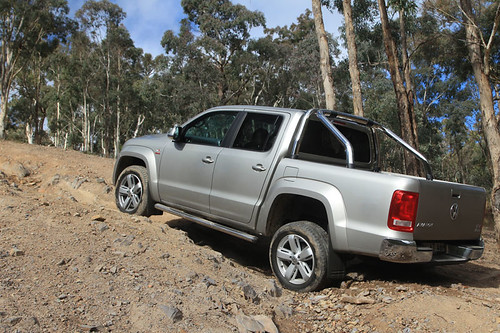
Now compare that to a Hyundai Creta 1.5 petrol — the closest real-world competitor to the Atto 3 in the SA market. South Africans in Gauteng are looking at around R25.21 for 95 Unleaded petrol from May 2026 onwards, and with the fuel levy relief beginning to unwind from June, those prices are only heading in one direction. At 7.5 L/100 km and R24.50/L (conservative May 2026 estimate), 1,200 km costs R2,205. That is a monthly saving of R1,554, or R18,648 annually.
Scenario 2: The Heavy User — 2,000 km per Month
Sales reps, Uber drivers considering the switch, business owners covering multiple sites across Joburg — this is your scenario. You need 330 kWh monthly. At R3.29 per kWh, that is R1,086 per month. Your per-kilometre cost stays at the same R0.54 (electricity pricing in Joburg does not change dramatically with volume the way block tariffs would theoretically suggest, because most EV-specific consumption falls in the upper blocks regardless).
Against the Creta at 2,000 km per month, you are spending R3,675 on petrol. The monthly saving balloons to R2,589, which is R31,068 per year. At this mileage, the purchase price premium starts to make genuine financial sense much sooner. If you drive 2,000 km monthly, you are not a casual consideration — you are the ideal BYD Atto 3 buyer.

Scenario 3: The Weekend Driver — 600 km per Month
Retired, work from home, or just have a short commute. You need 99 kWh per month. That is R326 per month in City Power electricity — less than most Joburgers spend on a single restaurant dinner. Against the Creta’s R1,103 petrol bill, you save R777 monthly, or R9,324 annually. The maths still works. But the payback on the R414,000 purchase price premium stretches out uncomfortably long at this mileage level.
The Diesel Crisis Angle — The Stat That Changes Everything
If you currently drive a diesel vehicle, the calculus is different and more dramatic. The diesel situation is far more dire than petrol. According to the Department of Mineral Resources and Energy, diesel customers face an increase in the region of R4.10 in May 2026 alone. The wholesale price of diesel is set to rise to around R29.35 at the coast and R30.11 in Gauteng, which could rise to R32–R33 at the pumps once retail margins are factored in.
A Toyota Fortuner 2.8 GD-6 at 7.9 L/100 km costs R3,034 per month in diesel at R32/L for 1,200 km of driving. Against the Atto 3’s R651 home charging cost, you are saving R2,383 per month — over R28,000 per year. The full fuel levy will be reinstated from July 1, with diesel returning to R3.93 per litre in levy alone — which pushes diesel towards R35 or more per litre once retail margins are included. The diesel-crisis angle is not hyperbole. It is the most compelling financial argument for going electric that Joburg has seen in a decade.
Public Charging in Joburg — For Emergencies and Road Trips Only
Home charging is where the economics work. Public charging is where they fall apart. GridCars’ standard charging rates for eMSP customers remain R5.88 per kWh for AC and R7.35 per kWh for DC, with no reported changes extending into 2026. At those rates, a full 60.5 kWh charge at a DC fast charger costs approximately R445 — more than double what the same charge costs at home.
The good news is that Gauteng leads the country with 23 free public charging stations, mostly in the Johannesburg and Tshwane areas. Sandton City, Mall of Africa, Rosebank Mall, and Menlyn Park all have public chargers available. Use them for opportunistic top-ups while shopping. Find the cheapest public chargers in Johannesburg on our live map. But plan your life around home charging for anything longer than a weekend errand.
If you rely exclusively on public charging — perhaps you live in a complex and cannot install a home charger — your monthly cost for 1,200 km jumps from R651 to approximately R1,188. Over five years, home charging saves you R27,240–R46,020 compared to relying on public EV charging stations in Johannesburg. That one figure makes the case for a home charger installation more compellingly than anything else in this article. Get a free quote for your Atto 3 home charger installation — it is the single best financial decision an EV owner in Joburg can make.
Ready to Install a Home Charger?
Get a free, no-obligation quote for professional EV charger installation in South Africa.
5-Year Total Cost of Ownership: The Honest Reckoning
This is where we stop cheerleading and do the hard work. Here is the full five-year TCO comparison for the BYD Atto 3 Extended (R783,900) against the Hyundai Creta 1.5 Executive (approximately R369,900), both driven 1,200 km per month — that is 14,400 km per year, 72,000 km over five years.
| Cost Category | BYD Atto 3 Extended (5 yrs) | Hyundai Creta 1.5 (5 yrs) | Difference |
|---|---|---|---|
| Purchase price | R783,900 | R369,900 | +R414,000 |
| Fuel / Charging | R39,060 | R132,300 | -R93,240 |
| Servicing | R6,000 | R25,000 | -R19,000 |
| Insurance (est.) | R60,000 | R48,000 | +R12,000 |
| Tyres (1 set) | R6,000 | R5,500 | +R500 |
| 5-Year TCO | R894,960 | R580,700 | +R314,260 |
The Atto 3 costs R314,260 more to own over five years in Johannesburg, even after fuel savings are included. That is the honest truth, and any article that glosses over it is selling you something. The fuel savings of R93,240 are real and meaningful — but they do not close a R414,000 purchase price gap inside five years at 1,200 km per month.
But flip the scenario two ways and the maths changes completely. First, the heavy user covering 2,000 km per month saves R31,068 annually in fuel alone. Over five years that is R155,340, which significantly narrows the TCO gap to R158,920 — still a premium, but one that closes entirely by year seven or eight. Second, the diesel driver. If diesel hits R38–R40 per litre by late 2026 — which current Middle East supply disruption trajectories suggest is entirely plausible — the annual fuel saving versus a diesel Fortuner jumps past R35,000. At that rate, a diesel-to-EV switcher doing 1,200 km per month breaks even on TCO by year six, and comes out R50,000+ ahead by year ten.
Also do not forget hidden costs: a 7 kW home wallbox installation runs R10,000–R15,000 once-off, and your DB board may need upgrading for another R5,000–R8,000. Factor those in upfront. The Atto 3 comes with a 5-year/100,000 km maintenance plan and an 8-year/160,000 km battery warranty, which substantially reduces the servicing cost risk over the long term.
Joburg vs Cape Town: Why Where You Live Changes Your EV Economics
If you have friends in Cape Town who rave about how cheap their EV is to run, they are not lying — but they are benefiting from a structural electricity advantage that Joburg residents simply do not have. Cape Town’s Homeflex time-of-use tariff allows residents to charge overnight at off-peak rates closer to R1.89 per kWh. That compares to Joburg’s flat R3.29 per kWh, 24 hours a day, seven days a week.
Run the numbers for 1,200 km per month under Cape Town’s best-case overnight rate and the charging cost drops to around R347 per month. That is R304 per month cheaper than in Joburg — R3,648 per year — for exactly the same car driven exactly the same distance. Over five years, a Cape Town Atto 3 owner saves R18,240 more in charging costs than their Joburg counterpart, purely because of tariff structure. Electricity tariffs in South Africa vary significantly depending on whether you are supplied directly by Eskom or by your local municipality — and this is precisely where that variation bites hardest.
City Power’s flat residential prepaid tariff is the single biggest structural barrier to EV adoption in Johannesburg. Until City Power introduces a residential time-of-use option — and there is no indication this is imminent — Joburg EV owners are effectively subsidising grid demand management without any of the cost benefit. It is an issue the EV community should be lobbying the City of Johannesburg about loudly.
For more detail on how SA’s major cities compare for EV running costs, our full EV vs petrol running cost breakdown for South Africa goes deep on every province.

Find Charging Stations Near You
Explore our live map of EV charging stations across South Africa — updated in real time.
The Verdict: Who Should Buy the BYD Atto 3 in Johannesburg?
Here is the unvarnished take. If you drive 1,200 km per month, keep cars for only five years, and are comparing the Atto 3 purely on financial grounds — it does not pencil out in Joburg. The R314,000 five-year TCO gap is real. The fuel savings are real too, but they are not large enough to close the gap in that timeframe at that mileage.
But here is who should absolutely be looking at the Atto 3 right now. High-mileage drivers doing 2,000 km or more per month see the payback accelerate dramatically — the TCO gap narrows to R158,920 over five years and closes entirely by year seven. Diesel refugees watching the pump price creep toward R32–R35 per litre will find the economics compelling even at five years, with breakeven by year six and significant savings beyond. Long-term keepers who hold cars for eight to ten years and beyond will almost certainly come out ahead. And anyone who places value on the V2L load-shedding capability, the industry-leading battery warranty, or simply not stopping at an Engen ever again — those are real, non-financial reasons to switch.
The BYD Atto 3 is a genuinely good car. Cumulative global sales of the Atto 3 / Yuan Plus reached one million vehicles on 23 June 2025 — that is not a niche product by any measure. The 2025 BYD Atto 3 Extended Range represents electric motoring maturity — not trying to be the fastest or flashiest, simply being the most liveable electric family SUV available in South Africa. But buy it with clear eyes on the numbers, not marketing copy.
See exactly what you would pay based on your specific driving distance, home tariff zone, and comparison vehicle. The calculator takes two minutes and may change your mind in either direction — that is the point.
FAQ
How much does it cost to charge a BYD Atto 3 in Johannesburg per month?
For the average Joburg commuter driving 1,200 km per month, charging a BYD Atto 3 Extended Range at home on City Power’s residential prepaid tariff (R3.29/kWh average, 2025/26) costs approximately R651 per month. Heavy users covering 2,000 km per month will pay around R1,086, while weekend drivers doing 600 km per month will spend approximately R326. All figures assume home charging only and a real-world efficiency of 16.5 kWh per 100 km.
Is it cheaper to charge at home or at public chargers in Johannesburg?
Home charging is significantly cheaper. GridCars’ standard rates remain R5.88 per kWh for AC and R7.35 per kWh for DC charging, compared to City Power’s home rate of approximately R3.29 per kWh — making home charging roughly 55% cheaper than public AC charging and nearly 125% cheaper than DC fast charging. A full 60.5 kWh charge at a DC public charger costs over R400, compared to around R199 at home. Installing a 7 kW home wallbox is the most financially impactful decision you can make as a Joburg EV owner. Get a free installation quote here.
Does City Power Johannesburg have off-peak electricity rates for home charging?
No. City Power does not currently offer a residential time-of-use or off-peak tariff for prepaid customers. Joburg residential EV owners pay the same rate 24 hours a day, seven days a week — unlike Cape Town, where the Homeflex tariff allows overnight charging at significantly lower rates. This is a major structural disadvantage for Joburg EV owners and a key reason Cape Town leads South Africa in EV adoption. Until City Power introduces a residential TOU option, Joburg EV owners cannot optimise charging costs by timing overnight sessions.
How does the BYD Atto 3 charging cost compare to petrol in Johannesburg?
Dramatically cheaper per kilometre. Home charging in Joburg costs R0.54 per km. A comparable petrol crossover like the Hyundai Creta 1.5 costs approximately R1.84 per km at current Gauteng petrol prices of around R25.21 per litre for 95 unleaded. Following the fuel levy relief extension, South Africans in Gauteng are looking at around R25.21 for 95 Unleaded from May 2026 — and those prices are set to climb further when the temporary relief expires in July. For 1,200 km per month, that translates to a saving of R1,554 monthly or R18,648 annually versus a petrol Creta.
Is the BYD Atto 3 cheaper to own than a Hyundai Creta over 5 years in Johannesburg?
No — not for the typical 1,200 km per month commuter. The five-year total cost of ownership for the BYD Atto 3 Extended comes to approximately R894,960 versus R580,700 for the Hyundai Creta 1.5 Executive — a gap of R314,260. The R414,000 purchase price difference is too large to fully close through fuel and servicing savings in five years at average Joburg mileage. However, at 2,000 km or more per month, the breakeven accelerates significantly — the gap narrows to R158,920 over five years and closes entirely by year seven. High-mileage users, diesel-to-EV switchers, and owners who keep cars for 10-plus years will likely come out ahead. Use our calculator to model your specific scenario.
Continue Reading