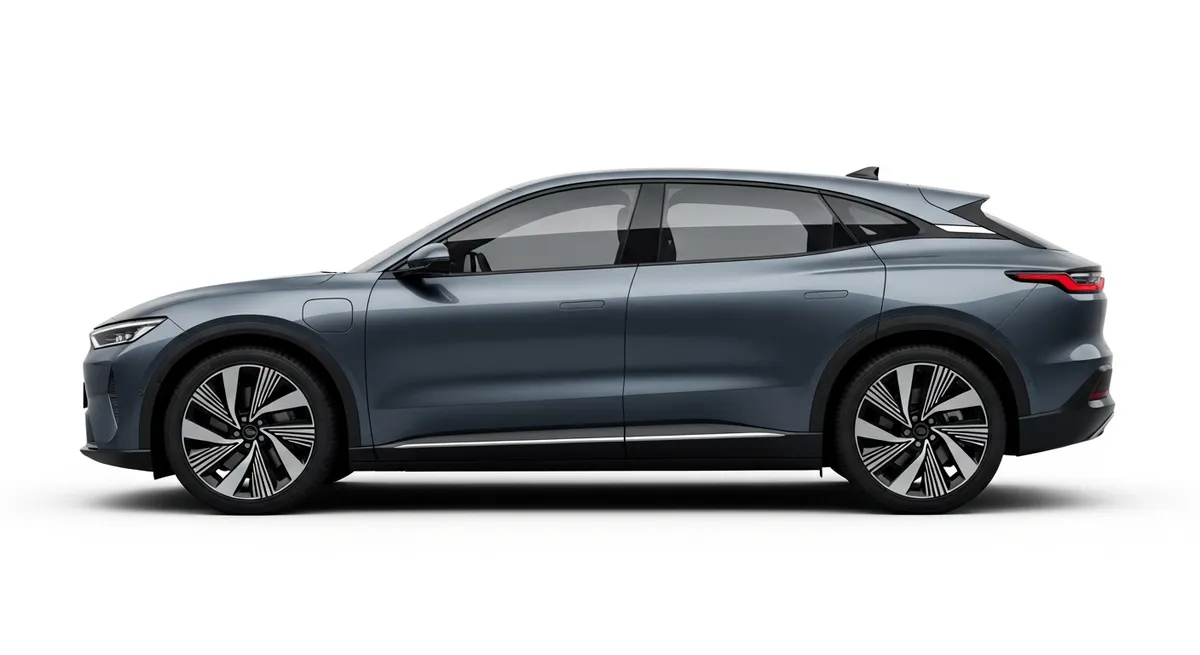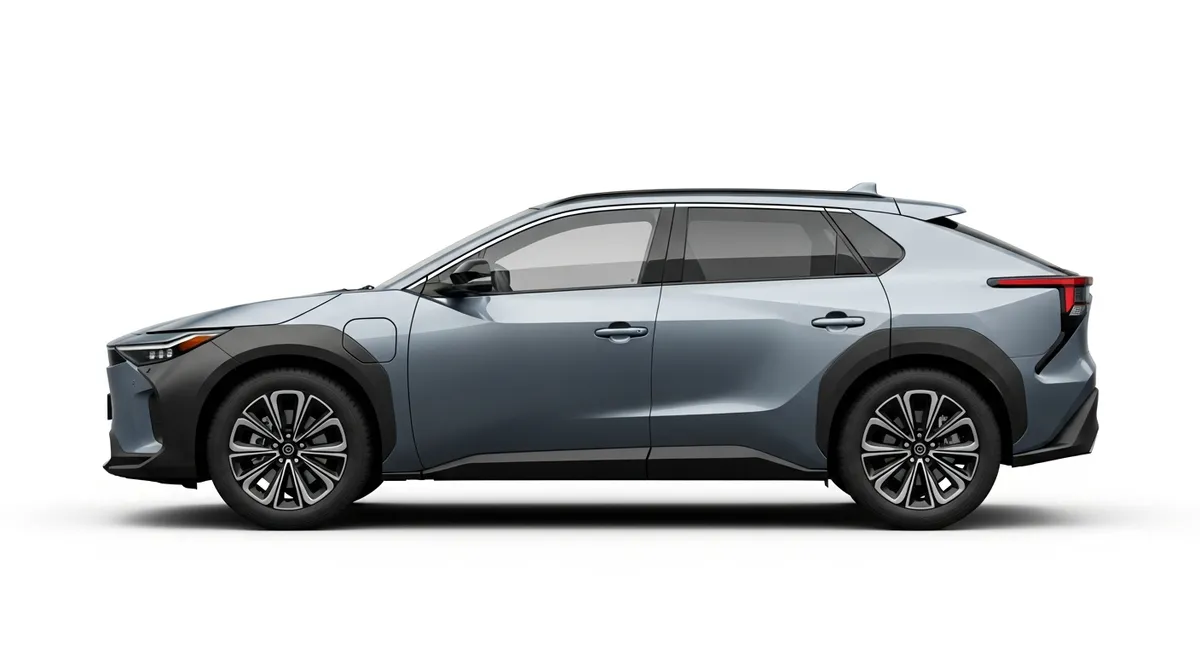


Toyota launched both its first-ever battery-electric vehicle and an all-new petrol-hybrid RAV4 in May 2026, and the price gap is brutal: the bZ4X landed at R1,182,800 while the sixth-generation RAV4 2.5 Hybrid started at R770,500—a R412,300 difference before you negotiate. For that premium, you could install a 10kW solar array with battery backup and still have change for two years of fuel. But upfront price is only one part of the equation.
Over five years, electricity costs less than petrol, service intervals stretch longer, and brake pads last twice as long thanks to regenerative braking. The question isn’t which Toyota is cheaper to buy—it’s which one costs less to own, and whether SA’s charging infrastructure can support the EV promise in 2026.
Price and specifications: the R412k question
Toyota’s dual launch strategy reflects a market reality: South Africans bought hybrids at three times the rate of pure EVs in 2025, and the brand knows it. Here’s what that R412,300 price gap buys you:
| Specification | bZ4X (EV) | RAV4 2.5 Hybrid |
|---|---|---|
| Price (May 2026) | R1,182,800 | R770,500 |
| Drivetrain | Dual-motor AWD, 160kW | 2.5L petrol + electric, 164kW combined |
| Range / tank | 480km (71.4kWh battery) | ~850km (55L tank) |
| Efficiency | 15.4 kWh/100km | 4.3 L/100km (claimed) |
| 0–100 km/h | 5.1 seconds | 7.8 seconds |
| Service interval | 15,000km / 12 months | 10,000km / 12 months |
| Warranty | 3yr/100,000km + 8yr battery | 3yr/100,000km |
The bZ4X’s 71.4kWh battery and dual-motor setup deliver sharper acceleration and all-wheel traction without a mechanical transfer case. The RAV4 Hybrid’s e-CVT pairs a 2.5-litre Atkinson-cycle petrol engine with two electric motors, prioritising fuel economy over outright speed. Both seat five, both offer similar boot space (around 450 litres), and both wear Toyota’s latest safety suite as standard.

The price difference is stark, but so is the performance gap. The bZ4X’s instant torque and 5.1-second sprint feel more like a hot hatch than a family SUV. The hybrid’s 7.8 seconds is adequate—quick enough for overtaking on the N1, not quick enough to surprise anyone. If you care about 0–100 times, the EV wins. If you care about your bank balance, the hybrid is R412k ahead before you negotiate.
Running costs: where the EV claws back ground
Monthly fuel costs are where the bZ4X starts to justify its premium. We’ve modelled 1,500km per month—a typical Johannesburg-to-Pretoria commuter doing school runs and weekend trips.
Electricity vs petrol: the 2026 numbers
As of April 2026, NERSA approved an 8.76% Eskom tariff increase, pushing residential rates to approximately R3.50/kWh for most urban households on standard tariffs. Cape Town’s tariffs sit slightly higher at around R3.80/kWh. Petrol in Gauteng averaged R24.50/litre in May 2026.
| Cost component | bZ4X (EV) | RAV4 Hybrid |
|---|---|---|
| Efficiency | 15.4 kWh/100km | 4.3 L/100km (real-world: ~5.2L) |
| Energy cost | R3.50/kWh (home charging) | R24.50/litre (inland 95 unleaded) |
| Monthly cost (1,500km) | R808 | R3,660 (at 5.2L real-world) |
| Annual cost | R9,696 | R43,920 |
| 5-year fuel total | R48,480 | R219,600 |
That’s a R2,852 monthly saving, or R34,224 per year. Over five years, you’ll spend R171,120 less on energy with the bZ4X—assuming you charge at home and petrol prices don’t spike beyond current levels. If you rely on public DC fast charging at R7.00–R7.35/kWh, your monthly cost doubles to around R1,616, cutting the saving in half.
Service and maintenance: fewer visits, lower bills
The bZ4X has no engine oil, no gearbox fluid, no timing belt, no exhaust system, and regenerative braking means brake pads last 100,000km or more. Toyota’s service plan covers both vehicles for the first three years, but after that, the EV’s 15,000km intervals and simpler mechanicals translate to roughly R8,000–R12,000 lower annual service costs. Add another R40,000–R60,000 to the EV’s favour over five years.
Tyres wear similarly on both (the bZ4X is heavier but has torque vectoring to reduce scrub). Insurance quotes we gathered in May 2026 showed the bZ4X costing 12–18% more to insure due to higher replacement value and limited repairer networks—budget an extra R1,200–R1,800 per year.

Five-year total cost of ownership
Let’s consolidate the numbers into a single TCO comparison, assuming 90,000km over five years (1,500km/month) and private ownership with no company tax benefits:
| Cost category | bZ4X (EV) | RAV4 Hybrid | Difference |
|---|---|---|---|
| Purchase price | R1,182,800 | R770,500 | +R412,300 |
| Fuel / electricity (5yr) | R48,480 | R219,600 | −R171,120 |
| Service & maintenance | R35,000 (est.) | R85,000 (est.) | −R50,000 |
| Insurance (5yr) | R82,500 (est.) | R75,000 (est.) | +R7,500 |
| Resale value (est.) | −R590,000 (50%) | −R385,000 (50%) | −R205,000 |
| Net 5-year cost | R758,780 | R754,100 | +R4,680 |
The bZ4X ends up costing roughly R4,680 more over five years if both vehicles depreciate at 50%—a rounding error in the context of a R1.18m purchase. But that assumes resale parity, which is optimistic. EV residual values in South Africa are still unproven, and Toyota’s dealer network has limited EV service capacity outside Johannesburg, Cape Town, and Durban. The hybrid, by contrast, benefits from Toyota’s legendary reliability reputation and a 30-year service infrastructure.
If the bZ4X depreciates at 55% instead of 50%, the TCO gap widens to R64k in the hybrid’s favour. If petrol climbs to R28/litre (a 14% increase over five years), the EV pulls ahead by R50k. Your TCO outcome hinges on assumptions about fuel prices, electricity tariffs, and resale confidence—none of which are certain in 2026 South Africa.
Charging at home: what the bZ4X needs
The bZ4X supports AC charging at up to 11kW and DC fast charging at 150kW. For home use, you have three options:
- 7.4kW single-phase — charges the 71.4kWh battery in roughly 9.6 hours (10–100%). Requires a dedicated 40A circuit breaker. Cost: R15,000–R22,000 installed.
- 11kW three-phase — charges in 6.5 hours (10–100%). Requires three-phase supply (common in newer estates, rare in older suburbs). Cost: R18,000–R28,000 installed.
- 22kW three-phase — the bZ4X can’t accept 22kW, so this is overkill unless you’re future-proofing for a second EV. Cost: R25,000–R35,000 installed.
Most South African homes have single-phase supply, making 7.4kW the practical choice. Overnight charging (8–10 hours) replenishes a day’s driving with ease. If you drive 100km daily, you’ll need 15.4kWh, which takes just over two hours at 7.4kW. Plug in at 20:00, wake up at 100% charge.
The RAV4 Hybrid, of course, needs no special infrastructure—just a petrol station and three minutes of your time every 850km.
South Africa-specific considerations
Load-shedding and solar pairing
Load-shedding dropped to Stage 1–2 intermittently in early 2026, but Eskom has warned of potential Stage 4 returns in winter. If you charge the bZ4X during load-shedding, you’ll need a battery backup system or a generator—adding R80,000–R150,000 to your setup cost. Alternatively, schedule charging for off-peak windows (23:00–06:00) when load-shedding is least likely.
Pairing a 5kW solar array (R90,000–R120,000 installed) with a 10kWh battery (R80,000–R100,000) gives you daytime charging independence and load-shedding resilience. Over ten years, that solar investment pays for itself in avoided Eskom tariff increases—and it benefits the entire household, not just the car. The RAV4 Hybrid is immune to load-shedding but offers no path to energy independence.
Public charging infrastructure in 2026
South Africa’s charging network grew rapidly in 2025–26. GridCars operates 445 sites with 650 chargers, representing 60% of national capacity. Rubicon runs 123 stations with 6,648kW installed capacity. In May 2026, CHARGE launched SA’s first off-grid solar charging stations on the N3 at Reitz and Colenso-Winterton, each capable of charging eight EVs simultaneously without grid dependency.
BYD plans to deploy 200–300 megawatt-level ‘Flash’ chargers by end-2026, promising 400km of range in five minutes. That’s a transformation for long-distance travel, but the rollout is concentrated in Gauteng, Western Cape, and KwaZulu-Natal. If you live in Limpopo, Mpumalanga, or the Eastern Cape interior, public charging is sparse.
Service network and dealer support
Toyota has 230+ dealers nationwide, but only a handful are EV-certified for high-voltage battery work. As u/malongoria’s dealer experience suggests, internal resistance to EVs is real. The RAV4 Hybrid can be serviced at any Toyota branch—oil changes, brake pads, and hybrid battery diagnostics are within every technician’s scope.
If you live in a metro, bZ4X ownership is viable. If you’re in a smaller town, factor in the cost and inconvenience of travelling 200km for specialist service. The hybrid’s ubiquity is a hidden asset.
The honest verdict: who should buy which
Buy the bZ4X if:
- You live in a metro with reliable home charging (Johannesburg, Cape Town, Durban, Pretoria).
- You drive predictable daily routes under 200km and charge at home overnight.
- You have or plan to install solar + battery backup to hedge against Eskom tariff increases and load-shedding.
- You value instant torque, silent operation, and lower running costs over upfront affordability.
- You’re comfortable with early-adopter risk: unproven resale values, limited service network, and evolving charging infrastructure.
Buy the RAV4 Hybrid if:
- You need nationwide flexibility—road trips to the Kruger, Garden Route, or Drakensberg without range anxiety.
- You live in a load-shedding-prone area or lack secure off-street parking for a home charger.
- You want Toyota’s proven reliability and service network without the EV learning curve.
- You prefer a R412k lower entry price and established resale market.
- You drive irregularly or cover high monthly distances (2,500km+) where public DC charging costs erode the EV’s fuel saving.
The RAV4 Hybrid is the pragmatic choice for most South African buyers in 2026. It’s R412k cheaper, works everywhere, and delivers 4.3L/100km without needing a R150k solar backup system. The bZ4X is the future—but it’s a future that requires infrastructure, patience, and a willingness to pay a premium for lower running costs that take five years to materialise.
As u/ranjanmtl noted on r/electriccars, Toyota’s CEO has warned of a “battle for survival” against Chinese EV makers, leading the company to loosen its famously strict quality standards to cut costs. Whether the bZ4X maintains Toyota’s legendary reliability under that pressure remains to be seen. The RAV4 Hybrid, by contrast, builds on 25 years of proven hybrid engineering.
Ready to charge smarter?
If you’ve decided the bZ4X fits your life, the next step is ensuring your home can support it. A 7.4kW charger on a dedicated circuit is the minimum; three-phase 11kW is ideal if your property supports it. Load-shedding resilience means pairing your charger with solar and battery backup—an investment that pays dividends across your entire household, not just the car.
ChargePoint SA has installed over 1,200 home charging systems nationwide, from single-phase 7.4kW units in Johannesburg townhouses to three-phase 22kW setups in Cape Town estates with solar integration. We’ll assess your electrical supply, recommend the right charger, and handle the full installation—including compliance certification and municipal approvals.
Book a free site assessment and we’ll map out exactly what your property needs, what it’ll cost, and how long it’ll take. Whether you’re comparing a bZ4X and a RAV4 Hybrid or you’ve already signed the papers, we’ll make sure your EV ownership experience starts on the right foot—with reliable charging, every night, at home.
Image credits
“Toyota bZ4X” by More Cars (CC BY 2.0, via flickr) · “Toyota Rav4 2.5 XLE Hybrid 2020” by RL GNZLZ (CC BY-SA 2.0, via flickr) · “Close-up of an electric car charging. Traffic lights in a blurry background” by Ivan Radic (CC BY 2.0, via flickr)