

Monthly Cost of Owning an Electric Car in South Africa (2026 Guide)
Complete Monthly Cost Breakdown: EV Ownership in South Africa
The average monthly cost of owning an electric car in South Africa ranges from R8,310 to R16,310, depending on your vehicle model, financing arrangement, insurance, and driving distance. This all-inclusive figure accounts for finance repayments, comprehensive insurance, home charging costs, and minimal maintenance expenses.
Here’s the complete picture with real December 2025 numbers:
| Expense Category | Monthly Cost | Notes |
|---|---|---|
| Vehicle Finance | R5,500-R12,000 | Depends on purchase price and deposit |
| Insurance | R1,200-R2,500 | Comprehensive cover, EV-specific policies |
| Electricity (50km/day) | R1,410 | At R5.15/kWh Cape Town rate |
| Maintenance | R200-R400 | Minimal – no oil changes, fewer parts |
| Total Monthly Cost | R8,310-R16,310 | All-inclusive ownership |
The wide range reflects the diversity of South Africa’s EV market. Entry-level models like the GWM Ora at R429,900 sit at the lower end, while premium options like the BMW i4 eDrive40 push towards the upper bracket. Your actual costs depend heavily on purchase price, deposit size, interest rate, and daily driving distance.
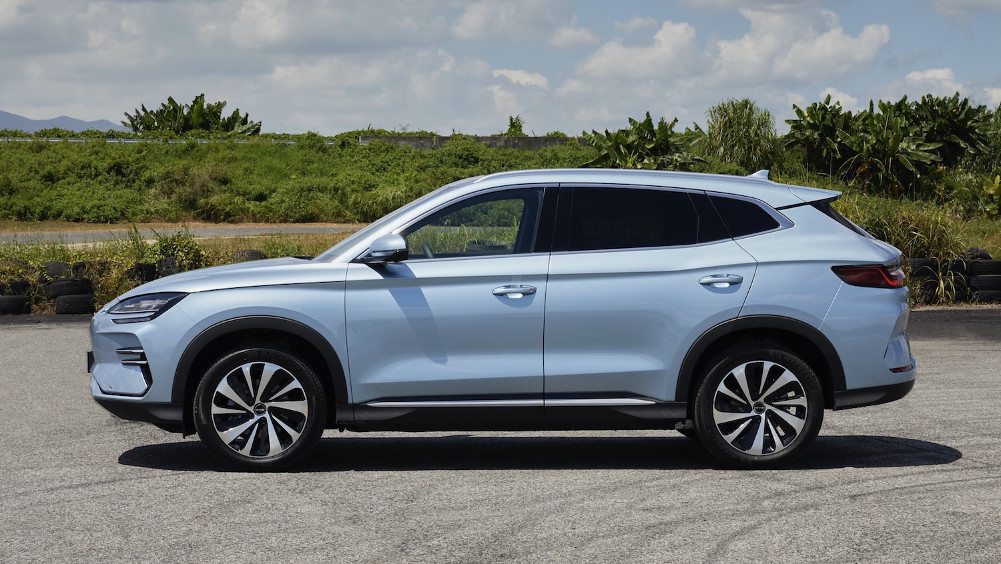
Real-World Example: BYD Atto 3 Ownership
Let’s break down actual monthly costs for one of South Africa’s most popular EVs, using December 2025 pricing and typical finance terms:
BYD Atto 3 Standard Range (R627,900)
- Purchase price: R627,900
- Deposit (10%): R62,790
- Finance (72 months @ 11.75%): R10,850/month
- Insurance: R1,800/month
- Electricity (50km/day): R1,410/month
- Maintenance: R300/month (tyres, wipers, brakes)
- Total monthly cost: R14,360
Compare: Toyota Corolla Cross 1.8 Petrol
- Finance: R9,500/month (cheaper purchase price)
- Insurance: R1,600/month
- Petrol (50km/day): R3,650/month
- Maintenance: R800/month (services, oil changes)
- Total monthly cost: R15,550
Monthly savings with EV: R1,190 – despite higher purchase price and finance costs. Over a six-year ownership period, that’s R85,680 in your pocket, enough to cover a substantial portion of your next vehicle deposit.
Understanding Each Cost Component
Vehicle Finance: The Biggest Monthly Expense
Finance repayments typically consume 60-75% of your total monthly EV budget. December 2025 interest rates hover around 11.5-12.5% for vehicle finance, with most banks offering 60-72 month terms. A larger deposit dramatically reduces monthly payments—increasing from 10% to 20% down can save R1,500-R2,000 per month on mid-range EVs.
Some manufacturers offer preferential finance rates. BYD’s partnership with WesBank occasionally features promotional rates 1-2% below market, potentially saving R500-R800 monthly on a R600,000 vehicle.
According to NAAMSA data, the average new vehicle finance term in South Africa has stretched to 68 months in 2025, reflecting rising vehicle prices and buyer affordability pressures. EVs follow this trend, with 72-month terms becoming standard for vehicles above R500,000.
Insurance: EV-Specific Considerations
Comprehensive EV insurance runs R1,200-R2,500 monthly depending on vehicle value, driver profile, and insurer. Premiums are typically 10-15% higher than equivalent petrol cars due to expensive battery replacement costs and limited repairer networks. However, several insurers now offer EV-specific policies with benefits like free towing to charging stations and battery cover.
Shop around aggressively—quotes for the same BYD Atto 3 ranged from R1,650 to R2,300 monthly in our December 2025 comparison. King Price, OUTsurance, and Naked all offer competitive EV rates with usage-based discounts for low-mileage drivers.
Charging Costs: Cheaper Than You Think
Home charging remains the most economical option. At Cape Town’s December 2025 residential rate of R5.15/kWh, a typical 50km daily commute costs just R1,410 monthly—less than half the R3,650 petrol equivalent. Johannesburg’s R4.85/kWh rate drops this to R1,330/month, while Durban’s R5.45/kWh pushes it to R1,495.
Off-peak charging (typically 22:00-06:00) can reduce costs by 30-40% where time-of-use tariffs apply. Installing a 5kW solar system eliminates charging costs entirely during daylight hours, though the R80,000-R120,000 upfront investment requires careful payback calculation.
Public DC fast charging costs significantly more—R8-R12/kWh at most ChargePoint SA stations—but remains cheaper than petrol for occasional long-distance trips. Budget R2,200-R2,800 monthly if you rely primarily on public charging. Check our live EV charging map to find the most cost-effective charging stations in your area.
Maintenance: The EV Advantage
EVs deliver dramatic maintenance savings. With no engine oil, transmission fluid, spark plugs, timing belts, or exhaust systems, routine service costs plummet to R200-R400 monthly versus R800-R1,200 for petrol equivalents. Most EVs require only annual brake fluid checks, cabin air filter replacement, and tyre rotation.
Brake wear is minimal thanks to regenerative braking—many EV owners report original brake pads lasting 100,000km or more. Battery warranties (typically 8 years/160,000km) cover the most expensive potential repair, providing peace of mind through your finance term.
The US Department of Energy reports that battery electric vehicles have maintenance costs approximately 40% lower than internal combustion engine vehicles over their lifetime—a trend mirrored in South Africa’s emerging EV market.
Ways to Reduce Your Monthly EV Costs
1. Optimize Charging Strategy
- Charge during off-peak hours (save 30-40% on electricity)
- Install solar panels (reduce to near-zero running costs after payback period)
- Use public DC fast chargers sparingly (3x more expensive than home charging)
- Join workplace charging programmes where available (often free or subsidised)
2. Smart Insurance Selection
- Shop around annually—loyalty doesn’t pay in insurance
- Ask about EV-specific discounts (some insurers offer 5-10% off)
- Consider usage-based insurance if you drive under 15,000km/year
- Increase excess to R10,000-R15,000 to lower premiums (if you can afford the risk)
3. Maximize Manufacturer Warranties
- Use warranty period for free or discounted maintenance
- BYD Atto 3’s 6-year/150,000km warranty saves R2,000+/year in service costs
- Battery warranty covers expensive repairs—understand what’s included
- Some brands offer free roadside assistance and software updates
4. Strategic Purchase Timing
- Year-end clearance sales (November-December) often feature R20,000-R50,000 discounts
- Demo models with 2,000-5,000km can save 15-20% off retail price
- Government incentives—while limited in 2026, monitor DMRE announcements for potential EV rebates
Entry-Level vs Premium: Monthly Cost Comparison
Budget Option: GWM Ora (R429,900)
- Finance (10% deposit, 72 months): R7,400/month
- Insurance: R1,200/month
- Electricity (50km/day): R1,280/month (more efficient than larger EVs)
- Maintenance: R250/month
- Total: R10,130/month
Premium Option: BMW iX xDrive40 (R1,599,000)
- Finance (10% deposit, 72 months): R27,500/month
- Insurance: R3,200/month
- Electricity (50km/day): R1,650/month (larger battery, less efficient)
- Maintenance: R600/month (premium service costs)
- Total: R32,950/month
The sweet spot for most South African buyers sits in the R600,000-R800,000 range, delivering premium features, 400km+ real-world range, and monthly costs around R13,000-R16,000—competitive with mid-spec petrol SUVs once fuel savings are factored in.
Hidden Costs to Budget For
Beyond the big four expenses, factor in these occasional costs:
- Home charger installation: R8,000-R25,000 once-off (essential for convenient charging)
- Tyre replacement: R6,000-R12,000 every 40,000-60,000km (EVs are heavier, wearing tyres faster)
- Public charging subscriptions: R0-R200/month (some networks charge membership fees)
- Load-shedding backup: R15,000-R40,000 for home battery system (optional but valuable)
- Annual licence renewal: R450-R850 depending on vehicle value
The Total Cost of Ownership Picture
While monthly costs provide a useful snapshot, total cost of ownership over your finance term tells the complete story. A BYD Atto 3 financed over six years costs approximately R1,033,920 total (R14,360 × 72 months), compared to R1,119,600 for an equivalent Corolla Cross (R15,550 × 72 months).
That R85,680 saving grows further when you consider resale value. South Africa’s EV market is maturing rapidly, with three-year-old EVs retaining 55-65% of original value—comparable to premium petrol vehicles and better than budget brands. Battery degradation fears are largely unfounded; most EVs retain 85-90% battery capacity after 100,000km.
Ready to crunch your own numbers? Use our EV Cost Calculator to compare monthly costs for your specific situation, or explore our live charging map to understand charging infrastructure in your area. For personalised advice on EV ownership costs and financing options, request a quote from our network of EV-specialist dealers.
Making the Switch: Is Now the Right Time?
South Africa’s EV market has reached a tipping point in 2026. With over 25 models available, expanding charging infrastructure, and monthly costs competitive with petrol equivalents, the barriers to entry have never been lower. The R8,310-R16,310 monthly range accommodates everyone from budget-conscious commuters to premium buyers seeking the latest technology.
The key is matching your budget to your needs. If you drive 50km daily and can charge at home, even entry-level EVs deliver substantial savings over petrol vehicles. Higher upfront costs are offset by lower running expenses within 3-4 years of ownership.
For buyers on the fence, consider this: every month you delay switching to an EV is another R2,000-R3,000 spent on petrol that could have stayed in your pocket. With fuel prices unlikely to decrease and electricity remaining relatively stable, the financial case for EVs strengthens with each passing year.
Frequently Asked Questions
What is the average monthly cost of owning an electric car in South Africa?
The average monthly cost ranges from R8,310 to R16,310, including finance (R5,500-R12,000), insurance (R1,200-R2,500), electricity for 50km/day (R1,410 at R5.15/kWh), and minimal maintenance (R200-R400). This is often cheaper than equivalent petrol vehicles when factoring in fuel and maintenance savings.
How much does it cost to charge an EV per month in South Africa?
For an average 50km/day commute, monthly charging costs approximately R1,410 at Cape Town rates (R5.15/kWh). Short commuters (30km/day) pay around R846/month, while long-distance drivers (80km/day) pay about R2,256/month – still significantly cheaper than petrol.
Are EVs cheaper to maintain than petrol cars?
Yes, significantly cheaper. EVs cost R200-R400/month for maintenance (mainly tyres, wipers, brakes) versus R800-R1,200/month for petrol cars (services, oil changes, spark plugs, exhaust systems). EVs have 60-70% fewer moving parts that can fail.
What’s the most expensive part of owning an EV in South Africa?
Vehicle finance is typically the largest expense at R5,500-R12,000/month, followed by insurance at R1,200-R2,500/month. Charging costs are relatively low at R1,410/month for average use, and maintenance is minimal at R200-R400/month.
Can I afford an EV on a middle-class South African salary?
Yes, entry-level EVs like GWM Ora (R429,900) have monthly costs around R8,000-R10,000 total. With fuel savings of R2,000-R3,000/month versus petrol, effective cost is similar to a budget petrol car but with premium features and lower running costs.
Do EVs hold their value in South Africa?
South Africa’s maturing EV market shows strong resale performance. Three-year-old EVs retain 55-65% of original value—comparable to premium petrol vehicles. Battery warranties transferring to second owners and improving charging infrastructure support residual values.
What about load-shedding—does it affect EV ownership costs?
Load-shedding requires planning but doesn’t significantly increase costs. Most EV owners charge overnight when load-shedding is less frequent. A home battery backup system (R15,000-R40,000) eliminates concerns entirely, though it’s optional. Public charging stations typically have backup power.
Continue Reading


Deprecated: File Theme without comments.php is deprecated since version 3.0.0 with no alternative available. Please include a comments.php template in your theme. in /var/www/wordpress/wp-includes/functions.php on line 6085
Leave a Reply