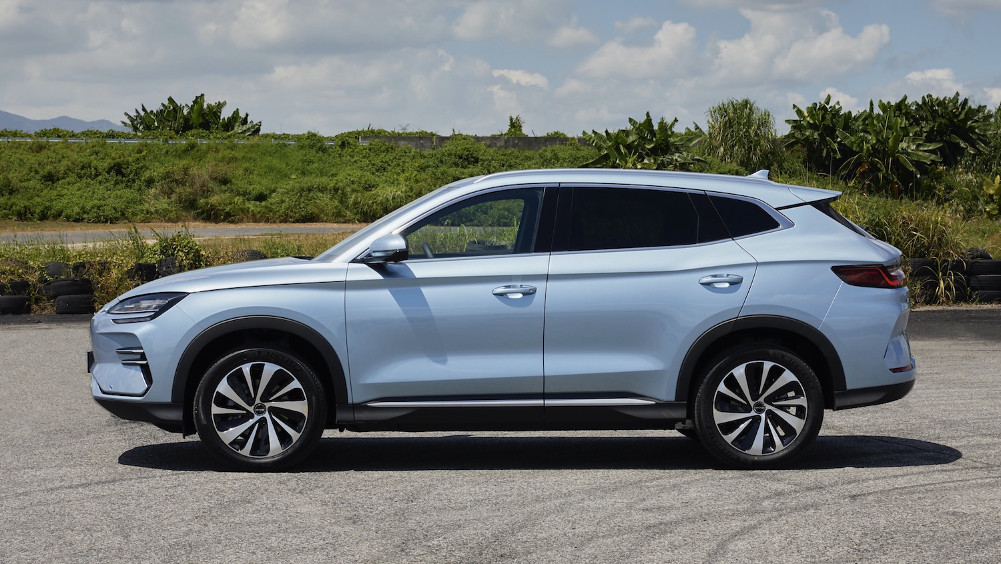
You’re standing in a Sandton showroom, keys to a Toyota RAV4 in one hand, a Tesla Model Y brochure in the other. The RAV4 rings up at R680,000. The Model Y? R1.25 million. That’s a R570,000 gulf—enough to buy a second-hand hatchback or fund five years of petrol. Yet EV search interest on AutoTrader jumped 45% in March 2026, and plug-in hybrid sales surged 281% in 2025. South Africans are doing the sums. Should you?
This article compares the Tesla Model Y and Toyota RAV4 on purchase price, range, monthly running costs at 1,500 km/month, five-year total cost of ownership, and the realities of charging in a country where NERSA just approved an 8.76% electricity tariff hike and load-shedding still looms. By the end, you’ll know which SUV suits your driveway, your budget, and your driving style.
Purchase Price: The R570,000 Question
The Tesla Model Y Long Range AWD retails for R1,250,000 in South Africa as of March 2026. The current-generation Toyota RAV4 2.0 VX AWD sits at R680,000 (prices range from R712,700 to R989,800 across the line-up, but we’re using the petrol AWD for apples-to-apples). That’s a R570,000 premium for the EV—84% more than the Toyota.
| Model | Drivetrain | Price (ZAR) | Range (km) | Efficiency |
|---|---|---|---|---|
| Tesla Model Y Long Range AWD | Dual-motor electric | R1,250,000 | 533 | 16 kWh/100 km |
| Toyota RAV4 2.0 VX AWD | 2.0 petrol + AWD | R680,000 | ~650 (55 l tank, 8 l/100 km) | 8.0 l/100 km |
Why the chasm? South Africa still slaps a 25% import duty on fully built EVs versus 18% on internal-combustion vehicles. The government’s 150% tax incentive for EV manufacturing (activated 1 March 2026) aims to encourage local assembly, but until Tesla or another OEM builds here, you’re paying the import penalty. The RAV4, meanwhile, benefits from decades of economies of scale and a mature supply chain.
That said, Toyota’s sixth-generation RAV4 lands in H1 2026 with hybrid and plug-in hybrid options. Early reports suggest the PHEV will cost closer to R900,000–R1,000,000, narrowing the gap. If you’re comparing a RAV4 PHEV to the Model Y, the price delta shrinks to R250,000–R350,000—still significant, but less daunting.
Range & Efficiency: Electrons vs Litres
Tesla Model Y: 533 km on a Charge
The Model Y Long Range AWD delivers 533 km of range (WLTP-equivalent for SA conditions; Tesla UAE lists 622 km for the 2025 refresh, but SA figures are typically 10–15% lower due to driving style and climate). It sips 16 kWh per 100 km in mixed driving—highway cruising at 120 km/h nudges that to 18–19 kWh/100 km, while gentle urban driving can drop it to 14 kWh/100 km.
Translate that to cost: at Eskom’s post-April-2026 tariff of roughly R2.50/kWh (including VAT, averaging direct and municipal customers after the 8.76% increase), you pay R0.40 per kilometre (16 kWh/100 km × R2.50 = R40/100 km). Drive 1,500 km in a month? That’s R600 in electricity. Drive the full 533 km range? R213 to recharge from empty.
Toyota RAV4: 650 km on a Tank
The RAV4 2.0 VX AWD carries a 55-litre tank and averages 8.0 l/100 km (Toyota’s claimed combined figure; real-world urban driving can push it to 9–10 l/100 km). That’s ~650 km per tank. At March 2026’s inland 95-octane price of R23.86/litre (coastal is slightly lower), you’re spending R1.91 per kilometre (8 l/100 km × R23.86 = R190.88/100 km). Monthly cost at 1,500 km: R2,865. Full tank: R1,312.
| Metric | Tesla Model Y | Toyota RAV4 2.0 AWD |
|---|---|---|
| Range (km) | 533 | ~650 |
| Efficiency | 16 kWh/100 km | 8.0 l/100 km |
| Cost per 100 km | R40 (@ R2.50/kWh) | R191 (@ R23.86/l) |
| Monthly cost (1,500 km) | R600 | R2,865 |
| Annual cost (18,000 km) | R7,200 | R34,380 |
Monthly saving with the Model Y: R2,265. Over a year, that’s R27,180 in your pocket—or offset against the R570,000 purchase premium. At this rate, the EV pays for its upfront cost in fuel savings alone after 21 years. Not a compelling case yet. But keep reading—service, maintenance, and depreciation shift the equation.
Five-Year Total Cost of Ownership
Beyond the Pump: Service, Tyres, and Depreciation
Fuel isn’t the whole story. EVs have fewer moving parts—no oil changes, no timing belts, no exhaust systems. Tesla recommends a brake fluid check every two years and cabin air filter replacement annually; total service cost over five years averages R8,000–R12,000. The RAV4 needs oil changes every 10,000 km (R1,500–R2,000 each), plus filters, spark plugs, and transmission fluid—budget R25,000–R35,000 over five years at a Toyota dealer.
Tyres: the Model Y’s instant torque and 1,979 kg kerb weight chew through rubber faster than the RAV4. Expect to replace a set every 40,000–50,000 km (R12,000–R16,000 per set) versus 60,000–70,000 km for the Toyota. Over 90,000 km (five years at 18,000 km/year), the Tesla will need two full sets (one at ~45,000 km, another approaching 90,000 km) totalling R28,000, while the RAV4 needs just one replacement set at ~65,000 km for R14,000—that’s R14,000 more in tyre costs for the Model Y.
Depreciation is the wild card. EVs historically shed value faster in SA due to battery anxiety and thin resale markets, but surging demand in 2026 is stabilising residuals. Assume the Model Y holds 50% of its value after five years (R625,000 residual) and the RAV4 retains 55% (R374,000). Depreciation cost: R625,000 for the Tesla, R306,000 for the Toyota.
The Five-Year Tally
| Cost Component | Tesla Model Y | Toyota RAV4 | Difference |
|---|---|---|---|
| Purchase price | R1,250,000 | R680,000 | +R570,000 (Tesla) |
| Fuel (90,000 km) | R36,000 | R171,900 | −R135,900 (Tesla) |
| Service & maintenance | R10,000 | R30,000 | −R20,000 (Tesla) |
| Tyres (extra set) | R28,000 | R14,000 | +R14,000 (Tesla) |
| Depreciation | R625,000 | R306,000 | +R319,000 (Tesla) |
| Total 5-year cost | R1,949,000 | R1,201,900 | +R747,100 (Tesla) |
Verdict: Over five years and 90,000 km, the Model Y costs R747,100 more than the RAV4—even after fuel and service savings of R155,900. The upfront price and depreciation hit are too steep to overcome at moderate mileage. The fuel-only payback of 21 years means the typical buyer won’t break even in any realistic ownership period. Push annual distance to 25,000 km (125,000 km over five years), and fuel savings climb to R194,000, narrowing the gap to R553,100. Add solar panels at home (offsetting electricity cost by 60–80%), and the Model Y starts to make financial sense—but only if you’re a high-mileage driver with off-grid charging and plan to keep the car well beyond five years.
Charging at Home: 7.4 kW, 11 kW, or 22 kW?
What the Model Y Accepts
The Model Y’s onboard AC charger handles up to 11 kW on three-phase power. That means:
- 7.4 kW (single-phase, 32 A): Adds ~46 km of range per hour. Charge from 20% to 80% (53 kWh usable, assuming ~80 kWh total battery) in ~7 hours. Perfect for overnight top-ups if you drive <300 km/day.
- 11 kW (three-phase, 16 A): Adds ~69 km/hour. Same 20–80% charge in ~4.8 hours. Ideal if you have three-phase at home (common in newer estates and commercial properties).
- 22 kW: The Model Y can’t use it—its onboard charger maxes out at 11 kW. Save your money; a 22 kW unit is overkill unless you’re future-proofing for a Porsche Taycan.
Installation Cost & Payback
A 7.4 kW wall-box (e.g., Wallbox Pulsar Plus, Zaptec Go) costs R18,000–R25,000 installed, including a dedicated circuit breaker and 10 m of cable. Three-phase 11 kW units run R22,000–R32,000. If your municipal supply is single-phase, upgrading to three-phase adds R15,000–R40,000 (depends on your suburb’s infrastructure). For most Joburg, Cape Town, and Durban homes, 7.4 kW is the sweet spot—you’ll recoup the install cost in fuel savings within 10–12 months at 1,500 km/month.
Load-Shedding & Solar Pairing
Here’s the rub: Eskom’s load-shedding hasn’t vanished. Stage 2–4 can interrupt charging mid-cycle, and a flat Model Y battery during Stage 6 leaves you stranded. Solutions:
- Battery backup: A 10 kWh home battery (e.g., Pylontech US5000) costs R80,000–R120,000. Pair it with your EV charger to ride out 2–4 hour outages.
- Solar + battery: A 5 kW solar array (R90,000–R140,000) plus 10 kWh storage generates ~700 kWh/month in Gauteng, covering your EV’s 240 kWh monthly appetite (1,500 km × 16 kWh/100 km) and slashing grid dependence. Payback: 5–7 years, faster if Eskom tariffs keep climbing.
- Public fast-charging: BYD’s megawatt network (200–300 stations by end-2026) and Zero Carbon Charge’s solar stations on the N3 mean you’re never more than 100 km from a top-up. Cost: R4–R6/kWh (vs R2.50 at home), but viable for road trips.
SA-Specific Realities: Service, Resale, and the Hybrid Alternative
Service Network: Tesla’s Achilles Heel
Tesla operates three service centres in SA: Johannesburg (Midrand), Cape Town (Century City), and a mobile service fleet. Break down in Polokwane or Port Elizabeth, and you’re waiting days for a tow or a mobile tech. The RAV4? 200+ Toyota dealers nationwide, parts on every shelf, and mechanics who’ve seen a thousand timing belts. If you live outside the metros, the Toyota’s service accessibility is a non-negotiable win.
Resale: The 2029 Question
Will your 2026 Model Y hold value in 2029? Battery degradation is the bogeyman—Tesla warranties the pack for 8 years / 192,000 km (70% capacity retention), but SA’s thin EV resale market makes buyers nervous. The RAV4’s petrol powertrain is a known quantity; a 100,000 km RAV4 still fetches 50–55% of its original price. The Model Y’s 2029 residual is a guess. Hedge: if you plan to keep the car 8+ years, depreciation becomes irrelevant—you’re driving it into the ground, and the fuel savings compound.
The Hybrid Wildcard
Toyota’s 2026 RAV4 PHEV offers 100 km of electric range plus a petrol safety net—best of both worlds for SA’s patchy charging infrastructure. If 80% of your driving is urban (<100 km/day), you’ll run on electricity most days and pay R0.40/km like the Model Y. Road trip to Kruger? The petrol engine kicks in, no range anxiety. Price will likely sit at R900,000–R1,000,000, splitting the difference. For many SA buyers, the PHEV is the pragmatic middle ground.
Honest Verdict: Who Should Buy What?
Buy the Tesla Model Y if:
- You drive 25,000+ km/year (fuel savings accelerate payback, though five-year break-even still requires solar charging).
- You own your home and can install a 7.4 kW or 11 kW charger.
- You have (or plan to add) solar panels to offset grid costs and load-shedding.
- You live in Gauteng, Cape Town, or Durban (Tesla service + public charging coverage).
- You value tech, performance, and zero tailpipe emissions over upfront cost and are prepared to keep the car 8+ years.
Buy the Toyota RAV4 (petrol or hybrid) if:
- You drive <20,000 km/year (fuel cost is manageable; EV premium isn’t justified).
- You rent, live in a complex, or lack home charging.
- You regularly drive >400 km in a day (e.g., JHB–Durban) and don’t want to plan around chargers.
- You live in a smaller town (Nelspruit, George, Kimberley) where Tesla service is a flight away.
- You want a car that just works—no apps, no software updates, no battery anxiety.
Consider the RAV4 PHEV if:
- Your daily commute is <100 km (electric-only most days).
- You want EV efficiency without range compromise.
- You’re willing to pay R900k–R1m (midway between petrol RAV4 and Model Y).
Ready to Charge Smarter?
The Tesla Model Y vs Toyota RAV4 debate isn’t about which car is “better”—it’s about which fits your life. If you’re a high-mileage metro driver with home charging and solar ambitions, the Model Y’s R27,000/year fuel savings and minimal maintenance make it a compelling long-term play—though you’ll need to keep it well beyond five years to see financial payback. If you value flexibility, service accessibility, and lower upfront risk, the RAV4 (especially the incoming PHEV) is the safer bet.
Thinking electric? Book a free site assessment with ChargePoint SA. We’ll survey your property, recommend the right charger (7.4 kW or 11 kW), and give you a no-obligation quote for installation—including solar pairing if you want to future-proof against Eskom. Let’s get you charging smarter, not harder.
Continue Reading