On 1 April 2026, petrol jumped R3.06 per litre to R23.36 inland and diesel soared R7.37 to R26.11—the same day electricity tariffs rose 8.76%. Two weeks later, Geely launched the E2 at R339,900, matching the BYD Dolphin Surf as the country’s most affordable EV. Meanwhile, Toyota quietly switched on 119 free chargers across 47 dealerships, and City Power opened Johannesburg’s first municipal charging hub in late March—a milestone that set the stage for April’s market shift.
For the first time in South African motoring history, the conditions aligned: EVs became cheaper to buy, cheaper to run, and easier to charge—all while petrol costs hit levels that make even the most sceptical driver reach for a calculator.
The Fuel Shock That Changed the Conversation
When South Africans woke up on 1 April 2026, they faced the largest single-month fuel price increase in recent memory. Petrol climbed R3.06 per litre, diesel R7.37 to R7.51 depending on grade. The culprit: escalating conflict between the US and Iran drove Brent crude from $69.08 to $93.67 per barrel in a matter of weeks.
Government applied temporary relief—a R3 per litre fuel levy reduction until 5 May—but the writing was on the wall. Inland petrol now sits at R23.36 per litre. Diesel, the lifeblood of SA’s logistics sector, hit R26.11 per litre wholesale in Gauteng. Industry analysts warn that without a ceasefire, May 2026 could see R33-35/L diesel—projections based on current crude trends, though unverified by official sources.
For EV advocates, the timing was striking. The same day fuel prices spiked, NERSA’s 8.76% electricity tariff increase took effect for Eskom direct customers (9.01% for municipal customers from 1 July). Critics pointed to a double cost shock. But even with pricier electricity, the maths tilted sharply in favour of plug-in motoring.
Running Cost Reality Check
| Fuel Type | Price per Unit (April 2026) | Efficiency (typical) | Cost per 100 km |
|---|---|---|---|
| Petrol 95 (inland) | R23.36/L | 10 L/100 km | R233.60 |
| Diesel 50ppm | R26.11/L | 7 L/100 km | R182.77 |
| Electricity (off-peak) | ~R2.00/kWh | 20 kWh/100 km | R40.00 |
A typical EV using off-peak municipal electricity costs roughly R0.40 per kilometre. A petrol car averaging 10 L/100 km now costs R2.34 per kilometre—nearly six times more. Even accounting for the 8.76% tariff hike, electricity remains a bargain compared to liquid fuel.
The Sub-R340k EV Price War
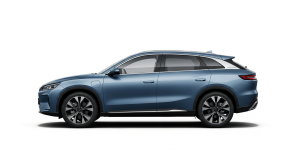
On 15 April, Geely South Africa launched the E2 Aspire at R339,900, slicing R2,000 off the BYD Dolphin Surf Dynamic to claim the title of SA’s most affordable EV. The E2 was China’s best-selling car in 2025, and its arrival signals Geely’s intent to challenge BYD’s dominance.
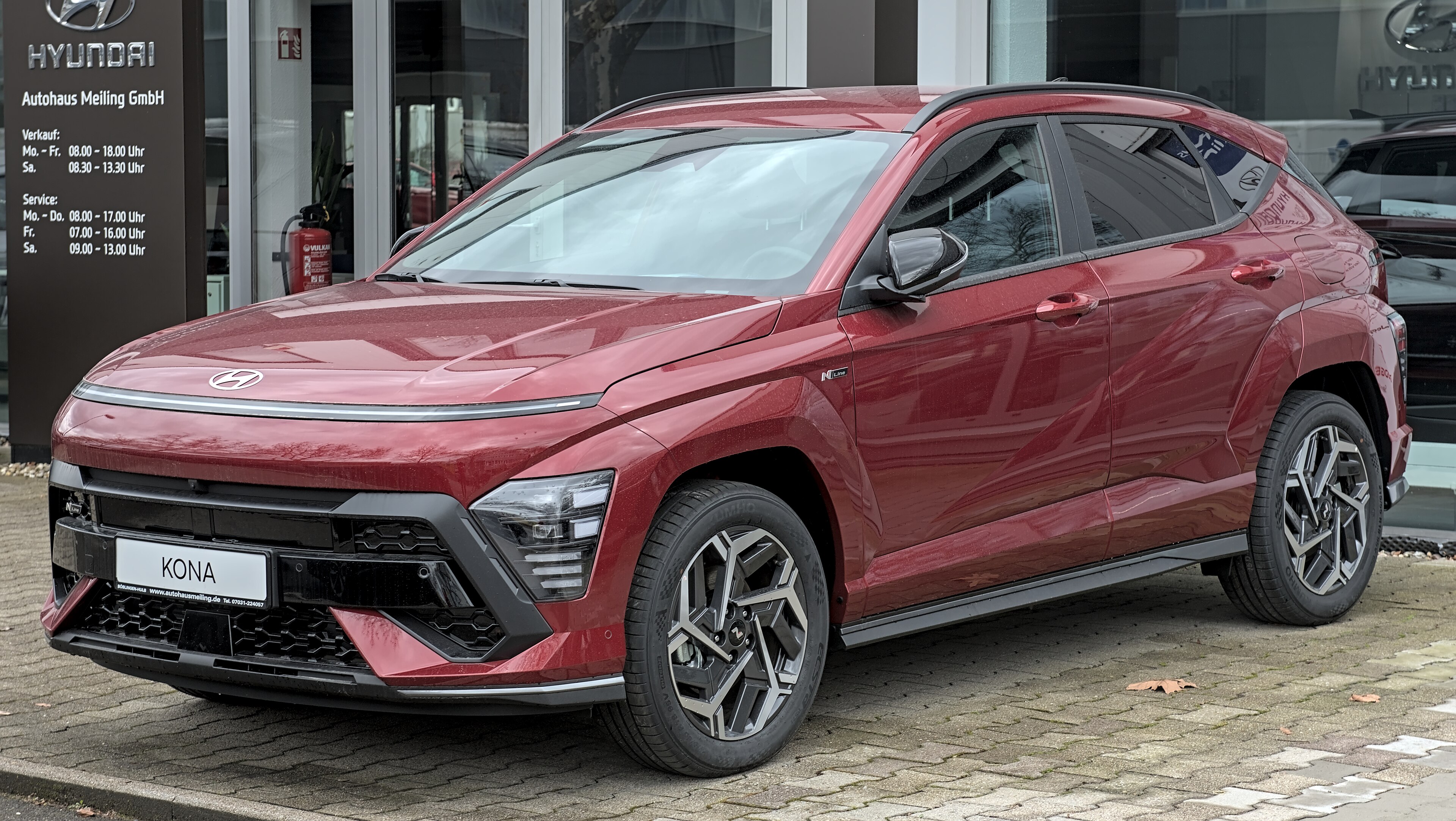
The same month, Dongfeng’s 06 all-electric SUV landed in showrooms. The entry-level E1 variant starts at R499,000, making it the country’s most affordable electric SUV. For context, the Dayun S5—previously the budget EV champion—sits at R339,900 for the base variant (R399,900 for the higher trim), while the Dongfeng Box undercuts the 06 at R460,000.
Price compression is real. A year ago, breaking the R400k barrier seemed ambitious. Now, three EVs sit below R340k: Geely E2 at R339,900, BYD Dolphin Surf at R339,900, and Dayun S5 base variant at R339,900—a credible entry-level segment that didn’t exist twelve months ago.
SA’s Most Affordable EVs (April 2026)
| Model | Price (ZAR) | Body Style | Approx. Range (WLTP) |
|---|---|---|---|
| Geely E2 Aspire | R339,900 | Hatchback | ~300 km |
| BYD Dolphin Surf Dynamic | R339,900 | Hatchback | 427 km |
| Dayun S5 (base) | R339,900 | Hatchback | figures vary—consult source |
| Dayun S5 (higher trim) | R399,900 | Hatchback | figures vary—consult source |
| Dongfeng Box | R460,000 | Compact SUV | figures vary—consult source |
| Dongfeng 06 E1 | R499,000 | SUV | figures vary—consult source |
Meanwhile, BYD expanded its range upmarket. The ATTO 8 seven-seater plug-in hybrid SUV launched 15 April, delivering 400 kW and 0-100 km/h in 4.3 seconds with a combined range exceeding 1,000 km. It’s a family hauler that can run on electricity for daily errands and petrol for long trips—hedging range anxiety while still slashing fuel bills.
Charging Infrastructure: The Silent Revolution
Range anxiety has long been the EV sceptic’s trump card. April 2026 pulled that card from the deck.
Toyota South Africa quietly installed 119 free EV chargers across 47 dealerships nationwide. Most are 22 kW AC units; three sites feature 50 kW DC fast chargers. Crucially, the network extends beyond metros—Barberton, Ceres, Groblersdal—signalling that Toyota sees EVs as a national proposition, not a Sandton hobby.
The rollout precedes Toyota’s three confirmed EV launches for 2026: the bZ4X electric SUV, Lexus RZ, and RAV4 plug-in hybrid. By seeding infrastructure first, Toyota is building confidence before the cars arrive—a page from Tesla’s playbook, executed through the dealer network.
On the municipal front, City Power launched Johannesburg’s first council-led charging station on 24 March at its Booysens headquarters. The site features 20 charging points (fast and medium-speed) powered by a hybrid solar-battery-grid system. While the launch occurred in late March—just days before the April fuel shock—its timing proved prescient, providing municipal charging capacity precisely when demand surged following the 1 April price hike.
Combine Toyota’s dealer network, City Power’s municipal hub, and BYD’s planned rollout of 300 fast-charging stations by year-end, and the infrastructure map starts looking less like Swiss cheese and more like actual coverage.
Policy and Market Momentum
Behind the headlines, policy levers are shifting. The 150% tax incentive for new energy vehicle (NEV) manufacturing activated on 1 March 2026, encouraging automakers to consider local assembly. Import duties on electric passenger vehicles dropped from 25% to 15% in prior years, narrowing the price gap versus ICE vehicles.
The market responded. South Africa’s new vehicle sales hit 596,818 units in 2025—up 15.7% year-on-year and surpassing pre-pandemic 2019 levels for the first time. NEV sales (EVs, hybrids, PHEVs) reached 15,611 units in 2024, doubling from 7,782 in 2023. By November 2025, full-year NEV sales had already eclipsed the entire 2024 total. Q1 2025 saw 3,487 NEV units sold, up 81% from Q1 2024.
Vehicle inflation dropped to a record low 1.5% in 2025—the lowest since tracking began in 2008. Naamsa forecasts 2026 sales growth of 9-11%, buoyed by lower inflation and interest rate cuts. BYD plans to expand from 13 dealerships in mid-2025 to 60-70 by the end of 2026.
The trajectory is clear: EVs are moving from curiosity to credible alternative.
What the Players Are Saying
Automakers
BYD’s aggressive expansion—dealerships, charging stations, new models like the ATTO 8—positions it as the brand to beat. Geely’s E2 launch is a direct challenge, leveraging China’s economies of scale. Dongfeng is carving out the budget SUV niche. Toyota’s dealer-led charging strategy suggests a long-term commitment, not a compliance exercise.
Government and Utilities
The Department of Mineral Resources and Energy applied temporary fuel levy relief but acknowledged the structural vulnerability of petrol/diesel dependence. City Power’s charging hub pilot is modest in scale but significant in intent—municipal utilities see EVs as both a grid challenge and an opportunity for diversified revenue.
Eskom’s tariff increase complicates the narrative. While off-peak electricity remains cheap relative to petrol, the 8.76% hike reminds buyers that energy costs are rising across the board. Load-shedding, though reduced in recent months, remains a wild card for home charging reliability.
Installers and Service Providers
ChargePoint SA and other installers report a surge in inquiries since the April fuel hike. Middle-income households that dismissed EVs as “too expensive” are now running total-cost-of-ownership calculations. The payback period on the EV price premium shrinks dramatically when petrol sits above R23 per litre.
Consumers
Social media and motoring forums lit up in April. The dominant sentiment: “I can’t afford NOT to consider an EV.” Fence-sitters are asking about home charging installation costs, off-peak tariffs, and real-world range. The conversation shifted from “Can I afford an EV?” to “Can I afford to keep driving petrol?”
What This Means for SA EV Buyers
If you’re in the market for a new vehicle in 2026, here’s the reality check:
Total cost of ownership now heavily favours EVs for urban and suburban drivers doing under 200 km per day. A Geely E2 or BYD Dolphin Surf at R339,900 costs more upfront than a comparable R200k petrol hatchback, but the running cost gap is staggering. At R23.36/L petrol versus ~R2/kWh off-peak electricity, the fuel savings alone can offset the purchase premium within five years for a typical 15,000 km/year driver.
Charging infrastructure anxiety is easing. Toyota’s 119 free chargers, City Power’s municipal hub, and BYD’s planned 300 fast chargers mean you’re no longer pioneering—you’re joining an ecosystem. Home charging remains the primary use case, but public options are multiplying.
The upfront cost barrier persists. R339,900 is still R139,900 more than a budget ICE equivalent. Not every household has that headroom, even with fuel savings factored in. Finance deals and potential government incentives (still absent in SA) could change the equation.
Electricity tariff increases complicate home charging economics. The 8.76% Eskom hike and 9.01% municipal increase (effective July) mean your off-peak rate won’t stay R2/kWh forever. Load-shedding, while reduced, can disrupt overnight charging unless you have battery backup.
The second-hand EV market is still immature. Resale values are uncertain, battery degradation is a concern, and financing options for used EVs are limited. Early adopters carry more risk than ICE buyers.
What’s Next: May and Beyond
All eyes are on the 1 May fuel price announcement. If the US-Iran conflict doesn’t de-escalate, petrol could breach R25 per litre, diesel R33-35 per litre. That would make April’s shock look like a warm-up.
Toyota’s three EV launches—bZ4X, Lexus RZ, RAV4 PHEV—are expected mid-2026. BYD’s dealership expansion continues, targeting 60-70 sites by December. Geely and Dongfeng will likely add models to capitalise on early momentum.
Policy-wise, watch for potential government incentives. The 150% manufacturing tax break is a start, but consumer-facing rebates or tax credits (common in Europe and the US) remain absent. Lobby groups are pushing, but Treasury has been silent.
Infrastructure rollout will accelerate. Expect more municipal pilots, private charging networks at malls and office parks, and possibly even Eskom-led fast-charging corridors on major routes.
The wildcard: load-shedding. If Eskom’s reliability improves, home charging becomes a no-brainer. If Stage 4+ returns, the value proposition wobbles—unless you invest in solar and battery storage, which adds R150k-250k to your EV transition cost.
Ready to Make the Switch?
April 2026 proved that EVs are no longer a future-tech gamble—they’re a present-day financial decision. If the fuel crisis, price wars, and infrastructure rollout have you rethinking your next vehicle purchase, the smart move is to get your charging sorted before the car arrives.
ChargePoint SA specialises in home and commercial EV charging installations across South Africa. Whether you’re eyeing a Geely E2, waiting for Toyota’s bZ4X, or just want to future-proof your garage, we’ll assess your site, recommend the right charger, and handle the full installation—from municipal approvals to final commissioning.
Get a free site assessment and quote today. The fuel price isn’t coming down—but your running costs can.
Continue Reading