The BYD Dolphin Surf sold 239 units in March 2026, making it South Africa’s best-selling electric vehicle that month — and the gap between first and second place tells you everything about where buyers’ heads are right now. The Dolphin Surf Dynamic costs R389,900, undercutting the Dayun S5 by R10,000 while delivering superior warranty coverage (6-year vehicle / 8-year battery versus 3-year / 5-year), faster DC charging (30–80% in 30 minutes versus 60 minutes), and a proven dealer network expanding to 90 locations by year-end. Over five years at 20,000 km annually using Cape Town off-peak electricity rates, the Dolphin Surf Dynamic costs approximately R454,020 all-in versus R466,720 for the Dayun S5 — and both save over R200,000 compared to a petrol equivalent like the Suzuki Swift 1.2. Running cost per 100 km: R26.08 (Dolphin Surf) versus R27.41 (Dayun S5) versus R127.88 (petrol hatchback). Want to see exactly what you’d save? Calculate your savings with our EV cost calculator.
Introduction: South Africa’s EV Market Has a New Champion
The BYD Dolphin Surf took 239 units off showroom floors in March 2026, making it the best-selling EV in SA that month. That is not a soft win. The second-placed BYD Atto 3 managed just 28 units, and the Volvo EX30 — priced from R835,500 — scraped third with 19. The gap between first and second place in SA’s EV market tells you everything about where buyers’ heads are right now: price. Raw, unambiguous, bottom-line price.
But before the Dolphin Surf arrived in September 2025, there was another car wearing the “most affordable EV in South Africa” crown. The Dayun Yuehu S5 came in at R399,900, making it the most affordable electric passenger vehicle in the country. The Pretoria-based importer Enviro Automotive marketed it hard, and for a solid stretch of 2025 it was genuinely the only sub-R400K fully electric car you could buy in SA. Then BYD showed up and changed the game entirely.
So here we are in April 2026, with two budget EVs slugging it out for the wallets — and the hearts — of South African motorists. One is a global giant with serious brand muscle. The other is a scrappy underdog that helped prove SA buyers would embrace EVs if the price was right. Which one should you actually buy? Let’s work through it properly.
Specs Head-to-Head
Numbers first. Here is how the two cars stack up on paper:
| Spec | BYD Dolphin Surf Comfort | BYD Dolphin Surf Dynamic | Dayun S5 Standard |
|---|---|---|---|
| Price | R339,900 | R389,900 | R399,900 |
| Battery | 30.08 kWh | 38.88 kWh | 31.7 kWh |
| Range (claimed) | 232 km WLTP | 295 km WLTP | 300–330 km claimed |
| Motor Power | 55 kW | 55 kW | 35 kW |
| Torque | 135 Nm | 135 Nm | 105 Nm |
| 0–100 km/h | 14.2 sec | 15.5 sec | Not published |
| Top Speed | 130 km/h | 130 km/h | ~100–115 km/h (est.) |
| AC Charging | 6.6 kW | 6.6 kW | 6.6 kW AC |
| DC Fast Charging | 40 kW (30–80% ~30 min) | 40 kW (30–80% ~30 min) | DC capable (~60 min 20–80%) |
| Vehicle Warranty | 6-yr / 150,000 km | 6-yr / 150,000 km | 3-yr / 60,000 km |
| Battery Warranty | 8-yr / 200,000 km | 8-yr / 200,000 km | 5-yr / 120,000 km |
A few things jump out immediately. The Dolphin Surf’s 55 kW motor versus the Dayun’s 35 kW is a meaningful gap, not just a spec sheet number. And that warranty difference — we’ll come back to that. It’s arguably the most important column in that entire table.
Design and Packaging: Cute vs. Compact
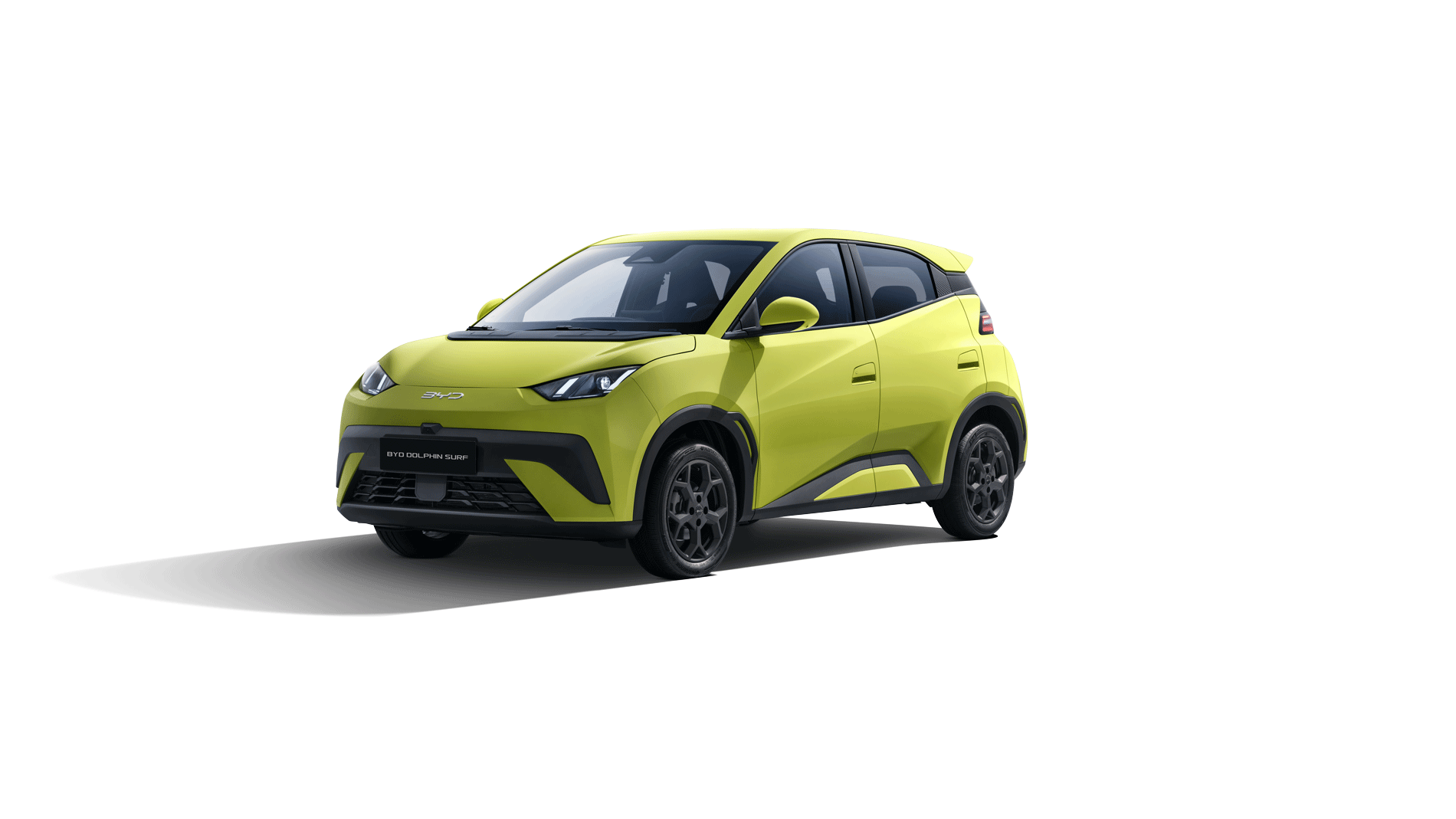
The BYD Dolphin Surf is genuinely good-looking for an entry-level electric car. It’s known as the Seagull in China, and the South African version carries those same rounded, cheerful proportions — officially becoming the most affordable electric car in the country at R339,900 when it launched in September 2025. It measures 3,925mm in length, which puts it roughly in MINI Cooper territory. That is small enough to slot into a tight parking spot at Woolworths Food on a Saturday morning without breaking a sweat.
Inside, the Dolphin Surf punches well above its price point. There’s a rotating gear selector, a proper touchscreen infotainment system with voice control, and a cabin that genuinely doesn’t feel like a poverty special. One owner described the drive as very smooth and noted the rotary-style gear selector as nifty and easy to use. That tracks with what we’ve experienced. It feels thoughtfully designed, not cost-cut into mediocrity.
The Dayun S5 takes a more SUV-ish approach. At 3,695mm long, 1,685mm wide, and 1,598mm tall with a 2,410mm wheelbase, its dimensions are on par with cars like the Kia Seltos, Hyundai Creta and Honda HR-V. That’s genuinely compact SUV territory. Ground clearance is rated at 201mm, which is useful on potholed Joburg side streets or gravel driveways in the Cape Winelands. The interior is more practical and upright, but the technology feels a generation behind the Dolphin Surf’s more modern interface.
Here’s the thing: both are five-door, five-seater urban machines. Neither is a road trip car. Neither pretends to be. But the Dolphin Surf feels more contemporary — it’s the car you’re happy to be seen in. The Dayun S5 is more appliance than statement.
How Much Could You Save With an EV?
Use our free calculator to compare your current fuel costs with EV charging costs.
Range and Real-World Use in South Africa
The Dolphin Surf is available in two variants: a Comfort at R339,900 and a Dynamic at R389,900. Both use BYD’s Blade Battery, the Comfort with a 30.08 kWh pack offering 232 km of WLTP range, the Dynamic stepping up to 38.88 kWh and 295 km. The Dayun S5 sits somewhere between those two numbers: a 31.7 kWh ternary lithium-ion battery with a claimed 330 km range.
But here is where you need to be a bit sceptical. The Dolphin Surf’s range figures are WLTP — a standardised European test cycle that is reasonably conservative. The Dayun’s 300–330 km figure is a manufacturer’s claimed range on a Chinese test cycle, which tends to be more optimistic. Real-world numbers will be closer. Factor in Highveld altitude, air conditioning during a Joburg summer, or the N2 headwind heading out towards Gordon’s Bay, and both cars will deliver somewhere around 200–260 km of realistic range on a typical mixed-use day.
For most South African urban commuters, that is more than enough. The average daily drive in Johannesburg is under 50 km. Cape Town’s northern suburbs to the CBD? Call it 35 km each way. Even the Comfort’s 232 km WLTP range handles Joburg to Pretoria and back without needing a top-up. Those figures will be familiar territory for urban commuters. The Dayun’s mini-SUV height gives it a psychological range buffer — people feel safer with it — but in practice you’ll be charging both cars at home overnight and heading into the day with a full “tank” regardless.
If range is the primary reason you’re considering the Dayun S5 over the Dolphin Surf Comfort, rather just stretch to the Dynamic at R389,900. You get 295 km WLTP, and still save R10,000 versus the Dayun. The maths is straightforward.
Charging: What You Actually Need at Home
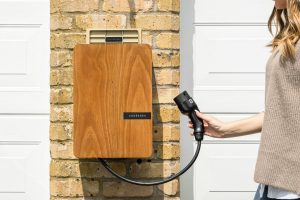
Both EVs max out at 6.6 kW on AC charging. That means a standard single-phase 7 kW wallbox handles both cars perfectly. You do not need a three-phase installation, and you do not need to rewire your garage. A standard home setup will do the job.
The Dolphin Surf’s Comfort trim (30.08 kWh) takes roughly 4.5 hours to go from empty to full on a 7 kW wallbox. The Dynamic (38.88 kWh) needs about 5.9 hours. The Dayun S5 (31.7 kWh) sits at around 4.8 hours. In practice? You plug in when you get home at 18:00, and all three cars are fully charged well before midnight. Problem solved.
On DC fast charging, the Dolphin Surf delivers a driving range of up to 295 km on a single charge, with fast charging from 30% to 80% in 30 minutes. The Dayun S5 supports Level 2 AC and DC charging, with DC fast charging taking approximately 60 minutes to charge from 20% to 80%. It is important to note that the Dayun’s 60-minute figure is for a 20–80% charge, not a full 0–100% charge, which would take considerably longer. The Dolphin Surf’s 40 kW DC capability is a meaningful advantage for anyone who occasionally needs a quick top-up on a road trip or a lunch-hour charge.
Home wallbox installation costs between R12,000 and R18,000 for a standard single-phase setup — depending on your property, cable run length, and whether your distribution board needs an upgrade. It’s a once-off cost that pays for itself quickly at current electricity tariffs. Get a free charger installation quote to see exactly what it would cost at your property. And if you’re relying on public charging, check the live charging map to find stations near you.
BYD also sweetened the deal with an early adopter package: BYD launched an early adopter package that included a 7 kW home charger, a R10,000 cash incentive, and a R999-a-month insurance offering through Absa. That makes the Dolphin Surf’s real effective cost even lower. Enviro Automotive has not publicly matched this with a comparable offer for the Dayun S5.
Running Costs: Where the Real Money Is
This is the section that should make every South African rethink their next petrol purchase. With pump prices for petrol sitting at R23.25 per litre in April 2026 and further increases forecast for May, the comparison against EVs is brutal — in the EV’s favour.
Take Cape Town’s off-peak electricity tariff of R1.89/kWh. The Dolphin Surf’s efficiency of approximately 13.8 kWh/100km (based on real-world owner reports and manufacturer data) works out to just R26.08 per 100 km on off-peak rates. The Dayun S5, at approximately 14.5 kWh/100km, comes to R27.41 per 100 km. Both are comfortably under R30/100km. Now compare that to a Suzuki Swift 1.2 — a reasonable like-for-like petrol alternative — which consumes 5.5L/100km at R23.25/L, costing R127.88 per 100 km. That’s a saving of roughly R101 per 100 km. You’re paying 79% less per kilometre driven. That is not a marginal advantage. That is a different financial universe.
At current tariffs, driving either EV in Cape Town off-peak costs under R27 per 100 km — versus R128 per 100 km in a comparable petrol hatchback. That is a 79% reduction in fuel cost.
The picture across South Africa’s three main metros tells a similar story. In Johannesburg at R1.75/kWh off-peak, the Dolphin Surf costs R24.15/100km and the Dayun S5 costs R25.38/100km. In Durban at R1.82/kWh off-peak, it’s R25.12 and R26.39 respectively. Every single one of those figures annihilates the petrol alternative. According to Winstone Jordaan, director of charging network GridCars, the cost of running an EV is roughly two-thirds that of a petrol vehicle, and fuel price hikes in April, with further increases expected in May, have added to the appeal of EV ownership.
If you’re comparing EVs more broadly, our full EV vs petrol running cost breakdown for South Africa goes deeper on the numbers across multiple vehicles and cities.
Ready to Install a Home Charger?
Get a free, no-obligation quote for professional EV charger installation in South Africa.
Five-Year Total Cost of Ownership
Purchase price is just the beginning of the ownership story. Run the numbers over five years at 20,000 km per year, using Cape Town off-peak electricity rates, and the EV advantage becomes almost absurd.
The BYD Dolphin Surf Dynamic (R389,900) accrues approximately R52,120 in electricity costs over five years, plus around R12,000 in servicing — reaching a five-year total of roughly R454,020. The Dayun S5 (R399,900) lands at approximately R466,720 all-in. Both are far cheaper than the Suzuki Swift 1.2 alternative: bought new at around R240,000, a Swift racks up approximately R384,000 in petrol plus R35,000 in services over the same period — a five-year total of R659,000. The EV advantage over five years is between R192,000 and R205,000. You are not just saving on fuel. You are saving on the scale of a deposit on a second property.
Driving on electricity in this class of car costs roughly 50 cents per kilometre for daily commuting, compared to a petrol hatchback averaging R1.80 to R2.20 per km at current fuel prices. Over 15,000 km a year, that is a saving of roughly R20,000 to R25,000 annually just in fuel. Compound that across five years and the purchase price premium over a petrol hatchback dissolves well before your first service interval. Use our EV savings calculator to plug in your own commute figures.
Warranty and Ownership: This Is Where It Gets Serious
For a first-time EV buyer in South Africa, warranty terms are not small print. They are a central part of the value proposition. And here, BYD wins so decisively it barely feels fair.
The battery warranty for the Dolphin Surf is eight years or 200,000 km, which is among the strongest in this price category. The vehicle warranty from BYD comes in at six years or 150,000 km for the Dolphin Surf. Compare that to the Dayun S5: the Dayun Yuehu S5 comes with a 3-year/60,000km warranty and service plan and a 5-year/120,000km battery warranty. Three years on the vehicle warranty versus six. That is a meaningful gap when you are buying into a relatively new brand with a limited dealer footprint.
On the dealer network side, BYD Auto registered a total of 589 units in South Africa in March 2026, and the brand is expanding its dealer network toward 90 locations by end-2026. That gives BYD real reach — Johannesburg, Cape Town, Durban, Pretoria, Port Elizabeth, Bloemfontein. Enviro Automotive, the importer behind the Dayun S5, currently operates its dealership in Pretoria, with a handful of additional outlets. If something goes wrong with your Dayun in Cape Town or Durban, you are dealing with a far thinner support structure.
This is not a knock on Enviro Automotive’s intent — they’ve been genuine EV pioneers in South Africa. But for a buyer spending R399,900 on their first electric car, aftermarket support matters enormously. BYD has the scale and the infrastructure. Dayun does not. Not yet.
Find Charging Stations Near You
Explore our live map of EV charging stations across South Africa — updated in real time.
Sales Momentum: What the Market Is Telling You
Here is proof that South Africans will buy EVs at the right price. Chinese brand BYD has released its South African sales figures for the first time, and they suggest local motorists have an appetite for electric cars when they’re priced right.
According to figures submitted to Naamsa, BYD Auto registered a total of 589 units in South Africa in March 2026, with all local sales coming via the dealer channel. That was enough to rank 21st on the list of South Africa’s best-selling automakers, just behind Mercedes-Benz SA but well ahead of several legacy automakers, including Honda Motor Southern Africa (348 units), Mitsubishi Motors SA (241 units), and Mazda Southern Africa (209 units). A brand that sells only electric cars and plug-in hybrids — no petrol, no diesel — outselling Honda and Mazda. Let that sink in for a moment.
The Dolphin Surf hatchback, which holds the title of SA’s most affordable fully electric vehicle, was comfortably BYD’s best-selling product in March, with 239 units registered, accounting for over 40% of the brand’s March 2026 sales. The Dayun S5, by contrast, does not officially report its figures to Naamsa. We do not have confirmed monthly sales data. That opacity makes it harder to assess true market traction — and for a buyer wondering about resale value in three years, market traction matters.
Figures from Naamsa show 1,088 BEVs were sold in 2025, up from only 92 units in 2020 but still only about 0.2% of the total new vehicle market. The Dolphin Surf alone is on course to deliver more EVs in a single month than the entire SA market managed in many previous full years. That is how significant this moment is.
In total, Naamsa reported 389 EVs were sold in South Africa in March 2026, which is a new monthly record for local full-electric sales, with BYD the clear leader at 316 fully electric car sales. South Africa’s EV inflection point is not coming. It has arrived.
The Verdict: One Car Wins Clearly
Look, both of these cars do something important: they make electric motoring accessible to ordinary South Africans for the first time. The Dayun S5 deserves real credit for holding the “most affordable EV” title through 2024 and most of 2025. Without it, the conversation would have stayed stuck at R540,000 and above.
But in 2026, if you are choosing between these two, the BYD Dolphin Surf Dynamic wins without much debate. It is cheaper than the Dayun S5 by R10,000. It has a longer vehicle warranty — six years versus three. It has better battery warranty coverage — eight years and 200,000 km versus five years and 120,000 km. It has a superior dealer network. It has DC fast charging that gets you from 30% to 80% in 30 minutes. And it has 239 units of March 2026 sales data proving that South African buyers trust it with their money.
The only credible reason to choose the Dayun S5 over the Dolphin Surf Dynamic is if you specifically want the slightly higher ride height of a mini-SUV, or you find a discounted deal that brings it below R370,000. Even then, the warranty gap would give me pause. The Dolphin Surf Comfort at R339,900 is the straight value-buy if you can live with 232 km of range for city driving. The Dynamic at R389,900 is the sweet spot — better range, better price than the Dayun, and the same bulletproof BYD Blade battery.
In a price-sensitive market, affordability — rather than environmental concerns — is the decisive factor. BYD has figured that out, and the sales numbers show it. The Dolphin Surf is not just the best budget EV in South Africa right now. It is genuinely reshaping who gets to own an electric car in this country. For first-time EV buyers navigating South Africa’s evolving charging infrastructure, understanding how South Africa’s EV charging network works is essential — and both the Dolphin Surf and Dayun S5 are compatible with the country’s growing public charging infrastructure.
FAQ
Is the BYD Dolphin Surf really South Africa’s best-selling EV?
Yes. The Dolphin Surf took 239 units off showroom floors in March 2026, making it the best-selling EV in South Africa that month. It accounted for over 40% of all BYD sales, dwarfing every other electric car on sale in the country.
Which is cheaper to run — the BYD Dolphin Surf or the Dayun S5?
The BYD Dolphin Surf is marginally cheaper per kilometre due to its slightly better efficiency of approximately 13.8 kWh/100km versus the Dayun S5’s estimated 14.5 kWh/100km. At Cape Town’s off-peak rate of R1.89/kWh, that works out to R26.08 vs R27.41 per 100 km — a small difference, but both are dramatically cheaper than any equivalent petrol car. Use our calculator to see your exact savings.
What home charger do I need for the BYD Dolphin Surf or Dayun S5?
Both EVs max out at 6.6 kW on AC charging, so a standard single-phase 7 kW wallbox handles both perfectly. Installation typically costs R12,000–R18,000 for a standard residential setup. Get a free installation quote here.
Does the Dayun S5 have a better range than the BYD Dolphin Surf?
The Dayun S5 has a 31.7 kWh battery with a claimed 330 km range. The Dolphin Surf Dynamic delivers a driving range of up to 295 km on a single charge. The Dayun’s range claim uses a more optimistic test cycle, so real-world numbers are likely closer than the headline figures suggest. For most SA urban commuting, both cars offer more than sufficient range.
Where can I charge a BYD Dolphin Surf or Dayun S5 in South Africa?
Both cars support Level 2 AC and DC fast charging. The Dayun S5 can be charged at over 350 GridCars charging stations across South Africa. The same GridCars network is compatible with the BYD Dolphin Surf. Find charging stations near you on the live map.
Is the BYD Dolphin Surf a good first EV in South Africa?
Six months in, at least one Durban owner described it as probably one of the wisest purchases they’ve made. With a starting price of R339,900, an eight-year battery warranty, fast DC charging, and BYD’s established dealer network expanding across SA, it is currently the strongest proposition for a first-time EV buyer in the country.
Continue Reading