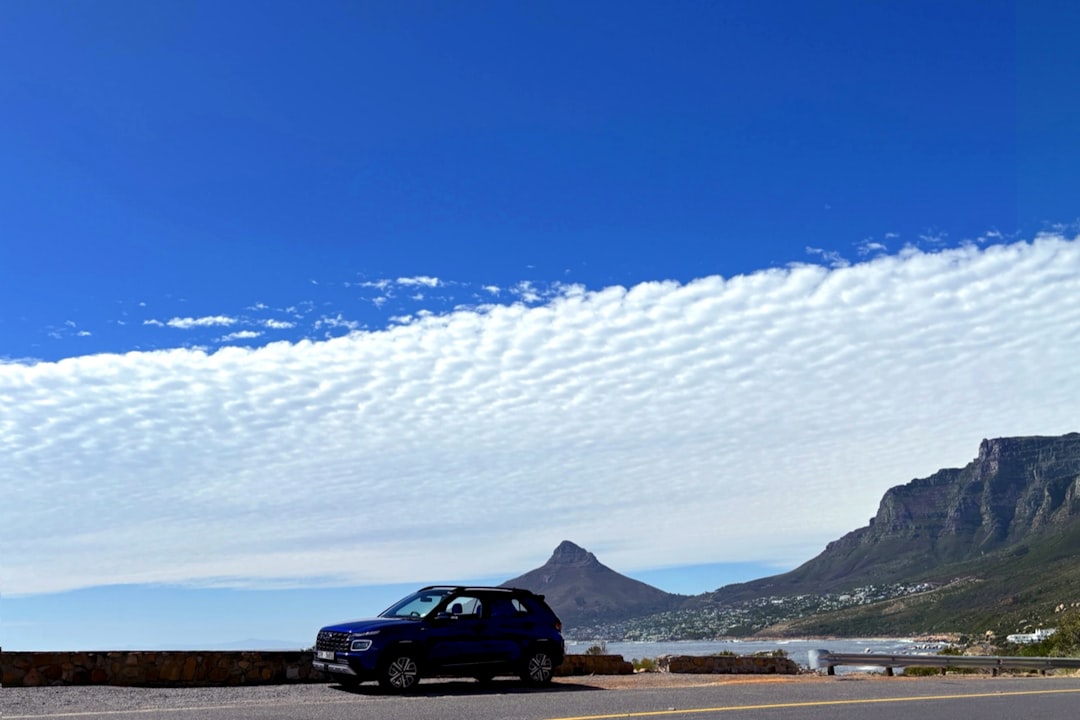
For the first time in South African motoring history, you can walk into a dealership and drive away in a fully electric car for less than R400,000. Not one model. Three of them — and a fourth is on its way. The BYD Dolphin Surf launched in September 2025 at R339,900 and held the “cheapest EV in SA” title until the Geely E2 made its local debut in April 2026. The Dayun S5 Standard has been sitting at R399,900 the whole time, largely ignored by the mainstream press. Together, these three Chinese-built city cars have done what years of government white papers and industry conferences could not: they made the running-cost maths of going electric work for ordinary South African commuters.
And the timing could not be more devastating for petrol. Petrol 93 currently sits at R23.25 inland, and the Central Energy Fund projects that May increases may surpass those for April, with petrol potentially increasing by a further R4.70. Global oil markets remain volatile, with Brent crude prices fluctuating above $85 per barrel amid ongoing geopolitical tensions in the Middle East. The fuel crisis and the sub-R400K EV have arrived at exactly the same moment. That is not a coincidence — it is a category disruption.
Here is your definitive guide to every sub-R400K electric car you can buy in South Africa right now, who should buy which one, and why the next 12 months will look nothing like the last five years of SA’s EV market.
Why R400,000 Is the Magic Number
For years, the honest answer to “should I buy an EV in South Africa?” was: not yet. The entry point was too high, the grid too unreliable, and the value proposition too thin for a country where the average new car sells for under R450,000. The psychological R400K ceiling matters because it is roughly where a well-specced mid-range petrol hatchback lives — think Toyota Starlet, Suzuki Fronx, upper-spec VW Polo Vivo. Break through that ceiling and suddenly EVs are competing in the same conversation as cars that millions of South Africans actually buy.
Figures from automotive body Naamsa show 1,088 BEVs were sold in 2025, up from only 92 units in 2020 but still only about 0.2% of the total new vehicle market — and these figures exclude brands such as BYD, Geely and Dongfeng, which did not report to Naamsa. That number is about to be blown apart. The BYD Dolphin Surf alone put 239 new units on showroom floors in March 2026, making it the best-selling EV in SA in the third month of 2026. One model. One month. Annualise that and you are already at nearly 2,900 units from a single affordable EV per year — before the Geely E2 has even registered its first full month of sales.
According to Winstone Jordaan, director of charging network GridCars, the cost of running an EV is roughly two-thirds that of a petrol vehicle. At current and projected fuel prices, that ratio is looking more like half. The financial argument has flipped from “interesting to consider” to “hard to ignore.” Want to see exactly what you’d save based on your own commute? Use our EV savings calculator and plug in your exact km and electricity tariff.
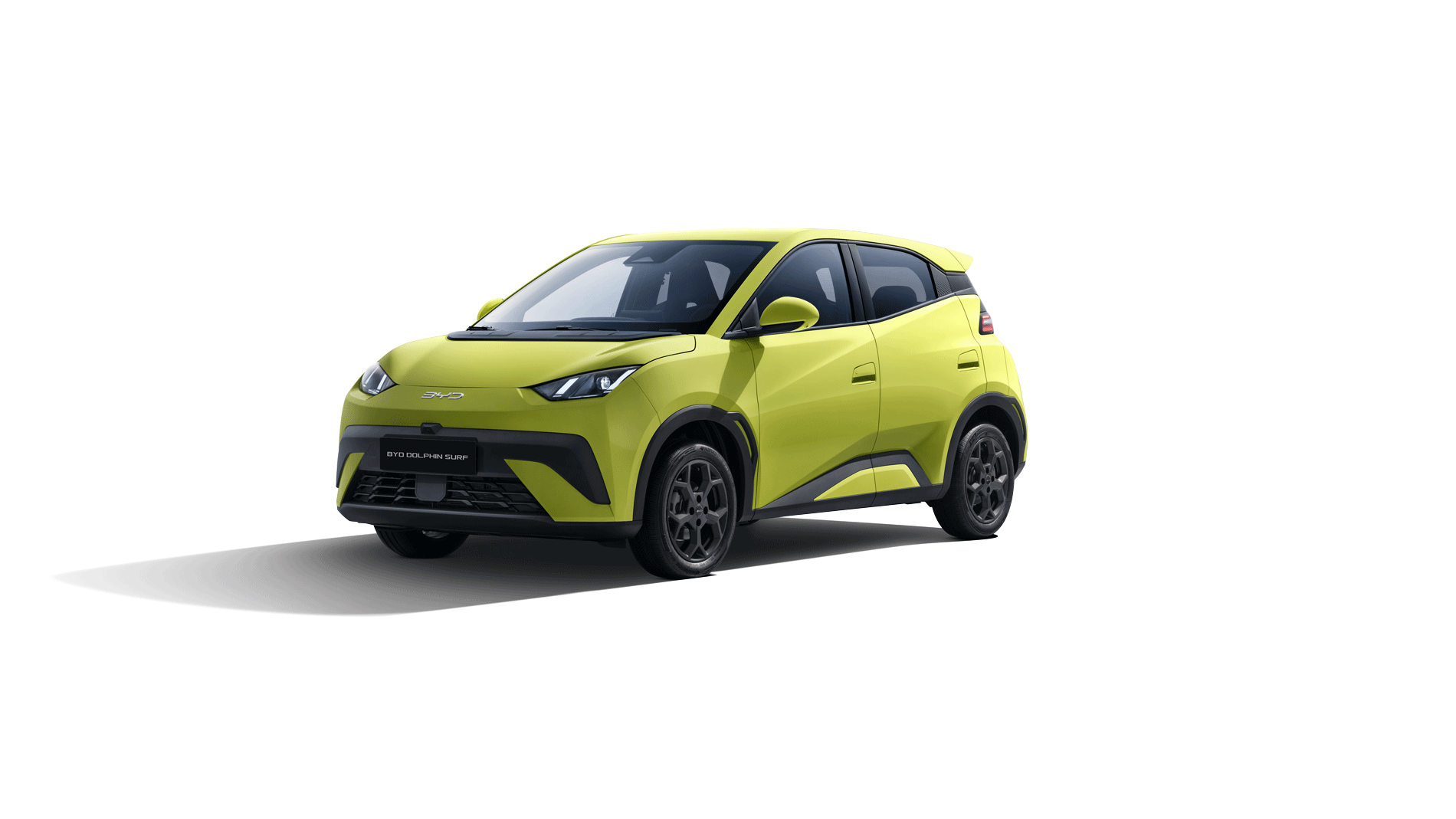
Car 1: BYD Dolphin Surf — The One That Started It All
The Dolphin Surf, roughly the same size as a MINI Cooper at 3,925mm in length, is a city car available in two derivatives, with the baseline Comfort powered by a 30.08kWh battery pack and a 55kW/135Nm electric motor driving the front wheels. Performance figures are 0-100km/h in a claimed 14.2 seconds, a top speed of 130km/h and a claimed 232km range (CLTC). The range-topping Dynamic, priced at R393,900, gets a larger 38.88kWh battery for up to 295km of range (CLTC).
Yes, 14.2 seconds to 100 is not going to win any braai arguments. But here is the thing: in Sandton traffic or on the N1 heading into the CBD at 7am, it does not matter. What matters is that both cars come with a 7kW home wallbox charger and an eight-year/200,000km battery warranty. That free wallbox alone saves you R8,000 to R12,000 in installation costs. The 8-year battery warranty is the kind of assurance that makes finance managers sleep at night.
The Dolphin Surf also has a party trick that Eskom has made unexpectedly relevant: Vehicle-to-Load (V2L) technology. At the launch event of the Dolphin Surf, BYD also announced an “Early Adopter Package” which included a V2L socket, portable charger, point-to-point cable and a 7kW home-charger wall box. That 1.6kW V2L output is enough for your fridge, a few lights, and your phone — keeping you going through load shedding without touching your inverter. And the Blade Battery underpinning it all? The structure uses 68% high-strength steel, and the Blade Battery has passed BYD’s nail penetration test, something not every EV can claim.
Real-world ownership? One early Durban owner reports getting approximately 220km on a full charge for school runs. Six months later, it has probably been one of their wisest purchases — parked at home for most of the day, they benefit from slow charging via home solar panels, meaning day charging is basically free. That is not an isolated story. It is a pattern repeating across SA cities wherever solar and short commutes align.
Driving on electricity in this class of car costs roughly 50 cents per kilometre for daily commuting, compared to a petrol hatchback averaging R1.80 to R2.20 per km at current fuel prices. Over 15,000km a year, that is a saving of roughly R20,000 to R25,000 annually just in fuel.
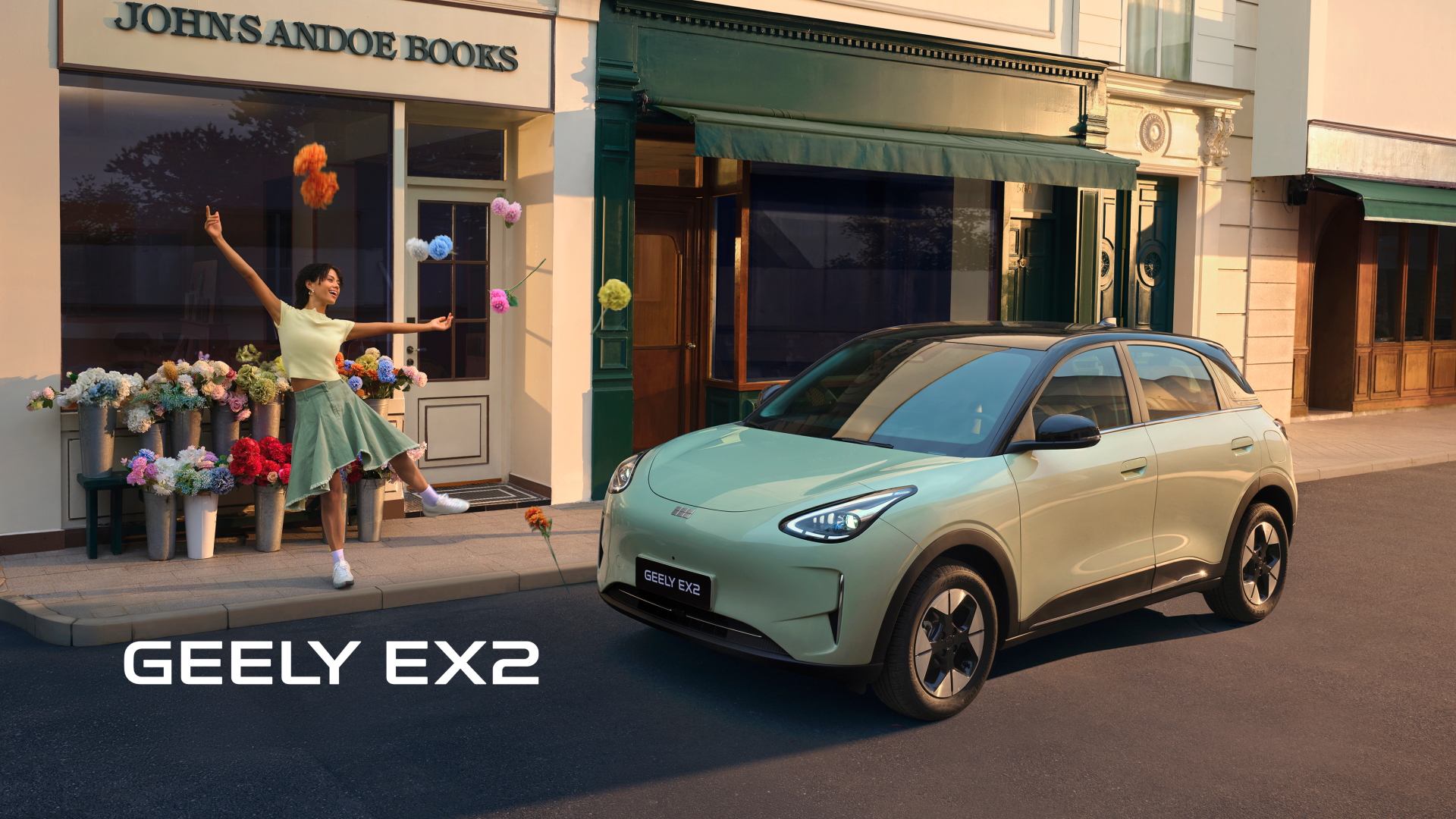
Car 2: Geely E2 — The Underdog That Just Took the Crown
The Geely E2 has officially taken the title of South Africa’s most affordable electric vehicle with a starting price of R339,900, matching the BYD Dolphin Surf Comfort’s launch price. The more compelling difference is not the price — it is the package you get for that price.
Measuring 4,135mm from front to back — precisely the same as a Volkswagen T-Cross — and featuring a wheelbase of 2,650mm, the E2 is a significant 210mm longer than the Dolphin Surf, with an extra 150mm between its axles. In real terms: more rear legroom, more boot space, more practical car. The e-motor is coupled with a 39.4kWh lithium-iron phosphate (LFP) battery pack, which can receive up to 70kW at a DC fast-charging facility. That 70kW DC charging rate versus the Dolphin Surf’s 40kW means faster top-ups on the road — a meaningful advantage if you plan any weekend trips to the Hex River Valley or the Drakensberg.
The E2 is available in two specifications — Aspire and Apex — both equipped with a single rear-mounted electric motor producing 85kW and 150Nm, with a 0-100km/h time of 11.5 seconds and a top speed of 130km/h. That 85kW figure is notably stronger than the Dolphin Surf’s 55kW, making the E2 a noticeably more confident car on dual carriageways and N-route on-ramps. It also means the E2 came from China with significant sales momentum in its home market.
All models include a wallbox home charger. Standard equipment across the range includes a 14.6-inch touchscreen infotainment with Apple CarPlay and Android Auto, an 8.8-inch digital instrumentation cluster, adaptive cruise control, automatic emergency braking, lane departure warning, forward collision warning and intelligent high-beam control. That is a full ADAS suite on the base model. Remarkable for R339,900. The E2 also features vehicle-to-load (V2L) technology, allowing you to use the car’s battery to power external appliances during load shedding or camping trips.
The two-strong Geely E2 model lineup is priced from R339,900 for the Aspire and R389,900 for the Apex derivative. Included with the pricing as standard are a four-year/150,000km vehicle warranty, an eight-year/200,000km battery warranty, and a three-year/200,000km service plan. The service plan is three years longer than the Dolphin Surf’s offering — worth factoring into your total cost of ownership. Geely returned to South Africa in November 2025 after a decade-long absence, launching as a new-energy focused brand, and currently operates 32 dealerships with plans to expand to 40 by end-2026. Network coverage is still tighter than BYD’s, but it is growing fast.
How Much Could You Save With an EV?
Use our free calculator to compare your current fuel costs with EV charging costs.
Car 3: Dayun S5 Standard — The One Nobody Talks About (But Should)
While the Dayun S5 Standard sits at R399,900 — just inside the sub-R400K threshold — it deserves a proper look, especially if you want something with a slightly more SUV-like stance. The range-topping S5 VIP at R449,900 falls outside our sub-R400K focus, but the Standard derivative qualifies and offers genuine value for buyers who prioritise practicality over brand recognition.
The Dayun Yuehu S5 lineup comprises two derivatives: the S5 Standard at R399,900 and the S5 VIP at R449,900. The Dayun S5 has a 31.7kWh ternary lithium-ion battery with a 330-kilometre range (CLTC), which is ideal for daily commutes. Designed for urban mobility, it features a 35kW front-mounted motor delivering 105Nm of torque, upgraded for local conditions with a top speed of 115km/h. That 35kW motor is modest — genuinely modest — but in a city context, the instant torque of any electric motor still feels snappier off the lights than the equivalent petrol car.
Here is where the Dayun case gets interesting: it supports Level 2 AC and DC charging for easy home charging or quick recharges at fast-charging stations, consuming 10.7kWh per 100km. With a standard 220V charger, it takes about four hours to recharge; using a DC fast charger, from 20% to 80% takes under an hour. That efficiency figure of 10.7kWh/100km is actually very competitive — better than the Dolphin Surf Comfort’s real-world consumption, which means your electricity costs per kilometre could be lower despite the higher sticker price.
The Dayun’s biggest challenge is not the car — it is the network. The Dayun S5 is brought to South Africa by Enviro Automotive, a specialist EV importer rather than a major OEM network. If you are in Cape Town, Johannesburg, or Durban, you are probably fine. If you are in Polokwane or East London and something goes wrong, you may be making a long phone call. For city buyers with home charging sorted, it remains a legitimate sub-R400K option. But its warranty terms — a 5-year/120,000km battery warranty and a 3-year/60,000km mechanical warranty — trail both the Dolphin Surf and Geely E2’s 8-year/200,000km battery coverage. On a battery that will cost six figures to replace, that gap matters.
The Chery Q: The Wild Card Coming Later in 2026
Chery has officially confirmed that a new “Q” model is coming to South Africa. The Chinese carmaker recently announced it will showcase the new all-electric compact vehicle at Auto China 2026, the massive automotive convention taking place in Beijing, and the Q will arrive in South Africa later in 2026 to compete in the affordable EV segment. This matters because Chery’s dealer network — 30-plus outlets nationally — is already one of the strongest among Chinese brands in SA.
According to reports, the entry-level Q is fitted with a single rear-mounted electric motor producing 58kW, with a more powerful version delivering 90kW. Battery sizes range from 29.5kWh to 41.3kWh, giving a CLTC range of between 310km and 420km. Chery South Africa has confirmed that the Q will represent a significant step in its local electrification strategy, serving as an accessible entry point into electric mobility. While final local pricing is yet to be announced, it is expected to slot in as a highly competitive option for first-time EV buyers. Expect something in the R350,000 to R390,000 range when it finally lands.
The Head-to-Head: How They Stack Up
Numbers on a spec sheet are one thing. What you actually spend at the end of each month is another. The table below uses off-peak home charging at R1.75/kWh — roughly what Eskom direct customers pay on the Homeflex tariff — and compares annual fuel savings against a VW Polo Vivo 1.4 at current petrol prices of R23.25 per litre for 93 Unleaded inland. Assume 15,000km per year, which is a realistic annual mileage for a commuter-focused city car.
| Model | Price (OTR) | Real-World Range | Battery | Motor Power | Annual Fuel Saving vs Polo Vivo |
|---|---|---|---|---|---|
| Geely E2 Aspire | R339,900 | ~285km | 39.4kWh (LFP) | 85kW / 150Nm | ~R22,000/yr |
| BYD Dolphin Surf Comfort | R339,900 | ~200km | 30.08kWh (Blade) | 55kW / 135Nm | ~R21,500/yr |
| BYD Dolphin Surf Dynamic | R393,900 | ~260km | 38.88kWh (Blade) | 55kW / 135Nm | ~R21,500/yr |
| Dayun S5 Standard | R399,900 | ~270km | 31.7kWh | 35kW / 105Nm | ~R20,000/yr |
| Chery Q (est.) | R350–390K est. | ~280–370km | 29.5–41.3kWh | 58–90kW | ~R20,000–22,000/yr |
Those annual savings figures are calculated at R23.25/litre petrol. The Central Energy Fund projects a further R4.70/litre increase in May, which would push those annual savings northward of R27,000 on current driving patterns. At that level, the payback period on the price premium over a Polo Vivo compresses from five years to closer than three. If you have home charging and solar, you can shave that further.
Before you sign anything, get a free quote for a 7.4kW wallbox installation at your home — most sub-R400K EVs include the hardware free, but installation costs vary significantly depending on your DB board setup and cable run distance.
Ready to Install a Home Charger?
Get a free, no-obligation quote for professional EV charger installation in South Africa.
Who Should Buy Which Car?
The Sandton-Fourways daily commuter, 50km/day, apartment with a parking bay: Go for the BYD Dolphin Surf Comfort at R339,900. The 200km real-world range covers your Monday-to-Friday on a single weekend charge. The proven track record matters too — 239 units in a single month means a growing dealer network, parts availability, and a secondary resale market already forming. Just sort out your body corporate approval for the charger before you commit — that can take two to six months and sometimes gets rejected outright. Check our guide to navigating body corporate EV charging approvals if you are in a sectional title scheme.
The Cape Town-Stellenbosch commuter, 80km/day, house with a garage: The Geely E2 at R339,900 is the stronger choice. The E2 offers a larger battery and roughly 100km more range than the base Dolphin Surf for the same price. That extra range means you are charging every three to four days instead of every two, and it opens up weekend road trips to Hermanus or the Overberg without the creeping range anxiety. The stronger motor (85kW vs 55kW) is a genuine improvement on N2 highway speeds too.
The budget-constrained first-time EV buyer anywhere in SA: The BYD Dolphin Surf Comfort wins on safety net alone. Both Dolphin Surf variants come with a 7kW home wallbox charger and an eight-year/200,000km battery warranty. BYD also launched an early adopter package that included a 7kW home charger, a R10,000 cash incentive, and a R999-a-month insurance offering through Absa. That combination of free hardware, strong warranty, and growing dealer support makes the risk of first-time EV ownership as low as it has ever been in this country.
The Pretoria-Johannesburg daily highway commuter, 100km/day: Wait for the Chery Q 90kW variant later in 2026. Battery sizes of up to 41.3kWh give a CLTC range of up to 420km — which translates to roughly 370km real-world, meaning a full week of Pta-JHB commuting on a single charge. The 90kW motor will be meaningfully more composed at highway speeds than the Dolphin Surf. It will almost certainly cost more than R339,900, but the use case justifies it.
The Fuel Crisis Multiplier
This whole sub-R400K EV story is happening against a backdrop of SA fuel prices behaving like they have had a complete breakdown. Global oil markets remain volatile, with ongoing geopolitical tensions in the Middle East contributing to price instability. Brent crude has fluctuated above $85 per barrel throughout early 2026, and analysts at S&P Global Commodity Insights warn that further supply disruptions could push prices toward $100 per barrel. With both sides of the fuel price equation working against motorists, this has led to steep under-recoveries, putting petrol and diesel prices on the block for significant increases.
In April, the National Treasury implemented a temporary R3.00 per litre reduction in the General Fuel Levy. This relief is currently scheduled to expire on 5 May 2026. If the government does not extend this relief, motorists will have to add R3.00 to the projected increases. This could result in petrol increasing by over R6.00 per litre and diesel by nearly R14.00 per litre in a single month. Petrol chasing R29-R30 per litre by May is not a worst-case scenario — it is a base case.
At R28/litre petrol, a Polo Vivo driver covering 15,000km a year spends roughly R30,000 annually on fuel. A Dolphin Surf driver charging at home off-peak spends around R4,000 to R5,000 a year in electricity. That is an annual saving of R25,000 or more — a new month’s salary for many South Africans, delivered quietly through the power socket in your garage every night.
AutoTrader recorded a 45% increase in EV search queries during March 2026 compared to February 2026. The fuel crisis is driving people to look at alternatives. The fact that sub-R400K EVs now exist means those searches are converting into actual sales for the first time. The high prices of EVs, combined with range anxiety and slow charging, have been the main obstacles to widespread EV adoption, but the Dolphin Surf’s affordability appears to have struck a chord — its 239 March sales eclipsed several petrol models such as the Hyundai Alcazar and Honda Fit.
The Honest Catch: Why 95% of SA Buyers Still Can’t Make This Work
Look, this is not a press release. There are real structural barriers to EV ownership in South Africa that no Chinese automaker can price away, and you need to go in with eyes open.
Body corporate charger approvals. More than 60% of urban South African households live in complexes or rental properties. Installing a charging point in your parking bay requires trustee approval, which can take two to six months — and can be rejected entirely. Petrol cars require zero approval. This is the single biggest practical obstacle for apartment-dwelling buyers in Johannesburg, Cape Town, and Durban.
Load-shedding charging anxiety. Chery themselves have acknowledged that load shedding, charging station rollouts, and long-distance travel across the country all come into play when considering an EV, and models are being built with that in mind. If your complex is on Stage 2 or higher overnight, your charge routine breaks down unless you have solar and battery backup — which adds R80,000 to R150,000 to your total spend. The V2L feature helps during the day, but it is not a substitute for consistent overnight charging.
200-300km real range is city-only. A Joburg-to-Kruger trip, or the Cape Town-to-George stretch on the N2, requires DC fast-charging stops. The Dayun S5 can be charged at over 350 GridCars charging stations all over South Africa, and GridCars covers the major N-routes. But every 270-300km leg adds 25 to 45 minutes, which changes the road trip experience meaningfully. For a commuter-only car, this is irrelevant. For a family’s only vehicle, it matters a lot. Check the live charging map to see whether DC fast chargers cover your most-driven routes before you commit.
Resale value is an unknown quantity. There is simply not enough data yet on how sub-R400K Chinese EVs hold their value in the SA used car market. Battery life anxiety among used car buyers, dependency on functioning charging infrastructure, and limited service network reach all suppress used EV demand. A Polo Vivo’s resale market is liquid and well-understood. An 18-month-old Dolphin Surf is largely uncharted territory.
Service network gaps. BYD has over 30 dealers nationally and growing. Geely returned to SA in November 2025 and currently operates 32 dealerships. Dayun, by contrast, runs through the Enviro Automotive / DFSK network, which is considerably thinner. If you live in Bloemfontein, East London, or Polokwane, ask specifically where your nearest authorised service centre is before signing the paperwork.
Find Charging Stations Near You
Explore our live map of EV charging stations across South Africa — updated in real time.
The Market Shift in Cold Numbers
Here is the before-and-after that nobody in the SA motor industry was prepared for. Back in early 2024, the starting price for highway-capable EVs in South Africa was over R700,000. By 2026, that price has dropped to under R340,000, thanks to the growing presence of Chinese manufacturers like BYD, Dayun, Dongfeng, and GWM. That is a more-than-50% price reduction at the entry level in under two years.
Before September 2025, the cheapest EV you could buy in SA was something like the MINI Cooper SE at R659,000 or the Volvo EX30 at R835,500. The target buyer was an affluent early adopter with a second or third household vehicle. The value proposition was largely environmental. And total BEV sales in 2025 came in at just over 1,000 units for the full year.
After April 2026, the cheapest EV is R339,900. The target buyer is a price-sensitive commuter in a single-income household. The value proposition is purely financial — R20,000 to R27,000 per year back in your pocket. And BYD South Africa, sharing sales figures to Naamsa for the first time since arriving locally in 2023, registered 589 units in March 2026 alone — comparable to an established brand like Mercedes-Benz, which sold 595 units in the same period. That is a market in the process of being remade.
While the early 2020s were defined by price hikes, 2026 marks the first real era of price compression at the entry level.
The wave of new EVs launched in South Africa mirrors a global shift driven by emissions regulations. But in a price-sensitive market, affordability, rather than environmental concerns, is the decisive factor. That has always been the truth about the SA market, and finally the product reality has caught up with it.
The Verdict
If you are buying a city commuter car right now and you have home charging — or you are in a freestanding property with a garage — the case for going electric has never been stronger. The sub-R400K EV trio is not perfect. The ranges are honest city-car numbers, not cross-country haulers. The service networks are still maturing. And body corporate politics can turn a simple purchase decision into a six-month ordeal.
But the financial maths, right now, in April 2026, with petrol at R23.25 and heading to R28-plus in May, is genuinely compelling. At R20,000 to R27,000 in annual fuel savings, you are essentially being paid to switch. That is new. That has never been true in South Africa before.
Between the Dolphin Surf and the Geely E2, I would lean toward the Geely E2 for most buyers. More range, more power, larger car, faster DC charging — for the same price as the Dolphin Surf Comfort. The Dolphin Surf wins on brand maturity, existing resale data, and that BYD safety net of Blade Battery technology and a rapidly expanding dealer network. Both are genuinely good choices. The Dayun S5 Standard is for committed budget buyers who want a mini-SUV stance and can live with a thinner support network.
The R400K EV barrier is gone. The question now is whether SA’s infrastructure — from body corporates to Eskom’s grid to the GridCars fast-charging network — can keep pace with the cars. Check the live SA charging map to see if the public fast-charging network covers your routes before making your final call.

FAQ
Which is cheaper: the BYD Dolphin Surf or the Geely E2?
The Geely E2 and BYD Dolphin Surf Comfort are both priced at R339,900, making them joint holders of the “most affordable EV in SA” title. However, the Dolphin Surf’s early adopter package — which has included a R10,000 cash incentive — could close that gap at point of purchase. Check current promotions at your nearest BYD dealer, as these incentives are periodically updated.
Can I charge a sub-R400K EV at home during load shedding?
Not reliably without additional infrastructure. Stage 2 or higher load shedding overnight will interrupt a standard AC wall charging session. Your best options are to charge during the day if you have solar panels (as several Dolphin Surf owners in Durban and Cape Town are already doing effectively), or to top up at a public DC fast charger before your scheduled load shedding window. Both the Dolphin Surf and the Geely E2 feature V2L technology that lets the car power your home appliances during outages — but this depletes your driving range, so use it strategically.
How does the Chery Q compare to the BYD Dolphin Surf?
The Chery Q (based on global QQ3 specs) offers a 58kW base motor with a more powerful 90kW variant, and battery sizes from 29.5kWh to 41.3kWh providing a CLTC range of between 310km and 420km. Against the Dolphin Surf Comfort’s 55kW motor and 232km CLTC range, the Chery Q on paper offers more range and power — but final local pricing is unconfirmed and the model has not yet launched in SA. Chery South Africa has confirmed the Q as an accessible entry point into electric mobility, with competitive pricing expected. Check back on chargepointsa.co.za when it lands later in 2026.
Are sub-R400K EVs cheaper to own than a VW Polo Vivo over 5 years?
In most scenarios, yes — but the calculation is more nuanced than headline fuel savings suggest. The Polo Vivo 1.4 starts at around R259,900 — roughly R80,000 less than the cheapest sub-R400K EV. However, at current fuel prices, driving on electricity costs roughly 50 cents per kilometre versus R1.80 to R2.20 per km for a petrol hatchback — a saving of R20,000 to R25,000 annually over 15,000km. That means the purchase price premium is recovered in three to four years at current fuel prices, and in under three years if May’s projected fuel increases materialise and persist. Service costs for EVs (no oil changes, fewer brake replacements due to regenerative braking) further improve the five-year total cost of ownership picture. Run your specific numbers through our EV cost calculator for a personalised comparison.
What is the real-world range of the Geely E2 in South African driving conditions?
According to the brand, the LFP battery unit provides an operating range of up to 325km (WLTP) when fully charged. In real South African conditions — mixed city and highway, air conditioning on (and it will be on), and at Highveld altitudes — expect approximately 270 to 290km from a full charge. Highway driving at 120km/h will reduce that to closer to 240km. City driving with regenerative braking enabled is where the E2 shines brightest, and short commuters will find the range more than adequate for three to four days between charges.
Continue Reading