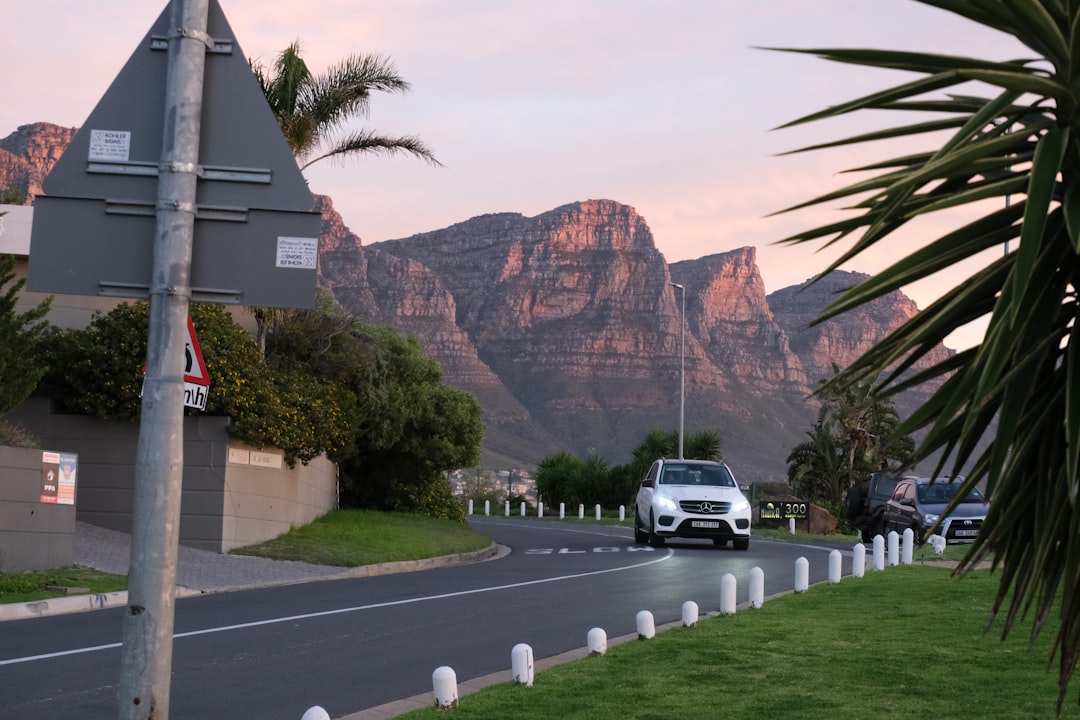
South Africa has about 650 public EV chargers spread across approximately 445 charging sites. The country has around 5,000 petrol stations. That’s roughly one charging site for every eleven fuel stations — a ratio that sounds damning, and in some respects, it is. Yet the picture is more nuanced than a simple number suggests. For the overwhelming majority of EV owners, public infrastructure barely matters on a day-to-day basis — with 90% of EV charging happening at home, the public network is really about road trips, not your morning commute. The problem is that when you do need that public charger — 400 kilometres from anywhere on the N1 — it had better work.
And that’s where things get complicated. South Africa’s charging network is growing, the operators are investing, and the private sector is stepping up in ways government simply hasn’t. But the gaps — geographic, technical, and reliability-related — are very real, and anyone who tries to tell you otherwise hasn’t done the Cape Town to Joburg run in an EV. This is an honest assessment of where we stand in April 2026: what’s working, what isn’t, and what’s actually being done about it.
If you’re researching your first electric car purchase, start with our Electric Vehicles in South Africa: The Complete 2026 Guide — then come back here for the infrastructure reality check.
The Numbers Don’t Lie — But They Don’t Tell the Whole Story Either
According to Rubicon’s annual report for 2025, by mid-2025 there were over 500 public charging stations operational in South Africa from all the various charge point operators. This growth helped maintain an EV-to-charger ratio of approximately 1:7 (one EV for every seven individual charge points) — better than the global 1:10 benchmark. That’s actually not terrible, and it’s a fact worth holding onto when the doom-scrollers start declaring EVs unworkable in South Africa. The number has been climbing steadily: in 2020 there were about 143 public charging stations in South Africa, increasing to over 350 in 2023, representing approximately a 50% annual growth rate.
But raw numbers mask the real issue, which is distribution. South Africa has a limited number of public charging stations, mainly concentrated in urban areas, with little accessibility in rural regions — a lack of coverage that poses a significant barrier to widespread EV adoption. Joburg, Cape Town, and Durban are reasonably well-served. Check out our dedicated guides for EV charging stations in Johannesburg, Cape Town, and Durban for a detailed breakdown of what’s available in each city. Venture into the Karoo, the Free State heartland, or Limpopo, and you’re in a different country entirely.
The business case problem is also hiding in the numbers. Winstone Jordaan, Director of GridCars, told an Enlit Africa audience that at present “there’s just no business case.” He added: “We need about 100,000 vehicles on the road before any of us will see real profitability. But that doesn’t mean we shouldn’t build the foundation now.” That’s a remarkably honest admission from the market leader — and it explains why private operators are moving cautiously in areas with thin EV density.
Who’s Running the Network: Meet the Players
GridCars is South Africa’s largest public electric vehicle charging network operator, headquartered in Roodepoort and managing the majority of the country’s public EV chargers. Founded in 2009 by software engineer Winstone Jordaan, GridCars pioneered the local EV charging market and has expanded to operate over 450 public AC and DC charging stations across the country. The Charge Pocket app connects drivers to about 445 sites on the map representing 650 individual chargers and more than 1,200 connectors, ensuring seamless access and real-time station information. They’ve also been quietly innovating: in December 2025, the company revealed its intention to introduce ultra-fast liquid-cooled chargers, aimed at delivering global-standard charging speeds to the local market — chargers described as designed to minimise downtime and make long-distance electric travel more practical.
GridCars recently got a shot in the arm on the ownership front. In January 2026, GridCars welcomed a new high-net-worth investor who acquired a 75% shareholding through Energex, a company affiliated with ABC Solar and Huawei Fusion Solar. This investment is intended to accelerate scaling, deepen commitments to high-quality charging infrastructure, expand the national footprint, and strengthen partnerships. Whether that translates into faster rural rollout remains to be seen.
Rubicon is the clear challenger. Rubicon’s network is currently composed of 103 public charging stations, and 20 charging stations at the various OEM partner dealerships. The company aims to expand its network to 200 stations, and between January and February 2026 added 11 new charging stations in the Eastern Cape — nine of which support DC fast charging — through a partnership with the Automotive Industry Development Centre (AIDC) Eastern Cape. The Eastern Cape push is significant because it’s one of the most underserved regions for EV infrastructure, sitting on the popular N2 coastal route.
There’s an emerging operator worth watching: CHARGE (formerly Zero Carbon Charge), which is taking a fundamentally different approach to the infrastructure problem. Their on-site solar and battery system guarantees enough power for ultra-fast charging with the flexibility to scale up as demand increases — being totally self-sufficient in power, their rates are predictable and controlled, not subject to Eskom tariff hikes or load-shedding. CHARGE plans to build 120 solar-powered stations for passenger vehicles, spaced roughly 150 km apart along major routes like the N1 and N3. Two new stations are scheduled to open in 2026 — one in the Free State and another in KwaZulu-Natal. These hubs will include 24/7 security, farm stalls, and Wi-Fi. Ultra-fast chargers at these locations can boost your battery from 10% to 80% in about 25 minutes. Off-grid, solar-powered charging in the Karoo? Now we’re talking.
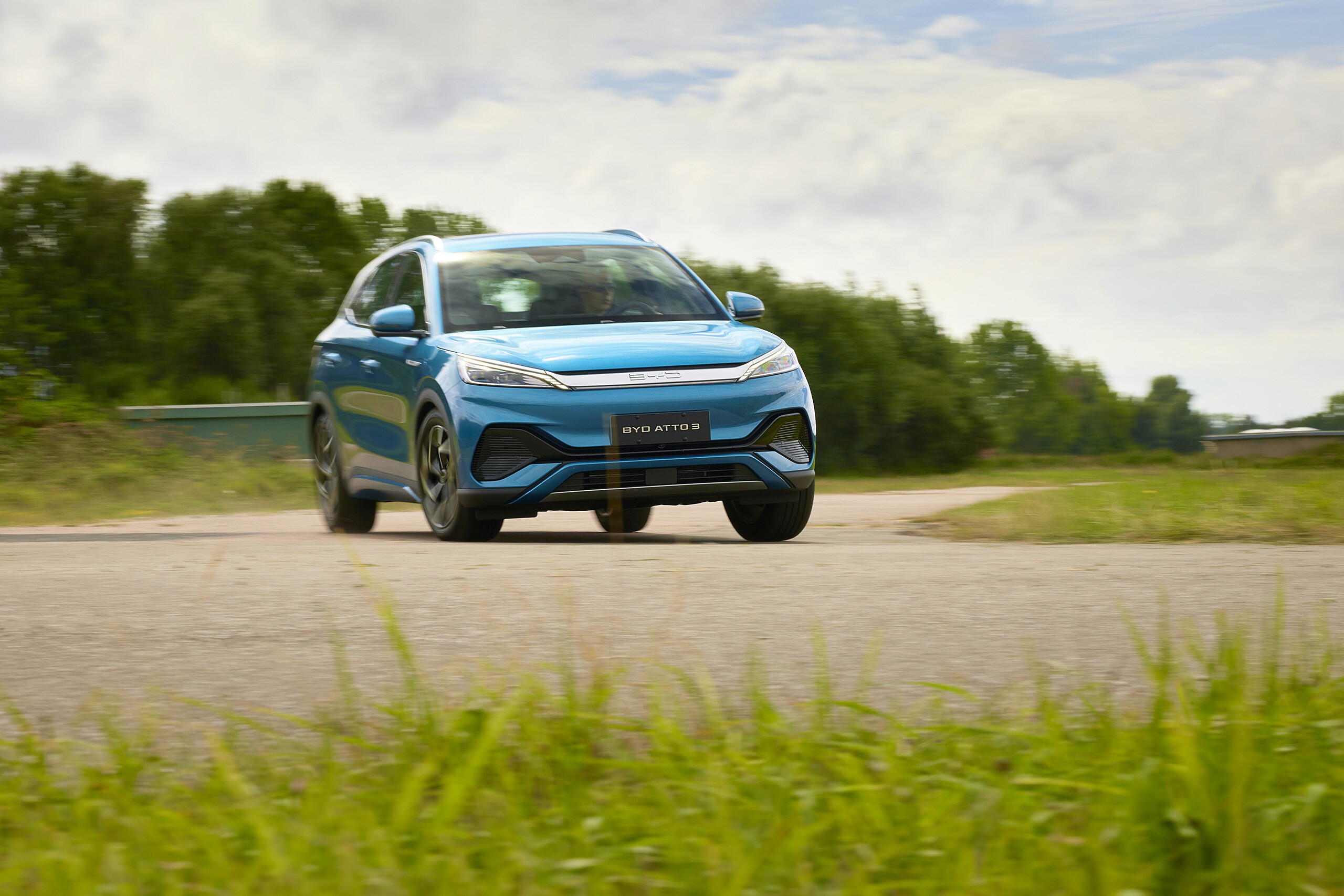
And then there’s BYD, which is about to dramatically shake up the landscape. BYD plans to bring flash charging with up to 1,000 kW charging power to South Africa, with the first locations set to go live in April or May 2026. Installation of the charging stations will begin at BYD dealerships in South Africa and will soon be expanded to strategic locations along the country’s motorways. “We want to cover 100% of the country,” said a BYD executive in a recent statement. “By the end of next year, we will have 200 or 300 Flash charging stations in South Africa.” If BYD delivers on that, it will more than double the country’s public charger count in under two years.
How Much Would YOU Save?
Plug in your monthly km, current fuel costs, and see the exact Rand savings of switching to an EV.
Where the Gaps Are Worst — and Why
Let’s be specific, because vague hand-wringing about “rural areas” doesn’t help anyone planning a road trip. The worst corridors in South Africa for EV charging right now are well-documented among the local EV community.
The N1 between Beaufort West and Three Sisters is the most notorious. There’s a roughly 300 km stretch of semi-desert where public fast charging is essentially non-existent. For most EVs, that’s a range-and-a-half — which means careful planning, conservative driving speeds, and a fair amount of stress if you’ve left Beaufort West with less than 80% charge. The N2 between East London and Durban is similarly sparse, which makes the Rubicon Eastern Cape expansion particularly welcome. The Free State interior and Limpopo outside Polokwane are, for most practical purposes, EV no-go zones if you’re depending on public infrastructure.
Why are these gaps so persistent? A large part of it is financial. Installing a single EV charging station in South Africa can cost as much as R2 million, sector experts have said. The high costs associated with installing Level 3 DC fast chargers — despite subsidies and creative financing solutions — have slowed the expansion of public charging networks. Add Eskom’s unreliability to the mix, and you understand why operators are nervous about plonking a R2 million asset in a town with three EVs on the road.
There are also bureaucratic landmines. Rubicon, for example, has avoided investing in Pretoria due to the city’s Basic Charge policy, which makes installations financially unviable. When a private operator actively avoids a major metro because of municipal policy, that’s a systemic failure — not an infrastructure one. The pace of expansion has slowed in early 2026, with operators waiting for EV adoption rates to rise while grappling with higher infrastructure costs and bureaucratic challenges.
The load-shedding dimension can’t be ignored either. Most public chargers remain vulnerable to load-shedding. Drivers are encouraged to consult load-shedding schedules and use real-time apps to check station availability — solutions that highlight the importance of planning ahead when relying on public EV chargers in South Africa. A charger that’s offline during Stage 4 load-shedding isn’t just inconvenient — it’s a range emergency if you’re depending on it. Read more about how SA EV owners navigate this reality in our article on load-shedding and electric cars.
South Africa has around 650 public EV chargers spread across approximately 445 charging sites. The country has around 5,000 petrol stations. That ratio — roughly one charging site for every eleven fuel stations — tells you everything about the scale of the infrastructure challenge still ahead.
The Real User Experience: Frustrations That the Operators Don’t Put in Their Press Releases
Talk to actual EV owners — on Facebook groups, Reddit’s r/southafrica, or at any EV meetup — and a pattern of frustrations emerges that is consistent enough to take seriously. Chargers that show as available on apps but are actually offline. Stations physically blocked by ICE (internal combustion engine) vehicles. Connectors that don’t work. Payment systems that fail. The quote doing the rounds captures it well: “I’ve found charging stations that don’t work, aren’t on the map, or are blocked by parked cars.” None of those are rare experiences.
The app fragmentation makes it worse. Since no single app covers all networks, EV owners often rely on network-specific apps like GridCars or community-driven platforms such as PlugShare to find available chargers. You might need three or four apps to plan a single cross-country trip. That’s not a user experience designed to attract new EV converts — it’s one designed to drive them back to petrol cars. To find what’s working right now near you, check the live map on this site, which aggregates real-time charger availability across networks.
The pricing complexity is its own frustration. The tariff structure is genuinely confusing to newcomers. As of August 2025, standard public EV charging tariffs include R7.00 per kWh for Rubicon eMSP customers on both Rubicon and GridCars DC charging stations, and R7.35 per kWh for GridCars eMSP customers on both GridCars and Rubicon DC charging stations. GridCars adds their margin — usually 15% — on top of the wholesale rate. And at some branded OEM stations, charging at the BMW Menlyn site in Gauteng costs up to R11.76 per kWh. That’s a wide range, and most people have no idea what they’ll pay until they plug in.
What Public Charging Costs — And Why It Matters Less Than You Think
Here’s the context that changes the whole conversation. In South Africa, public DC fast charging costs range from R7.00 to R7.50 per kWh, while charging at home is much cheaper, between R3.00 and R4.00 per kWh. This means public fast charging can be 75% to 140% more expensive than home charging. In rand terms, charging a medium-sized EV with a 70 kWh battery at home costs around R245, compared to over R515 at a public DC fast charger.
That’s a steep premium, no question. But here’s the thing: you’re not charging at a public station every day. The whole point is that home charging handles the 90%-plus of your needs at the lowest possible cost, and public infrastructure is your occasional road trip backstop. Even charging exclusively at public stations, EVs remain significantly cheaper to operate — typically one-third to one-half the cost of comparable petrol-powered vehicles. For a complete picture of running costs, our EV vs Petrol Running Costs in South Africa: Complete 2026 Comparison breaks down the numbers in detail — and they’re still convincingly in the EV’s favour.
If you’re weighing up home charging, the cost of installing a home EV charger is a one-time investment that pays off fast. Installing a 7 kW home charging system costs between R12,000 and R25,000, but the savings on fuel often offset this cost within 6 to 12 months. Get a free installation quote from ChargePoint SA if you’re ready to take that step — and many EV owners say it was the single best decision they made after buying the car.
Ready to Get a Charger Installed?
Get a free, no-obligation quote for a home or business EV charger installation. We handle everything.
What’s Actually Being Done: The Solutions Gaining Traction
The good news — and there is genuine good news — is that several different approaches to the infrastructure problem are advancing simultaneously.
The off-grid solar angle is the most compelling. CHARGE’s model of self-sufficient stations funded by the Development Bank of Southern Africa is smart on multiple levels. The DBSA has provided an equity investment of US$6.2 million to support the expansion, with a funding condition that CHARGE must build off-grid charging infrastructure every 150 kilometres along major national roads. The two N3 charging stations are expected to be completed by June 2026. Off-grid solar sidesteps the two biggest obstacles simultaneously: Eskom’s unreliability and the grid connection costs that make rural installations financially impossible for most operators.
Even Eskom is dabbling. Eskom piloted 10 stations at five sites and procured 20 EVs for its fleet, aiming for full electrification by 2040. That’s a small number, but the signal matters — the national utility acknowledging EVs as part of its own future is at least symbolically significant. The government’s 2026 tax incentive is similarly directional: South Africa introduced a 150% tax deduction for EV production in 2026, which should attract more manufacturing investment and, eventually, more affordable vehicles that broaden the market.
The fuel station integration model is also gaining momentum. Shell and BP have both been adding EV charging points to forecourts, which makes geographic sense — fuel stations already exist on all the major arterial routes, they have the grid connections, and they have the land. BP Pulse in particular is working to integrate chargers into their existing footprint. It’s not as glamorous as a solar-powered mega-hub in the Karoo, but it’s pragmatic and it fills gaps without requiring new site development from scratch.
The body corporate and shopping centre wave is equally important for urban dwell-charging. Growth has primarily been driven by private initiatives — examples include Zero Carbon Charge launching off-grid solar-powered stations in rural areas, while BYD announced plans for 200 to 300 megawatt-level chargers by end-2026. Sandton City, the V&A Waterfront, and Menlyn Park have all added charging capacity. As more premium residential estates install chargers for residents, the pressure on public infrastructure in urban areas decreases, freeing operators to focus investment on the highway corridors where the real gaps sit.
For those in a body corporate or apartment complex wondering how to get home charging sorted, our articles on EV charger installation in Cape Town, Johannesburg, and Durban cover the process in detail — including how to navigate the body corporate approval minefield.
The Network Operator Comparison: Where Each Player Stands
| Operator | Approx. Sites | Key Focus | DC Fast Charging Rate | Notable 2026 Move |
|---|---|---|---|---|
| GridCars | 445+ sites (650+ chargers) | National highway + urban coverage | R7.35/kWh | Ultra-fast liquid-cooled chargers incoming; new Energex/Huawei investment |
| Rubicon | 103 public + 20 OEM dealerships | Gauteng + expanding Eastern Cape | R7.00/kWh | 11 new Eastern Cape stations (Jan–Feb 2026) |
| CHARGE (Zero Carbon Charge) | Growing (120 planned) | Off-grid solar highway hubs, N1 and N3 | TBC (off-grid model) | N3 stations due June 2026; DBSA-funded |
| BYD Flash Charging | Rolling out April/May 2026 | Dealer network expanding to highways | TBC | 200–300 stations planned by end-2026 |
| Chargify | 32+ | Urban destinations + OEM partnerships | Market rates | Expansion to 110 stations planned |
Solar Charging: The Shift Nobody Talks About Enough
Any honest discussion of SA’s EV infrastructure has to include solar home charging, because for a large slice of EV owners, it changes the entire equation. Adding solar panels to your home charging setup is becoming increasingly popular, particularly in South Africa, where frequent load-shedding makes energy independence appealing. 42% of GridCars’ chargers across the country are already using solar. That’s not a pilot project — that’s mainstream deployment.
When you charge from your own solar array, your cost per kilometre drops to near zero. South Africa’s strong solar potential presents a viable pathway for renewable-powered charging hubs, reducing reliance on Eskom’s unstable grid. Our detailed guide on charging an EV with solar in South Africa explains how to set up and size a solar charging system for your specific vehicle and driving pattern. It’s one of the most-read articles on this site, and for good reason.
The solar angle also explains why the public network gaps are less catastrophic than the raw numbers suggest. A home solar + EV combination is genuinely energy-independent for daily driving. The public network only becomes critical for that Joburg-to-Cape Town run — and even then, the corridor coverage on the N1 is improving, if not yet seamless.
What Needs to Happen — and Quickly
Honest assessment time. The market is improving, the investment is accelerating, and the trajectory is encouraging. But there are specific things that need to happen faster for South Africa’s EV charging network to reach the point where it stops being a barrier to adoption.
First, the regulatory blockages need to go. Rubicon avoiding Pretoria because of a municipal tariff structure is a policy failure that costs EV drivers, not operators. SANEDI and the Department of Mineral Resources and Energy need to create standardised, operator-friendly frameworks for municipalities — not leave each city to invent its own policy. South Africa’s introduction of a 150% tax reclaim on EV manufacturing investments starting March 2026 is a step in the right direction, but more is needed — clarity on VAT for electricity sales, renewable energy incentives, and lower import duties could make a big difference.
Second, uptime and reliability need to be taken seriously as KPIs. Universal charging protocols and streamlined payment systems are essential to prevent fragmented networks and ensure a smooth experience for EV users. A charger that works 70% of the time is not a charging solution — it’s a range anxiety generator. Operators need to be held to minimum uptime standards, and those standards need to be publicly tracked.
Third, the highway corridors need to be treated as national infrastructure, not private investment opportunities. The N1 gap between Beaufort West and Three Sisters, the sparse N2 on the East London–Durban run, the Free State interior — these require coordinated public-private investment, not just market forces. The CHARGE/DBSA model of requiring stations every 150 km as a condition of funding is exactly the right framework. Scale it.
The Bottom Line for EV Buyers in 2026
If you live in a major metro, own or rent a home with parking, and your primary use case is daily commuting, South Africa’s public charging gaps are almost entirely irrelevant to your life. With limited public charging options and frequent power outages, home charging has become the go-to solution for many electric vehicle owners. You’ll charge at home overnight, possibly from solar, and spend far less per kilometre than you do filling up at a petrol station. The home charging guide covers everything you need to know about getting set up.
If you want to do regular long-distance driving — Cape Town to Joburg, Durban to the Eastern Cape — you need to plan more carefully than petrol drivers do. That will change, and it’s changing faster in 2026 than it has in any previous year. But it hasn’t changed completely yet. Use the live EV charging map to plan your routes, cross-reference with PlugShare for real user reviews, and give yourself buffer range — particularly in the Western Karoo and Free State.
Run the EV calculator on this site to see what you’d genuinely save on fuel costs even accounting for occasional expensive public DC charging. Most buyers are surprised — the savings are substantial, even when the public tariff of R7.00–R7.35/kWh feels steep compared to what you’d pay at home. And before you make any decisions, check the best EVs to own in South Africa for a realistic view of which models actually work within the current infrastructure reality.
The network has gaps. It will have fewer of them in 2027, and fewer still in 2028. That’s not blind optimism — it’s where the investment, the operator commitments, and the government incentives all point. But we’re not there yet, and pretending otherwise doesn’t serve the people trying to make real decisions about real money.
Find Charging Stations Near You
Our live map shows every public EV charger in South Africa — updated in real time.
FAQ
How many public EV charging stations are there in South Africa in 2026?
South Africa has about 650 public EV chargers spread across approximately 445 charging sites, with GridCars managing most of them as the largest charging network operator in the country. The Charge Pocket app connects drivers to about 445 sites representing 650 chargers and more than 1,200 connectors. The number continues to grow through 2026 as new operators and OEM-backed networks come online.
What are the worst routes in South Africa for EV charging?
The most problematic corridors are the N1 between Beaufort West and Three Sisters (a roughly 300 km gap), the N2 between East London and Durban (sparse coverage), the Free State interior between Bloemfontein and neighbouring provinces, and Limpopo outside Polokwane. These gaps are actively being addressed by CHARGE’s off-grid solar hubs and Rubicon’s Eastern Cape expansion, but they remain challenging in 2026.
How much does it cost to charge an EV at a public station in South Africa?
As of August 2025, standard public EV charging tariffs are R7.00 per kWh for Rubicon eMSP customers on DC stations, R7.35 per kWh for GridCars eMSP customers on DC stations, and R5.88 per kWh for AC charging stations. Some branded OEM stations can charge as much as R11.76/kWh. Home charging typically costs R3.00–R4.00/kWh.
Can I do a road trip from Cape Town to Johannesburg in an EV in 2026?
Yes, but it requires more planning than a petrol car. The N1 corridor has been progressively improved, and most modern EVs with 400 km+ range can complete the trip with careful charging stop planning. Charging infrastructure is growing nicely now in South Africa and one can now comfortably drive across it along the country’s major highways. However, the Beaufort West to Three Sisters stretch remains the tightest section, so plan your charge accordingly. Use the live map to identify working stations before you depart.
Why is public EV charging so much more expensive than charging at home?
Higher infrastructure costs are the major driver. The upfront installation and equipment costs for DC chargers are significantly higher than for AC chargers. The CPO offers a wholesale tariff to the EMSP, which includes the cost of electricity from Eskom and infrastructure and operational costs. The EMSP then adds a markup to cover their services, and the final retail tariff is the EMSP’s price, plus VAT. Despite the premium, public charging still makes EVs cheaper to run than petrol vehicles.
What is BYD doing for EV charging infrastructure in South Africa?
BYD plans to bring flash charging with up to 1,000 kW charging power to South Africa, with the first locations set to go live in April or May 2026. By the end of 2026, the company has stated plans for 200 or 300 Flash charging stations in South Africa. This would represent a dramatic expansion of the public network if delivered on schedule.
Should I wait for better charging infrastructure before buying an EV?
If you have home charging — a garage, a carport, or any dedicated parking — don’t wait. Home charging has become the go-to solution for many EV owners, and the public network is supplementary for most daily drivers. If you rely entirely on on-street parking with no home charging option, the calculation is harder, and it’s worth calculating your specific savings and use case before committing.
Continue Reading