South Africa’s EV market has been through a price compression unlike anything we’ve seen before. In 2024, getting into a proper electric car meant spending north of R800,000 — minimum. Fast-forward to April 2026, and new entrants like Dongfeng, Leapmotor, and Geely are all targeting sub-R500,000 price points, alongside BYD, which has been dragging the entry price down aggressively. We now have five legitimate electric vehicles under R600,000 on South African roads. Five. That’s not a projection — it’s the market today.
The catalyst was September 2025, when BYD launched the Dolphin Surf, becoming the most affordable electric car in the country at R339,900. Before that, a consumer could only get into a new battery electric passenger car if they were willing to spend at least R400,000 — the starting price of the little-known Dayun S5. That dam wall cracked, and now it’s burst wide open. Chinese brands have done what the traditional German and Japanese manufacturers couldn’t — or wouldn’t — do: they’ve made electric mobility genuinely accessible to the South African middle class.
This is your definitive, no-fluff guide to every affordable EV on sale in South Africa right now, what each one is actually like, who should buy which, and whether the maths actually works out in your favour. Spoiler: for most city commuters, it does. Let’s get into it.
The Big Picture: Why 2026 Is the Tipping Point
Here’s the thing about timing: buying an EV in South Africa has never made more sense than it does right now. The government has announced a 150% tax deduction for EV production investments activating in March 2026, but consumer-side incentives remain thin — Phase 2 of the NEV White Paper, which is expected to address buyer incentives, is still years away from implementation. So you’re not getting any government handout. Despite that — and despite South Africa’s punishing 25% import duty plus ad valorem taxes — Chinese manufacturers are somehow delivering EVs at prices that start a conversation.
South Africa’s fully electric vehicle sales rose 22% in 2024, with 1,130 units sold by October of that year. That is growth from a very small base, but the trajectory is clear. The grid? More stable than it’s been in years. The infrastructure? Growing faster than most people realise. And fuel? Still climbing. The equation is shifting fast, and for the first time, budget-conscious South African car buyers have real options.
If you’re already leaning towards making the switch, calculate your exact savings based on your daily km and local electricity tariff — the numbers often surprise people.

#1: BYD Dolphin Surf — From R339,900
The BYD Dolphin Surf has emerged as the best-selling EV in South Africa in March 2026. It launched in September 2025 with a starting price of R341,900, and with 239 new units leaving showroom floors, it became the best-selling EV in SA in the third month of 2026. That’s not a niche product finding a niche audience. That’s a mass-market car doing mass-market numbers — and doing it on electric power.
The Dolphin Surf is available in two variants: a Comfort at R339,900 and a Dynamic at R389,900. Both use BYD’s Blade Battery, the Comfort with a 30 kWh pack offering 232 km of WLTP range, the Dynamic stepping up to 38.8 kWh and 295 km. Both models produce 55 kW and 135 Nm of torque. This is not a sports car. It’s not trying to be. What it is, is practical, efficient, and priced so aggressively that the conversation about EVs being “too expensive” has become a lot harder to sustain.
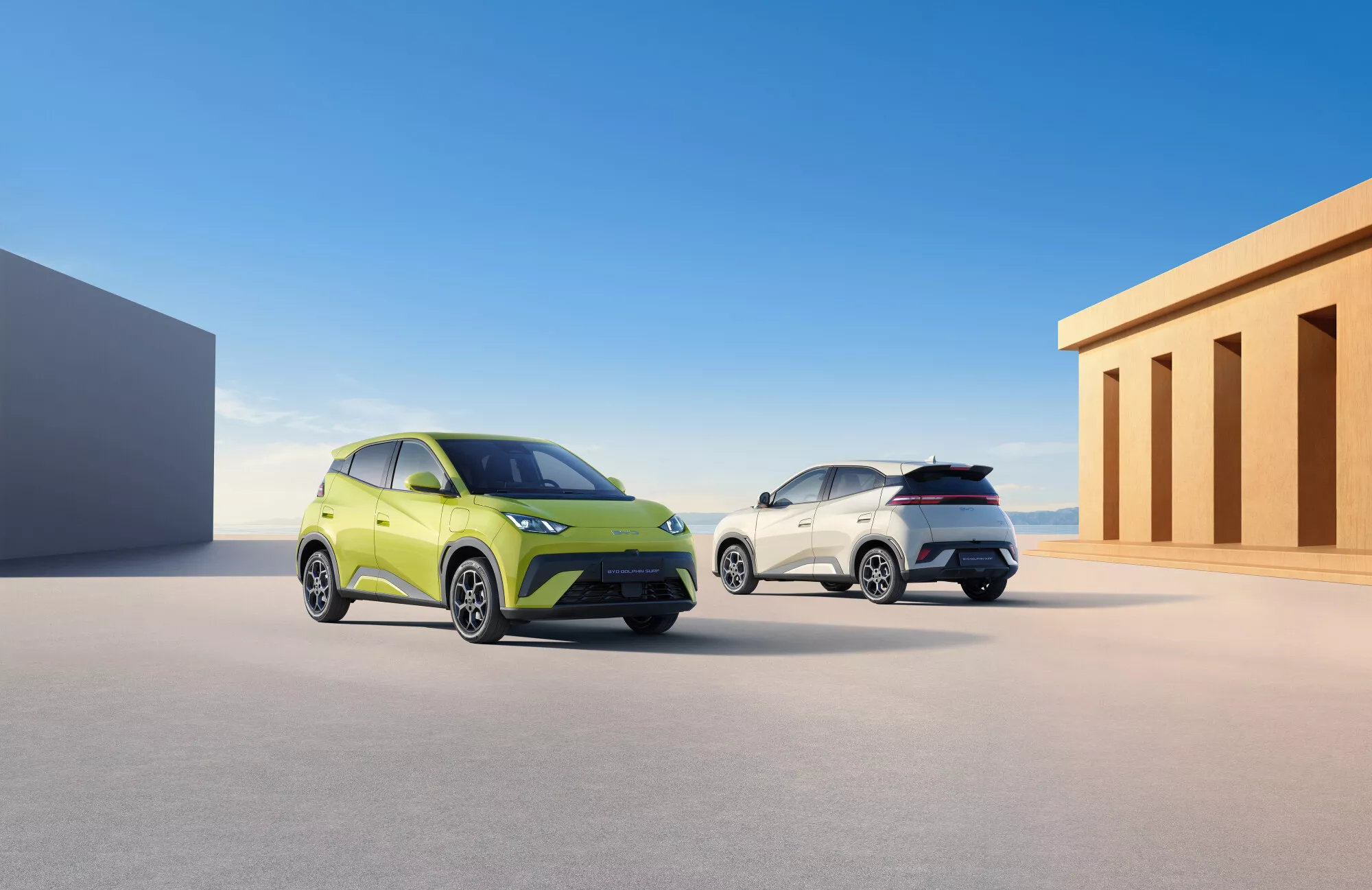
The design has genuine pedigree. Wolfgang Egger, who also worked on cars for Audi, Alfa Romeo, and Lamborghini, led the Seagull’s original design, which is why you can spot shrunken supercar cues in the sharp headlights and short front overhang. Inside, a rotatable 10.1-inch infotainment screen supports wireless Apple CarPlay and Android Auto, voice control activates via “Hi BYD,” and the car integrates with a smartphone app for remote locking, range monitoring, and cabin preconditioning.
The safety story holds up too. BYD provides an 8-year/200,000 km warranty on the battery alongside the 3-year vehicle warranty and service plan. These Blade Batteries are designed for exceptional longevity and thermal stability, with BYD claiming potential service life exceeding 1.5 million kilometres under optimal conditions. And the Early Adopter Package is worth knowing about: BYD launched an early adopter package that included a 7 kW home charger, a R10,000 cash incentive, and a R999-a-month insurance offering through Absa.
One real-world owner in Durban put it simply: “When we heard that the BYD Dolphin Surf was available, I contacted their agent and purchased one without even seeing it. R340k for an EV was really too good a price to turn a blind eye to.” Six months in, he’s charging primarily on solar and the car is parked at home for the majority of the day, benefiting from slow charging via solar panels — meaning day charging is basically free.
Best for: City commuters doing under 150 km per day, first-time EV buyers, tightest-budget buyers. The Dynamic at R389,900 is arguably the sweet spot — 295 km of range for R50,000 more than the base model is genuinely good value.
#2: Dayun S5 — From R399,900
Before the Dolphin Surf arrived, this was the cheapest EV in South Africa. Now it sits at number two — but don’t write it off. The Dayun S5 occupies a different niche: it’s a mini SUV, not a hatchback, and for buyers who want that slightly higher riding position and boxy SUV form factor, it’s still the most affordable way to get there.
The Dayun Yuehu S5 is available in two derivatives: the S5 Standard at R399,900 and the S5 VIP at R449,900. Under the bonnet — or rather, in the floor — it features a 35 kW front-mounted motor delivering 105 Nm of torque, upgraded for local conditions with a top speed of 115 km/h. It is equipped with a 31.7 kWh ternary lithium-ion battery, consuming 10.7 kWh per 100 km, offering a 330-kilometre range.
Let’s be honest: the Dayun doesn’t have the brand recognition of BYD, and its 35 kW motor will feel noticeably slower than the Dolphin Surf’s 55 kW unit, especially on the N1 on-ramps in Johannesburg. Its length of 3,695 mm, width of 1,685 mm, height of 1,598 mm, and wheelbase of 2,410 mm make it genuinely compact — significantly smaller than the Kia Seltos (4,370 mm), Hyundai Creta (4,300 mm), and Honda HR-V (4,330 mm). The Dayun is closer in footprint to a Suzuki Ignis or Renault Kwid than a proper compact SUV, which is worth understanding before you visit a showroom. According to Cars.co.za’s coverage of the launch, the S5 was positioned as South Africa’s cheapest EV before the Dolphin Surf arrived. Battery warranty? A 3-year/60,000 km warranty and service plan, plus a 5-year/120,000 km battery warranty. Not as generous as BYD’s 8-year/200,000 km package, which is worth factoring in.
Best for: Buyers who specifically want SUV form factor and need a few thousand rand less than the Dongfeng Box, and those already in the DFSK/Enviro Automotive dealer network.
How Much Could You Save With an EV?
Use our free calculator to compare your current fuel costs with EV charging costs.
#3: Dongfeng Box — From R459,000
This one is the range king of the affordable bracket. Forget about the hatchback-vs-SUV debate for a moment — if maximising real-world driving range per rand is your priority, the Dongfeng Box is your car. All Box derivatives feature a front-mounted electric motor delivering 70 kW and 160 Nm, and a top speed of 140 kph — that’s meaningfully more power than either the Dolphin Surf or the Dayun S5, and a top speed actually usable on South African highways.
The compact all-electric hatchback is available in four flavours — E1 330, E2 330, E2 430, and E3 430. The former two variants are equipped with a 32.6 kWh battery offering a claimed range of 330 km, while the latter two derivatives carry a larger 43.9 kWh battery offering a claimed 430 km on a full charge. Four hundred and thirty kilometres. That’s a real number — close enough to a Joburg-to-Durban single leg that weekend trips become genuinely viable with one charging stop.
In a real-world test of the E3 430, set to the highest of its two energy recuperation levels and driven in a mix of town and freeway driving, the test car had a range of more than 350 km. If used mostly as an urban commuter, the quoted 400 km-plus range seemed possible. That’s genuinely impressive for a sub-R520,000 car.
But there are caveats worth mentioning. The minimalist interior is almost completely bereft of buttons, with most functions controlled via a large infotainment touchscreen. The cabin has only one USB port, which doesn’t bode well for family harmony. There were gripes with the user-friendliness of the infotainment system too. The dealer said the car will get Android Auto and Apple CarPlay in a future update — which is not ideal if you’re paying today. The Dongfeng Box is sold with a five-year/150,000 km warranty, five-year/100,000 km maintenance plan, an eight-year/200,000 km EV motor and drive battery warranty, and five-year roadside assistance — a strong package overall.
Best for: Buyers who prioritise range above everything else, those doing occasional highway trips, and anyone who wants 70 kW of power for under R500,000.
#4: Dongfeng Vigo E3 — From R579,000
Meet South Africa’s newest and cheapest electric SUV. The new Dongfeng Vigo landed in South Africa on April 10, 2026. Dongfeng is a Chinese car brand that made its local debut in November 2025, initially launching with the electric Box hatchback. Now they’ve gone upmarket — relatively speaking — with a proper compact SUV that costs less than anything comparable.
The Vigo has a starting price of R499,900, making it the most affordable electric SUV in the country. For reference, this title was previously shared by the BYD Atto 3 and Geely E5, which both cost R699,900. In other words, the Vigo has lowered the price floor on electric SUVs by a staggering R200,000. That is a remarkable disruption. R200,000 cheaper than the previous cheapest electric SUV is not a marginal improvement — it’s a different category entirely.
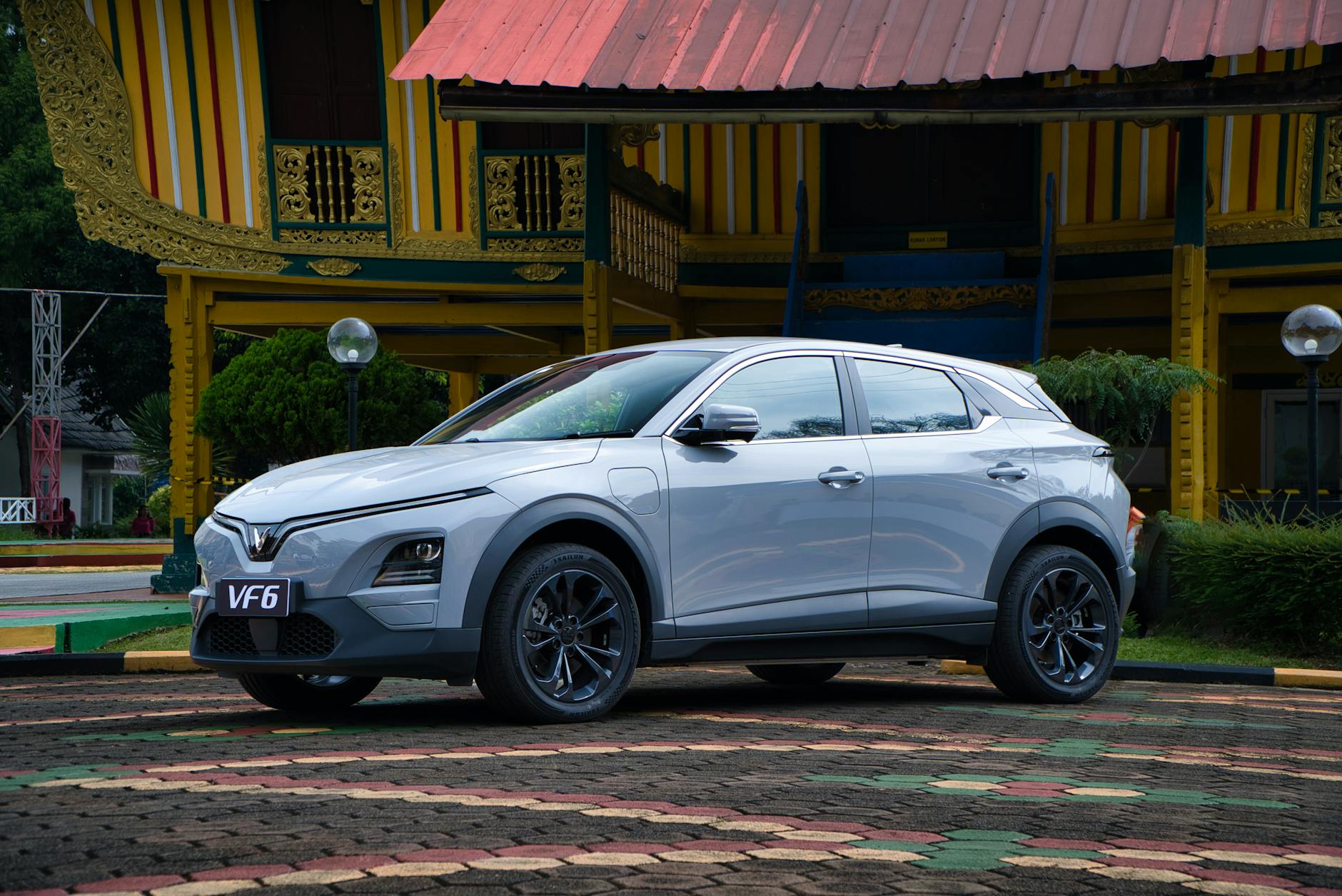
Both versions are equipped with a single front-mounted electric motor with 120 kW and 230 Nm, letting the SUV accelerate from 0 to 100 km/h in a brisk 7.8 seconds. The entry-level E1 uses a 44.94 kWh battery, which affords a driving range of 401 km based on CLTC — closer to 300 km on the more widely recognised WLTP. The E3 has a larger 51.87 kWh battery with a CLTC range of 471 km, around 350 km WLTP.
The spec sheet for a sub-R500,000 SUV is genuinely impressive. Standard features on the Vigo E1 include 17-inch wheels, LED headlights, roof rails, auto-folding side mirrors, and a split tailgate opening to a 500-litre boot. Inside: a multifunction steering wheel, keyless start, automatic air conditioning, leatherette upholstery, a 50W wireless charger, an 8.8-inch digital driver display, and a floating 12.8-inch infotainment screen. Those who step up to the E3 at R579,000 get six-way electric front seat adjustment — with heating, ventilation and memory for the driver — ambient lighting, and a panoramic sunroof.
All Dongfeng cars are sold with a 5-year/100,000 km vehicle warranty, a 5-year/100,000 km service plan, and an 8-year/200,000 km battery warranty.
Best for: Families needing genuine SUV space and a high seating position, buyers who’ve been waiting for the BYD Atto 3 to become affordable, school run parents who want a proper SUV under R600,000.
#5: BYD Dolphin — From R539,900
Don’t confuse this with the Dolphin Surf. The Dolphin is the bigger, more refined sibling — a proper family hatchback where the Surf is more city-car in real-world use. The BYD Dolphin is priced between R539,900 and R602,900 in South Africa. Yes, it technically creeps above our R600,000 benchmark in Extended Range guise, but the Standard Range at R539,900 sits cleanly within budget, and we’d argue the full-fat Dolphin deserves its place in any affordable-EV conversation.
The Standard Range Dolphin uses a 70 kW motor producing 180 Nm, with a 44.9 kWh battery offering roughly 340 km of WLTP range. Step up to the Extended Range, and you’re looking at 150 kW, giving you genuinely brisk acceleration alongside extended range capability. Whereas pricing for the Dolphin begins at R539,900, the entry price for the city-car sibling, the Dolphin Surf, starts well under R400,000 — so you’re paying a meaningful premium, but you’re getting substantially more car.
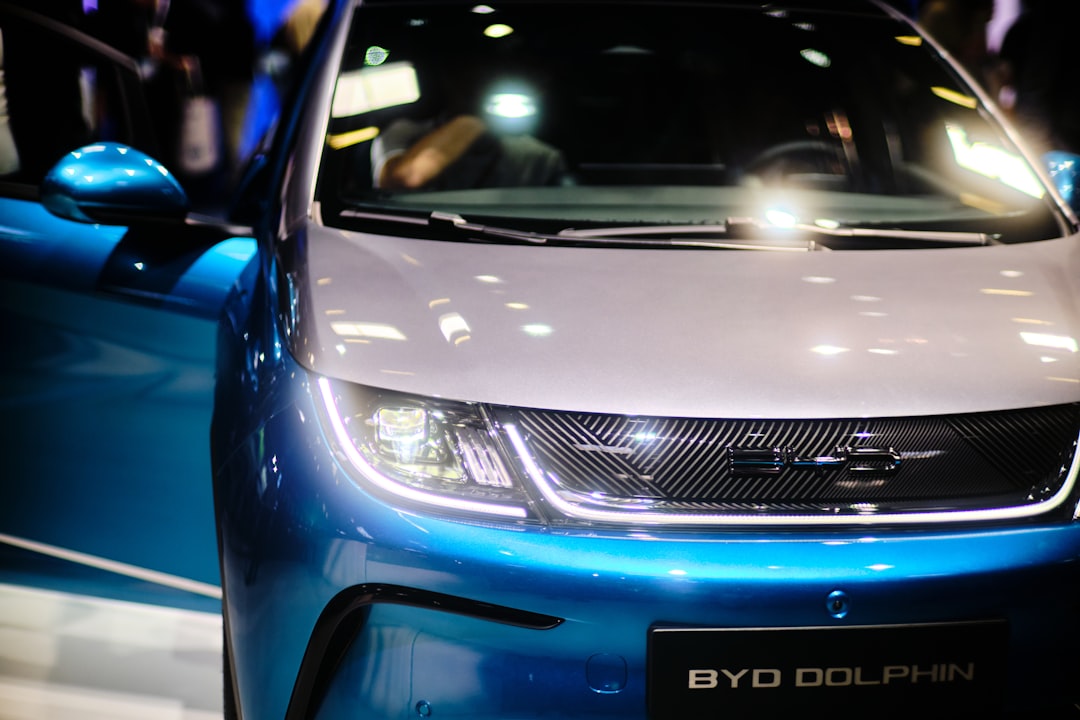
BYD’s e-Platform 3.0 underpinning the Dolphin is the same architecture that’s earned the brand global credibility, and the fit and finish is a noticeable step above the Surf. More legroom, bigger boot, better ride quality on the open road — all the things that matter when a car needs to do more than the school run. If you’re torn between spending R389,900 on a Dolphin Surf Dynamic versus R539,900 on a Dolphin Standard, the deciding factor should be: do you need that extra interior space? If the answer is yes, the R150,000 premium is justified.
The Dolphin benefits from the same BYD Blade Battery technology as the Surf, with an 8-year/200,000 km battery warranty, 3-year vehicle warranty, and service plan. The Standard Range offers a practical balance of performance and affordability, while the Extended Range at R602,900 delivers 427 km of WLTP range and genuinely rapid acceleration for those who can stretch the budget.
Best for: Buyers who want BYD quality and reliability in a full-size hatchback, those doing occasional longer trips, anyone comparing against a Volkswagen Polo GTI or Toyota Corolla budget.
Full Comparison: 2026 Affordable EVs Side by Side
| Model | Price | Battery | WLTP Range | Power | Best For |
|---|---|---|---|---|---|
| BYD Dolphin Surf Comfort | R339,900 | 30.1 kWh | 232 km | 55 kW / 135 Nm | Absolute cheapest, city only |
| BYD Dolphin Surf Dynamic | R389,900 | 38.9 kWh | 295 km | 55 kW / 135 Nm | Best value overall in this list |
| Dayun S5 Standard | R399,900 | 31.7 kWh | ~300 km | 35 kW / 105 Nm | Mini SUV form, tightest budget |
| Dayun S5 VIP | R449,900 | 31.7 kWh | ~300 km | 35 kW / 105 Nm | Mini SUV with more features |
| Dongfeng Box E1 330 | R459,000 | 32.6 kWh | ~330 km | 70 kW / 160 Nm | Best power under R500K |
| Dongfeng Box E3 430 | R519,000 | 43.9 kWh | ~430 km | 70 kW / 160 Nm | Range king of this segment |
| Dongfeng Vigo E1 400 | R499,000 | 44.94 kWh | ~300 km WLTP | 120 kW / 230 Nm | Cheapest electric SUV in SA |
| Dongfeng Vigo E3 470 | R579,000 | 51.87 kWh | ~350 km WLTP | 120 kW / 230 Nm | Electric SUV with sunroof + fast charge |
| BYD Dolphin Standard | R539,900 | 44.9 kWh | ~340 km | 70 kW / 180 Nm | Bigger BYD, refined family hatch |
Ready to Install a Home Charger?
Get a free, no-obligation quote for professional EV charger installation in South Africa.
The Real Cost of Charging: Does the Maths Actually Work?
Here’s where budget buyers need to do their homework — because the sticker price is only half the story. The running cost calculation is where EVs genuinely win.
Take the BYD Dolphin Surf Comfort at R339,900. Real-world consumption is around 13–14.3 kWh per 100 km based on owner data. Driving on electricity in this class of car costs roughly 50 cents per kilometre for daily commuting, compared to a petrol hatchback averaging R1.80 to R2.20 per km at current fuel prices. Over 15,000 km a year, that is a saving of roughly R20,000 to R25,000 annually just in fuel.
Run the specific numbers: at Cape Town’s off-peak tariff of roughly R1.89/kWh, 13.8 kWh per 100 km works out to about R26 per 100 km — or roughly R0.26 per km. A comparable petrol car like a Volkswagen Polo Vivo at 6.5 L/100 km and R23.25/L fuel costs around R1.51/km. Over 15,000 km annually, you’re looking at fuel savings of close to R18,750 per year. For context, a well-specced Volkswagen Polo Vivo starts at roughly R270,000. The Dolphin Surf costs about R70,000 more — meaning at current fuel prices, you’re at break-even in under four years.
At current fuel prices, a Dolphin Surf owner saves roughly R18,000–R25,000 per year over a comparable petrol hatchback — enough to clear the price premium in under four years.
And that’s with today’s fuel price. If fuel climbs further — which South African motorists know is the direction of travel — the payback shortens dramatically. For anyone spending more than R2,000 a month on fuel right now, the conversation about switching to electric isn’t speculative. It’s financial common sense.
To get a personalised breakdown for your specific commute and electricity tariff, use our EV savings calculator here.
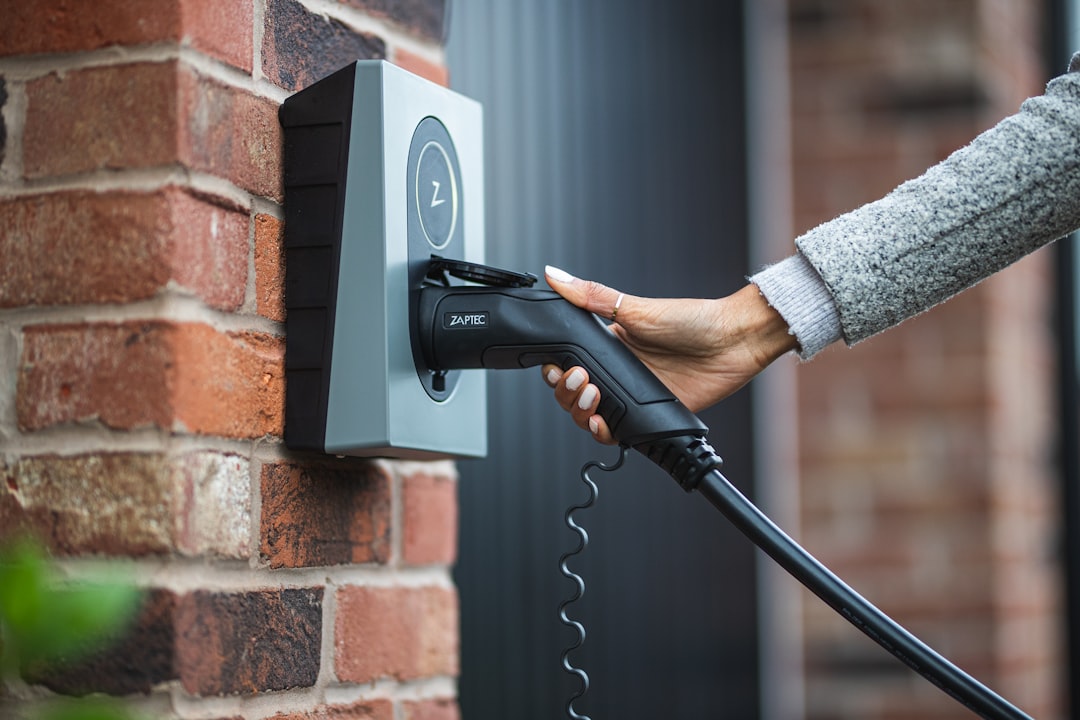
Home Charging: The Non-Negotiable
All five vehicles on this list — every single one — make most sense with home charging. A 7 kW wallbox installed at home is the difference between this being genuinely convenient and mildly frustrating. The good news is that BYD includes a 7 kW wallbox as standard in the Dolphin Surf package. The others may not, so budget R12,000–R25,000 for installation if you need it.
If you’re in sectional title or a body corporate, you’ll need approval to install a dedicated circuit — but this is increasingly common, and many levies now include provisions for it. The conversation with your body corporate is well worth having before you buy.
For apartment dwellers or those without off-street parking, the public network is improving. The Dayun S5 can conveniently be charged at over 350 GridCars charging stations all over South Africa. GridCars operates the largest public network, and CHARGE has been deploying solar-powered hubs every 150 km along major highways. To find the nearest charger to you right now, check our live EV charging map.
Charging time at home on 7 kW AC: expect 4–6 hours for a full charge on the smaller batteries in this segment, which means plugging in overnight and waking up to a full car. Both Dolphin Surf models have a maximum DC fast-charging capacity of 40 kW, meaning a 30–80% top-up takes about 30 minutes on a public fast charger. The Dongfeng Vigo E3’s 167 kW DC charging speed can recharge from 30% to 80% in just 18 minutes — that’s legitimately rapid for this price point.
Ready to get a wallbox sorted? Get a free home charger installation quote here — the process is simpler than most people expect.
What You Give Up vs Petrol (Be Honest With Yourself)
This guide wouldn’t be worth reading if we didn’t address the limitations. These are real.
Range: every single car on this list has under 430 km of claimed range, and real-world figures will be lower. A typical petrol family car does 600–800 km on a tank. If you regularly drive Joburg to Cape Town in a single push, an EV in this price range is not yet your car.
Charging time: even a 30-minute DC fast-charge stop is fundamentally different from a 5-minute petrol fill. For urban commuters who charge at home overnight, this is irrelevant. For road-trippers, it requires planning. Real-world experience shows public chargers can sometimes be offline, which highlights one of the key reasons EV adoption remains slow.
Upfront cost: you’re paying R70,000–R270,000 more than a comparable petrol car depending on what you’re comparing to. That premium recoups over 3–12 years depending on km driven and fuel price — but it does require upfront capital or a larger finance instalment.
And then there’s the brand familiarity factor. BYD now has 589 units sold in a single month — impressive as an NEV brand, considering a more established brand like Mercedes-Benz sold a total of 595 units in the same period. Dongfeng is newer in SA. Dayun newer still. Parts availability, resale values, and long-term dealer support are all unknowns that an established Toyota or VW dealer simply isn’t. That’s a legitimate concern and worth weighing.
Find Charging Stations Near You
Explore our live map of EV charging stations across South Africa — updated in real time.
Who Should Buy Which Model: Our Verdict
Look, if you want a single recommendation: the BYD Dolphin Surf Dynamic at R389,900 is the best value EV in South Africa right now. You get 295 km of range, BYD’s proven Blade Battery technology with an 8-year warranty, Wolfgang Egger design DNA, a 5-star safety rating, and a free 7 kW wallbox. Nothing else at anywhere near this price comes close on total-package value.
But the right car depends on your life. Here’s the breakdown:
Tightest budget, city-only driving: BYD Dolphin Surf Comfort at R339,900. Just make sure your daily commute is comfortably under 150 km.
Want SUV form factor under R450,000: Dayun S5 at R399,900. Accept the slower 35 kW motor and shorter warranty in exchange for that mini-SUV stance.
Prioritise range above everything else: Dongfeng Box E3 430 at R519,000. The 430 km claimed range and 70 kW motor make it the most versatile car in this list for anyone who occasionally goes beyond city driving.
Need a proper electric SUV and can’t stretch to R699,000: Dongfeng Vigo E3 at R579,000. The Vigo has lowered the price floor on electric SUVs by a staggering R200,000 — that’s genuinely significant for family buyers.
Want a refined, bigger BYD with more interior space: BYD Dolphin Standard at R539,900. The step up in quality and space over the Surf is real, and the BYD dealer and service network is unmatched in this segment locally.
Is Now the Right Time to Buy?
Buy now if: you have home charging (or can get it installed), your daily drive is comfortably under 200 km, your fuel bill exceeds R2,000 a month, and you can handle the upfront premium over a petrol equivalent — because you will get it back.
Wait if: you have no home charging option and rely entirely on public infrastructure, you regularly do trips over 400 km without wanting to plan stops, or you’re on an absolutely fixed budget where even the R339,900 entry point requires stretching beyond comfort.
The Eskom situation has also genuinely improved. After years of crippling load-shedding that made home EV charging genuinely unreliable, Eskom reached the milestone of 328 consecutive days without a single stage of load-shedding in April 2026. That’s not a guarantee of the future — but it’s the kind of sustained stability that makes home charging feasible in a way it simply wasn’t two years ago.
The Bottom Line
Five EVs under R600,000. One under R340,000. A public charging network that’s growing, a grid that’s more stable than it’s been in years, and fuel prices that only move in one direction. The barriers to EV ownership in South Africa have been coming down fast, and 2026 is the year that for many city-based drivers, the maths has genuinely crossed over to “yes.”
The Chinese brands — BYD, Dongfeng, Dayun, with Geely and Leapmotor now joining them — have done something the established players wouldn’t: they’ve treated the South African market as worth taking seriously at an accessible price point. For budget-conscious buyers who drive in cities and charge at home, the era of waiting is over. These aren’t future cars. They’re practical, affordable transport for South African roads right now.
Whether you want the absolute cheapest entry point, the best range for the money, or South Africa’s most affordable electric SUV, there’s something in this list for you. And with prices only likely to come down further as competition intensifies, those who move now are buying into a rapidly maturing market — not a gamble on unproven technology.
FAQ
What is the cheapest electric car in South Africa in 2026?
The BYD Dolphin Surf Comfort is priced at R339,900, making it the most affordable proper electric vehicle on sale in South Africa as of 2026. It offers 232 km of WLTP range and a 5-star Euro NCAP safety rating. A free 7 kW home wallbox is included.
How much does it cost to charge an electric car at home in South Africa?
Using Cape Town’s off-peak tariff of approximately R1.89/kWh, a full charge of the BYD Dolphin Surf Comfort (30 kWh battery) costs roughly R57. At 13.8 kWh/100 km efficiency, that works out to about R26 per 100 km — compared to approximately R150 per 100 km for a petrol equivalent. Over 15,000 km a year, that is a saving of roughly R20,000 to R25,000 annually just in fuel.
What is the cheapest electric SUV in South Africa?
The Dongfeng Vigo has a starting price of R499,900, making it the most affordable electric SUV in South Africa. It was launched on April 10, 2026, and undercuts the previous cheapest electric SUV by R200,000. The E1 variant offers around 300 km of WLTP range and 120 kW of power.
Do EVs under R600K have enough range for South African driving?
For city commuters, yes — comfortably. BYD noted at the Cape Town launch that the average South African daily travel distance sits around 55 km, meaning the base model covers over four days of typical driving on a single charge. For longer highway trips, the Dongfeng Box E3 430 with its 430 km claimed range is the best option in this price bracket. All models support DC fast charging for top-ups on the road.
Is the BYD Dolphin the same as the BYD Dolphin Surf?
No — they are different vehicles. The BYD Dolphin Surf (from R339,900) is a smaller city-focused hatchback. The Dolphin is a larger car beginning at R539,900. The Dolphin offers more interior space, a larger battery, higher power output (70 kW vs 55 kW), and a more refined driving experience — but costs significantly more.
How long does home EV charging take?
AC home charging on the Dolphin Surf Comfort takes around 4.6 hours for a full charge, while the Dynamic needs 5.9 hours. Both come bundled with a 7 kW home wallbox. Most buyers simply plug in overnight. For faster top-ups, both models have a DC fast charging ceiling of 30–40 kW, and the Dynamic can go from 30% to 80% in roughly 30 minutes. To see what home charger installation costs in your area, get a free quote here.
Which affordable EV has the best real-world range in South Africa?
The Dongfeng Box E3 430 with its 43.9 kWh battery claims 430 km per charge. In real-world mixed driving, the test car achieved a range of more than 350 km — the best in this price bracket. If you regularly do longer trips and want the EV under R520,000 with the least range anxiety, the Box E3 430 is your car.
Continue Reading