On May 6, 2026, South Africa faces its largest fuel price shock in history — diesel could jump R6.00 to R9.00 per litre depending on whether the government extends its R3.00 levy relief. A Toyota Fortuner doing 40,000km annually will cost R136,000 in fuel at post-hike prices. The BYD Atto 8 PHEV, launched April 15, costs R28,584 per year for the same distance when charged at home. Annual saving: R107,416. Five-year saving: R537,080. Home charger payback at these savings: 1.6 months. If you want your exact numbers, calculate your personal fuel savings at post-crisis diesel prices here. The results are shocking.
The Fuel Crisis: What Is Actually Happening
On April 8, 2026, Iran and the United States announced a ceasefire following weeks of conflict that restricted nearly all traffic through the Strait of Hormuz. The International Energy Agency characterised this as the “largest supply disruption in the history of the global oil market.” That is not hyperbole from a doom-scrolling blogger. That is the IEA.
Brent crude surged more than 55% during the conflict, hitting nearly $120 a barrel at its peak, amid fears of disrupted oil flows through the Strait of Hormuz. The ceasefire sent oil prices lower briefly, but the relief has been partial and unstable. Even after the April 8 ceasefire, ship traffic through the Strait of Hormuz — a critical route carrying roughly 20% of global oil supply — remained far below pre-war levels. Military activity, stalled negotiations, and continued regional instability have kept oil markets volatile.
For South Africa specifically, this is a double blow. While the Rand has stabilised slightly at R16.30 to R16.64 per US dollar, international Brent Crude remains the primary culprit, hovering near R1,550–R1,630 per barrel (approximately $95–$100) amid ongoing tensions. And then there is the levy question.
A key uncertainty shaping May’s fuel price outcome is the future of the R3.00 per litre fuel levy relief introduced in April. The measure was implemented to cushion consumers from sudden price shocks but is scheduled to expire on May 6, 2026. Finance Minister Enoch Godongwana confirmed that the government is considering extending the relief but emphasised that it cannot be maintained indefinitely due to fiscal constraints.
With the latest CEF data pointing to a diesel hike of over R6.00 per litre — and that’s assuming the government extends the R3.00 levy relief — diesel 0.05% faces an increase of 624 cents per litre even on the more optimistic projections. If that levy relief expires unextended, the number climbs past R9.00 per litre for diesel alone. For a Fortuner or Hilux owner doing 40,000km a year, this isn’t an inconvenience. This is a financial emergency.
A small car with a 45L tank could pay between R163 and R298 more per fill-up. For a large SUV or bakkie with an 80L diesel tank, a full tank could cost an eye-watering R860 to R1,100 more than it did in April.
And this isn’t a one-month crisis. Any reopening of the strait would likely trigger an immediate drop of between R163–R326 per barrel (approximately $10–$20) in crude prices due to speculative positioning, but that relief would be temporary. Supply chain bottlenecks, infrastructure damage and lingering production outages would keep the market tight, likely anchoring Brent in the R1,304–R1,467 per barrel range (approximately $80–$90) rather than a full return to pre-crisis levels.
Investec Chief Economist Annabel Bishop has warned that these fuel hikes are no longer just a motoring issue — they are an inflation disaster. The projected May hike is expected to add 0.6% to monthly inflation, potentially pushing May’s CPI to 4.2%. Consequently, the South African Reserve Bank may be forced into a 25-basis-point interest rate hike during the MPC meeting on 28 May.
Higher fuel, higher inflation, higher interest rates. If you’re financing a Fortuner right now, the walls are closing in from three directions simultaneously.
How Much Could You Save With an EV?
Use our free calculator to compare your current fuel costs with EV charging costs.
Enter the BYD Atto 8: The Fortuner Killer Nobody Saw Coming
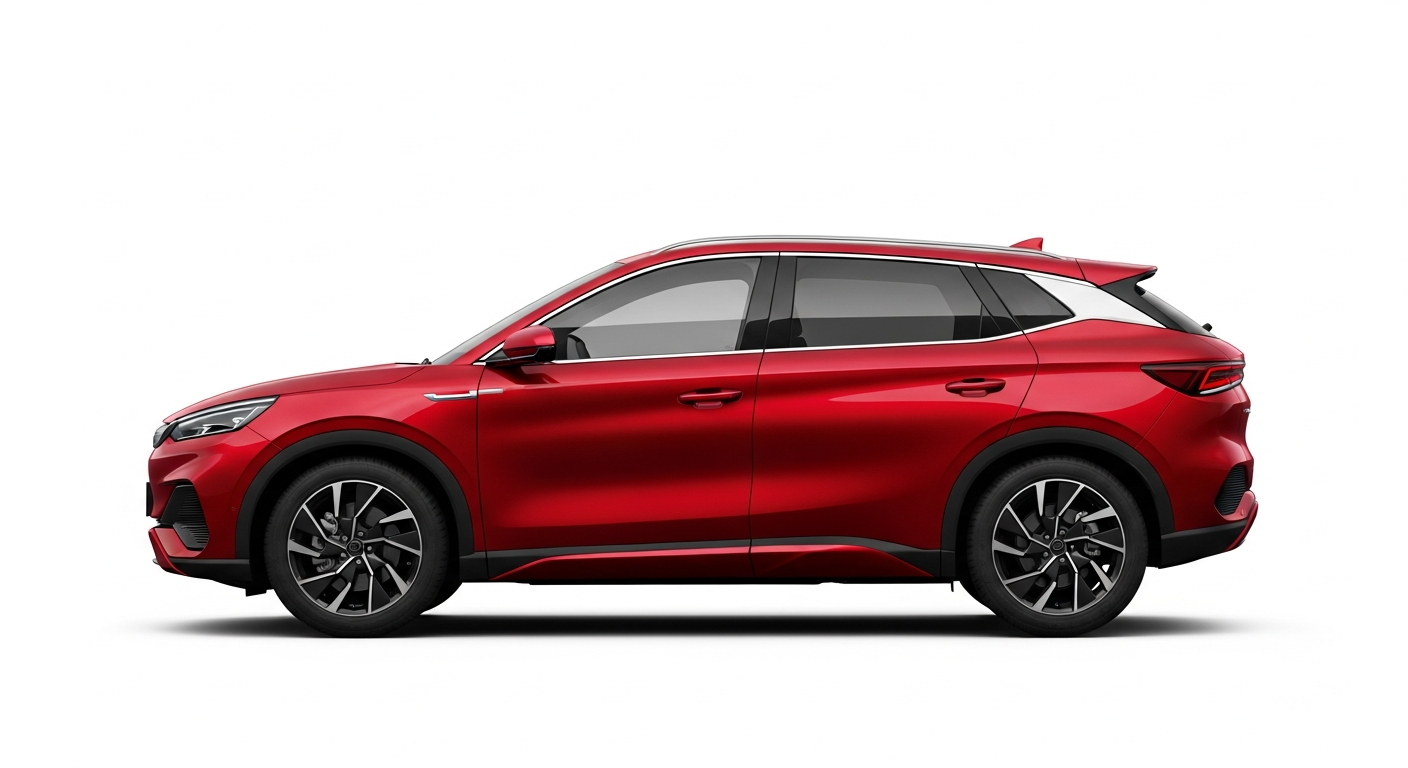
And here’s where it gets interesting. On April 15, 2026 — almost as if BYD had a direct line to the Department of Mineral Resources — BYD launched its new seven-seater plug-in hybrid electric vehicle (PHEV) SUV, the Atto 8, in South Africa. A direct competitor to the Toyota Fortuner and Ford Everest, capable of running 130km on pure electric power, and priced from R1,059,900. The timing is not a coincidence. It is an opportunity.
South Africa’s plug-in hybrid SUV market has a new entrant with the arrival of the BYD Atto 8, a large 7-seater crossover that combines long-distance practicality with strong electric performance and premium-level features. Positioned as a family-focused flagship, it enters the segment with serious specifications, bold sizing, and pricing that places it firmly in the upper-mid SUV category.
Featuring BYD’s fifth-generation DM Super Hybrid Technology, the Atto 8’s powertrain pairs electric motor(s) with a 110kW/220Nm 1.5-litre, four-cylinder turbocharged petrol engine. The Premium model develops a combined system output of 205kW and 315Nm. The Performance AWD derivative features twin electric motors for combined power and torque outputs of 359kW and 675Nm.
The Performance model’s 0–100km/h acceleration is claimed at 4.3 seconds — faster than a BMW M3, in a seven-seater family SUV. The Fortuner 2.8 GD-6 does 0–100 in around 10 seconds. The Ranger Raptor manages roughly 7.9 seconds. This is not a fair fight.
The Performance model features a bigger 35.6kWh battery pack, allowing it to travel 130km on electric power only, and manage a total range of 844km. In practical SA terms: charge overnight at home, and for most weekday commuters, the petrol engine never even wakes up. Johannesburg to Pretoria on the N1? Pure electric, both ways, nothing spent at the pump.
BYD’s seven-seater PHEV SUV is priced from R1,059,900 and R1,259,900 for the Premium and Performance AWD derivatives, respectively. The Toyota Fortuner 2.8 GD-6 4×4 AT starts at around R900,000. The Ford Everest V6 Platinum sits above R1.1 million. When you factor in the running cost savings we’re about to calculate, the Atto 8 is not the expensive option. It is the cheap option.
These prices include a 5-year/100,000km vehicle warranty, a 5-year/100,000km powertrain warranty, an 8-year/200,000km battery warranty and a 5-year/100,000km maintenance plan. Compare that to a Fortuner’s standard 3-year/100,000km warranty. The BYD walks away with the peace-of-mind comparison too.
For buyers comparing across the segment, our full EV vs petrol running cost breakdown for South Africa in 2026 is worth a read before you sign anything at a dealership.
The Running Cost Maths: Prepare to Feel Uncomfortable
This is the section that matters. Opinions are free. Numbers are not.
Take a real-world South African scenario: a high-mileage driver doing 40,000km per year in a Toyota Fortuner 2.8 GD-6 diesel. Sales reps, business owners, farmers running between towns on the N1. You know who you are.
At the pre-crisis diesel price of approximately R26.11 per litre with a real-world consumption of 8.5L/100km, that’s 3,400 litres a year — roughly R88,400 in annual fuel costs. It hurts, but it’s manageable. Now take diesel to R32.35 per litre (the more conservative post-May scenario, with levy relief extended). Annual fuel cost: R110,000. If the levy expires unextended and diesel hits R40.00 per litre as projected in worst-case CEF scenarios, you’re looking at R136,000 per year just to keep the Fortuner moving. That’s R11,333 a month in diesel. On a vehicle that’s depreciating.
Now look at the Atto 8 PHEV. Assume you charge at home overnight — using Cape Town’s off-peak tariff of around R1.89/kWh — and that 70% of your annual driving (28,000km) happens on electric power. The remaining 30% (12,000km) uses the petrol engine at approximately 6L/100km on the combined cycle.
| Vehicle | Annual Fuel/Energy Cost (May 2026) | 5-Year Total |
|---|---|---|
| Toyota Fortuner 2.8 GD-6 (diesel R40/L worst-case) | R136,000 | R680,000 |
| BYD Atto 8 PHEV — Electric portion (28,000km @ R1.89/kWh) | R10,584 | R52,920 |
| BYD Atto 8 PHEV — Petrol portion (12,000km @ R25/L) | R18,000 | R90,000 |
| BYD Atto 8 PHEV — Total | R28,584 | R142,920 |
| Annual Saving (Atto 8 vs Fortuner) | R107,416 | R537,080 |
Note: The table uses R40/L diesel (worst-case post-May projection if levy relief expires) for comparison consistency. At the more conservative R32.35/L scenario (levy extended), the Fortuner’s annual cost drops to R110,000, reducing the Atto 8 annual saving to R81,416 — still a five-year saving of R407,080. Either way, the PHEV wins decisively.
Read that last line again. R537,080 in fuel savings over five years in the worst-case diesel scenario. That’s more than half the purchase price of the Atto 8 itself, recovered purely from what you no longer spend at the pump.
Now run the same numbers for a daily commuter scenario. A Johannesburg professional doing 25,000km per year in a VW Polo 1.0 TSI versus a BYD Atto 3 full EV.
Petrol 95 at R25/L post-May (conservative estimate), Polo consuming 5.8L/100km: that’s 1,450 litres at R25.00 = R36,250 per year. The BYD Atto 3, consuming 16.5kWh/100km and charged at Johannesburg’s off-peak rate of around R1.75/kWh, works out to 4,125kWh × R1.75 = R7,219 per year. Annual saving: R29,031. That’s R2,419 per month back in your pocket — every single month.
Home charger payback for the Atto 3 scenario at these savings: 6.2 months. After that, it’s pure profit on every kilometre.
Ready to Install a Home Charger?
Get a free, no-obligation quote for professional EV charger installation in South Africa.
The Home Charger Equation: The Key That Unlocks Everything
Here’s the thing people miss when they debate EVs: public charging is your backup plan. Home charging is your primary fuel source. And the economics of home charging in South Africa right now are extraordinary.
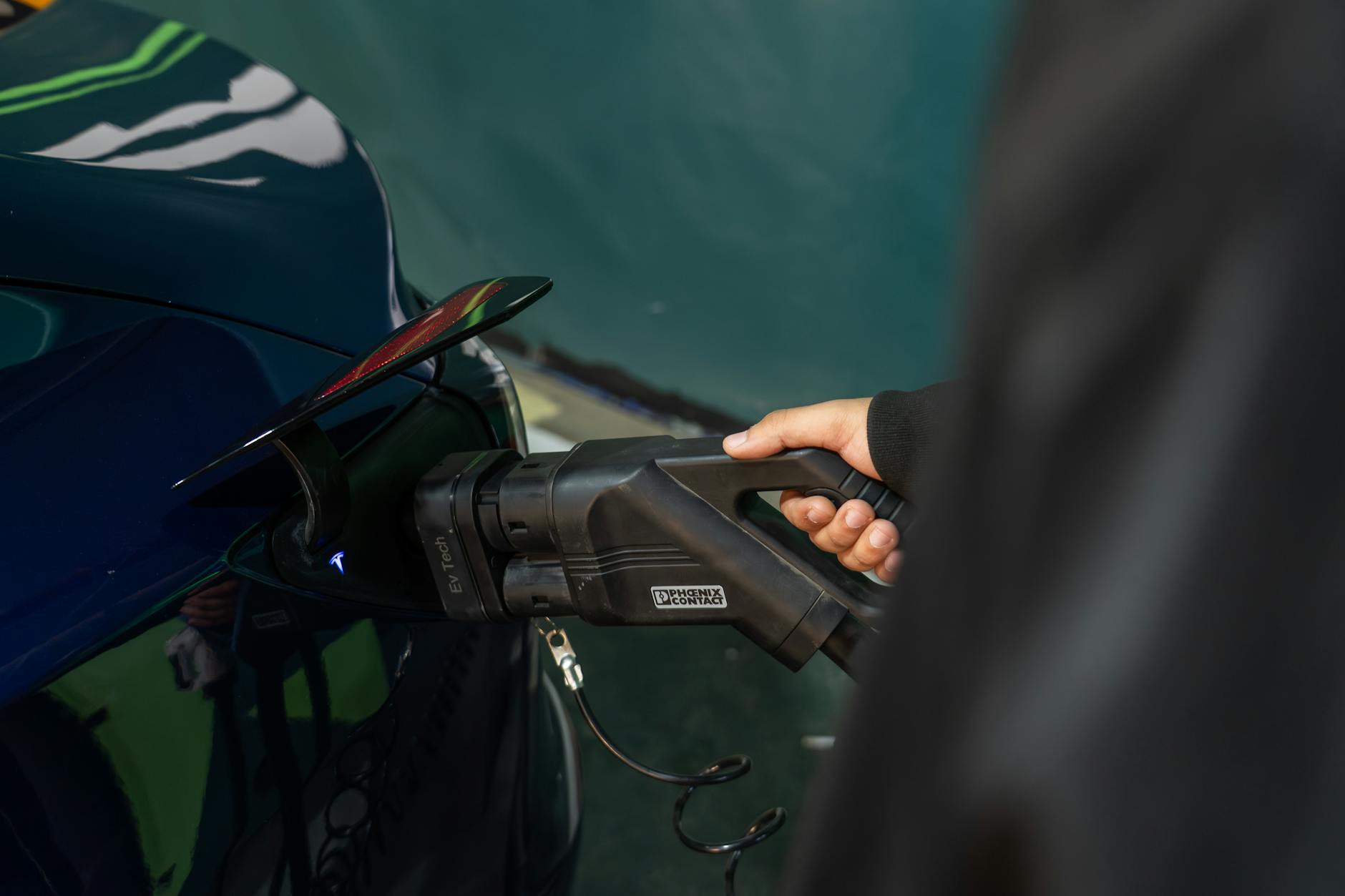
A 7.4kW wallbox charger professionally installed in Cape Town or Johannesburg runs R14,000 to R22,000 all-in, depending on the distance from your DB board and whether you need an upgraded supply. That sounds like a significant outlay. But at R107,000 in annual savings on the Fortuner scenario, the charger pays itself back in approximately 1.6 months. You’re not buying a luxury. You’re buying a machine that prints money.
Set the charger timer for 10pm. Wake up at 6am with 130km of free range. Repeat every day. Eskom’s grid has been remarkably stable — 341 days of no load-shedding heading into winter 2026, with the utility reporting improved generation capacity. The load-shedding bogeyman that scared people away from EVs in 2023 and 2024 has largely retreated. Even if Stage 2 creeps back during winter peaks, a full overnight charge on an 11kW wallbox takes under 3 hours. You’ll survive Stage 2.

Public DC fast charging exists as a backup — typically R5.00 to R8.00 per kWh at commercial rapid chargers — but if you’re paying those rates as your primary fuel source, you’re doing it wrong. Home charging at R1.75–R1.89/kWh off-peak is where the economics work. Check the live public charger map for your route to understand the backup network before committing to a vehicle.
For body corporate residents or flat dwellers: this is no longer the obstacle it was. SANS 10142-compliant installation with a Certificate of Compliance (CoC) is legally sound, and with Eskom stability improving the conversation, most body corporates that were previously stonewalling EV charger requests are now approving them. The tide has turned. Get a free home charger installation quote and see exactly what’s involved for your specific property — payback at current fuel prices is under two months for high-mileage drivers.
Find Charging Stations Near You
Explore our live map of EV charging stations across South Africa — updated in real time.
Should You Wait, or Buy Now?
This is the question every fence-sitter asks. “Maybe I’ll wait for the next BYD model.” “Maybe fuel prices drop again.” “Maybe there’s a better EV coming.”
Deal with the fuel question first. Any reopening of the Strait of Hormuz would likely trigger an immediate drop of between R163–R326 per barrel (approximately $10–$20) in crude prices, but that relief would be temporary. Supply chain bottlenecks, infrastructure damage and lingering production outages would keep the market tight, likely anchoring Brent in the R1,304–R1,467 per barrel range (approximately $80–$90). Even in the optimistic scenario where diesel retreats to R30/L by Q4 2026, the Atto 8 still saves you R70,000+ per year versus a Fortuner. The economics don’t flip back.
On the “cheaper EV coming” argument: yes, BYD’s Dolphin Surf starts at R341,900 and the Atto 3 sits at R599,900. These are genuinely excellent options for commuters not needing seven seats. But if you need a seven-seater SUV with serious towing capability and range that competes with a Fortuner or Everest, the Atto 8 is your vehicle right now. Every month you delay in the Fortuner costs you R8,000 to R12,000 in fuel versus what you’d spend charging the Atto 8.
Put that in brutal terms. Hesitate for six months? You’ve burned R48,000 to R72,000 that you could have avoided. That’s a business-class flight to London. That’s a braai fridge for every room in the house. That’s actual, real money, gone.
The grid is stable. The Rand has shown relative resilience, stabilising around R16.50 to R16.64 per US dollar. Interest rates may rise, making vehicle finance more expensive. The window to lock in a finance deal before the SARB reacts to CPI is narrowing. This is the convergence moment. Stable grid, available stock, fuel prices at historic highs, home charger payback under two months. Everything is aligned.
FAQ
What happens to the maths if diesel prices drop back to R26/L?
Even if diesel retreats to R26 per litre — back to pre-crisis levels — the Atto 8 PHEV still saves a 40,000km/year driver approximately R60,000 annually versus a Fortuner. The home charger still pays for itself within five months. The cost-of-ownership case for PHEVs doesn’t depend on a fuel crisis to be compelling. The crisis just makes it urgent.
Is the BYD Atto 8 available to order right now?
BYD pulled the covers off the all-new Atto 8 in South Africa on April 15, 2026. The seven-seater, known as the “Tang L” in its local market, is the latest plug-in hybrid offering from the Chinese automaker. It is available now through BYD dealerships. Delivery lead times are typically 4–8 weeks depending on specification and colour. Get your order in before the post-May fuel shock turns every Fortuner and Everest owner into a motivated buyer.
Can I install a home EV charger if I live in a complex or apartment?
Yes. A SANS 10142-compliant wallbox installation with a Certificate of Compliance is legal in sectional title properties. The body corporate approval process has become significantly easier as load-shedding concerns have diminished. Your installer will handle the liaison documentation. The key is using a registered electrician who understands both the EV charging standards and the sectional titles process. Request a free installation quote and your installer will assess your property specifics.
What is the BYD Atto 8’s electric-only range in real-world South African conditions?
The Performance model comes with a bigger 35.6kWh battery that offers up to 130km of electric-only driving. In real-world SA conditions — Highveld altitude, AC running, mixed urban and highway — expect 100–115km of practical electric range. That comfortably covers a Johannesburg-to-Pretoria return commute on pure electricity five days a week, with charge remaining. The petrol engine is genuinely a backup, not a crutch.
What about BYD resale values?
BYD South Africa sold a record number of vehicles in March 2026, with the brand’s local market presence growing rapidly. As fuel costs remain elevated through 2026, demand for fuel-efficient PHEVs and EVs is accelerating. Early resale data from 2-year-old Atto 3s suggests depreciation broadly in line with established European brands. The fuel savings over a 3-to-5-year ownership period — R300,000 to R537,000 depending on mileage — comfortably absorb any resale differential versus the Fortuner.
Is now actually the right time, or should I wait for better infrastructure?
South Africa’s public EV charging network has grown significantly. The live charging map shows DC fast chargers on every major N-route corridor. But for a PHEV like the Atto 8, public infrastructure is largely irrelevant to daily economics — you charge at home, overnight, and the 800km+ combined range handles any road trip without anxiety. Infrastructure is a valid concern for full BEVs on remote routes. For PHEVs in an urban SA context, it’s essentially a non-issue.
Continue Reading