At R35 per litre for diesel — and projections suggest it could hit R40 — the question isn’t whether EVs make financial sense anymore. It’s how fast you can get a home charger installed. South Africa is staring down one of the most punishing fuel price events in its history, with the May 6 adjustment poised to deliver a double blow: sustained global oil prices driven by Strait of Hormuz disruptions, layered on top of a government relief levy that is scheduled to expire. The maths, at these numbers, is brutal for diesel owners — and transformative for anyone considering a plug-in hybrid.
As of April 20, 2026, the fuel situation in South Africa has evolved into a critical economic event. While mid-month data suggests a slight easing from the “doomsday” scenarios predicted in early April, motorists are still facing a historic increase scheduled for Wednesday, 6 May 2026. The crisis is driven by a collision of global war-driven oil prices and the expiration of emergency government intervention. We’re not telling you to panic-buy an EV. We’re showing you the maths. And right now, the maths are screaming.
The BYD Atto 8 PHEV launched in South Africa on April 15, 2026 — almost as if it was timed for this exact moment. A seven-seat PHEV with up to 130 km of pure electric range for around R1.06 million, arriving just as diesel threatens to hit levels that would have seemed impossible eighteen months ago. Whether that’s coincidence or clairvoyance from BYD’s product planners, the timing couldn’t be more relevant.
What Is Actually Happening With Fuel Prices in May 2026
Brent crude has climbed back above $100 per barrel, fuelled by escalating tensions in the Middle East. Disruptions in the Strait of Hormuz, a critical route carrying roughly 20% of global oil supply, have intensified concerns over supply constraints. Military activity, stalled negotiations between the United States and Iran, and continued instability in the region have kept oil markets volatile. Shipping delays, rerouted tankers, and rising insurance costs are feeding directly into global fuel prices, raising import costs for countries like South Africa. And as a net importer of fuel, we feel every barrel of this conflict directly at the Engen forecourt.
Then there’s the levy issue. Finance Minister Godongwana proposed that the general fuel levy be temporarily reduced by R3 per litre from Wednesday, 1 April 2026 to Tuesday, 5 May 2026, reducing the general fuel levy for petrol from R4.10 per litre to R1.10 per litre. Finance Minister Enoch Godongwana confirmed that the government is considering extending the relief but emphasised that it cannot be maintained indefinitely due to fiscal constraints.
The two scenarios motorists face are stark. Scenario A — “The cliff” — means the R3.00 levy is added back in full on May 6, pushing petrol toward R30/litre and diesel past R37/litre. Scenario B involves Treasury opting to “phase in” the levy over several months. Either way, this could result in petrol increasing by over R6.00 per litre and diesel by nearly R14.00 per litre in a single month.
Based on Central Energy Fund data for April 2026 and the scheduled expiry of the R3/litre relief, the R35/litre diesel projection for May 6 assumes partial levy reinstatement (approximately R1.50-R2.00 of the R3.00 relief added back) combined with continued elevated Brent crude pricing. The R40/litre worst-case scenario assumes full R3.00 levy restoration plus further oil price increases driven by sustained Middle East supply disruptions. These are not speculative figures — they represent the mathematical outcome of known policy changes and observable commodity pricing as of late April 2026.
Without further intervention, May 2026 is set to go down as one of the most expensive months in South African motoring history.
A large SUV or bakkie with an 80-litre tank could cost an eye-watering R860 to R1,100 more to fill up than it did in April. If you drive a Fortuner and you fill up twice a month, that’s potentially R2,200 extra. Per month. Every month. Until something changes.
Enter the BYD Atto 8: Right Car, Right Moment
On April 15, 2026, BYD unveiled the all-new Atto 8 in Johannesburg. The seven-seater, known as the “Tang L” in its local market, is the latest plug-in hybrid (PHEV) offering from the Chinese automaker. It’s big. It’s properly equipped. And it arrives at precisely the right moment in South African motoring history.
BYD’s seven-seater PHEV SUV is priced from R1,059,900 and R1,259,900 for the Premium and Performance AWD derivatives, respectively. That puts the entry-level Atto 8 Premium in direct competition with a Toyota Fortuner 2.8 GD-6 4×4 — which lists at around R939,900 to R1,009,000 depending on trim level (the GR-S 4×4 variant sits at the upper end of that range). Same price bracket. Completely different running cost story.
Featuring BYD’s fifth-generation DM Super Hybrid Technology, the Atto 8’s PHEV powertrain pairs the electric motor(s) with a 110 kW/220 Nm 1.5-litre, four-cylinder turbocharged petrol engine. The range-topping Performance AWD model goes properly hard: twin electric motors deliver combined power and torque outputs of 359 kW and 675 Nm.
But here’s the number that matters most for the fuel crisis conversation: electric range. The Performance model uses the same 1.5-litre petrol engine but adds another electric motor and increases the battery to 35.6 kWh, netting up to 150 km of electric-only range and “more than 1,000 km combined.” For a sales rep or daily commuter driving 80 km round-trip, that means going all week without touching the petrol tank. At R35-40/litre diesel, that’s not a minor perk — it’s a monthly saving of thousands of rands.
Standard with every Atto 8 is a 5-year/100,000 km vehicle warranty, 5-year/100,000 km powertrain warranty, 8-year/200,000 km battery warranty and a 5-year/100,000 km maintenance plan. That battery warranty alone should calm the nerves of anyone who’s been burned by out-of-warranty repair bills before.
How Much Could You Save With an EV?
Use our free calculator to compare your current fuel costs with EV charging costs.
The 5-Year TCO Comparison: Atto 8 vs Fortuner Diesel
This is where you need to put down whatever you’re drinking, because the numbers get dramatic fast.
The Toyota Fortuner 2.8 GD-6 is South Africa’s quintessential family SUV. Real-world mixed driving puts consumption at around 7.5 L/100 km for most drivers. At the current April 2026 diesel price of approximately R26/litre (post-levy relief), that’s around R195 per 100 km. At R35/litre in May, it becomes R262.50 per 100 km. Drive 20,000 km a year and you’re spending R52,500 on diesel annually. At R40/litre — the worst-case Scenario A number — that climbs to R60,000 per year, or R5,000 every single month just on diesel.
The Atto 8 Performance, driven 80% electrically (achievable for most daily commuters with a home charger), paints a completely different picture. According to Eskom’s 2025/26 Homeflex tariff schedule, residential rates average roughly R2.92/kWh off-peak for direct Eskom customers (rates vary by municipality and are subject to annual adjustment). A 60 kWh battery charged overnight off-peak costs roughly R26 per 100 km. Scale that to 20,000 km/year at 80% electric usage and you’re looking at approximately R5,200 in electricity costs. Add 20% petrol driving at modest real-world consumption and you’re still under R8,000 total annual energy cost. Compare that to R52,500-R60,000 for the Fortuner. Over five years, that gap becomes a chasm.
| Metric | BYD Atto 8 Performance | Toyota Fortuner 2.8 GD-6 4×4 |
|---|---|---|
| Purchase price (2026) | R1,259,900 | R939,900–R1,009,000 |
| Annual energy cost (20,000 km, R35/L diesel) | ~R8,000/year | ~R52,500/year |
| Annual energy cost (20,000 km, R40/L diesel) | ~R8,000/year | ~R60,000/year |
| 5-year energy cost (R35/L scenario) | ~R40,000 | ~R262,500 |
| 5-year energy savings vs Fortuner | R222,500 saved | — |
| Home charger install (7–22 kW) | R8,000–R30,000 | N/A |
Net savings over five years, after accounting for charger installation: somewhere between R192,500 and R214,500. That’s a significant chunk of the premium you’d pay for the Atto 8 over the entry Fortuner — paid back purely through energy cost differentials. And those calculations assume diesel stays at R35/litre. If it goes to R40, the savings are even more dramatic.
Want to plug in your own numbers? Use our EV savings calculator to see exactly what you’d save based on your own monthly mileage and home electricity rate.
The Home Charger Economics: Where the Real Magic Happens
Here’s the thing — the entire TCO argument above hinges on one thing: having a home charger. Without one, you’re relying on public charging (which is more expensive and less convenient) or you’re barely using the electric range at all.
Installing a Level 2 home charger costs R8,000–R30,000, offering greater reliability than public charging. A smarter 22 kW unit with load management and scheduling — ideal for the Atto 8 Performance’s 35.6 kWh battery — will sit at the higher end of that range. But context matters. The payback period on the charger itself is typically 18 to 30 months for a commuter driving 1,800 km/month. Add solar and the payback drops to under a year in many cases.
At R35-40/litre diesel, that payback period collapses even further. If you’re currently spending R52,500 a year on diesel and you switch to primarily electric at home, the charger pays for itself in fuel savings alone within four to seven months. That’s not a marketing claim — that’s arithmetic.
And the grid situation? Eskom enters the 2026 winter season projecting a winter period of continued energy stability from 1 April to 31 August 2026. According to Eskom’s 2025 system status reports, South Africa went over 200 days without load-shedding between June and December 2025, and as of early 2026 the grid remains stable. The load-shedding-ruins-EV-ownership argument is increasingly hollow. Charge overnight at 11pm. Wake up to a full battery. Done.
Don’t wait for the May price shock to hit before acting. Get a free home charger installation quote now — lead times are growing as more South Africans make the switch.
Ready to Install a Home Charger?
Get a free, no-obligation quote for professional EV charger installation in South Africa.
The Real-World Scenario: 2,000 km/Month Sales Rep
Picture a sales rep covering Gauteng — Sandton to Pretoria to Midrand and back, day in, day out. Two thousand kilometres a month. That’s 24,000 km a year, and pretty typical for someone in that role. On a Fortuner 2.8 GD-6 at 7.5 L/100 km and R35/litre diesel, that’s R63,000 a year. Nearly R5,300 a month, just on fuel. Every Eskom outage, every fuel hike, every Middle East headline hits that person directly in the wallet.
On an Atto 8 Performance with a home charger, the same 24,000 km at 80% electric costs roughly R6,240 in electricity annually, plus perhaps R2,500 in petrol for the remaining 20%. Total annual energy: under R9,000. Monthly fuel cost: under R750. The difference is R54,000 per year. Per year. That’s a small car payment, a decent kitchen renovation, or twelve very good braais. Take your pick.
But even the other 20% isn’t stranded — the Premium DM-i model claims an overall fuel consumption of 6.9 litres per 100 km and a range of 892 km on a full tank, so long highway runs to Durban or Cape Town are genuinely sorted. This isn’t an EV that leaves you anxious on the N3. It’s a PHEV with proper range insurance.
What About Pure EVs? Even Better Numbers
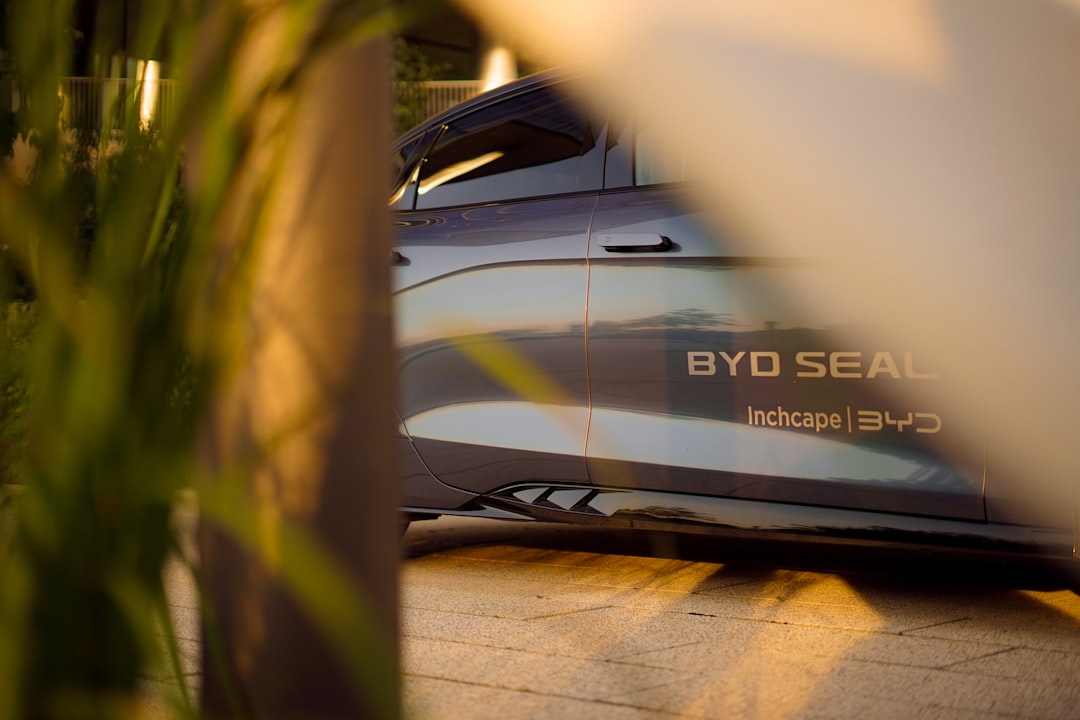
If the BYD Atto 8 PHEV’s economics look compelling, a pure battery EV looks even more dramatic at R35-40/litre diesel. Vehicles like the BYD Seal, Tesla Model 3 Long Range, and Hyundai Ioniq 5 have no petrol fallback, which means 100% of their running energy comes from the grid. At off-peak Eskom Homeflex rates, a BYD Atto 3 charged overnight off-peak costs roughly R26 per 100 km. The same 100 km in a petrol Hyundai Creta 1.5 costs R134 at R25/litre. At R35/litre diesel, the petrol comparison gets even uglier — we’re talking R168 per 100 km in a diesel Fortuner versus R26 in a battery EV. That’s a six-to-one ratio.
Yes, pure EVs carry more range anxiety on inter-city trips in SA. Yes, not every body corporate has sorted out EV charging rules yet (though that’s changing fast). But for two-car households where one vehicle handles city commuting, a pure EV at current electricity rates is genuinely the cheapest way to move a human being on four wheels in South Africa right now. Check the live charging map to see how the public network looks in your area before you make the call.
Find Charging Stations Near You
Explore our live map of EV charging stations across South Africa — updated in real time.
The SA Reality Check
Alright. Let’s be honest about the counterarguments, because they’re real.
R1.06 million is a lot of money. It’s also, as we’ve established, within shouting distance of a fully-specced Fortuner GD-6. But most South Africans don’t pay cash for cars. They finance them. At current interest rates, the Atto 8 Premium and Fortuner GD-6 sit in broadly similar monthly instalment territory. The fuel saving difference is where the Atto 8 starts pulling ahead month by month.
The 22 kW home charger debate is worth having too. If you drive 50 km a day, a 7 kW charger overnight is perfectly adequate for the Atto 8 Premium’s 19 kWh battery — and costs significantly less to install. The 22 kW unit makes more sense if you’re covering 150+ km daily and need a full top-up in a couple of hours. Know your daily usage before you spec the charger.
Investec Chief Economist Annabel Bishop has warned that these fuel hikes are no longer just a motoring issue — they are an inflation disaster. The projected May hike is expected to add 0.6% to monthly inflation, potentially pushing May’s CPI to 4.2%. Consequently, the South African Reserve Bank may be forced into a 25-basis-point interest rate hike during the MPC meeting on 28 May. Which means financing a new car in June could cost you more than financing it now. The economic logic of acting before the full fuel shock lands is stronger than it might appear.
And if you’re thinking about the government’s 150% manufacturing incentive for EVs introduced in March 2026 — that’s aimed at manufacturers assembling EVs locally, but it signals a policy direction that should translate into broader EV ecosystem support over the coming 18 months. Import duties, charging infrastructure funding, and fleet incentives are all on the table. The direction of travel is clear.
For those already comparing EV options, our full running cost breakdown for EVs vs petrol in South Africa runs the numbers across the most popular models in the market right now.
Our Verdict
If you’re in the market for a large family SUV in the R900K–R1.3M bracket right now, and your daily commute is under 150 km, the BYD Atto 8 is not just a sensible option — it is, at May 2026 diesel prices, arguably the most financially rational large SUV you can buy in South Africa. The fuel savings alone, at R35/litre diesel and a home charger running off-peak, will cover a substantial portion of the price premium within three to four years. By year five, you’re comfortably ahead — by more than R200,000 in some scenarios.
The Fortuner is a brilliant vehicle with a proven track record and a resale value that other manufacturers envy. No argument there. But it was designed for a world where diesel was R16/litre. That world is gone. At R35-40/litre, running a large diesel SUV as your primary commuter vehicle is an expensive choice, and every month that diesel stays elevated, that choice gets harder to justify.
The EV transition in South Africa isn’t happening because of idealism. It’s happening because of R35/litre diesel and an electricity tariff that makes overnight charging stupidly cheap. That’s not an environmental argument. That’s just money.
FAQ
What if diesel prices drop again after May 2026?
Even at April 2026’s pre-levy-expiry price of around R26/litre, the Atto 8 running primarily on home electricity still has materially lower energy costs than a diesel Fortuner. The off-peak electricity advantage is significant at any diesel price above R20/litre. The May crisis accelerates the payback calculation; it doesn’t create it from nothing. A price drop would widen the margin slightly, but not eliminate it.
How long does the BYD Atto 8 battery last?
The Atto 8 comes with an 8-year/200,000 km battery warranty. BYD uses LFP (lithium iron phosphate) Blade Battery chemistry, which is well-established for longevity and thermal stability. Real-world data from BYD fleets globally shows minimal capacity degradation over 150,000+ km with LFP chemistry. For South African conditions including heat and occasional DC fast charging, the 8-year warranty gives meaningful peace of mind.
Can I charge the Atto 8 at work or at a shopping centre?
Yes. South Africa has around 600 public charging stations, mostly in urban areas like Gauteng, Western Cape, and KwaZulu-Natal. The Atto 8 accepts standard Type 2 AC charging from any compatible public wallbox. For the Performance model’s 35.6 kWh battery, a 7 kW public charger adds roughly 5 hours of charging — which is fine for a workday top-up. Many shopping centres in Johannesburg, Cape Town, and Durban already have multiple AC and DC chargers. Check the live map to see what’s available near your office or regular shopping routes.
What is the resale value of the BYD Atto 8 likely to be?
BYD resale values in South Africa are still maturing as a data set, but the brand’s rapid local growth, strong warranty offering, and escalating fuel prices all work in its favour. PHEVs with strong pure electric range — especially in a fuel crisis environment — tend to retain value well because their appeal increases as fuel costs rise. The 8-year battery warranty also removes one of the traditional EV resale objections entirely.
Is a 22 kW home charger necessary for the BYD Atto 8?
Not always. A 7 kW wallbox will fully charge the Atto 8 Premium’s 19 kWh battery in under three hours overnight — more than adequate for most daily commuters. The 35.6 kWh Performance battery benefits more from a 22 kW charger if you’re doing high daily mileage and need a faster turnaround. Get a proper consultation from a certified installer before speccing your setup. Get a free installation quote here to see what makes sense for your situation.
Does the government offer any EV incentives for private buyers in South Africa in 2026?
As of April 2026, the primary incentive is the 150% manufacturing tax allowance introduced in March 2026, which targets local EV production rather than individual buyers directly. There is no direct consumer purchase rebate equivalent to international EV subsidies yet. However, the policy direction — including potential import duty changes and Section 12B solar-plus-charging tax benefits — is moving in favour of EV adopters. Watch this space through the 2026 Mid-Term Budget Statement in October.
Continue Reading