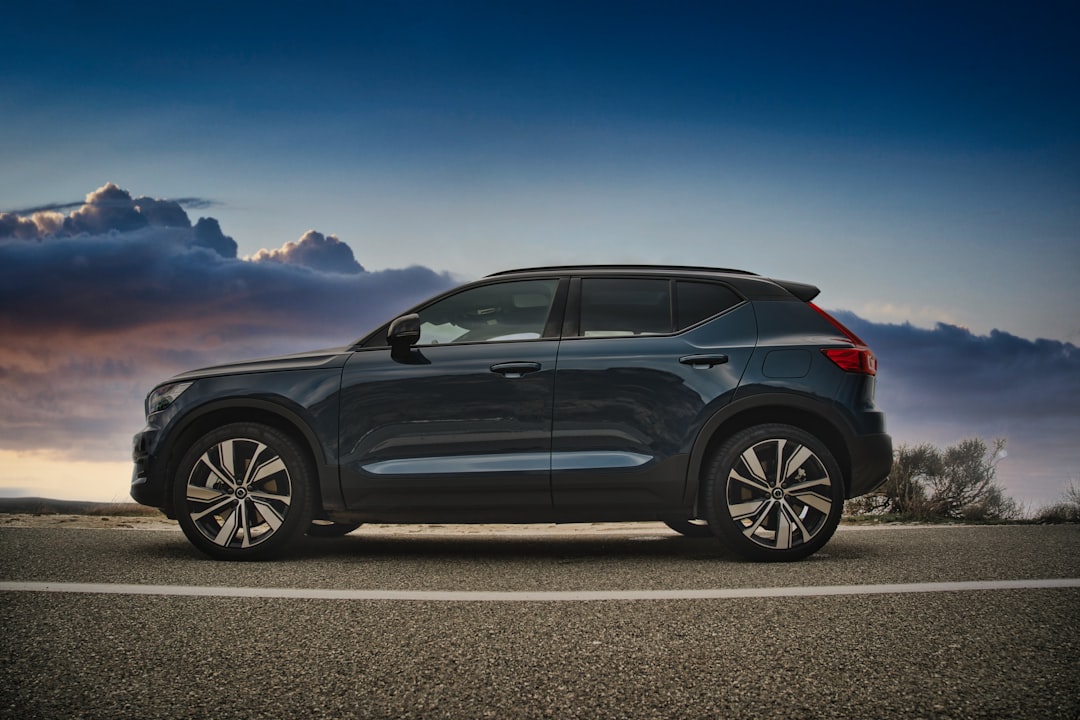
Volvo has started production of the new fully electric EX60, with delivery expected from mid-2026 and South Africa firmly in the picture.
To be precise,
Volvo South Africa has confirmed the EX60 will arrive in our market during the third quarter of 2026.
That is not a vague “we hope to bring it someday” commitment — that is a concrete Q3 date, backed by a car that is already rolling off the line in Gothenburg.
And the headline number?
With a WLTP range of up to 810km, the SUV aims to ease local range anxiety, covering a trip from Johannesburg to Durban on a single charge.
Think about that for a moment. Joburg to Durban (approximately 560km) without stopping to plug in. It is the single most compelling argument against range anxiety that any EV maker has made to South African buyers — ever.
Here is why this matters more than the usual EV launch:
the EX60 is the first car to be entirely designed, developed and manufactured in Sweden.
It is not badge-engineered from a Chinese platform, not assembled somewhere else and shipped in. This is Swedish engineering, start to finish — and it is coming to a Volvo showroom near you before the year is out.
Production Has Started — and Demand Is Already Off the Charts
Production of the EX60 began at the Torslandaverken on April 22, 2026.
The timing is significant.
The production start follows Volvo’s March decision to raise 2026 output after European retail orders exceeded internal targets across nearly all major markets, according to Reuters.
The Swedish carmaker expects to build up to 40,000 EX60s this year, CEO Hakan Samuelsson told Reuters.
That is a serious number for a premium EV. And demand has been so ferocious that
the order intake has been so high that the Swedish brand began negotiations with labour unions to convince them to keep the Torslanda plant open one extra week in the summer, which has never happened before.
To fund all of this,
the Swedish carmaker spent around 10 billion Swedish Krona (approximately R24 billion) to upgrade the Torslanda plant, with upgrades including mega casting capabilities, a new battery assembly plant, and a fully refurbished paint shop and final assembly facility.
That is not a company hedging its bets on EVs. That is a full commitment.
Three Powertrains: Entry, Balanced, and “Most Powerful Volvo Ever”
The EX60 does not arrive as a one-size-fits-all proposition. There are three powertrains — P6, P10, and P12 — each targeting a different kind of buyer. Here is how they stack up in real-world terms that matter to South African drivers.
The P6 is equipped with a single rear-mounted electric motor with an output of 275kW and 480Nm, letting it accelerate from 0-100km/h in 5.9 seconds. This version uses an 83kWh battery, which gives it a range of 620km.
That is your entry point, and even the “base” option embarrasses most of the competition on range.
The P10 has an all-wheel-drive system with an e-motor over each axle, improving power outputs to 375kW and 710Nm, which cuts the 0-100km/h time down to 4.6 seconds.
The P10 AWD achieves 660km — range figures that are already very comfortable for both daily use and long trips.
This is probably the sweet spot for most SA buyers who want AWD confidence and serious range without going full-throttle on price.
Then there is the P12.
The P12 uses the same dual-motor AWD layout as the P10, but output jumps to 500kW. Acceleration to 100km/h takes 3.9 seconds — sports-car territory.
The P12 AWD Electric variant offers the class-leading range of up to 810km.
That 500kW output makes it the most powerful production car Volvo has ever built. Full stop.
How Much Could You Save With an EV?
Use our free calculator to compare your current fuel costs with EV charging costs.
How the Range Stacks Up Against SA’s Key Competitors
Range is the conversation that every SA EV buyer eventually has. With load-shedding still an unpredictable factor and public charging infrastructure still maturing, a bigger battery is not just about road trips — it is about having a buffer when Eskom decides to ruin your evening.
The BYD Atto 3, which has found strong traction in the R539K–R839K bracket, offers around 420km WLTP. The Tesla Model Y Standard Range manages roughly 533km. The Volvo EX30 — currently Volvo’s entry EV at R835,500 — offers around 480km in its best configuration. The EX60 P6 starts at 620km and climbs to 810km. It is not even a close comparison.
The EX60 P12’s 810km WLTP range is nearly double that of the BYD Atto 3 — and enough to cover Johannesburg to Durban (approximately 560km one-way) with substantial range to spare.
Below is a direct comparison of the EX60 against its most relevant SA rivals.
| Model | Drive | WLTP Range | 0–100km/h | Est. SA Price |
|---|---|---|---|---|
| Volvo EX60 P6 | RWD | 620km | 5.9s | ~R1.2M (est.) |
| Volvo EX60 P10 | AWD | 660km | 4.6s | ~R1.3M (est.) |
| Volvo EX60 P12 | AWD | 810km | 3.9s | ~R1.4M (est.) |
| Tesla Model Y LR | AWD | ~533km | 5.0s | From R1.1M |
| BYD Atto 3 | FWD | ~420km | 7.3s | R539K–R839K |
| Volvo EX30 (Twin) | AWD | ~480km | 3.6s | From R835K |
The pricing picture is still an estimate.
Considering that the EX30 and EX90 start at R835,500 and R2,650,000 respectively, a reasonable extrapolation based on Volvo’s current SA pricing strategy would place the EX60’s base price at between R1.2 million and R1.4 million — though this estimate could shift by 15–20% depending on final import duties, specification levels, and exchange rates at launch.
That puts it in direct competition with the Tesla Model Y — and priced identically to the XC60 T8 PHEV it is specifically designed to replace in Volvo’s own lineup.
If you are trying to decide between the EX60 and something like the BYD Atto 3 or Tesla Model Y, our EV savings calculator lets you compare total running costs over five years — and the numbers may surprise you.
The Charging Reality in South Africa
Let us be honest about the charging claims.
Volvo states the EX60 can charge from 10% to 80% in approximately 16 minutes under optimal conditions.
However, this figure assumes access to ultra-high-power DC chargers. The EX60’s actual maximum DC charging capability is up to 370kW for the P10 and P12 versions, and 320kW for the P6 — meaning the 16-minute claim would require chargers operating at or near these peak rates, which do not yet exist in South Africa.
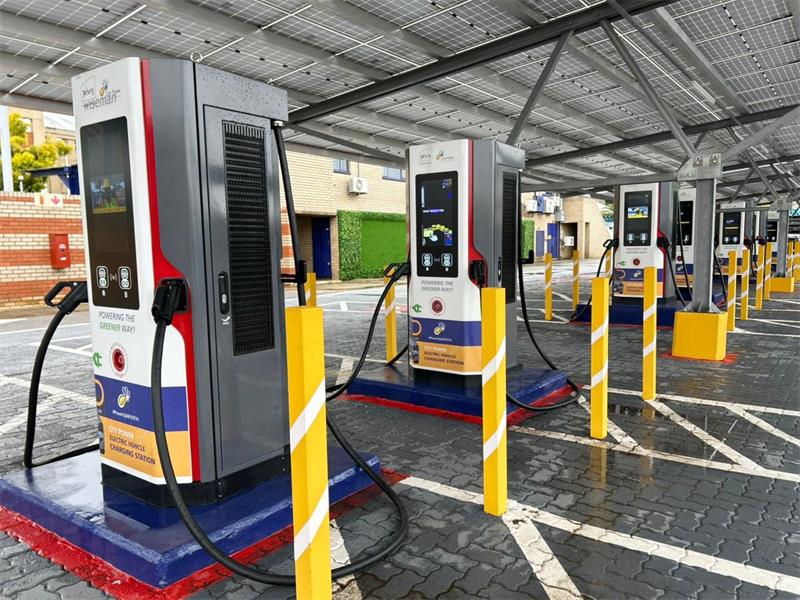
GridCars and Rubicon’s networks typically top out at 60–150kW, which is fast by SA standards but a long way from the 320–370kW the EX60 can theoretically accept. That said, the 16-minute headline is really about future-proofing.
The 800V architecture supports high DC power: up to 370kW for the P10 and P12 versions, and 320kW for the P6.
When SA’s charging infrastructure eventually catches up — and it is catching up, faster than most people realise — the EX60 will be ready. You are not buying a car for today’s infrastructure. You are buying it for the next decade.
In the meantime, even on a 150kW charger, the EX60’s 800V architecture will charge significantly faster than most 400V EVs at the same stated charger power. And with 620–810km of range, many SA drivers will barely need to use public chargers outside of major road trips anyway.
Want to see where you can charge today? Check our live SA charging map for the latest public charger locations — the network is growing every month.
Ready to Install a Home Charger?
Get a free, no-obligation quote for professional EV charger installation in South Africa.
Home Charging: What You Need to Know
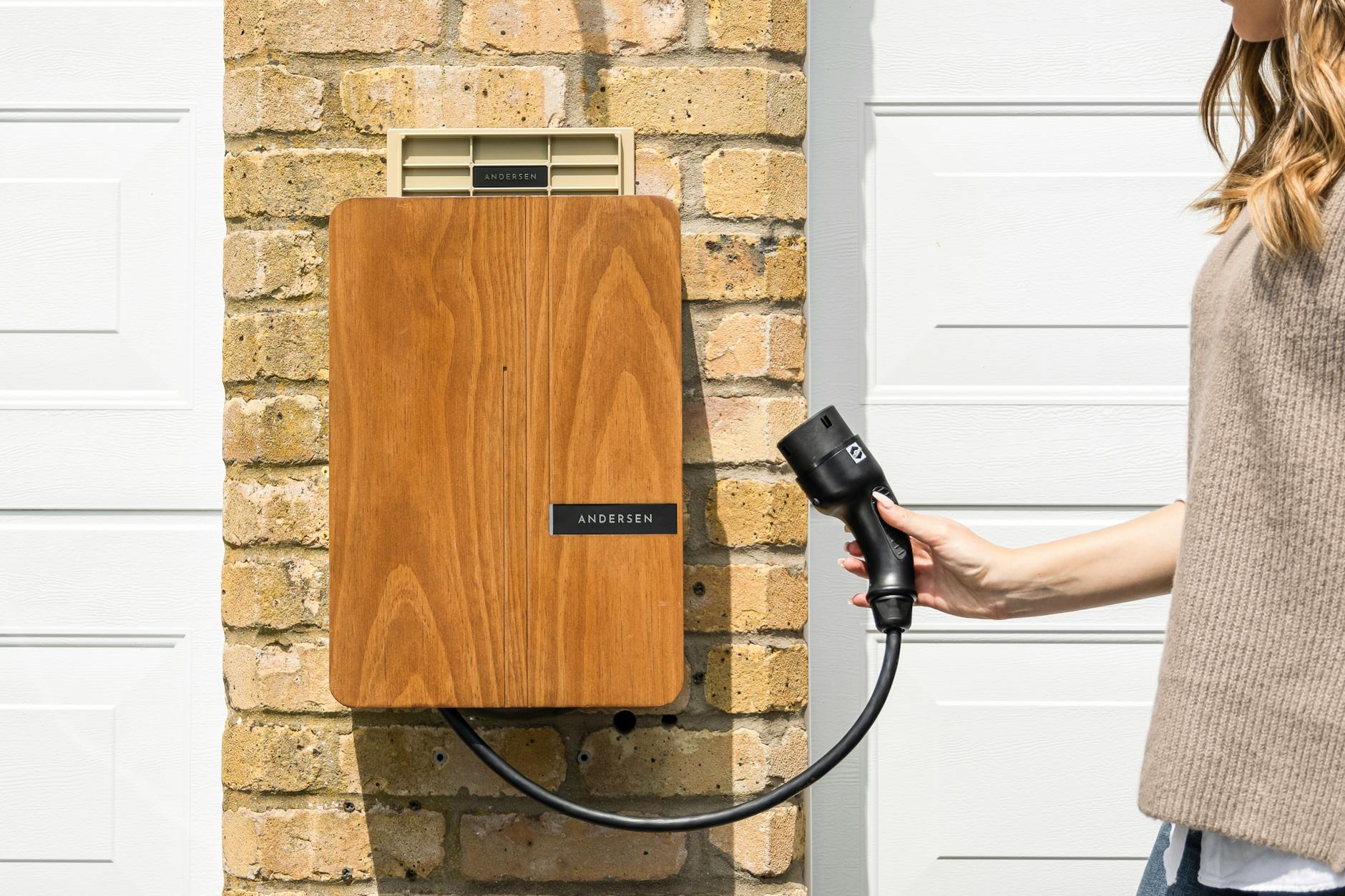
This is where most SA EV buyers get their maths wrong. The 117kWh battery in the P10 and P12 is enormous — the largest in any Volvo ever built. On a standard 7.4kW home wallbox, a full charge from empty will take around 16 hours. On an 11kW three-phase charger, you are looking at approximately 11 hours — a comfortable overnight charge.
The P6’s 83kWh battery is more forgiving. On an 11kW charger, you are charging from empty in roughly eight hours. Plug in after the braai on Friday night and it is full before Saturday morning’s game drive.
For load-shedding specifically, the EX60’s size actually works in your favour. An 810km range means you are charging less frequently than with a shorter-range EV. If load-shedding hits the day before a long trip, you have far more buffer. That said, pairing your home charger with solar is still the smartest move — and increasingly, it is what premium EV buyers in Gauteng and the Western Cape are doing.
Get a free home charger installation quote — our team can spec the right wallbox for the EX60’s 11kW AC charging capability, whether you are in a freestanding home or navigating a body corporate approval process.
Who Is This Car Actually For?
Locally, Volvo hopes to position the midsize SUV as a premium yet accessible entry point into electric mobility, especially for buyers already considering the XC60 T8.
That is a very specific South African buyer profile: someone spending R1.2–1.5M on a premium family SUV who has been holding off going full-EV because of range anxiety and charging uncertainty.
The EX60 directly addresses every objection in that conversation. Too little range? 810km. Charging takes too long? 16 minutes at the right charger (when SA infrastructure catches up), and an overnight charge at home handles 90% of use cases. What if the software is glitchy?
The vehicle’s HuginCore processing system and NVIDIA DRIVE intelligence make the EX60 more intuitive and responsive, creating a no-lag infotainment system.
Volvo has learned hard lessons from the EX90’s early software struggles — the EX60 cannot afford the same.
And then there is the diesel cost argument. With diesel hovering around R23–24 per litre and unlikely to soften significantly in 2026, a buyer doing 25,000km per year in an XC60 diesel is spending roughly R50,000–R60,000 annually on fuel alone. The EX60 at home charging rates slashes that to under R15,000. Over five years, that is a meaningful chunk of the price difference back in your pocket.
Speaking of which — calculate exactly what you’d save switching from a diesel luxury SUV to the EX60. Punch in your current fuel spend and annual kilometres, and the number will do the talking.
Find Charging Stations Near You
Explore our live map of EV charging stations across South Africa — updated in real time.
The Tech Inside: More Than Just Range Numbers
The EX60’s interior is a genuine step up from Volvo’s current EV range.
A large landscape-oriented infotainment touchscreen takes centre stage in the minimalistic interior. A first for a Volvo, the Android Automotive OS-run setup incorporates Gemini, a new Google AI assistant, and Apple Music pre-installed with Dolby Atmos.
The multi-adaptive safety belt, a world first, offers personalised protection, including pregnancy protection in the front row, and is standard fitment.
It connects to interior and exterior sensors to modify tension and load based on your size and seating position. Volvo building a safety feature specifically for pregnant passengers is exactly the kind of detail that sets the brand apart from the price-driven competition.
Volvo is offering a 10-year battery warranty
— an industry-leading commitment that should give SA buyers genuine long-term confidence. If you are financing over 72 months, you want to know your battery is covered well beyond the loan period. At least on this score, Volvo delivers unconditionally.
For more context on how the EX60 fits into SA’s broader premium EV landscape, our full running cost comparison for 2026 breaks down exactly what SA buyers pay over five years across the premium SUV segment.
Verdict: Is the EX60 the EV That Finally Cracks the SA Premium Market?
Probably, yes. And I say that with conviction rather than hedging.
The Tesla Model Y is brilliant but polarising. The BYD Atto 3 is exceptional value but not a premium product. The Volvo EX30 is a gem but too small for families. The EX60 lands in exactly the space that SA’s premium EV market has been waiting for: a proper five-seat family SUV, Swedish build quality, a 10-year battery warranty, and a range figure that puts an end to every range anxiety conversation before it starts.
The charging infrastructure caveat is real, but it will age away. The SA charging network is growing steadily, with GridCars and other operators expanding coverage monthly. Home solar plus a wallbox handles most daily charging needs. And the 810km ceiling means you are starting road trips from a position of genuine confidence — not careful calculation.
At R1.2–1.4M estimated, it is not cheap. But it is priced identically to the petrol alternative it is replacing, which makes the running cost savings a pure bonus. If you are in the market for an XC60, a Model Y Long Range, or anything in that premium SUV bracket, the EX60 deserves to be your first test drive booking in Q3 2026.
FAQ
When will the Volvo EX60 arrive in South Africa?
Production of the EX60 begins in Sweden in Q2 2026, with the first South African customer cars touching down in Q3 2026.
That means showroom arrivals from around July–September 2026. Expect official local pricing announcements a few weeks before first deliveries.
How does 810km range work in real SA driving conditions?
WLTP figures are measured under controlled conditions and typically return 10–15% less in real-world driving.
In real-world conditions, you should generally expect 10 to 15% less range depending on driving style, temperature, and route type.
That still puts the EX60 P12 at approximately 690–730km of realistic range — more than enough for Johannesburg to Durban (approximately 560km) in a single run, even with the aircon running and a 120km/h cruise speed on the N3.
Can I charge the EX60 at home during load-shedding?
Yes — if you have solar and battery backup, you can charge during the day regardless of load-shedding. Without backup power, you will need to plan your charging around load-shedding schedules, just like any home appliance. The advantage with the EX60’s large battery is that you charge less frequently — with 620–810km of range, most weekly commuters will only need to top up once or twice a week. Get a quote for a home charger installation that can be paired with your solar system.
How does the EX60 compare to the BYD Atto 3 and Tesla Model Y?
The BYD Atto 3 is significantly more affordable (from R539K) but offers roughly half the range of the EX60 P12. The Tesla Model Y Long Range starts from around R1.1M and offers approximately 533km WLTP. The EX60 matches the Model Y on price but beats it comprehensively on range, and beats the Atto 3 on both range and premium finish. If budget is the priority, the Atto 3 remains compelling. If you want a premium long-range family EV, the EX60 wins.
What home charger do I need for the Volvo EX60?
Volvo’s EX60 supports up to 11kW AC charging at home. A three-phase 11kW wallbox is the optimal home setup — it will charge the P6’s 83kWh battery from empty in roughly 8 hours, and the P10/P12’s larger battery in about 11 hours (perfect for overnight charging). A single-phase 7.4kW charger will work but will take 12–16 hours for a full charge on the larger battery. Get a free installation quote to spec the right charger for your home setup before delivery day.
Continue Reading