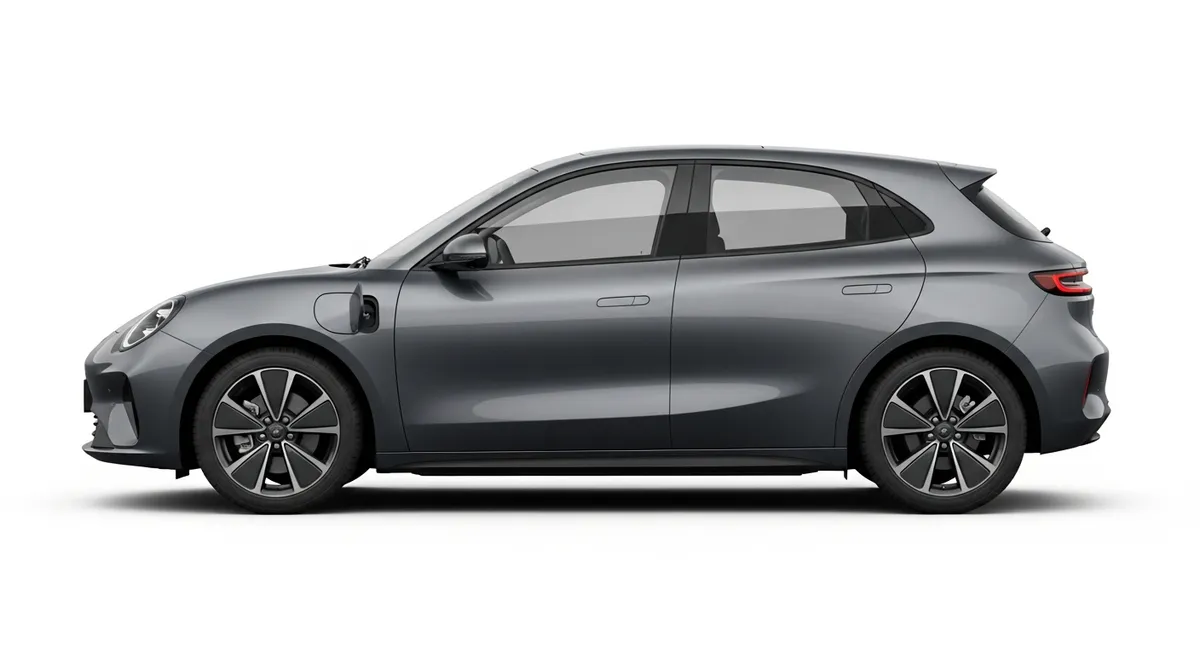

The GWM Ora 03 launched at R686 950 in late 2023, making it South Africa’s most affordable new EV — yet it still costs 2.6× the price of a Suzuki Swift 1.2 GL. That R421 000 gap is the electric hatchback’s biggest hurdle, but the monthly fuel bill tells a different story: R441 for electrons versus R1 837 for petrol. We’ve crunched the numbers using 2026 electricity tariffs, real petrol prices, and verified ownership data to see whether the EV’s running-cost advantage can overcome its sticker shock.

Price comparison: what you pay at the dealership
The GWM Ora 03 launched at R686 950 for the base model and R835 950 for the GT variant, making it South Africa’s most affordable new EV as of late 2023. Suzuki Swift pricing for 2026 hovers around R265 000 for the 1.2 GL manual and climbs to approximately R310 000 for the 1.2 GLX auto. The Ora’s sticker shock is real — you’re paying roughly 2.6× the price of a Swift for the electric option.
| Model | Variant | Price (ZAR, 2026) | Power / Torque |
|---|---|---|---|
| GWM Ora 03 | Base | R686 950 | 126 kW / 250 Nm (electric) |
| GWM Ora 03 | GT | R835 950 | 126 kW / 250 Nm (electric) |
| Suzuki Swift | 1.2 GL manual | ~R265 000 | 60 kW / 112 Nm (petrol) |
| Suzuki Swift | 1.2 GLX auto | ~R310 000 | 60 kW / 112 Nm (petrol) |
That price delta is the EV’s Achilles heel in a market where most buyers finance. But the running-cost story is very different.
Range and efficiency: electrons vs litres
The GWM Ora 03 offers 310–420 km of range depending on variant (the base uses a smaller battery, the GT a larger one). Real-world efficiency sits around 14–16 kWh/100 km in mixed driving. The Suzuki Swift 1.2 GL, meanwhile, achieves roughly 5.0–5.5 l/100 km and carries a 37-litre tank, giving it a theoretical range of 670–740 km on a single fill.

What that means in practice
For city commutes under 200 km/day, the Ora 03 is a one-charge-per-day proposition. The Swift can go a week or more between petrol stops. Long-distance road trips? The Swift refuels in five minutes at any garage; the Ora requires DC fast-charging stops (30–40 minutes to 80%) at one of South Africa’s ~600 public charging points, most of which are concentrated in Gauteng, the Western Cape, and KwaZulu-Natal.
Running costs: the monthly fuel bill
This is where the EV starts clawing back that purchase premium. Let’s assume 1 500 km per month — a typical SA commuter profile.
GWM Ora 03 (electricity)
- Efficiency: 15 kWh/100 km (real-world average)
- Monthly consumption: 225 kWh
- Eskom direct tariff (post-April 2026): R1.96/kWh average (blended residential rate after 8.76% increase)
- Monthly cost: R441
(Note: municipal customers face a 9.01% hike from July 2026, pushing the blended rate closer to R2.10/kWh in metros — call it R472/month in Cape Town or Johannesburg.)
Suzuki Swift 1.2 GL (petrol)
- Efficiency: 5.2 l/100 km (manufacturer claim; real-world often 5.5 l/100 km)
- Monthly consumption: 78–82.5 litres
- Petrol price (inland, May 2026): ~R22.30/litre (95 octane)
- Monthly cost: R1 739–R1 837
Monthly saving with the Ora 03: R1 298–R1 396. That’s R15 576–R16 752 per year, or enough to cover two years of Eskom increases and still come out ahead.

Five-year total cost of ownership
Purchase price, fuel, maintenance, insurance, and depreciation — here’s the full picture over 90 000 km (1 500 km/month × 60 months).
| Cost item | GWM Ora 03 (base) | Suzuki Swift 1.2 GL |
|---|---|---|
| Purchase price | R686 950 | R265 000 |
| Fuel (60 months) | R26 460 | R110 220 |
| Service plan (5 yr / 90k km) | ~R8 000 (EV: fewer consumables) | ~R18 000 (oil, filters, plugs) |
| Insurance (est. annual avg) | R18 000 × 5 = R90 000 | R9 000 × 5 = R45 000 |
| Tyres (one set) | R6 000 | R4 500 |
| Total 5-year outlay | R817 410 | R442 720 |
| Resale value (est. 50% / 40%) | -R343 475 | -R106 000 |
| Net cost of ownership | R473 935 | R336 720 |
Even with R83 760 in fuel savings, the Ora 03’s higher purchase price and insurance premiums mean the Swift edges ahead on total cost — if you sell at five years. Drive 2 500 km/month instead of 1 500, and the EV breaks even around year four. Keep the car for eight years, and the Ora wins outright.
Charging at home: which speed suits the GWM Ora 03?
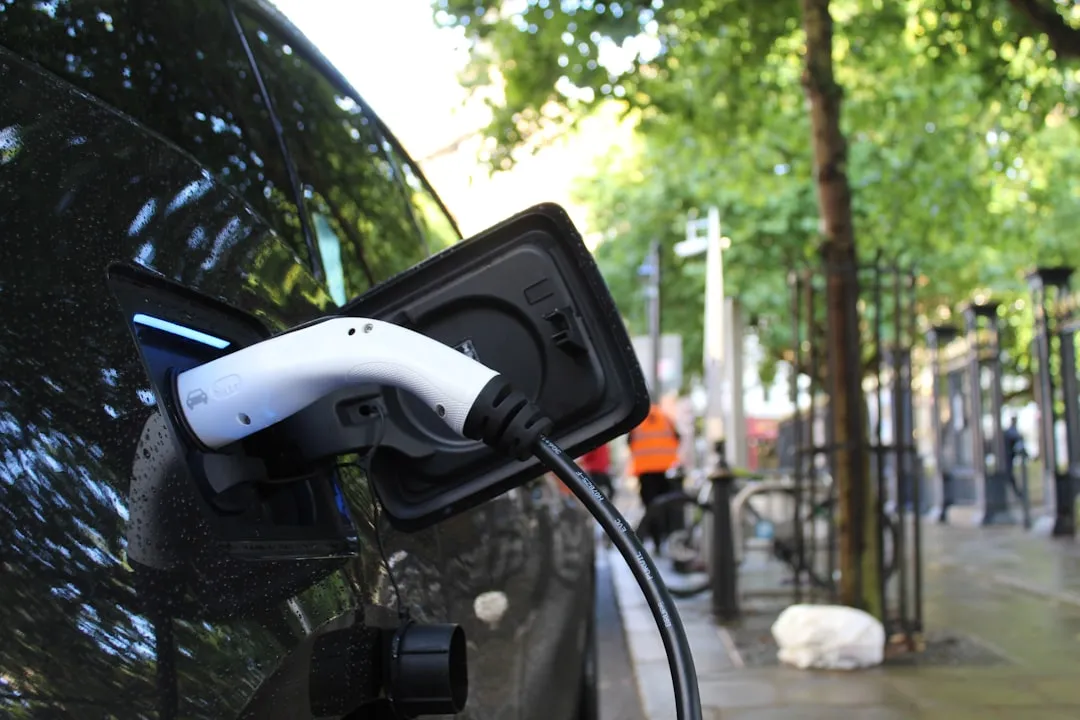
The GWM Ora 03 supports AC charging at up to 6.6 kW. That means a 7.4 kW home charger is the sweet spot — it’ll max out the car’s onboard capability without overspending on an 11 kW or 22 kW unit you can’t use. A full charge (48 kWh battery in the base model, 63 kWh in the GT) takes roughly 7–10 hours on a 7.4 kW charger — perfect for overnight top-ups.
| Charger power | Ora 03 compatibility | Time to full (48 kWh) | Typical cost (installed) |
|---|---|---|---|
| 7.4 kW (single-phase) | Optimal | ~7 hours | R18 000–R25 000 |
| 11 kW (three-phase) | Overkill (car caps at 6.6 kW) | ~7 hours (same as 7.4 kW) | R25 000–R35 000 |
| 22 kW (three-phase) | Wasted capacity | ~7 hours (same as 7.4 kW) | R35 000–R50 000 |
Unless you’re future-proofing for a second EV with faster AC charging, stick with 7.4 kW. For public DC fast-charging, GridCars charges R7.35/kWh and Rubicon R7.00/kWh — roughly 3.5× the cost of home charging, so road trips get expensive fast.
SA-specific considerations: load-shedding, solar, and service networks
Load-shedding
“Load shedding is a concern,” wrote u/[redacted] on r/southafrica, “but if you have solar or can charge at work, an EV makes total sense financially in SA right now.” That’s the reality: if you’re relying solely on municipal electricity and Stage 4+ is routine, you’ll need a charging strategy — time-of-use tariffs, a small battery backup, or daytime solar charging. The Swift, meanwhile, doesn’t care about the grid.
Solar pairing
A 5 kW rooftop solar system (R80 000–R120 000 installed) can generate ~700 kWh/month in Gauteng or the Western Cape — enough to cover the Ora’s 225 kWh and still feed the house. Pair solar with the EV, and your marginal fuel cost drops to near-zero. The CHARGE network is rolling out 120 solar-powered stations along the N3 corridor in 2026, and BYD plans 200–300 flash chargers (up to 1 000 kW) starting April 2026 — infrastructure is improving, but it’s still patchy outside the main metros.
Service and parts
Suzuki has 140+ dealers nationwide; GWM’s network is smaller but growing (around 40 outlets as of 2026). EV service intervals are longer (fewer consumables), but battery warranty and specialist technician availability matter. GWM offers an 8-year / 160 000 km battery warranty; Suzuki’s petrol drivetrain is bulletproof and cheap to fix anywhere.
The honest verdict: who should buy which?
Buy the GWM Ora 03 if you…
- Drive 2 000+ km/month (high mileage magnifies fuel savings)
- Have off-street parking and can install a home charger
- Own solar panels or charge at work during the day
- Rarely do road trips beyond 300 km, or are comfortable planning DC charging stops
- Can afford the R686k–R836k entry price and want to future-proof against petrol volatility
As u/[redacted] put it on r/electricvehicles: “The GWM Ora is surprisingly well-equipped for the price point. Build quality feels solid and the tech features punch above its weight class.”
Stick with the Suzuki Swift if you…
- Need the lowest upfront cost (R265k vs R687k)
- Rent or park on-street (no home charging option)
- Do frequent long-distance trips and value sub-5-minute refuelling
- Live in an area with unreliable electricity and no solar backup
- Want nationwide service coverage and rock-bottom insurance premiums
The Swift remains the pragmatic choice for cash-strapped buyers and anyone who can’t guarantee daily charging access. It’s also the safer bet if you’re unsure about EV resale values in the SA market.

Ready to go electric? Book a free site assessment
If the GWM Ora 03’s running-cost advantage has you convinced, the next step is confirming your home can support a 7.4 kW charger. ChargePoint SA offers free site assessments across Gauteng, the Western Cape, and KwaZulu-Natal — our technicians will check your electrical panel, recommend the right charger, and quote you a fixed installation price. No surprises, no upselling to hardware you don’t need.
Book your assessment today and find out what it really costs to make the switch. The Ora 03 might not beat the Swift on sticker price, but over the life of the car — and especially if you pair it with solar — it’s a different story. One where you fill up at home, never queue at a petrol station again, and pocket R1 300+ every month.
Image credits
“Suzuki Swift 1.3 GLX Automatic” by denniselzinga (CC BY 2.0, via flickr) · “Suzuki Swift 1.2 GL Sport 2022” by RL GNZLZ (CC BY-SA 2.0, via flickr) ·