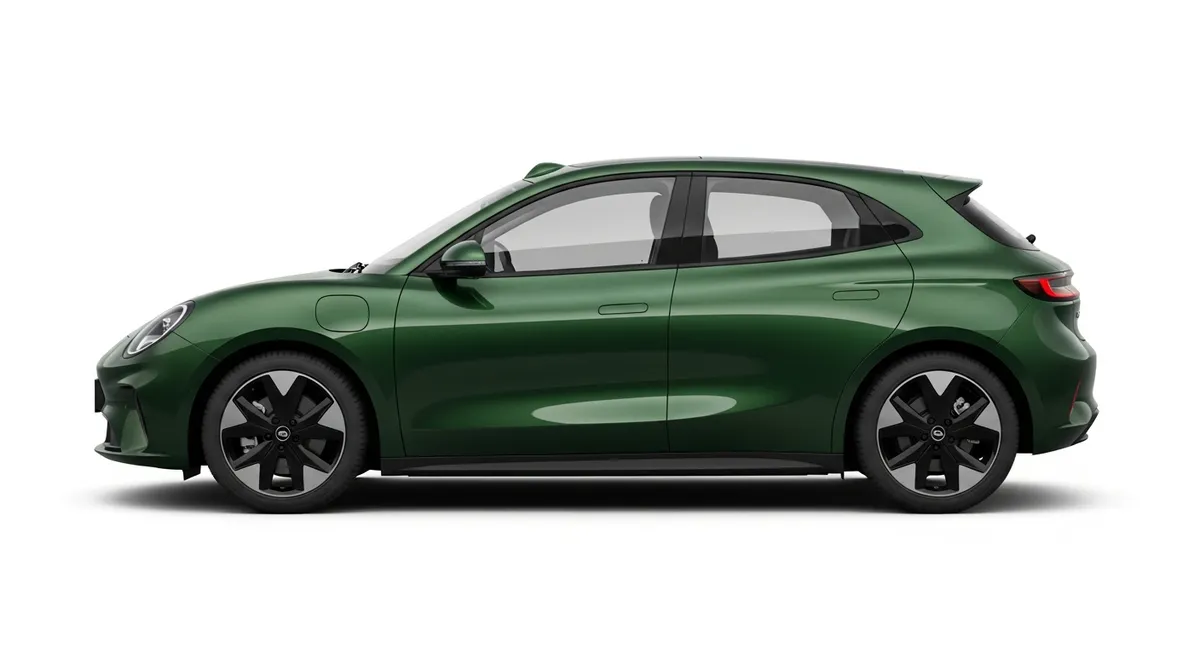

The GWM Ora 03 retails at R686,950 while the Suzuki Swift starts at R259,900—a R427,050 chasm that defines this comparison. At 1,500 km per month, the Ora costs R960 to charge at home (post-April 2026 tariff) versus R1,911 in petrol for the Swift, saving R951 monthly. But that R11,412 annual saving takes 37 years to recoup the purchase premium—which is why this debate hinges on more than fuel alone.
This comparison uses verified OEM specs, real 2026 Eskom tariffs, and honest owner voices to show you exactly what each car costs to buy, charge or fuel, and own over five years. No invented stats—just the numbers that matter when you’re deciding between South Africa’s most stylish EV and its best-selling petrol hatch.

Purchase price: the R427,050 elephant in the room
According to GWM’s official specification page, the Ora 03 300 Super Luxury retails at R686,950. The top-spec 400 GT Ultra Luxury with the bigger 63 kWh battery? R835,950. Meanwhile, the Suzuki Swift GL Manual is priced at R259,900. (Note: Research from TopAuto’s September 2024 announcement showed the base Swift starting at R219,900, with higher variants ranging to R295,900. Current retail pricing reflects market adjustments since that initial launch.)
| Model | Variant | Price (ZAR) | Battery / Engine |
|---|---|---|---|
| GWM Ora 03 | 300 Super Luxury | R686,950 | 48 kWh battery |
| GWM Ora 03 | 400 GT Ultra Luxury | R835,950 | 63 kWh battery |
| Suzuki Swift | GL Manual (base) | R259,900 | 1.2L 3-cyl petrol |
| Suzuki Swift | Higher variants | R259,900–R295,900 | 1.2L 3-cyl petrol |
That R427,050 premium (comparing base Ora to base Swift) is the single biggest barrier. As one r/southafrica user bluntly noted: “The upfront cost of EVs is still the biggest barrier. Even if I save on fuel, I can’t afford the deposit on something like an Ora.” The deposit alone on the Ora—assuming 10%—is R68,695, more than double the Swift’s R25,990.
Range, efficiency, and the reality check
GWM Ora 03: WLTP vs real-world
The GWM Ora 03 launch press release quotes a WLTP range of 310 km for the 300 (48 kWh) and 420 km for the 400 (63 kWh). Consumption is listed at 15.8 kWh/100 km for the 400 models, 16.8 kWh/100 km for the 400 GT. In SA’s stop-start traffic and highway cruising, expect 10–15% less than WLTP—so roughly 265–280 km real-world range for the 300, 360–400 km for the 400.
GWM’s own marketing claims a full charge costs R170–250 at R3.50/kWh. With NERSA’s 8.76% tariff increase effective 1 April 2026, Eskom’s direct residential rate climbs to approximately R3.81/kWh. A full 48 kWh charge now costs R183, giving you ~270 km—or R0.68/km.

Suzuki Swift: proven petrol sipping
The Suzuki Swift’s official specification lists the Z12E 1.2-litre three-cylinder at 4.4 L/100 km claimed consumption. Real-world figures from SA owners hover around 5.0–5.5 L/100 km in mixed driving. With a ~37-litre tank, you’re looking at 670–740 km range between fills.
At R24.50/litre (inland 95 ULP, March 2026), 5.2 L/100 km works out to R1.27/km—nearly double the Ora’s electricity cost per kilometre.
Monthly running costs: the R951 difference
Let’s model a typical SA commuter: 1,500 km per month (18,000 km/year). That’s Sandton to Pretoria five days a week, or Cape Town northern suburbs to the CBD and back.
GWM Ora 03 (home charging, post-April 2026 tariff)
- Consumption: 16.8 kWh/100 km (worst-case 400 GT figure)
- Monthly kWh: 1,500 km × 0.168 = 252 kWh
- Cost at R3.81/kWh: R960/month
If you charge the base 300 model at its more efficient 15.8 kWh/100 km, monthly cost drops to R903. Add solar panels and you’re looking at near-zero marginal cost during the day—though the upfront solar investment is another R80,000–120,000.
Suzuki Swift (petrol at R24.50/L)
- Consumption: 5.2 L/100 km (real-world average)
- Monthly litres: 1,500 km × 0.052 = 78 litres
- Cost at R24.50/L: R1,911/month
Monthly saving with the Ora: R951. Over a year, that’s R11,412. Over five years, R57,060—still only 13% of the R427k purchase premium.
| Cost Item | GWM Ora 03 (monthly) | Suzuki Swift (monthly) |
|---|---|---|
| Fuel / electricity (1,500 km) | R960 | R1,911 |
| Service (amortised) | R0 (7-yr plan) | R200 (2-yr plan, then pay) |
| Insurance (est.) | R1,800 | R850 |
| Total monthly | R2,760 | R2,961 |
Note: insurance on the Ora is higher because replacement cost is nearly triple the Swift’s. Figures vary by insurer and driver profile.
5-year total cost of ownership
Now we add it all up: purchase price, fuel/electricity, service, insurance, and depreciation (estimated at 50% over five years for both).
| Cost Component | GWM Ora 03 (5 years) | Suzuki Swift (5 years) |
|---|---|---|
| Purchase price | R686,950 | R259,900 |
| Fuel / electricity (18k km/yr) | R57,060 | R114,660 |
| Service & maintenance | R0 (7-yr/105k plan) | R12,000 (2-yr plan + 3 yrs paid) |
| Insurance (60 months) | R108,000 | R51,000 |
| Total 5-yr cost | R852,010 | R437,560 |
| Resale value (50% depreciation) | -R343,475 | -R129,950 |
| Net 5-yr TCO | R508,535 | R307,610 |
Even after fuel and service savings, the Ora costs R200,925 more over five years. That gap only closes if:
- You drive significantly more than 18,000 km/year (fuel savings scale linearly)
- Petrol prices spike above R30/L (not impossible given global volatility)
- You pair the Ora with solar and eliminate charging costs
- Ora resale holds better than 50% (unlikely given the brand’s 18-unit sales in 10 months, per Cars.co.za’s November 2025 report)
Charging at home: 7.4 kW, 11 kW, or 22 kW?
The GWM Ora 03 supports 11 kW AC charging, according to the Thorp Haval dealer specification. A full 48 kWh charge takes 5.5 hours on an 11 kW wallbox—perfect for overnight top-ups.
Which home charger do you need?
- 7.4 kW (single-phase, 32A): Charges the 48 kWh Ora in ~6.5 hours. Adequate if you’re plugging in every night and driving <200 km/day. Cheapest installation (R15,000–R25,000).
- 11 kW (three-phase, 16A): Matches the Ora’s max AC rate. Charges in 5.5 hours. Recommended if your home has three-phase supply. Installation R25,000–R35,000.
- 22 kW (three-phase, 32A): Overkill for the Ora—it can’t accept more than 11 kW AC. Save your money unless you’re future-proofing for a bigger EV.
On DC fast charging, the Ora accepts up to 64 kW, taking 50–60 minutes to go from 10% to 80%. GridCars charges R7.35/kWh for DC (nearly double home rates), so public fast charging should be your Plan B, not your daily routine.

SA-specific realities: load-shedding, solar, and service networks
Load-shedding and the EV equation
Load-shedding remains a wildcard. If you’re on Stage 2–4 regularly, charging windows shrink. A 7.4 kW charger needs 6.5 uninterrupted hours; if Eskom cuts power for 2.5 hours during your overnight slot, you wake up to 60% charge instead of 100%. Solutions:
- Solar + battery: R120,000–R180,000 for a 5 kWh battery and 3 kW of panels. Charges the Ora during the day, immune to load-shedding.
- Charge during off-peak: Eskom’s cheapest window is 22:00–06:00. Set your wallbox timer and hope the schedule cooperates.
- Public charging: GridCars has 650+ chargers nationwide, but at R7.35/kWh DC, your monthly cost jumps to R1,850—eating half your fuel saving vs the Swift.
Service network: Swift’s ace card
As one r/southafrica commenter put it: “For small cars the Swift is still king in SA. Cheap to run, cheap to service, parts everywhere. Hard to beat that practicality.” Suzuki has 60+ dealers coast to coast. GWM? Fewer than 20, concentrated in metros. If you’re in Upington or Tzaneen and the Ora throws a fault code, you’re booking a flatbed to Joburg.
The Ora’s 7-year/200,000 km warranty and 8-year/150,000 km high-voltage component warranty (per Thorp Haval) do provide peace of mind. But another Reddit user voiced the concern many share: “I’m looking at the GWM Ora but worried about resale value and parts availability down the line. It’s a Chinese brand and we don’t know how long they’ll support it here.”
That’s a fair worry. GWM sold 18 Ora 03s in the first 10 months of 2025. The brand is pivoting to hybrid powertrains in its 2026 relaunch, signalling the pure-EV bet didn’t pay off. If GWM exits the EV market in three years, your R686k car becomes an orphan.
The honest verdict: who should buy which?
Buy the Suzuki Swift if:
- Your budget caps out at R280k and financing R686k isn’t viable
- You drive long-distance regularly (Durban–Joburg, Cape Town–PE) where EV charging infrastructure is patchy
- You value a proven service network and the Swift’s position as SA’s #2 best-seller YTD 2026
- You’re buying for a teenager or need a second runaround—depreciation and insurance matter
Buy the GWM Ora 03 if:
- You have secure home parking with three-phase power or can install an 11 kW wallbox
- Your daily commute is <150 km and you rarely road-trip beyond Gauteng/Western Cape metros
- You’re pairing it with solar panels (the TCO maths flip when electricity is free)
- You’re an early adopter comfortable with Chinese EV tech and willing to bet on GWM’s long-term SA commitment
- You want to future-proof against petrol-price shocks and tightening emissions regulations
One r/electricvehicles owner summed it up: “The Ora 03 is a solid city car. Range is adequate for daily commuting and the tech features punch above its price point.” That’s true—if you can stomach the R427k premium and accept the infrastructure compromises.
Ready to go electric? Book a free site assessment
If the GWM Ora 03’s lower running costs and seven-year warranty have you leaning toward the EV side, the next step is confirming your home can handle it. ChargePoint SA offers free site assessments across Gauteng, Western Cape, and KZN. We’ll verify your electrical supply, recommend the right wallbox (7.4 kW or 11 kW), and give you a no-obligation quote for installation—typically R20,000–R35,000 turnkey.
Whether you choose the Swift’s proven practicality or the Ora’s electric future, make sure your charging setup is sorted before you sign the finance agreement. Book your assessment today and take the guesswork out of going electric.
Image credits
“Suzuki Swift 1.3 GLX Automatic” by denniselzinga (CC BY 2.0, via flickr) · “Suzuki Swift 1.2 GL Sport 2022” by RL GNZLZ (CC BY-SA 2.0, via flickr) · “2000 Suzuki Swift 1.3 GLX 5-door” by vetaturfumare – thanks for 4 MILLION views!!! (CC BY-SA 2.0, via flickr)