Every Electric Car Under R400,000 in South Africa (April 2026): Ranked and Compared
South Africa’s affordable electric vehicle market has arrived in earnest. In the space of just two years, the sub-R400,000 EV segment has gone from a single lonely option to a genuine six-car showdown, with Chinese and South Korean-backed brands leading the charge. Whether you are a first-time EV buyer trying to escape the fuel queue, or a savvy commuter who has run the numbers on Eskom tariffs versus petrol costs, the choice has never been more interesting — or more confusing.
This guide ranks every electric car available in South Africa for under R400,000 as of April 2026, by base price. We break down the real-world numbers, the monthly charging costs, the five-year running cost comparison against the best-selling petrol car in the country, and everything you need to know before signing on the dotted line. We also address the question every prospective EV buyer in South Africa eventually asks: what do I do about load shedding?
Understanding the Market: Why Now?
The sub-R400,000 price bracket is significant because it places battery-electric vehicles in direct competition with the South African new-car market’s most popular segment — the compact hatchback and small sedan. For the first time, a buyer walking into a dealership with a R350,000 to R400,000 budget genuinely has to weigh up whether to buy a petrol car or go electric. The answer, as we will show, increasingly favours the plug.
All six cars in this guide are sourced from Chinese manufacturers or brands with strong Chinese manufacturing partnerships. That is not a coincidence. Chinese EV makers have achieved economies of scale that European and Japanese manufacturers are still scrambling to match, and they have targeted emerging markets like South Africa with competitive entry-level pricing. The result is a buyer’s market for the cost-conscious South African consumer.
Which Affordable EV Saves You the Most?
Plug in your driving habits and see which sub-R400K EV gives you the best savings over 5 years.
A Note on Load Shedding and Home Charging
It would be dishonest to write a South African EV buyer’s guide without addressing Eskom’s rotational load shedding. The good news is that 2025 and 2026 have brought considerably more grid stability than the dark days of Stage 6 in 2023 and 2024. However, load shedding has not disappeared entirely, and it remains a legitimate concern for prospective EV owners.
The practical reality is this: most EV owners charge at home overnight. If your area experiences two-hour load shedding windows, your car will simply charge for two hours fewer than planned. Given that a typical commuter in South Africa drives between 40km and 60km per day, and every car in this guide offers well over 200km of range, losing a single charging session is rarely catastrophic. A car that goes to bed at 70 percent charge and wakes up at 70 percent charge still has more than enough range for a day’s driving in most urban environments.
For buyers in areas with frequent or lengthy load shedding schedules, pairing a home charger with a solar and battery backup system is increasingly popular and cost-effective. Several solar installers now offer packages specifically designed for EV households.
Monthly Charging Cost Methodology
Throughout this guide, monthly charging cost estimates are calculated on the following basis: 15,000km driven per year (1,250km per month), using a real-world energy consumption figure derived from each car’s battery capacity and official range, and applying a blended average electricity tariff of R3.20 per kWh. This tariff reflects a mix of off-peak home charging and occasional public charging. Your actual costs will vary depending on your municipality’s Eskom or direct tariff, your driving style, and how often you use public charging infrastructure.
The Rankings: Every EV Under R400,000
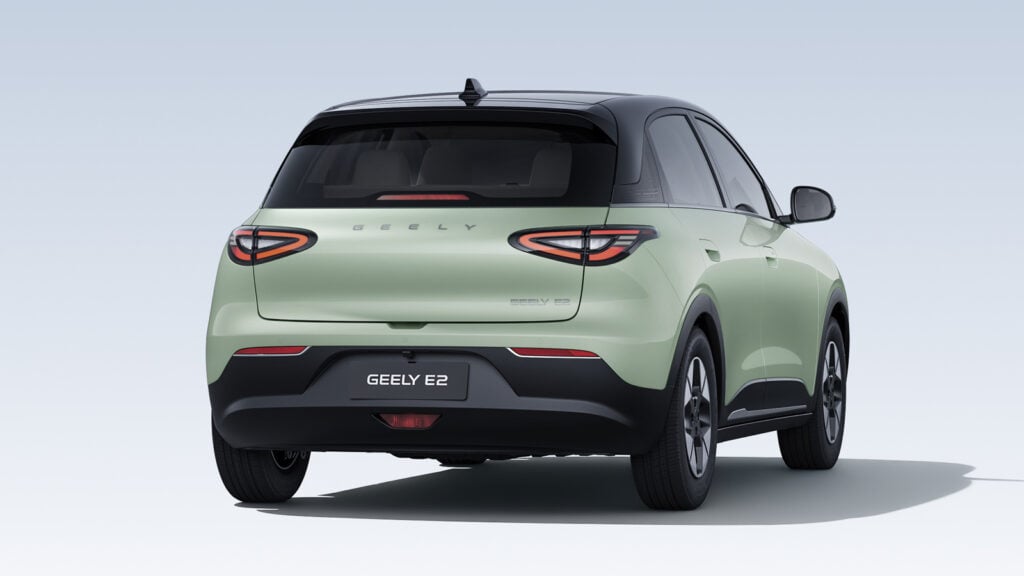
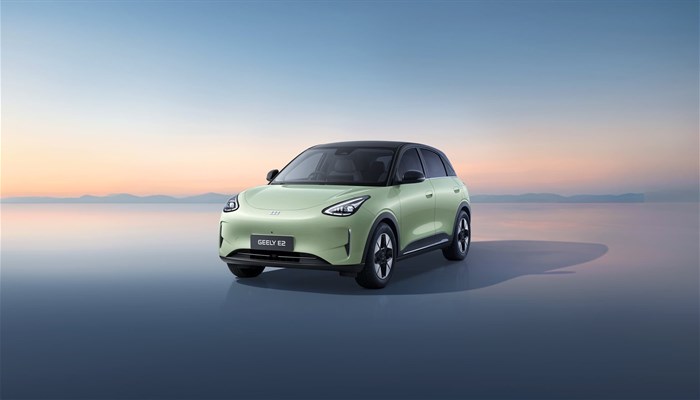
1. Geely E2 Aspire — R339,900
- Battery: 39.4 kWh
- Official range: 325km (WLTP)
- Motor output: 85kW
- DC fast charging: Up to 40kW
- Estimated monthly charging cost: Approximately R487 per month
- Included bonus: Free 7.4kW wallbox with purchase
The Geely E2 Aspire arrives as the joint-cheapest car in this guide and immediately stakes a strong claim to segment leadership. At R339,900 with a free 7.4kW home wallbox included, it offers the largest battery, the longest official range, and a respectable 85kW motor in a package that undercuts much of its competition on both price and practicality. The 325km WLTP range means confident inter-city travel between Johannesburg and Pretoria, or well-supported Cape Town to Hermanus runs.
Pros and cons: The free wallbox inclusion is a genuinely meaningful saving — a quality 7.4kW charger installation typically costs between R8,000 and R15,000 in South Africa — and the range and power figures are class-leading at this price. The Aspire is the entry-level trim, however, so buyers seeking a more premium interior finish or additional driver assistance features will need to look at the Apex.
Best for: First-time EV buyers who want maximum range and the lowest possible total cost of entry, including home charging infrastructure.
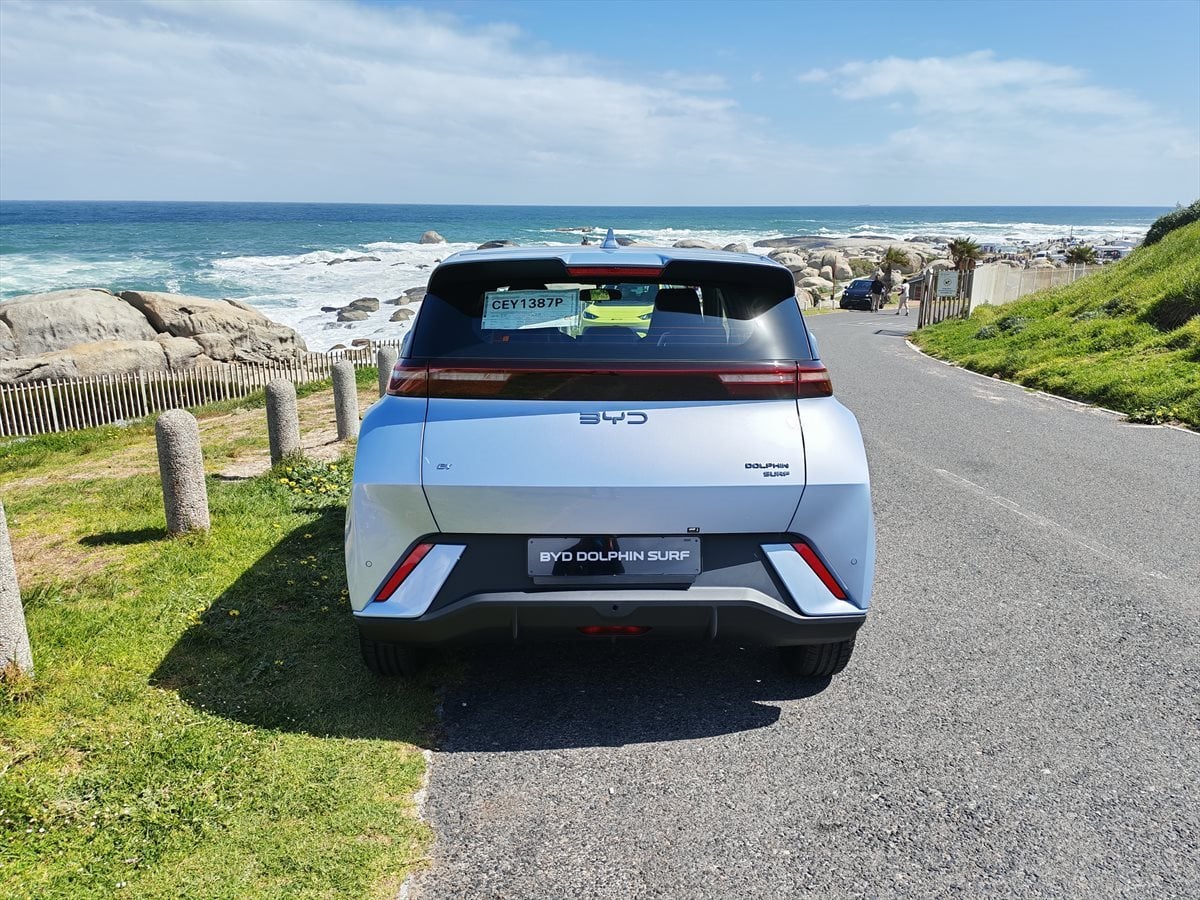
2. BYD Dolphin Surf Comfort — R339,900
- Battery: 30 kWh (BYD Blade battery)
- Official range: 232km (WLTP)
- Motor output: 55kW
- DC fast charging: Up to 60kW
- Estimated monthly charging cost: Approximately R410 per month
BYD’s Dolphin Surf Comfort shares its price tag of R339,900 with the Geely E2 Aspire but takes a meaningfully different approach. The smaller 30 kWh battery produces a lower monthly charging cost — the cheapest of any car in this guide — and the BYD Blade battery technology is renowned for its thermal stability, longevity, and safety credentials. BYD’s local dealer network and after-sales infrastructure is also among the most developed of the Chinese brands now operating in South Africa.
Pros and cons: The 232km range is the shortest in this guide, which makes the Dolphin Surf Comfort a city car rather than a road trip companion. However, for a buyer whose daily driving needs are well within 150km, the lower charging costs and the reassurance of BYD’s established South African presence are genuine advantages. The 55kW motor is adequate rather than spirited.
Best for: Urban commuters with predictable, short daily distances who prioritise low running costs and brand confidence over maximum range.
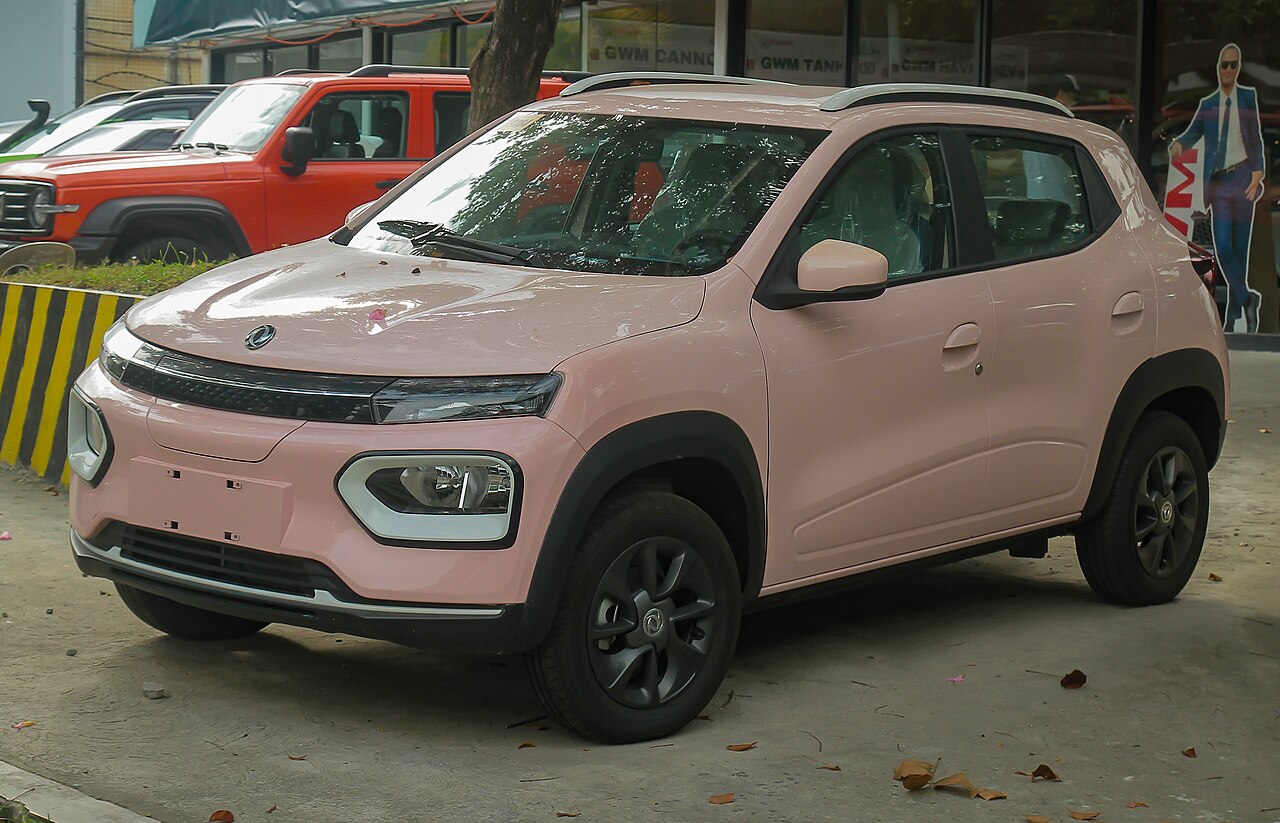
3. Dongfeng Box — R349,900
- Battery: 31.4 kWh
- Official range: 250km (WLTP)
- Motor output: 70kW
- DC fast charging: Up to 40kW
- Estimated monthly charging cost: Approximately R428 per month
The Dongfeng Box is the wild card of this segment. Its boxy, retro-inflected styling is deliberately attention-seeking, and the brand has made no secret of targeting younger, style-conscious urban buyers who find the more conventional hatchback shapes of its rivals uninspiring. Priced at R349,900, it sits R10,000 above the joint cheapest cars in this guide and offers a middle-ground specification between the entry BYD and the larger-battery Geely.
Pros and cons: The Dongfeng Box offers a more distinctive design identity than anything else in this segment, and its interior packaging is clever, with a surprisingly usable boot for its footprint. The Dongfeng brand’s after-sales footprint in South Africa is still maturing compared to BYD and GWM, which is a legitimate consideration for a five-year ownership proposition. Range is competitive for its battery size.
Best for: Design-led buyers, urbanites who want something different from the crowd, and younger buyers making their first new car purchase.
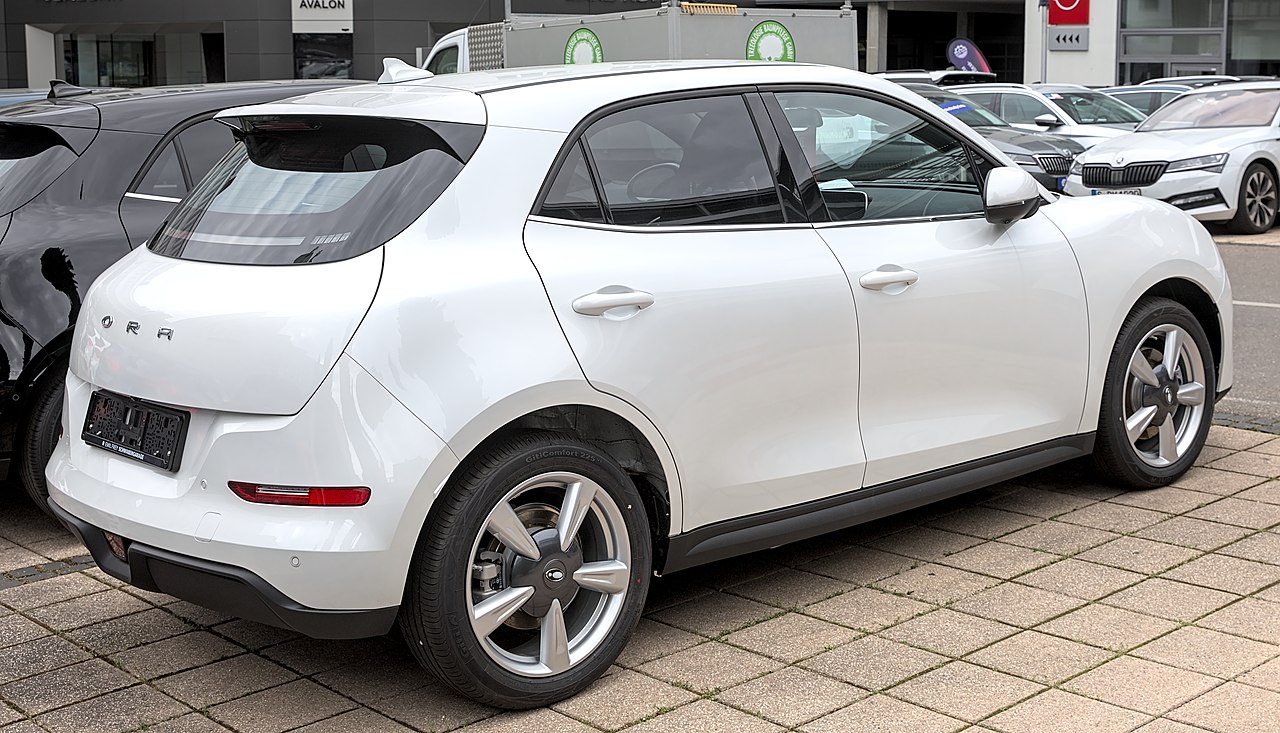
4. GWM Ora 03 — R369,900
- Battery: 48 kWh
- Official range: 310km (WLTP)
- Motor output: 105kW
- DC fast charging: Up to 78kW
- Estimated monthly charging cost: Approximately R527 per month
GWM’s Ora 03 is the performance proposition of this group. With a 48 kWh battery, 105kW of motor power, and DC fast charging at up to 78kW — the fastest in this entire segment — the Ora 03 is the car for buyers who want an EV that feels genuinely capable on South African highways and can replenish meaningfully quickly on a public charger. GWM has one of the most extensive dealer and service networks of any Chinese brand operating in South Africa, which matters for long-term peace of mind.
Pros and cons: The Ora 03 is priced R30,000 above the cheapest options here, and its larger battery means slightly higher monthly charging costs than its rivals. However, it compensates with the best performance figures, the fastest charging speed, and the backing of a brand that has been in South Africa long enough to have built genuine infrastructure. The retro-styled cabin has proven divisive among test drivers.
Best for: Buyers who regularly travel between cities, need the fastest charging capability on a public network, or simply want the most performance for their budget.
5. BYD Dolphin Surf Dynamic — R389,900
- Battery: 38.8 kWh (BYD Blade battery)
- Official range: 295km (WLTP)
- Motor output: 70kW
- DC fast charging: Up to 60kW
- Estimated monthly charging cost: Approximately R475 per month
The BYD Dolphin Surf Dynamic is the upper-specification variant of the Dolphin Surf family, stepping up from the entry Comfort with a significantly larger 38.8 kWh battery, extended range of 295km, and a more comprehensive standard features list. At R389,900 it is near the top of this price bracket, but the BYD Blade battery’s reputation for longevity and safety, combined with a well-appointed interior, makes a compelling case for the premium over the entry model.
Pros and cons: The Dynamic strikes a strong balance between range, charging speed, and the quality assurance that comes with BYD’s Blade battery platform. It is not the cheapest way into the Dolphin Surf family, and at R50,000 more than the Comfort, buyers need to honestly assess whether the extra range justifies the additional outlay for their lifestyle. The 70kW motor is a step up from the Comfort but not the most powerful option in this segment.
Best for: BYD brand loyalists and buyers who want more range than the Comfort offers without stepping outside the Dolphin Surf family, as well as those who prioritise battery safety technology.
6. Geely E2 Apex — R389,900
- Battery: 39.4 kWh
- Official range: 325km (WLTP)
- Motor output: 85kW
- DC fast charging: Up to 40kW
- Estimated monthly charging cost: Approximately R487 per month
- Included bonus: Free 7.4kW wallbox with purchase
The Geely E2 Apex shares its mechanical underpinnings entirely with the Aspire — same battery, same range, same motor, same DC charging speed — but adds a richer standard specification that justifies its R50,000 premium over the entry model. Where the Aspire is the pragmatic choice, the Apex is for buyers who spend considerable time in their car and want a more premium day-to-day experience. The free wallbox inclusion carries across from the Aspire, meaning total cost of entry relative to rivals remains competitive.
Pros and cons: The Apex offers the longest range in this entire guide, tied with its sibling Aspire, and the additional features justify careful consideration for buyers who would otherwise option up an Aspire significantly. The 40kW DC charging speed is the lowest fast-charge rate in this segment, which becomes a meaningful limitation on a long-distance trip requiring multiple charging stops. The Geely brand’s South African dealer network is still expanding.
Best for: Buyers who want maximum range and a more premium specification but cannot stretch to the R400,000-plus segment, and who primarily rely on home charging rather than DC fast-charging infrastructure.
Get Your Home Charger Installed
Buying an affordable EV? Get a home charger installed from R8,000. ChargePoint SA handles everything.
Comparison Table: Every EV Under R400,000
| Model | Price | Battery | Range (WLTP) | Motor | DC Fast Charge | Est. Monthly Cost |
|---|---|---|---|---|---|---|
| Geely E2 Aspire | R339,900 | 39.4 kWh | 325km | 85kW | 40kW | R487 |
| BYD Dolphin Surf Comfort | R339,900 | 30 kWh | 232km | 55kW | 60kW | R410 |
| Dongfeng Box | R349,900 | 31.4 kWh | 250km | 70kW | 40kW | R428 |
| GWM Ora 03 | R369,900 | 48 kWh | 310km | 105kW | 78kW | R527 |
| BYD Dolphin Surf Dynamic | R389,900 | 38.8 kWh | 295km | 70kW | 60kW | R475 |
| Geely E2 Apex | R389,900 | 39.4 kWh | 325km | 85kW | 40kW | R487 |
Five-Year Running Cost Comparison: EV vs VW Polo 1.0 TSI

The Volkswagen Polo 1.0 TSI remains South Africa’s best-selling passenger car, available from approximately R350,000. It is the logical benchmark against which affordable EVs must be measured. The comparison below assumes 15,000km driven per year, a petrol price of R23.50 per litre, the Polo’s official claimed consumption of 5.2L/100km, and a blended electricity tariff of R3.20 per kWh for EV running costs. Servicing costs are based on published service plan pricing and independent workshop averages. Figures are indicative and will vary.
| Cost Category | VW Polo 1.0 TSI | Geely E2 Aspire | BYD Dolphin Surf Comfort |
|---|---|---|---|
| Purchase price | R350,000 | R339,900 | R339,900 |
| 5-year fuel / charging cost | R86,775 | R29,220 | R24,600 |
| 5-year servicing estimate | R32,000 | R12,000 | R10,000 |
| Home charger installation | N/A | R0 (included) | R12,000 (estimated) |
| Total 5-year cost | R468,775 | R381,120 | R386,500 |
| 5-year saving vs Polo | — | R87,655 | R82,275 |
The conclusion is clear: even at similar or slightly higher purchase prices, every EV in this guide will cost significantly less to operate over five years than a comparable petrol car. The Geely E2 Aspire’s free wallbox inclusion makes it particularly compelling in this analysis. Buyers who currently pay for a service plan on a petrol vehicle will also note that EVs have fewer consumable components — no oil, no spark plugs, no timing belt — which is reflected in substantially lower servicing costs.
Find Public Chargers Near You
See real-time availability of charging stations across South Africa.
Home Charging for Budget EV Buyers: Why a 7.4kW Wallbox is Enough
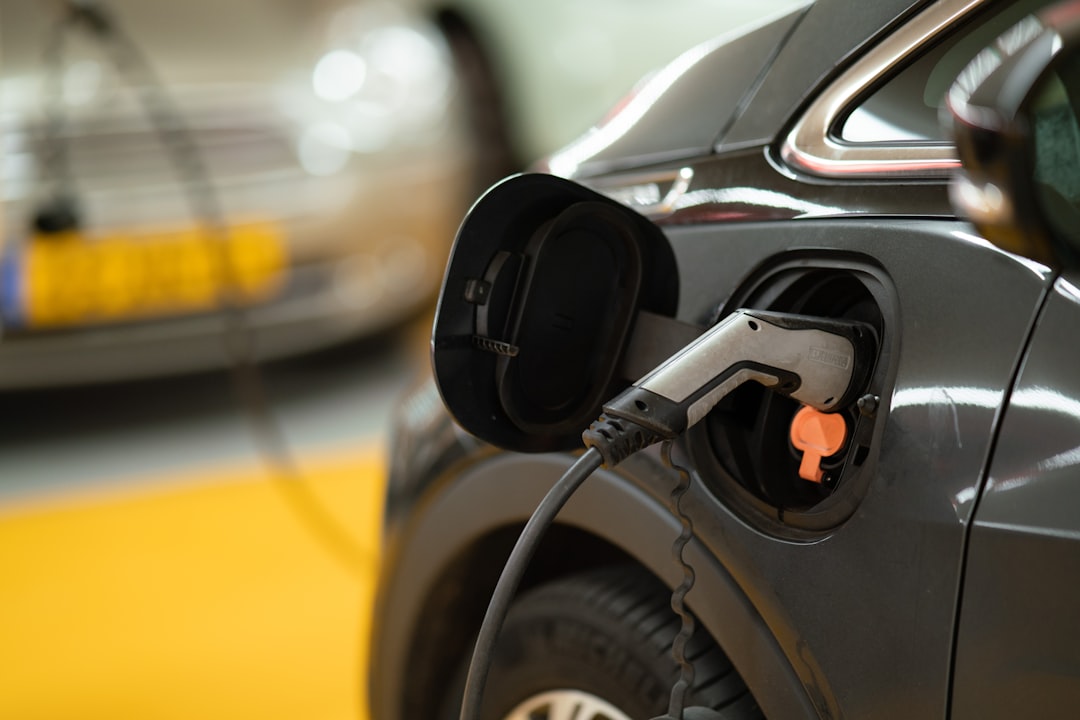
One of the most common sources of confusion for first-time EV buyers in South Africa is home charging. The short answer for the majority of buyers in this segment is straightforward: a 7.4kW AC wallbox charger is sufficient for your needs, and you do not need to spend money on a more powerful installation.
A 7.4kW wallbox will add approximately 40km to 50km of range per hour of charging. For a car with a 39 kWh battery like the Geely E2, a full charge from 20 percent to 100 percent takes approximately five hours. If you plug in when you arrive home and unplug when you leave in the morning, you will have a full battery every single day regardless of how depleted it was the previous evening.
Faster home chargers — 11kW or 22kW three-phase units — exist and are used by buyers with larger battery EVs or those who drive unusually high daily distances. For the cars in this guide, the additional cost of a three-phase installation (which requires a three-phase electricity supply that many South African residential properties do not have) is not justified.
The Geely E2 in both Aspire and Apex trim includes a free 7.4kW wallbox, which removes this barrier entirely. Buyers of other vehicles in this guide should budget between R8,000 and R15,000 for a quality wallbox and professional installation, and should use a registered electrician who understands EV charging requirements.
Frequently Asked Questions
Can I charge my EV during load shedding?
Not from the grid, no. During a load shedding window, your home charger will have no power. If you have a solar and battery backup system that is sized appropriately, you may be able to charge from that, but most standard residential backup systems are not large enough to charge an EV at 7.4kW simultaneously with running a household. The practical approach is to schedule charging outside load shedding windows using your car’s built-in charging timer, a feature available on all six vehicles in this guide.
What is the warranty on these batteries?
All six vehicles in this guide come with battery warranties of at least eight years or 160,000km, whichever comes first. BYD’s Blade battery carries an eight-year warranty. Geely offers a similar eight-year battery guarantee on the E2 range. GWM backs the Ora 03’s battery with an eight-year warranty. Always confirm the specific warranty terms with your dealer before signing, as coverage conditions vary.
Where can I charge in South Africa outside of home?
South Africa’s public charging network has expanded considerably. ChargePoint, Rubicon, GridCars, and Powertime operate public networks across major urban centres and key national routes. The Joburg to Cape Town corridor is now reasonably well served for DC fast charging. It is worth downloading the relevant apps before your first long trip and planning your stops in advance. The GWM Ora 03’s 78kW DC charging capability will be most useful on this type of journey.
Are these cars safe? Do Chinese EVs meet South African safety standards?
All vehicles sold new in South Africa must comply with the National Road Traffic Act’s vehicle safety requirements and have passed the relevant homologation processes. BYD’s Blade battery in particular has an excellent safety record globally and is designed to resist thermal runaway. Independent crash test data from NCAP programmes in other markets provides additional reassurance for several of these models.
Will the resale value of these EVs hold up?
Resale value for affordable Chinese EVs in South Africa is still an evolving picture. BYD and GWM have the longest track records in the market and have demonstrated better residual values than newer entrants. As a general rule, the used EV market in South Africa is small but growing, and buyers who choose established brands with strong local dealer networks will be better protected at resale than those who purchase from brands with limited South African presence.
Is it worth buying an EV if I live in a complex or apartment?
This is one of the most relevant questions for South African urban buyers. If your body corporate or landlord will allow the installation of a dedicated EV charging point in your parking bay, then apartment living is entirely compatible with EV ownership. If not, you will need to rely on workplace charging or public infrastructure. Several bodies corporate in Johannesburg, Cape Town, and Durban have already approved EV charging installations as standard practice. Lobby your building management early.
Which car in this guide offers the best value overall?
If forced to pick a single recommendation, the Geely E2 Aspire at R339,900 offers the most compelling combination of price, range, power, and the genuinely meaningful inclusion of a free 7.4kW wallbox. It is the joint-cheapest car in this guide, has the longest range, and eliminates the largest single hidden cost of EV ownership for a new buyer. The BYD Dolphin Surf Comfort is the best option for pure urban use and lowest monthly running costs. The GWM Ora 03 is the right choice for buyers who need proper fast-charging capability and the assurance of GWM’s well-established South African service network.
The Bottom Line
The sub-R400,000 EV market in South Africa in April 2026 is the most competitive it has ever been. Six credible, properly warranted electric vehicles compete for your attention at price points that are genuinely accessible to the average new-car buyer. The five-year cost advantage over a comparable petrol car is now substantial and measurable — not a theoretical future promise, but a real financial benefit that starts from the first month of ownership.
The question is no longer whether you can afford to buy an EV. For many South African car buyers in this budget range, the more accurate question is whether you can afford not to.
Continue Reading