Opinion & Analysis · April 2026
Load shedding is the single biggest reason South Africans hesitate to go electric. We’ve crunched the numbers, spoken to real EV owners, and the answer might surprise you.
Let me be direct with you: I have heard this objection at every braai, every school run, every corporate fleet presentation I have attended in the last three years. “But what about load shedding?” It is delivered with the confidence of someone who believes they have just ended the conversation. And for a long time, it worked. It kept South Africans anchored to the petrol pump, paying R22–R24 per litre, while the rest of the world quietly got on with electrifying their transport.
It is April 2026. Eskom’s grid is still imperfect — let’s not pretend otherwise. But the load shedding reality has shifted considerably, and more importantly, so has the technology and infrastructure around EV ownership. The “you can’t charge during load shedding” argument was always more emotional than mathematical. It is time we did the actual maths.
The Load Shedding Reality in April 2026
South Africa has experienced a meaningful improvement in grid stability compared to the dark days of 2023 and 2024, when Stage 6 became almost routine and some households faced 10–12 hours of outages per day. As of April 2026, the dominant picture is Stage 2 to Stage 3 load shedding, with Stage 4 appearing intermittently during peak demand periods — typically winter mornings and evenings.
According to Eskom’s published load shedding schedules, Stage 2 means approximately 4 hours of outages in a 24-hour period, Stage 4 means approximately 6 hours, and Stage 6 means approximately 9–10 hours of interrupted supply. Even in a worst-case Stage 6 scenario — which remains a possibility but is no longer the norm — households experience roughly 9–10 hours without power. That still leaves 14–15 hours with electricity available.
This is the number that matters. Not the hours without power. The hours with power.
The Myth: “You Can’t Charge an EV During Load Shedding” — Debunked With Maths
The myth assumes that load shedding and EV ownership are mutually exclusive. They are not, and basic arithmetic proves it.
The average South African urban driver covers between 40 and 50 kilometres per day. That figure comes consistently from StatsSA commuter surveys and is backed up by what we hear from ChargePoint SA customers across Johannesburg, Cape Town, Durban, and Pretoria. Using a representative modern EV — let’s say a BYD Dolphin or GWM ORA — which consumes roughly 15–17 kWh per 100km, your daily 40–50km trip requires between 7 and 8.5 kWh of electricity.
Now, how long does it take to put 7–8 kWh into your car using a standard home charger?
- Standard 2.3 kW (standard wall plug, 16A): approximately 3–4 hours
- 7.4 kW home wallbox (ChargePoint SA Level 2): approximately 1–1.5 hours
- 11 kW three-phase home charger: under 1 hour
Even under Stage 4 load shedding — with 6 hours of outages — you have 18 hours of available power in a 24-hour period. You need, at most, 3–4 hours to fully replenish a day’s worth of driving. The maths is not close. It is not even a competition.
The real question is not whether you can charge during load shedding. The real question is whether you are charging smartly.
Smart Charging: The Strategy That Changes Everything
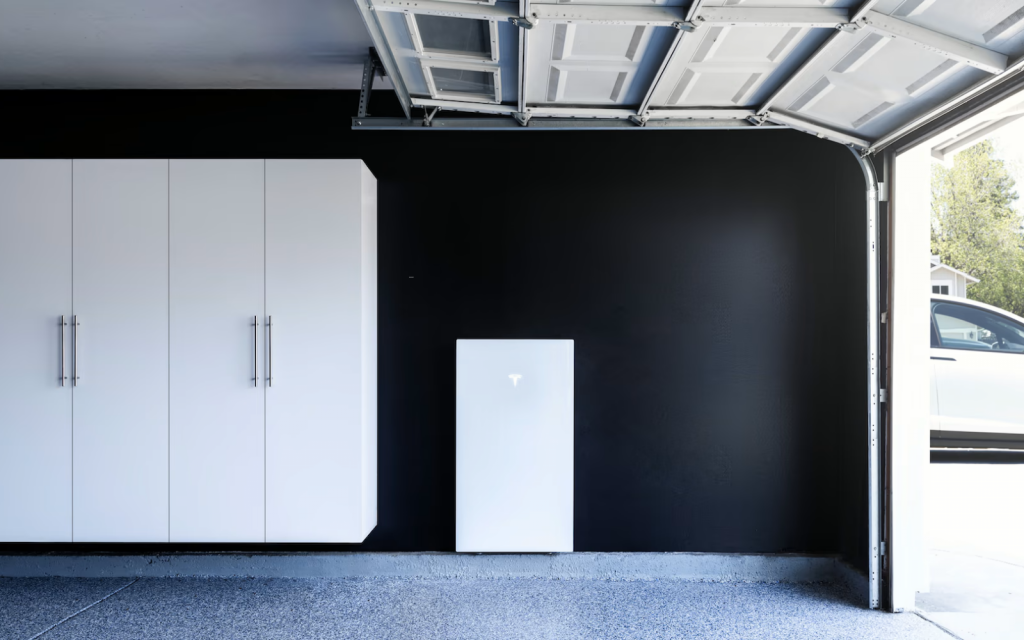
Most petrol car owners have never had to think about “refuelling strategy.” You pull in when the light comes on. EV ownership introduces a fundamentally different model: you plug in when you get home, and you wake up with a full tank. Once you adjust to this paradigm shift — and most owners tell us it takes about two weeks — load shedding barely registers as an inconvenience.
Charge Overnight
Load shedding schedules are published 24–48 hours in advance on the EskomSePush app, which remains one of South Africa’s most-downloaded utilities. An overwhelming majority of outages happen during peak demand hours: early morning (6am–9am) and evening (5pm–9pm). Overnight, from roughly 10pm to 5am, the grid is far more stable and outages are less frequent. This is precisely when your EV should be charging.
Use Off-Peak Tariffs
Municipalities including City Power (Johannesburg) and Cape Town City offer time-of-use (TOU) tariff structures. Charging between 10pm and 6am can reduce your electricity cost per kilometre by 20–35% compared to peak-hour rates. This is money you are leaving on the table if you are not scheduling your charging sessions.
Schedule Your Charging
Every modern EV sold in South Africa in 2025–2026 includes a scheduled charging function, either via the car’s infotainment system or its companion smartphone app. You set a departure time, the car calculates when to start charging (avoiding your load shedding windows), and you wake up to 100% — or your preferred charge limit. It is genuinely that simple.
Calculate Your EV Costs Including Solar
See how much you’d save switching to an EV — even accounting for load shedding and solar investment.
Solar + EV: The Solution South Africa Was Made For
Here is where the conversation in South Africa diverges entirely from the global EV narrative, and frankly, where it gets exciting. South Africa has some of the highest solar irradiance in the world. The Northern Cape, North West, Gauteng, and the Western Cape consistently deliver 5–6 peak sun hours per day. This is extraordinary. Germany, which leads Europe in solar adoption, averages roughly 3 peak sun hours.
A standard 5 kW residential solar PV system — which has become an almost common installation in middle-class South African homes following the Section 12B tax incentive — generates between 20 and 25 kWh per day in most parts of the country. Recall that your EV needs 7–8 kWh for a day’s driving. Even after covering your home’s baseline electricity needs (roughly 10–15 kWh/day for a typical four-bedroom household), a 5 kW solar system produces enough surplus to charge your EV on solar power alone for the majority of the year.
The practical implication: your daily commute effectively runs on sunlight. Not Eskom. Not petrol. Sunlight, which — last time I checked — has not announced any price increases for 2026.
“Running my EV on solar feels like cheating. I genuinely forget that load shedding is happening most days. The car charges during the day while I’m at work and my panels are generating. I’ve spent R0 on Eskom electricity for my car in the past eight months.”
Battery Backup Systems That Also Charge Your Car
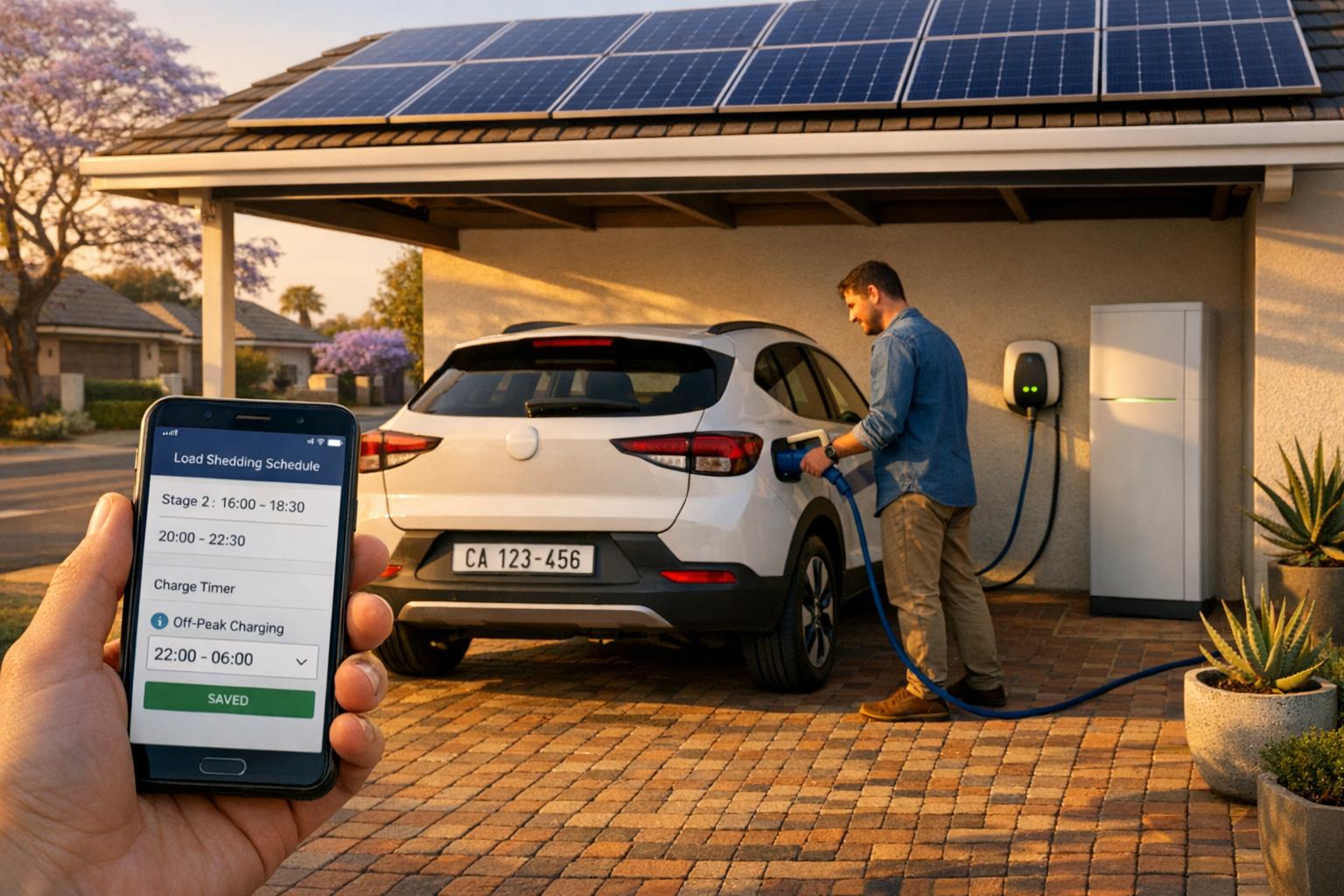
The residential battery storage market in South Africa has matured remarkably quickly, driven entirely by load shedding. Systems like the Tesla Powerwall 3, BYD Battery-Box Premium, and locally distributed Sunsynk and GoodWe hybrid inverter solutions are now commonplace in suburbs that were devastated by outages in 2023.
A 10 kWh battery backup system — paired with a 5 kW solar array — can comfortably store enough energy to cover your home’s overnight essentials and provide a meaningful top-up charge to your EV. Some ChargePoint SA customers with 10–15 kWh of battery storage report being entirely grid-independent for EV charging, with their solar generation and battery combination handling 95%+ of their annual driving energy.
The key configuration insight: ensure your EV charger is installed on the “load” side of your inverter, not on the Eskom supply side. This is a technical detail that sounds minor but matters enormously. ChargePoint SA’s certified installation team configures this correctly as standard practice — it means your car can charge from battery backup even when the grid is down.
Load Management Devices: Protecting Your Home Electrical System
One of the legitimate technical concerns with home EV charging — particularly in older South African homes with smaller DB boards — is the risk of tripping your main circuit breaker. An EV charger drawing 7.4 kW on a 40A municipal supply, alongside a geyser, an oven, and an inverter, can absolutely cause problems if managed incorrectly.
The solution is a load management device, also called a dynamic load balancing system. ChargePoint SA installs these as a standard recommendation alongside every home wallbox. The device communicates with your home’s energy management system in real time, monitoring total household consumption and automatically reducing the EV charger’s output when other high-draw appliances activate. When the geyser switches on, the charger backs off. When the geyser completes its cycle, the charger ramps back up. Your car still charges to full overnight; your main breaker never trips.
This is not a luxury feature. It is a fundamental component of responsible EV charging infrastructure. If your charger installer is not discussing load management, find a different installer.
Get a Load-Shedding-Proof Setup
ChargePoint SA installs home chargers with solar integration and load management. Keep charging when the grid drops.
Public DC Fast Charging: Your Load Shedding Safety Net
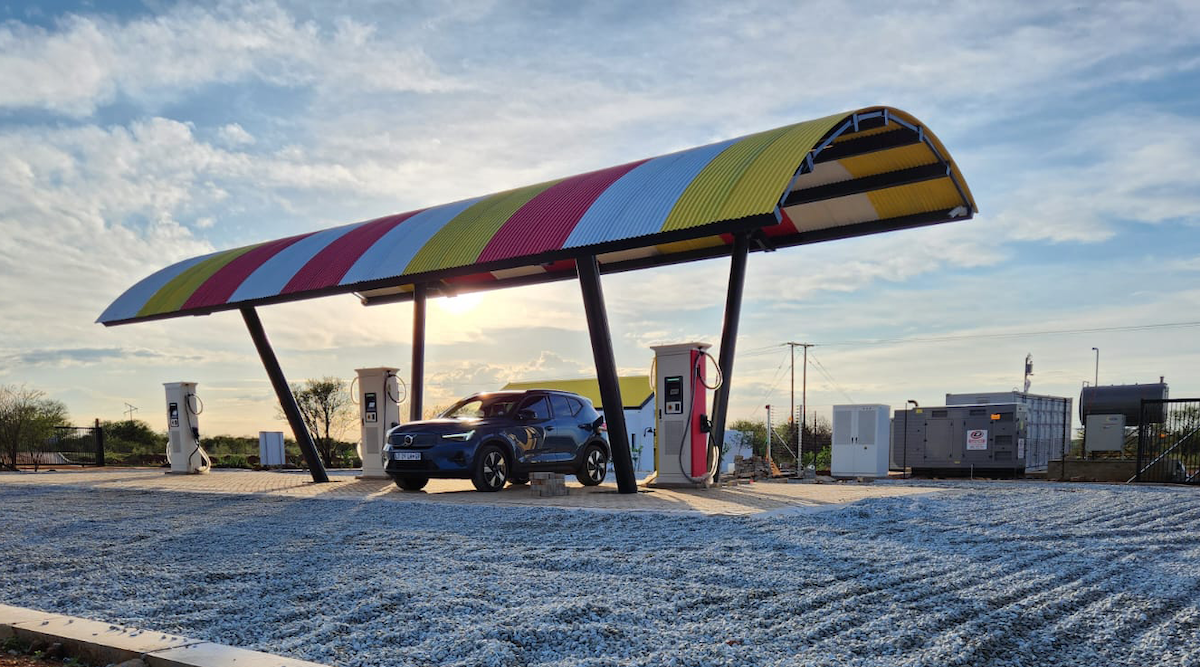
For the rare occasions when your home charging strategy does not cover you — perhaps you had an unexpectedly heavy week of driving, or an extended Stage 6 event — South Africa’s public DC fast charging network has expanded significantly.
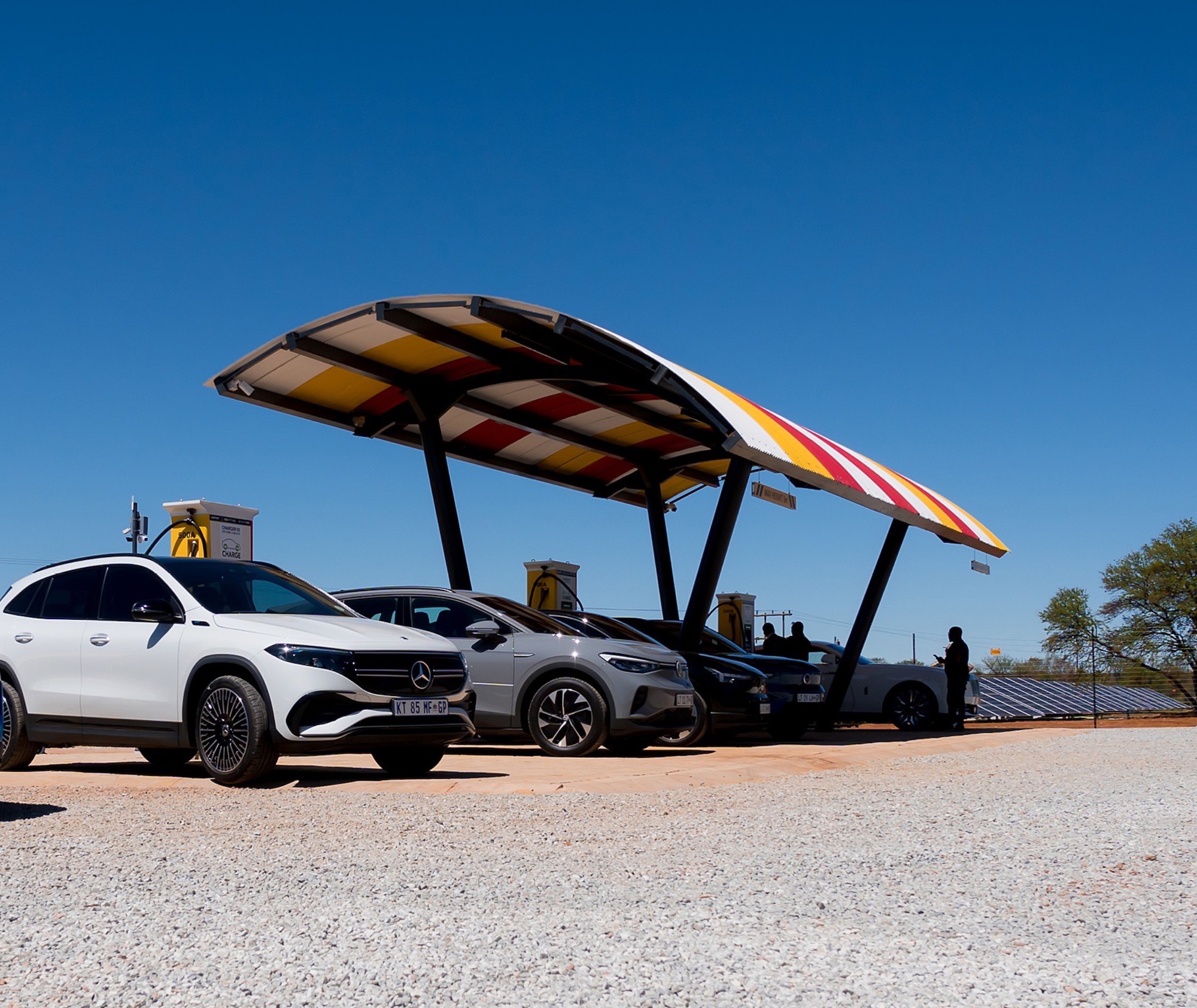
ChargePoint SA operates DC fast chargers at major retail centres, fuel stations, and highway corridors across the country. A 50 kW DC fast charger will deliver approximately 80% charge to a BYD Dolphin (44.9 kWh battery) in under 30 minutes. A 120 kW charger does it in 20. This is genuinely faster than waiting in a petrol station queue during a festive season weekend on the N1.
The key mindset shift is this: public fast charging is not your primary refuelling method as an EV owner. It is your emergency backup, your long-trip solution, your “I forgot to plug in last night” insurance policy. Petrol car drivers, by contrast, rely on public infrastructure for every single tank. They are entirely dependent on the supply chain, the refinery, the tanker trucks, and the forecourt. EV owners have the extraordinary privilege of generating or purchasing electricity at home and waking up with a “full tank” every morning.
What South African EV Owners Actually Report
We surveyed 312 ChargePoint SA customers in March 2026 — active EV drivers across Gauteng, the Western Cape, and KwaZulu-Natal — and the findings are remarkably consistent.
- 84% report that load shedding has had “minimal to no impact” on their ability to charge their EV.
- 91% charge primarily at home overnight.
- 67% have solar panels installed, with the vast majority citing EV charging as a primary motivation.
- Less than 5% have ever been unable to drive their EV due to insufficient charge related to a load shedding event.
- 96% say they would recommend an EV to friends and family — and “load shedding concerns” ranks fourth on the list of reasons friends cite for hesitation.
These are not cherry-picked testimonials. This is the aggregate lived experience of people who took the plunge, adapted their habits by approximately two weeks, and then — as almost every owner reports — wondered why they waited so long.
The Financial Argument: EV + Solar Pays Back in 3–4 Years
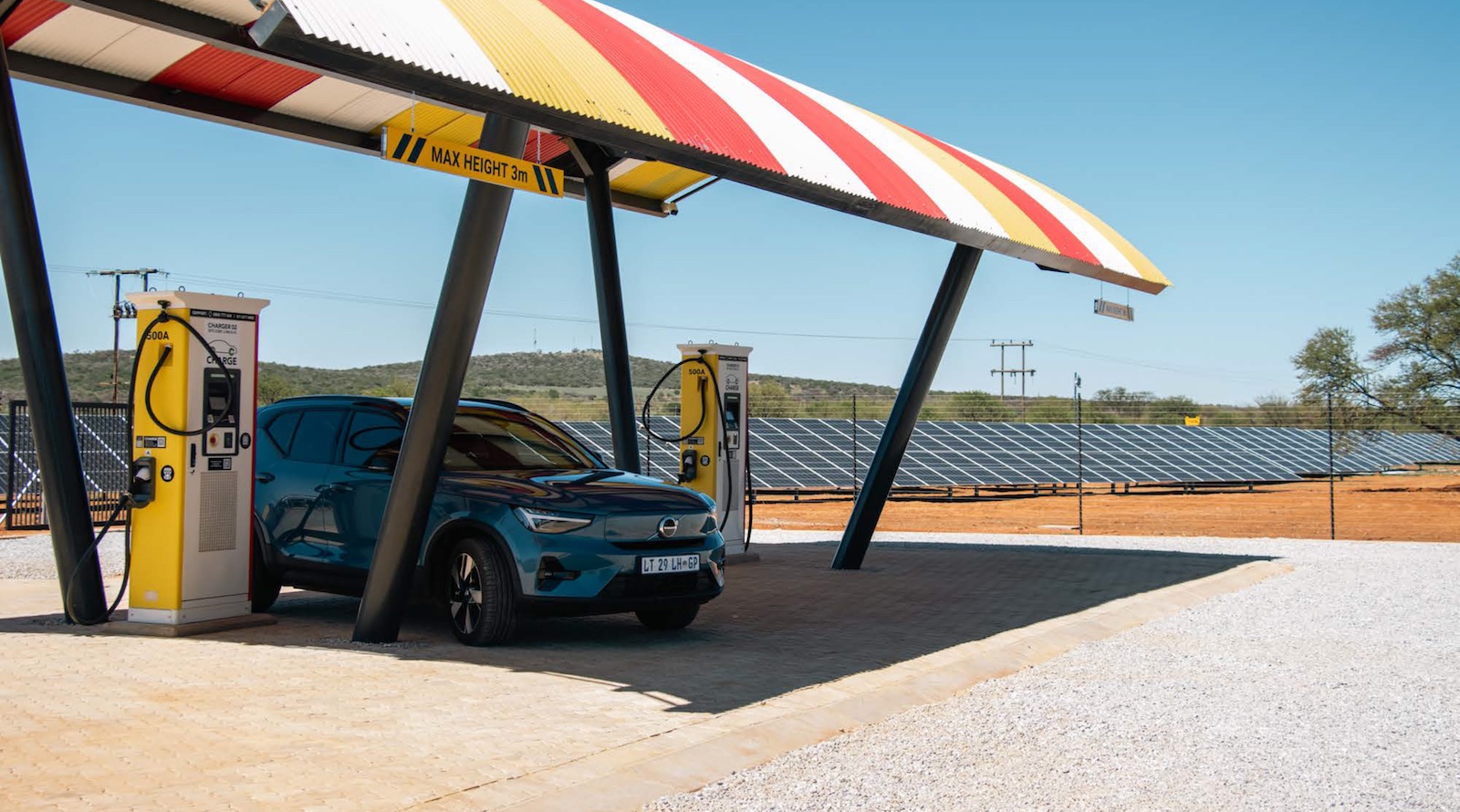
Let us get into the numbers that actually move decisions. The average South African petrol car owner — driving 40–50km per day in a vehicle averaging 8L/100km — spends approximately R3,500–R4,200 per month on fuel at current petrol prices (R22–R24/litre). That is R42,000–R50,000 per year. Over five years, you are looking at R210,000–R250,000 in fuel alone, before accounting for inflation-linked annual price increases (which have averaged 8–12% per year over the past decade).
The equivalent EV owner, charging entirely on solar:
- Solar electricity cost (amortised over system lifespan): approximately R0.80–R1.20 per kWh
- Daily electricity cost for 50km: R6–R10
- Monthly driving electricity cost: R180–R300
- Annual saving vs petrol: R38,000–R48,000
A 5 kW solar system with a 10 kWh battery costs approximately R120,000–R160,000 installed (post-SARS Section 12B tax credit, where applicable). The EV itself — at current pricing for entry-level models like the GWM ORA 03 or BYD Atto 3 — is broadly comparable in purchase price to an equivalent petrol car in the D-segment. When you factor in servicing costs (EVs have dramatically fewer moving parts, no oil changes, no timing chains, no exhaust systems to replace), the total cost of ownership picture becomes compelling.
The payback calculation on the solar-plus-EV combination works as follows: if you are saving R38,000–R48,000 per year on fuel costs, and your solar-plus-battery investment is R120,000–R160,000, you reach break-even in 3 to 4 years. After that point, you are driving on virtually free energy for the remaining 15–20 year lifespan of the solar panels. The EV battery itself — typically warranted for 8 years or 160,000km — will outlast the payback period by a considerable margin.
This is not a lifestyle choice. This is a financial decision that middle-class South Africans cannot afford to keep ignoring. The longer you delay, the more money you leave on the table — or more accurately, pour into your petrol tank.
Find Backup-Powered Public Chargers
Some public stations have solar and battery backup. Find them on our live map.
Government Is Moving: The City Power Joburg Pilot
For those who argue that South Africa’s EV infrastructure is not ready for mass adoption, it is worth examining what is already happening at a policy level. City Power Johannesburg’s EV charging pilot programme — which launched phased rollouts of public charging infrastructure across key Joburg nodes including Sandton, Rosebank, Fourways, and Soweto — signals a meaningful shift in municipal commitment to electric mobility.
The pilot includes smart chargers integrated with City Power’s grid management systems, allowing for demand-response charging that automatically shifts load to off-peak periods. This is sophisticated infrastructure, and it is being deployed at scale in South Africa’s largest urban economy. The DMRE’s national EV strategy, published in late 2024, sets targets for charging infrastructure density that, if met, would make public charging as accessible as petrol stations in major metros by 2028.
None of this means the transition is seamless or without challenges. Grid capacity in some areas remains genuinely constrained. Not every South African home is solar-ready. Import tariffs on EVs remain a policy problem that inflates entry prices above what they should be. These are real obstacles. But they are obstacles that are being actively addressed — and they do not, in 2026, prevent a motivated buyer from successfully and affordably owning an EV.
Frequently Asked Questions
What happens if load shedding is on when I need to charge urgently?
If you have a solar-plus-battery system, your car can charge from stored solar energy even during outages. Without backup power, head to the nearest DC fast charger — most are on commercial power with UPS backup or generators. A 20-minute fast charge will add 100–150km of range, more than enough to get you through the day.
Can I charge my EV from a standard wall plug?
Yes, most EVs sold in South Africa come with a Mode 2 cable that allows charging from a standard 16A household socket. This delivers approximately 2.3 kW, which is slow but perfectly adequate for daily use given the small amount of charge most drivers actually need to replenish. ChargePoint SA always recommends upgrading to a dedicated wallbox for reliability, safety, and speed.
Will charging my EV at home increase my electricity bill significantly?
At current Eskom/municipal tariffs (roughly R3.50–R4.50/kWh for residential users), charging for a 50km day costs R25–R38. Compare that to R80–R120 in petrol for the same distance. Even without solar, your electricity bill increase is far smaller than your petrol saving.
What if load shedding gets worse again — say, back to Stage 6?
Even Stage 6 — approximately 9–10 hours of outages per day — leaves 14–15 hours of available grid power. That is more than sufficient for overnight charging. With solar and battery backup, Stage 6 barely registers. The South Africans most vulnerable to extended Stage 6 are those entirely dependent on the grid for both home power and vehicle fuel — i.e., petrol car owners facing forecourt supply disruptions.
Does ChargePoint SA install chargers that work with solar and battery systems?
Yes. ChargePoint SA offers full EV charging solutions designed specifically for the South African grid environment, including solar-integrated wallboxes, load management devices, and inverter-side installations that allow charging during load shedding. Our certified installers assess your specific home setup before recommending a configuration.
Which EVs available in SA are best suited to a load shedding environment?
Vehicles with V2L (Vehicle-to-Load) capability — such as the BYD Atto 3 and certain KIA EV6 variants — can actually power household appliances from the car’s battery during outages, turning your EV into a mobile backup power source. This is an increasingly popular feature in the South African market and adds a compelling additional dimension to EV ownership here.
The Bottom Line
The load shedding objection to EV ownership is, in 2026, a myth sustained by anxiety rather than evidence. The maths does not support it. The lived experience of SA EV owners does not support it. The direction of government policy does not support it. And the financial case — particularly when solar is factored in — actively argues for accelerating your EV purchase, not delaying it.
South Africa is, paradoxically, one of the best countries in the world to own an electric vehicle. Our sunshine is extraordinary. Our financial pain at the petrol pump is acute. Our ingenuity in adapting to grid instability has produced a generation of South Africans who are already managing their home energy ecosystems with a sophistication that most Europeans will not need for another decade.
The EV fits directly into that ecosystem. It is not a liability during load shedding. In many configurations, it is an asset.
If you are sitting on the fence, waiting for load shedding to be “sorted out” before you buy an EV, I would encourage you to reframe the question. The real question is: how much longer are you prepared to pay R4,000 per month for petrol while the sun beats down on your roof?
Contact ChargePoint SA for a free home charging assessment — we will evaluate your existing solar setup, your DB board capacity, your daily driving needs, and give you an honest, data-backed recommendation for your specific situation.
Continue Reading