Published: April 2026 | ChargePoint SA Energy & Mobility Desk
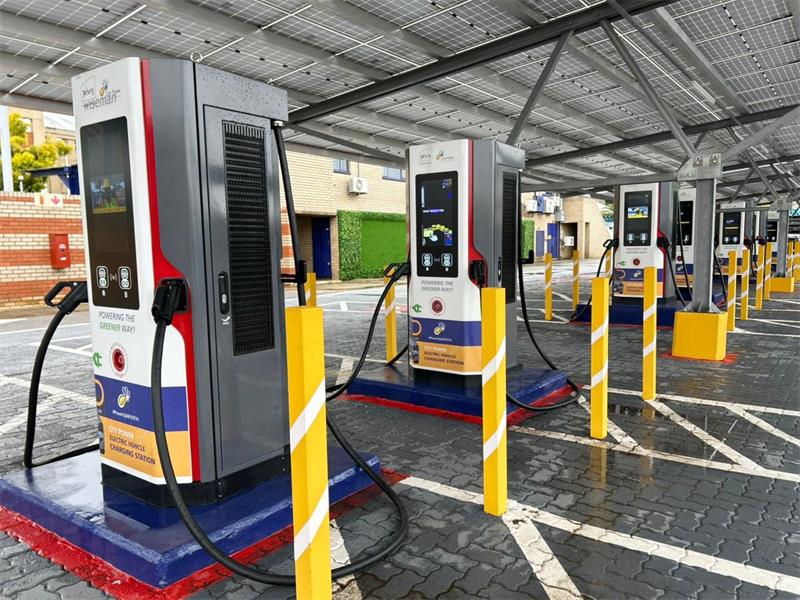
When City Power quietly switched on its first public electric vehicle charging station at its Booysens head office in March 2026, it marked something far more significant than a ribbon-cutting ceremony. For the first time in Johannesburg’s history, a municipal utility had put its name — and its infrastructure — behind the EV transition. Twenty charging points, a hybrid energy system, and a location in the heart of the city’s southern suburbs: it is a modest start, but the implications for Gauteng’s half-a-million-plus registered vehicle owners are anything but modest.
This article examines what City Power actually built, why it matters beyond the press release, whether Johannesburg’s battered grid can realistically support an EV charging rollout, and what drivers across Gauteng should be thinking about right now — from electricity tariffs to home charging strategy.
What City Power Actually Built at Booysens

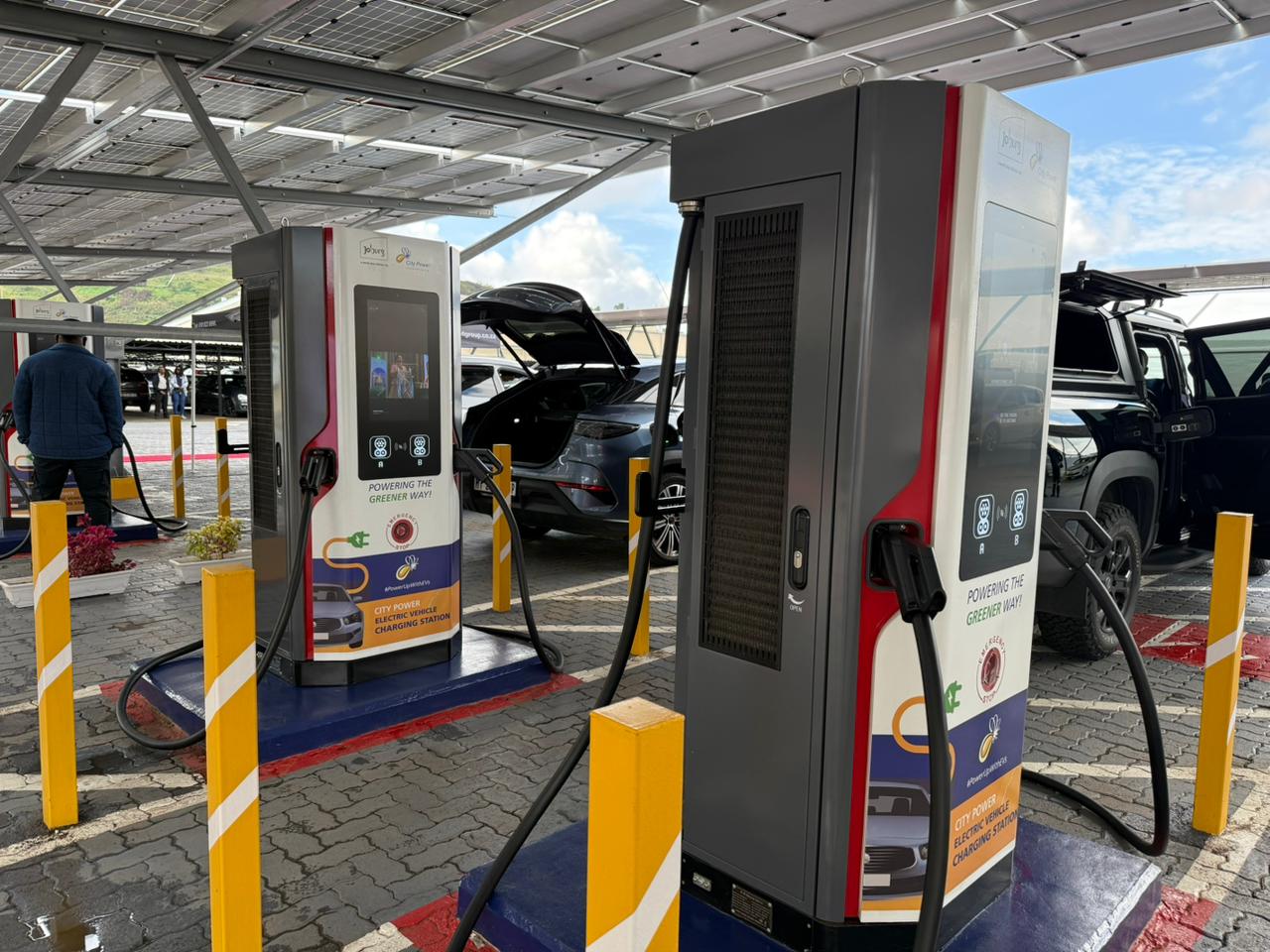
The Booysens facility is not a single charging bay tucked into a corner of the utility’s car park. City Power has installed 20 dedicated charging points split across fast-charging and medium-charging categories. Fast chargers in this context typically deliver between 50kW and 150kW of direct current (DC), capable of adding roughly 200 kilometres of range to a modern EV in under 45 minutes. Medium chargers — often operating at 22kW AC — are suited to vehicles parked for two to four hours, making them practical for employees, visitors, and nearby residents running errands.
Crucially, the station is not purely grid-dependent. City Power engineered a hybrid energy system that draws from three sources: rooftop solar photovoltaic generation, a battery energy storage system (BESS), and conventional grid supply from its own network. This architecture is significant. It means the facility can continue operating — at reduced capacity — during load shedding stages that would otherwise knock out a purely grid-fed station. The solar array charges the battery storage during daylight hours, the stored energy buffers peak demand, and the grid fills gaps when generation falls short.
The location at City Power’s Booysens head office on Beatrix Street is deliberate. It gives the utility direct oversight of the pilot, allows engineers to monitor usage patterns and system performance in real time, and places the infrastructure within reach of some of Johannesburg’s densest commuter corridors — Soweto to the west, the CBD to the north, and the industrial south.
Why This Matters for Johannesburg — and for South Africa
Prior to this launch, EV charging infrastructure in Johannesburg was almost entirely driven by the private sector: shopping centres, hotel forecourts, a handful of corporate campuses, and the growing network of independent charge point operators. Government entities were conspicuously absent. Cape Town’s municipal involvement and the Western Cape provincial government’s EV strategy had made Joburg’s silence on the issue look increasingly like neglect.
The Booysens station changes that narrative. When a municipal utility commits capital, engineering resources, and reputational credibility to EV infrastructure, it sends signals that pure market activity cannot. It tells vehicle manufacturers that Johannesburg intends to be a viable market. It tells property developers and fleet operators that municipal support is forthcoming. And it tells the ordinary driver sitting on the fence about their next vehicle purchase that the city is not going to leave them stranded.
There is also a regulatory dimension. South Africa’s Integrated Resource Plan and the Department of Transport’s draft Green Transport Strategy both call for significant EV adoption targets by 2035. For those targets to be achievable, public charging infrastructure must expand well beyond private initiative. City Power’s pilot is, in effect, the first time a Johannesburg government entity has operationalised those national policy ambitions at street level.
Find Charging Stations Near You
See real-time charger availability across Johannesburg and all of South Africa.
The Grid Question: Can Johannesburg Handle EVs?
This is the question that every sceptic raises, and it deserves a serious answer rather than a dismissive reassurance.
Johannesburg’s electricity supply situation has improved considerably since the worst of the load shedding crisis that ran from 2022 through 2024, but it has not normalised. Eskom’s generation capacity remains constrained by ageing coal plant infrastructure, delayed maintenance schedules, and the slow ramp-up of new renewable capacity. City Power itself faces distribution-level losses, illegal connections, and an infrastructure deficit that predates the EV conversation entirely.
The EV Association of South Africa (EVASA) has been measured in its welcome of the Booysens announcement, cautioning that the success of any public charging rollout in Johannesburg depends entirely on how electricity demand is managed. Their concern is not unreasonable. A single DC fast charger drawing 100kW represents roughly the same instantaneous load as 40 average South African households. Twenty charging points, all occupied simultaneously at peak capacity, could draw upwards of 1.5 megawatts — a non-trivial ask on a distribution network already running close to its limits during evening peaks.
City Power’s hybrid approach directly addresses this. The BESS allows the facility to draw energy from the grid during off-peak periods — typically between 10pm and 6am under Eskom’s time-of-use tariff structure — store it, and discharge it during peak demand without amplifying the grid spike. The solar generation reduces daytime grid draw. Smart load management software distributes available power across active charging points rather than committing full rated capacity to every bay simultaneously. It is not a perfect solution, but it is a credible engineering response to a genuine constraint.
The broader question — whether a city-wide EV charging network could overwhelm Johannesburg’s grid — is more nuanced. Studies from the Council for Scientific and Industrial Research (CSIR) suggest that managed, off-peak EV charging could actually benefit grid stability by providing a flexible, schedulable load that helps balance renewable energy intermittency. The problem is not EVs per se; the problem is unmanaged, uncoordinated charging concentrated in peak hours. That is precisely why intelligent load management, at both the public and home charging level, is not optional — it is foundational.
What This Means for EV Prices and Adoption in Gauteng
Municipal infrastructure investment reduces what economists call the “range anxiety premium” — the psychological and practical cost that makes buyers hesitant about switching to electric vehicles. When public charging is unreliable or sparse, buyers demand a larger battery (and therefore a more expensive vehicle) to compensate. They also factor in the inconvenience cost of planning every journey around charging availability. Both of these factors inflate the effective cost of EV ownership beyond the sticker price.
As Johannesburg’s public charging network becomes denser and more reliable, those premium calculations change. Buyers become more comfortable with a more modestly sized battery pack. Shorter-range, lower-priced vehicles like the BYD Dolphin — which retails at under R500,000 and offers around 400 kilometres of WLTP range — become genuinely practical daily drivers rather than anxiety-inducing compromises.
Gauteng accounts for roughly a third of South Africa’s vehicle sales. If the City Power pilot scales — and the utility has indicated it intends to roll out additional stations across Johannesburg’s sub-stations and public facilities — the resulting infrastructure density could meaningfully accelerate the EV adoption curve in the province. Fleet operators, which account for a significant share of new vehicle purchases, are particularly sensitive to charging infrastructure availability. A fleet manager at a Sandton-based logistics company needs confidence that their drivers can charge reliably across Joburg, not just at a single pilot facility in Booysens.
Ready to Charge at Home?
Don’t rely on public infrastructure alone. Get a home charger installed with load management and optional solar integration.
Johannesburg vs Cape Town vs Durban: The Infrastructure Comparison
Cape Town has long held the lead in South African public EV charging infrastructure, a position built on earlier private-sector investment, a more prosperous demographic base with higher EV uptake, and — critically — a more stable electricity supply, partly by virtue of Cape Town’s own municipal utility running independently of City Power’s challenges. The City of Cape Town has been more proactive in its public infrastructure planning, and the Western Cape government’s EV incentive discussions have created a more favourable environment for charge point operators to invest.
Durban and the eThekwini municipality have been slower still than Johannesburg, with public charging infrastructure concentrated almost entirely in high-end retail precincts and a handful of hospitality locations along the Umhlanga ridge. The port city’s EV ecosystem remains thin relative to its economic size, and eThekwini has not yet demonstrated the kind of municipal commitment that City Power’s Booysens station represents.
On a raw numbers basis, Johannesburg’s public charging network — including private operators — remains smaller than Cape Town’s. However, the gap has been closing, and the City Power pilot changes the dynamic qualitatively rather than just quantitatively. Cape Town’s lead was built on private capital; Johannesburg is now adding municipal credibility and infrastructure to its private sector base. If City Power delivers on its stated intention to expand beyond the Booysens pilot, Johannesburg could rival Cape Town’s network density within two to three years.
Home Charging vs Public Charging: Why You Still Need Both

The launch of a public charging facility inevitably prompts a question from prospective EV buyers: if I can charge at City Power’s station, do I still need a home charger? The answer is unambiguously yes, and understanding why matters for making sensible decisions about EV ownership in Johannesburg.
The average South African EV owner does the vast majority of their charging at home, overnight. This is not merely a convenience preference — it is an economic and practical reality. Home charging at off-peak tariffs costs a fraction of even the most competitively priced public fast charger. It means you begin every day with a full battery, eliminating the range planning that defines life for drivers who rely solely on public infrastructure. And in a city where load shedding has been a recent reality, a well-configured home system with load management can integrate with your home’s electrical load to ensure your vehicle charges safely within your available capacity, without tripping your main breaker or causing an Eskom-notified exceedance.
Public infrastructure, meanwhile, fills the gaps that home charging cannot cover: long-distance travel, unexpected extra mileage during the day, vehicles charged at work, and households in sectional title complexes or rental accommodation who cannot easily install a private charger. The Booysens station and its successors are not alternatives to home charging — they are the complement that makes the overall system resilient.
ChargePoint SA provides professional home charger installation across Gauteng, including smart load management systems that monitor your home’s real-time electricity consumption and adjust the charging rate accordingly. This means your EV charges as fast as your home’s capacity allows at any given moment — without interfering with your geyser, air conditioning, or other high-draw appliances — and automatically schedules charging to take advantage of off-peak tariffs.
How Much Would You Save Switching to Electric?
Use our calculator to compare your current petrol costs with EV charging costs in Johannesburg.
Johannesburg Electricity Tariffs: The Numbers That Matter
Understanding City Power’s tariff structure is essential for calculating the true cost of EV ownership in Johannesburg. For residential customers on the standard time-of-use schedule applicable from the 2025/26 financial year, the key rates are:
- Standard tariff: R2.95 per kWh — applicable during standard daytime hours outside peak and off-peak windows
- Off-peak tariff: R1.75 per kWh — typically applied between 22:00 and 06:00, and over weekends and public holidays
- Peak tariff: R4.12 per kWh — applied during morning and evening peaks, typically 07:00–10:00 and 18:00–20:00 on weekdays
To put these numbers into practical context, consider a BYD Atto 3 with a 60.5kWh usable battery. A full charge from flat would cost approximately R106 at off-peak rates, R178 at the standard rate, or R249 at peak. Given that the Atto 3 delivers roughly 420 kilometres of real-world range in Johannesburg conditions, charging at off-peak rates works out to less than 26 cents per kilometre — compared to roughly R1.80 to R2.20 per kilometre for a comparable petrol SUV at current fuel prices.
The implication is clear: if you charge primarily at home during off-peak hours, your EV running costs are dramatically lower than petrol. If you rely predominantly on public fast chargers during peak hours, the economics narrow considerably — though you still avoid the volatility of fuel prices and benefit from reduced servicing costs. A well-designed home charging setup with automatic off-peak scheduling is not a luxury; it is the single most effective way to maximise your EV’s cost advantage in Johannesburg.
ChargePoint SA’s home installation packages include tariff-aware smart charging software that automatically programmes your vehicle’s charging window to align with City Power’s off-peak periods, ensuring you capture the lowest possible per-kilometre cost without any manual intervention.
Frequently Asked Questions
Where exactly is the City Power EV charging station in Johannesburg?
The pilot facility is located at City Power’s head office at Booysens, Johannesburg. The station is accessible to members of the public as well as City Power employees and visitors during operating hours. City Power has indicated that future stations will be distributed across its substation and municipal facility network throughout the city.
How much does it cost to charge at the Booysens station?
City Power had not published finalised public tariffs for the Booysens station at the time of writing. Pricing for public fast chargers in South Africa typically ranges from R4.50 to R7.50 per kWh depending on the operator and charger speed. City Power is expected to announce competitive pricing given its position as a municipal utility with an interest in driving EV adoption.
Will load shedding affect the City Power charging station?
The hybrid design — combining solar generation, battery storage, and grid supply — means the station can continue operating at reduced capacity during moderate load shedding stages. During severe or extended outages, capacity may be further reduced, but the facility should not go entirely dark under most load shedding scenarios that have been experienced in recent years.
Do I need a home charger if I live close to the Booysens station?
Yes. Public charging stations are best used for top-ups, long-distance travel, and situations where home charging is unavailable. Charging at home overnight during off-peak hours (R1.75/kWh) is dramatically cheaper than using a public fast charger, and ensures you start every day with a full battery. ChargePoint SA installs home chargers across Johannesburg and surrounding areas, complete with smart load management to protect your home’s electrical system.
What EV models are compatible with the Booysens charging station?
The station supports both AC and DC charging. AC medium chargers are compatible with virtually all EVs sold in South Africa. DC fast chargers use the Combined Charging System (CCS2) standard, which is compatible with BYD, Volvo, BMW, Mercedes-Benz, Volkswagen, Hyundai, and Kia EVs, among others. CHAdeMO compatibility depends on the specific equipment installed; prospective users should confirm with City Power ahead of their first visit.
How does Johannesburg’s EV charging infrastructure compare to Cape Town?
Cape Town currently has a denser public charging network, built on earlier private-sector investment and a more stable electricity supply environment. However, Johannesburg’s private charging network has expanded significantly since 2023, and the City Power pilot represents the first meaningful municipal commitment to public infrastructure. If City Power executes its planned rollout, Johannesburg could approach Cape Town’s infrastructure density within two to three years.
Can ChargePoint SA install a home charger that works with City Power’s time-of-use tariffs?
Yes. ChargePoint SA’s home charging installations include smart load management systems and tariff-aware scheduling software compatible with City Power’s time-of-use structure. Your charger can be programmed to automatically charge during off-peak hours at R1.75/kWh, pause during peak hours to avoid the R4.12/kWh rate, and integrate with your home’s existing electrical load to prevent overload conditions. Contact ChargePoint SA for a site assessment and installation quote.
Is the City Power Booysens station a permanent facility?
The station is described as a pilot, which typically implies an assessment period during which usage data, system performance, and grid impact are evaluated before a decision is made to scale. Given the level of infrastructure investment involved — 20 charging points with a hybrid energy system — it is almost certain to remain operational regardless of the pilot’s outcome. The question is what the pilot’s findings will mean for the pace and locations of subsequent rollouts.
ChargePoint SA is a leading installer of home and commercial EV charging solutions across South Africa. For professional home charger installation with smart load management in Gauteng and beyond, visit our website or contact our technical team for a no-obligation site assessment.
Continue Reading