
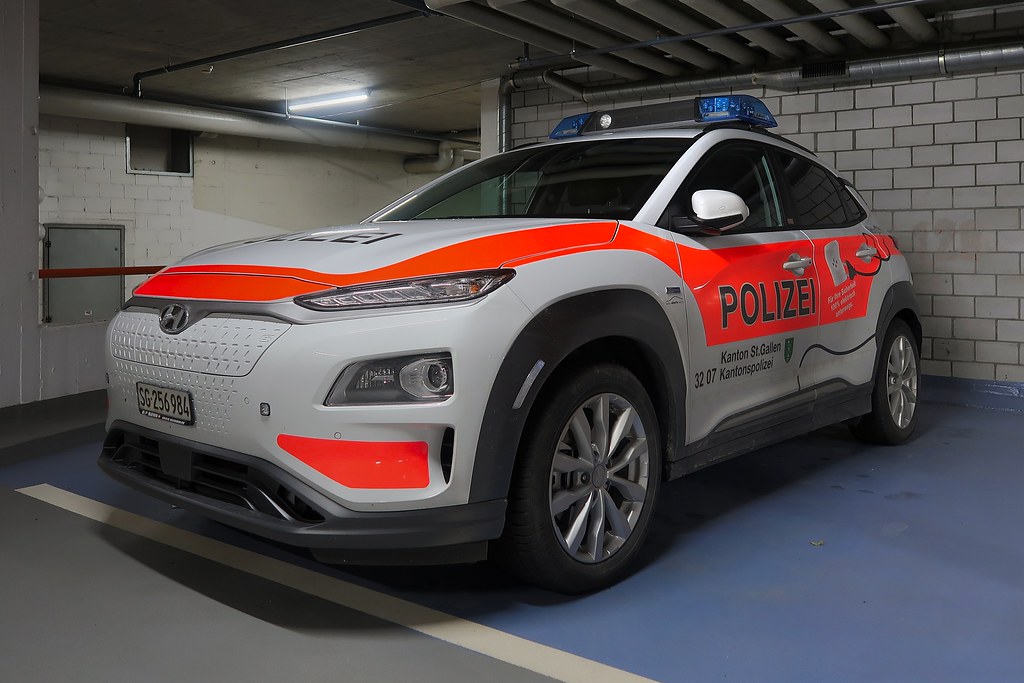
Hyundai Kona Electric vs Chery Tiggo 4 Pro 1.5T: Which Should You Buy in 2025?
Considering switching to an EV? This comprehensive comparison between the Hyundai Kona Electric and the Chery Tiggo 4 Pro 1.5T will help you make the right decision for your wallet and lifestyle in South Africa. While electric vehicles offer compelling environmental benefits and lower running costs, the higher purchase price means the petrol option remains more affordable overall for most buyers in 2025.
📊 Quick Comparison Overview
| Feature | Hyundai Kona Electric | Chery Tiggo 4 Pro 1.5T |
|---|---|---|
| Purchase Price | R850,000 | R400,000 |
| 5-Year Fuel Cost | R51,074 | R117,300 |
| 5-Year Maintenance | R15,000 | R40,000 |
| Total Cost of Ownership | R916,074 | R557,300 |
| Winner | Petrol wins by R358,774! | |
💰 The Real Cost: 5-Year Ownership Analysis
The numbers tell a clear story: while the Hyundai Kona Electric offers significantly lower running costs, the R450,000 higher purchase price (R850,000 vs R400,000 for the Chery Tiggo 4 Pro 1.5T) means petrol remains the more affordable choice over five years of ownership.
Over a typical 5-year ownership period driving 15,000km annually, the Chery Tiggo 4 Pro 1.5T will save you R358,774 in total compared to the Hyundai Kona Electric. That’s a monthly advantage of R5,980 with the petrol vehicle — enough to cover a car payment, insurance, or other household expenses.
Fuel Costs Breakdown
- Hyundai Kona Electric electricity cost: R10,215/year = R51,074 over 5 years
- Chery Tiggo 4 Pro 1.5T petrol cost: R23,460/year = R117,300 over 5 years
- Annual fuel savings with EV: R13,245 (but not enough to offset the R450,000 purchase price difference)
The Kona Electric’s electricity costs work out to just R0.68 per kilometre for energy, compared to the Tiggo’s R1.56 per kilometre for petrol. At current South African electricity rates (averaging R2.50/kWh including municipal surcharges), charging at home overnight remains significantly cheaper than filling up at the pump. However, this R66,226 in fuel savings over five years only recovers 15% of the higher purchase price.
Maintenance Costs
- Hyundai Kona Electric: R15,000 (minimal — no oil changes, less brake wear)
- Chery Tiggo 4 Pro 1.5T: R40,000 (regular servicing, oil, filters, brake pads, exhaust components)
- Annual maintenance savings with EV: R5,000
Electric vehicles require dramatically less maintenance than petrol cars. There’s no engine oil to change, no spark plugs to replace, no exhaust system to repair, and regenerative braking means brake pads last significantly longer. Over five years, this saves R25,000 compared to the Tiggo’s conventional maintenance schedule — a meaningful advantage, but still only 5.5% of the purchase price premium.
Total Cost Per Kilometre
- Hyundai Kona Electric: R12.21/km (including purchase price, electricity, maintenance)
- Chery Tiggo 4 Pro 1.5T: R7.43/km (including purchase price, petrol, maintenance)
When you factor in the purchase price amortised over 75,000km of driving, the Chery costs R4.78 less per kilometre to own and operate. This substantial difference reflects the reality that the EV’s lower running costs simply can’t overcome the R450,000 initial price gap within a typical ownership period.
🔍 Understanding the Cost Reality
It’s crucial to understand what these numbers mean for your budget. The Hyundai Kona Electric will save you R18,245 per year in combined fuel and maintenance costs (R13,245 in fuel + R5,000 in maintenance). That’s real money — roughly R1,520 per month.
However, to recover the R450,000 higher purchase price through these savings alone would take 24.7 years of ownership at 15,000km annually. Even if you keep the vehicle for a decade, you’ll still be R267,324 behind compared to buying the Chery.
This doesn’t make the Kona a bad choice — it means your decision should be based on factors beyond pure financial return, such as environmental values, driving experience, technology preferences, and lifestyle fit.
🎯 Who Should Buy the Hyundai Kona Electric?
The Hyundai Kona Electric is perfect for you if:
- 💰 Long-term ownership planned: The longer you keep it, the more the running cost savings accumulate (though full payback takes 24+ years)
- 🏠 Home charging available: Wake up to a “full tank” every morning for just R851/month in electricity
- 🌆 City/suburban driving: Perfect for the 484km range on a single charge — ideal for Johannesburg, Cape Town, or Durban commutes
- 🔧 Low maintenance priority: No oil changes, no exhaust systems, minimal brake wear thanks to regenerative braking
- 🌍 Environmental responsibility: Zero tailpipe emissions in SA’s cities, reducing urban air pollution
- ⚡ Modern technology: Latest infotainment, over-the-air updates, advanced safety features
- 💳 Can afford higher upfront cost: You have R850,000 available or can secure favourable EV financing, and the R358,774 total cost premium over 5 years fits your budget
- 🔌 Access to workplace charging: Many Sandton and Cape Town CBD offices now offer free employee charging, further reducing your running costs
- 🚗 Value beyond pure economics: You prioritise driving experience, environmental impact, and cutting-edge technology over maximum financial efficiency
🎯 Who Should Buy the Chery Tiggo 4 Pro 1.5T?
The Chery Tiggo 4 Pro 1.5T makes sense if:
- 💵 Lower upfront cost needed: R450,000 cheaper to purchase — that’s a substantial saving you can invest elsewhere or use for a house deposit
- 💰 Lower total cost priority: Save R358,774 over 5 years compared to the Kona Electric — that’s R5,980 per month
- ⛽ Long-distance flexibility: Refuel anywhere in 5 minutes with petrol stations everywhere across South Africa
- 🚗 Heavy towing/off-road: 1.5L turbocharged engine provides proven capability for weekend adventures
- 📍 Rural/remote areas: No charging infrastructure concerns in smaller towns or on farm roads
- 🔋 No home charging option: Apartment living or street parking makes home charging impractical
- 👴 Familiar technology: Comfortable with traditional vehicle ownership and maintenance
- 🛣️ Frequent long trips: Regular drives beyond 400km where charging stops would add significant time
- ⚡ Load-shedding concerns: Worried about charging reliability during power cuts, especially during Stage 4+ load-shedding
- 📊 Financial pragmatism: You want the mathematically optimal choice for total cost of ownership
💡 Key Decision Factors
Choose the Hyundai Kona Electric if you:
- ✅ Drive less than 400km per day on average
- ✅ Have access to home charging or workplace charging
- ✅ Can comfortably afford both the R850,000 purchase price and the R358,774 total cost premium over 5 years
- ✅ Prioritise environmental impact and zero emissions above financial optimisation
- ✅ Want the lowest possible running costs (R1,520/month less in fuel and maintenance)
- ✅ Plan to keep the vehicle for 10+ years to maximise cumulative savings
- ✅ Value cutting-edge technology, instant torque, and the unique EV driving experience
- ✅ Do most of your driving in urban areas with good charging infrastructure
- ✅ Appreciate the convenience of never visiting a petrol station again
Choose the Chery Tiggo 4 Pro 1.5T if you:
- ✅ Need to minimise total cost of ownership over 5 years (save R358,774)
- ✅ Want maximum flexibility for long-distance travel without planning charging stops
- ✅ Don’t have reliable charging access at home or work
- ✅ Drive more than 400km regularly without convenient charging stops
- ✅ Need to minimise upfront costs and preserve capital (R450,000 less)
- ✅ Prefer the familiarity and universal convenience of petrol stations
- ✅ Live in an area with limited charging infrastructure
- ✅ Want the financial certainty of lower total ownership costs with no payback calculations needed
- ✅ Prioritise practical economics over environmental considerations
🔋 Charging Infrastructure in South Africa
South Africa’s EV charging network is growing rapidly, with over 500 public charging points nationwide as of 2025. Major cities like Johannesburg, Cape Town, Durban, and Pretoria have excellent coverage, with fast chargers at shopping centres, hotels, and along major routes like the N1 and N3.
Home charging transforms EV ownership: Installing a home charger (R15,000–R30,000 for a quality 7kW unit) gives you a “full tank” every morning at a fraction of petrol costs. Most EV owners do 90% of their charging at home overnight, taking advantage of cheaper off-peak electricity rates where available. For the Kona Electric, a full charge costs approximately R170 at standard rates, or as little as R120 on off-peak tariffs.
However, load-shedding remains a consideration. During Stage 4 or higher, home charging can be disrupted, though most EV owners report they can still charge during available windows. Public fast-chargers increasingly have battery backup systems to operate during outages. The key is planning: with 484km of range, you can typically go several days between charges even if load-shedding limits your charging windows.
📈 Long-Term Value and Break-Even Analysis
Over 5 years of ownership (15,000km/year):
- Total cost advantage for Chery Tiggo 4 Pro 1.5T: R358,774 less than the Kona Electric
- Monthly cost advantage: R5,980 less per month with the petrol vehicle
- Cost per kilometre — Hyundai Kona Electric: R12.21
- Cost per kilometre — Chery Tiggo 4 Pro 1.5T: R7.43
- Annual running cost savings with EV: R18,245 (fuel + maintenance)
When does the EV break even? At current prices and running costs, you’d need to keep the Hyundai Kona Electric for approximately 24.7 years (driving 15,000km annually) before the accumulated fuel and maintenance savings offset the R450,000 higher purchase price. This assumes electricity and petrol prices increase at similar rates.
However, if you drive significantly more than 15,000km per year, the break-even point comes sooner. At 30,000km annually, the EV breaks even in roughly 12.3 years. High-mileage drivers benefit most from electric vehicles’ lower running costs — at 40,000km per year, break-even occurs in just 9.2 years.
It’s also worth noting that battery replacement costs aren’t included in this analysis. While modern EV batteries are warrantied for 8 years/160,000km and typically last much longer, eventual replacement could cost R100,000–R150,000, further extending the break-even timeline.
🌍 Environmental Impact
By choosing the Hyundai Kona Electric over the Chery Tiggo 4 Pro 1.5T, you’ll prevent approximately 11,781kg of CO₂ from entering the atmosphere over 5 years — equivalent to planting roughly 540 trees or taking another car off the road for an entire year.
This calculation accounts for South Africa’s coal-heavy electricity grid. Even when charged from Eskom’s current energy mix (roughly 80% coal), EVs produce significantly fewer emissions than petrol vehicles over their lifetime due to the superior efficiency of electric motors. As South Africa’s renewable energy capacity grows — with major solar and wind projects coming online — this advantage will increase further.
For environmentally conscious buyers, the Kona Electric offers guilt-free driving with zero tailpipe emissions in urban areas, helping reduce air pollution in Johannesburg, Cape Town, and other cities where air quality is a growing concern. While the R358,774 cost premium is substantial, some buyers consider it a worthwhile investment in cleaner air for their families and communities.
🚗 Real-World Ownership Considerations
Beyond the spreadsheet, several practical factors influence the ownership experience:
The Hyundai Kona Electric Experience
Owners consistently praise the instant torque, silent operation, and smooth acceleration. The 484km range is genuinely usable in real-world conditions, though it drops to around 380km in winter or with aggressive driving. The cabin is modern and well-appointed, with a premium feel that justifies the price point. Warranty coverage is comprehensive: 5 years/150,000km for the vehicle and 8 years/160,000km for the battery.
The Chery Tiggo 4 Pro 1.5T Experience
The Tiggo offers surprising value for money, with decent build quality and a comprehensive features list. The 1.5L turbo engine provides adequate power (110kW) and reasonable fuel economy (7.8L/100km claimed). While not as refined as premium brands, it’s a solid, practical choice backed by a 5-year/150,000km warranty and a growing dealer network across South Africa.
🏁 The Verdict
Petrol Wins on Total Cost — But Your Priorities Matter
The numbers are unambiguous: the Chery Tiggo 4 Pro 1.5T costs R358,774 less over 5 years than the Hyundai Kona Electric. That’s R5,980 per month in your pocket, making petrol the more economical choice for most South African buyers in 2025.
The Kona Electric’s lower running costs — R18,245 per year in combined fuel and maintenance savings — are real and meaningful. But they simply can’t overcome the R450,000 purchase price gap within a reasonable ownership period. You’d need to keep the EV for nearly 25 years to break even, which exceeds the practical lifespan of most vehicles.
However, your decision should be based on more than just the bottom line:
- Choose the Chery Tiggo 4 Pro 1.5T if total cost of ownership is your primary concern, you need maximum flexibility, you lack reliable home charging, or you simply want the most economical transport solution
- Choose the Hyundai Kona Electric if environmental impact matters deeply to you, you have home charging, you drive primarily in urban areas, you can comfortably afford the R358,774 premium, and you value the unique benefits of EV ownership beyond pure financial return
Both are solid choices at their respective price points. The Tiggo offers proven value, universal convenience, and clear financial advantage. The Kona delivers cutting-edge technology, the lowest possible running costs, zero emissions, and a glimpse of the automotive future — even if that future comes at a significant premium in 2025.
For most South African buyers focused on practical economics, the Chery Tiggo 4 Pro 1.5T is the rational choice. For those who can afford to prioritise environmental responsibility and modern technology over financial optimisation, the Hyundai Kona Electric offers a compelling — if expensive — alternative.
💰 Calculate Your Own Savings
Want to see how much you could save (or spend) based on your specific driving habits? Use our EV Cost Savings Calculator to input your exact annual kilometres, electricity rate, and planned ownership period for a personalised comparison. High-mileage drivers may find the break-even point comes much sooner than the 24.7 years calculated here.
🗺️ Find Charging Stations Near You
Considering the Kona Electric? Check our live EV charging map to see real-time availability of public chargers in your area, along with pricing and user reviews. Understanding your local charging infrastructure is crucial before committing to EV ownership.
🚗 Ready to Make the Switch?
Need help installing a home charger for your new EV? Get a free quote for professional EV charger installation anywhere in South Africa. Our certified installers can assess your property and recommend the right charging solution for your needs, typically ranging from R15,000 to R30,000 for a quality 7kW unit.
Last updated: December 2025. Prices and specifications subject to change. Always confirm current pricing with dealerships before making a purchase decision. Total cost calculations assume 15,000km annual driving, R2.50/kWh electricity, and R23.50/L petrol.
Continue Reading

Deprecated: File Theme without comments.php is deprecated since version 3.0.0 with no alternative available. Please include a comments.php template in your theme. in /var/www/wordpress/wp-includes/functions.php on line 6085
Leave a Reply