
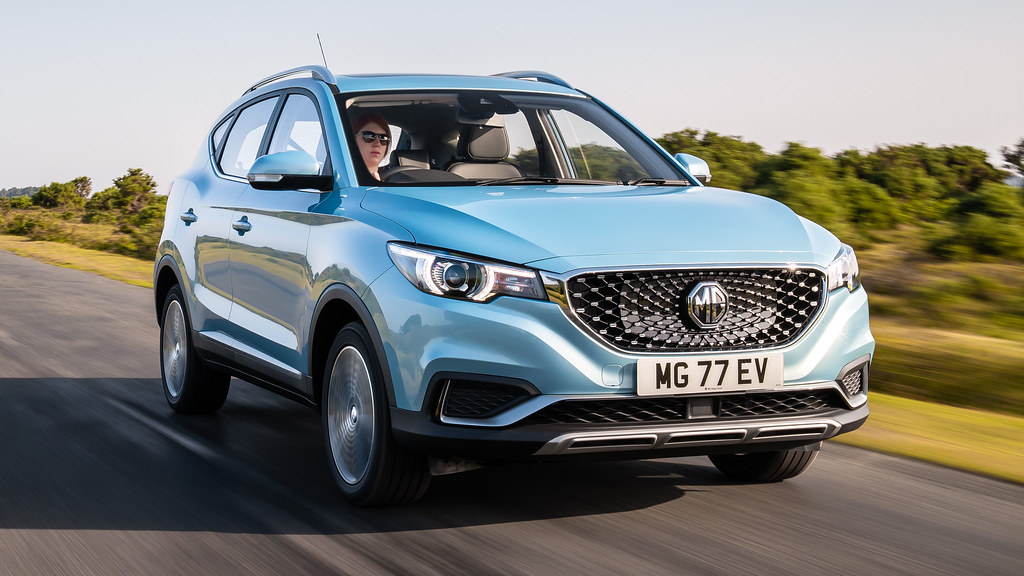
MG ZS EV vs Toyota Fortuner 2.8 GD-6: Which Should You Buy in 2025?
Considering switching to an EV? This comprehensive comparison between the MG ZS EV and the Toyota Fortuner 2.8 GD-6 will help you make the right decision for your wallet and lifestyle in South Africa.
📊 Quick Comparison Overview
| Feature | MG ZS EV | Toyota Fortuner 2.8 GD-6 |
|---|---|---|
| Purchase Price | R650,000 | R980,000 |
| 5-Year Fuel Cost | R60,714 | R118,125 |
| 5-Year Maintenance | R15,000 | R40,000 |
| Total Cost of Ownership | R725,714 | R1,138,125 |
| Winner | EV wins by R412,411! | |
💰 The Real Cost: 5-Year Ownership Analysis
Here’s where electric vehicles shine. While the MG ZS EV costs R650,000 upfront compared to the Toyota Fortuner 2.8 GD-6’s R980,000 (mid-spec 4×4 AT pricing for 2025), the total cost of ownership tells an even more compelling story.
Understanding the Fortuner 2.8 GD-6: It’s a Diesel
An important clarification: the Toyota Fortuner 2.8 GD-6 runs on diesel, not petrol. The “GD” designation stands for “Global Diesel,” and this affects both fuel costs and consumption patterns. Diesel typically costs less per litre than petrol in South Africa, and the Fortuner’s 2.8-litre turbodiesel engine delivers better fuel economy than an equivalent petrol engine would.
Fuel Costs Breakdown
- MG ZS EV electricity cost: R12,143/year = R60,714 over 5 years (based on 15,000km/year at R2.50/kWh home charging rate, 18kWh/100km consumption)
- Toyota Fortuner 2.8 GD-6 diesel cost: R23,625/year = R118,125 over 5 years (based on 15,000km/year at R21/litre diesel, 8.5L/100km combined consumption)
- Fuel savings with EV: R57,411 over 5 years
Maintenance Costs
- MG ZS EV: R15,000 (minimal – no oil changes, less brake wear, simpler drivetrain)
- Toyota Fortuner 2.8 GD-6: R40,000 (regular servicing, oil changes, diesel particulate filter maintenance, filters, etc.)
- Maintenance savings with EV: R25,000
The Purchase Price Reality
The Fortuner 2.8 GD-6 4×4 AT mid-spec model retails for approximately R980,000 in 2025, making the upfront cost difference R330,000 more than the MG ZS EV. This means you’re not only saving on running costs—you’re starting with a lower purchase price too.
🎯 Who Should Buy the MG ZS EV?
The MG ZS EV is perfect for you if:
- 💰 Budget-conscious long-term: Save R6,869 per month on running costs compared to the Fortuner
- 🏠 Home charging available: Wake up to a “full tank” every morning for just R1,012/month
- 🌆 City/suburban driving: Perfect for the 320km range on a single charge
- 🔧 Low maintenance priority: No oil changes, no diesel particulate filter concerns, no exhaust systems, minimal brake wear
- 🌍 Environmental responsibility: Zero tailpipe emissions in SA’s cities
- ⚡ Modern technology: Latest infotainment, over-the-air updates, advanced safety features
- 💵 Lower upfront investment: R330,000 less to purchase than the Fortuner
🎯 Who Should Buy the Toyota Fortuner 2.8 GD-6?
The Toyota Fortuner 2.8 GD-6 makes sense if:
- ⛽ Long-distance flexibility: Refuel anywhere in 5 minutes with diesel stations everywhere
- 🚗 Heavy towing/off-road: 2.8L turbodiesel engine provides proven capability and torque
- 📍 Rural/remote areas: No charging infrastructure concerns
- 🔋 No home charging option: Diesel stations remain more accessible than public EV chargers in many areas
- 👴 Familiar technology: Comfortable with traditional diesel vehicle ownership
- 🏔️ Serious off-road use: Body-on-frame construction and 4×4 capability for challenging terrain
- 🚛 Towing heavy loads: 3,000kg towing capacity with diesel torque characteristics
💡 Key Decision Factors
Choose the MG ZS EV if you:
- ✅ Drive less than 320km per day on average
- ✅ Have access to home charging or workplace charging
- ✅ Want to save R6,869 per month on combined purchase and running costs
- ✅ Prioritize lower maintenance and running costs
- ✅ Want zero tailpipe emissions
- ✅ Prefer a lower upfront purchase price (R330,000 less)
- ✅ Drive primarily in urban and suburban environments
Choose the Toyota Fortuner 2.8 GD-6 if you:
- ✅ Need maximum flexibility for long-distance travel
- ✅ Don’t have reliable charging access
- ✅ Drive more than 320km daily regularly
- ✅ Require serious off-road capability
- ✅ Need to tow heavy trailers or caravans frequently
- ✅ Prefer the familiarity of diesel stations
- ✅ Live in an area with limited charging infrastructure
🔋 Charging Infrastructure in South Africa
South Africa’s EV charging network is growing rapidly, with over 500 public charging points nationwide. Major cities like Johannesburg, Cape Town, Durban, and Pretoria have excellent coverage, with new stations opening monthly.
Home charging is transformative: Installing a home charger (R15,000-R30,000) gives you a “full tank” every morning at a fraction of diesel costs. Most EV owners charge overnight on off-peak electricity rates, further reducing costs.
For those concerned about load-shedding, many home charger installations now include battery backup options, and most EVs can be charged from a standard 15A wall socket in a pinch (though slower).
📈 Long-Term Value
Over 5 years of ownership (15,000km/year):
- Total savings with MG ZS EV: R412,411
- Monthly savings: R6,869
- Cost per kilometre – MG ZS EV: R9.68
- Cost per kilometre – Toyota Fortuner 2.8 GD-6: R15.18
These figures include purchase price, fuel/electricity, and maintenance. The MG ZS EV’s advantage grows even larger if you factor in potential battery incentives, lower insurance premiums (some insurers offer EV discounts), and the likelihood of diesel prices rising faster than electricity rates over time.
🌍 Environmental Impact
By choosing the MG ZS EV over the Toyota Fortuner 2.8 GD-6, you’ll prevent approximately 13,514kg of CO₂ from entering the atmosphere over 5 years. This calculation accounts for South Africa’s current electricity grid mix (which includes coal-fired power stations) versus direct diesel combustion emissions.
Even with Eskom’s coal-heavy grid, EVs produce fewer lifecycle emissions than diesel vehicles. As South Africa’s renewable energy capacity grows, this advantage will only increase.
🔧 Practical Ownership Considerations
MG ZS EV Daily Reality
Owners report that the 320km real-world range is more than sufficient for daily use. The typical South African commute is 40-60km per day, meaning you’ll charge 2-3 times per week at most. Regenerative braking extends range in city driving, and pre-conditioning the cabin while plugged in preserves battery range.
Fortuner 2.8 GD-6 Daily Reality
The Fortuner’s 80-litre diesel tank provides approximately 900km range, making it ideal for long-distance travel and remote areas. The turbodiesel engine delivers strong torque from low revs, excellent for towing and off-road use. However, diesel particulate filter (DPF) regeneration requires regular highway driving—short city trips can cause DPF issues.
🚘 Real-World Owner Experiences
MG ZS EV: Urban Commuter Perspective
Many South African EV owners find the transition easier than expected. The ability to “refuel” at home eliminates petrol station visits entirely for daily driving. Most report charging once or twice per week for typical urban use, with the car ready each morning. Winter range drops by approximately 10-15% due to cabin heating, but this still leaves 270-290km of usable range—more than sufficient for daily commutes.
Public charging infrastructure continues expanding, with shopping centres, office parks, and hotels increasingly offering charging facilities. Apps like ChargePoint’s live charging map make finding available chargers straightforward, though most owners rarely need public charging for routine use.
Fortuner 2.8 GD-6: Long-Distance and Off-Road Reality
The Fortuner excels in scenarios where EVs currently struggle. Weekend trips to game reserves, coastal holidays, or Drakensberg escapes require no charging planning—simply refuel at any diesel station. The 900km range means Johannesburg to Durban on a single tank with range to spare.
For families who regularly tow boats, caravans, or trailers, the Fortuner’s 3,000kg towing capacity and diesel torque characteristics remain unmatched. The turbodiesel’s low-end grunt makes towing effortless, though fuel consumption increases to approximately 12-14L/100km when towing heavy loads.
💳 Financing and Insurance Considerations
Purchase Financing
The R330,000 lower purchase price of the MG ZS EV translates to significantly lower monthly payments. At typical South African interest rates (prime + 2%, approximately 13.25% in late 2025), financing R650,000 over 72 months costs approximately R13,200/month, compared to R19,900/month for the R980,000 Fortuner. That’s R6,700/month saved on finance alone—before considering fuel and maintenance savings.
Insurance Premiums
Insurance costs vary by provider, but several South African insurers now offer EV-specific policies with discounts of 10-15% compared to equivalent petrol or diesel vehicles. The MG ZS EV’s lower replacement value also means lower premiums—expect to pay R1,800-R2,200/month for comprehensive cover, compared to R2,400-R2,800/month for the Fortuner.
🔌 Home Charging Setup: What You Need to Know
Installing a home charger is simpler than many assume. A qualified electrician can assess your existing electrical setup and install a dedicated 32A circuit with a Type 2 charging point. Most installations take 4-6 hours and cost R15,000-R25,000 depending on distance from your distribution board and whether trenching is required.
The MG ZS EV’s 51kWh battery charges fully overnight (8-10 hours) on a 7kW home charger, or in 5-6 hours on an 11kW charger. Even a standard 15A wall socket can add 60-80km of range overnight—sufficient for many daily commutes, though a dedicated charger is recommended for convenience and faster charging.
For renters or those in complexes, portable charging units exist that don’t require permanent installation. Body corporate approval is increasingly straightforward as EV adoption grows, with many schemes now having established EV charging policies.
⚡ Load-Shedding and EV Ownership
Load-shedding remains a concern for prospective EV buyers, but practical solutions exist. Most EV owners charge overnight during off-peak hours (22:00-06:00), when load-shedding is less frequent. A 7kW home charger adds approximately 40km of range per hour, so even a 4-hour charging window provides 160km of range—more than most daily requirements.
For additional peace of mind, home battery systems (like the increasingly popular lithium-ion home batteries) can store electricity during grid-available periods and charge your EV during load-shedding. While this adds R80,000-R150,000 to initial setup costs, it provides complete energy independence and can power your home during outages.
Alternatively, workplace charging, shopping centre charging, or public fast-charging stations provide backup options. The growing network means you’re rarely more than 20km from a charging point in major urban areas.
🏁 The Verdict
Clear Winner: MG ZS EV
The numbers speak for themselves. With a lower purchase price and dramatically reduced running costs, the MG ZS EV will save you a staggering R412,411 over 5 years compared to the Toyota Fortuner 2.8 GD-6. That’s R6,869 per month back in your pocket.
If you have access to home charging and drive within the 320km daily range, the MG ZS EV is the smarter financial choice. The fuel and maintenance savings alone make it worthwhile, and you’re starting R330,000 ahead on purchase price.
The Fortuner remains the right choice for serious off-road enthusiasts, those who tow heavy loads regularly, or drivers in remote areas without charging infrastructure. But for the vast majority of South African drivers—especially those in urban and suburban areas—the MG ZS EV delivers better value, lower costs, and a more modern driving experience.
💰 Calculate Your Own Savings
Want to see how much you could save based on your specific driving habits? Use our EV Cost Savings Calculator to input your exact annual kilometres, electricity rate, and more.
🚗 Ready to Make the Switch?
Need help installing a home charger for your new EV? Get a free quote for professional EV charger installation anywhere in South Africa. Our certified installers can assess your electrical setup, recommend the right charger, and handle the complete installation—often within 48 hours.
You can also explore our live EV charging map to see public charging locations near your home, workplace, and regular routes.
Last updated: 2 December 2025
Continue Reading

Deprecated: File Theme without comments.php is deprecated since version 3.0.0 with no alternative available. Please include a comments.php template in your theme. in /var/www/wordpress/wp-includes/functions.php on line 6085
Leave a Reply