BYD Dolphin Surf Is SA’s Best-Selling EV — Now Every Buyer Needs a Home Charger
In March 2026, the first month BYD officially reported its sales figures, the Dolphin Surf sold 239 units to become South Africa’s best-selling battery-electric vehicle by a wide margin.
That number needs some context to land properly.
Figures from automotive body Naamsa show 1,088 BEVs were sold in all of 2025 — still only about 0.2% of the total new vehicle market.
The Dolphin Surf just moved 239 units in a single month. That is 21.9% of the entire previous year’s BEV volume. In thirty-one days. This is not a blip. This is a turning point.
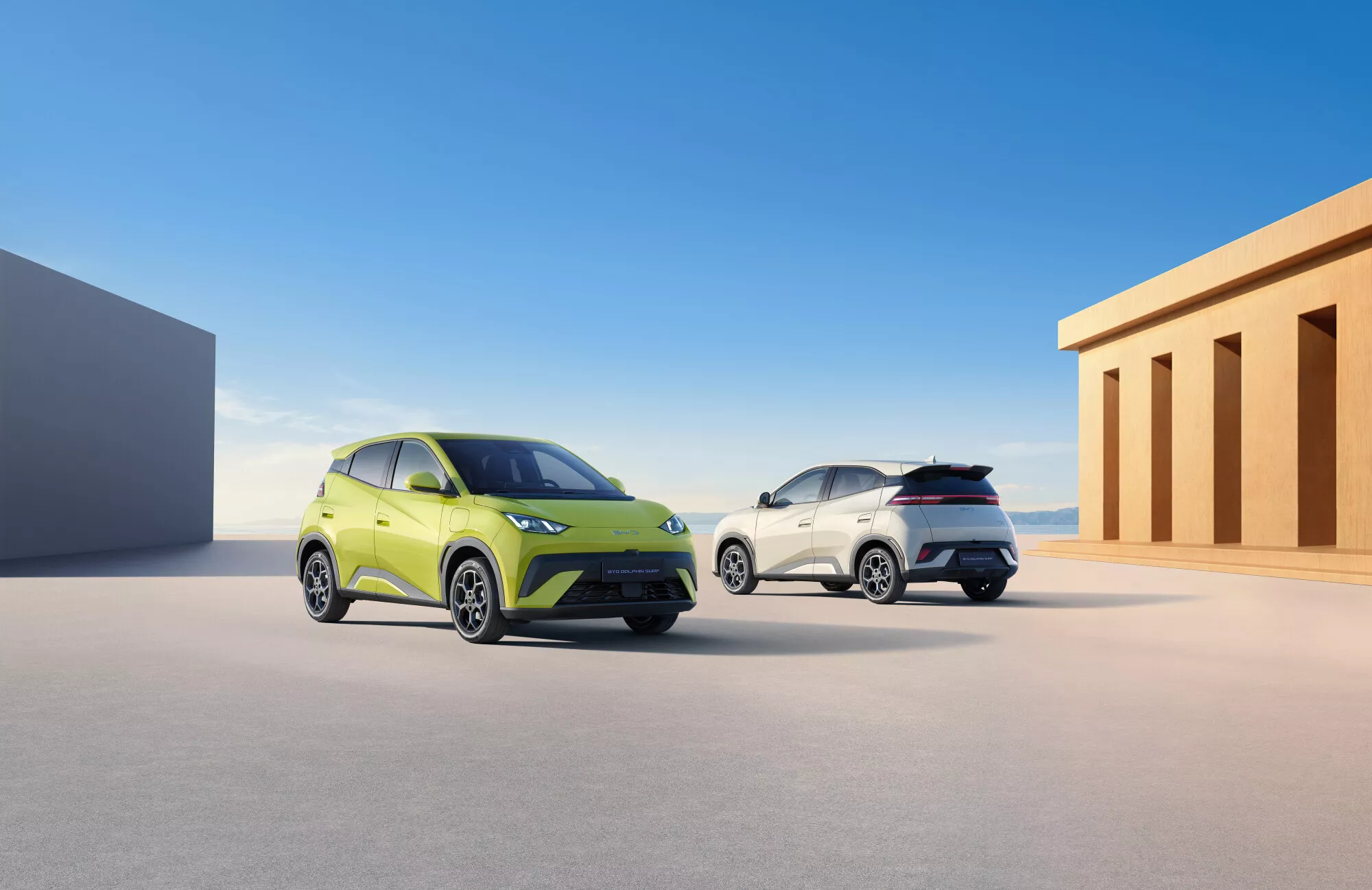
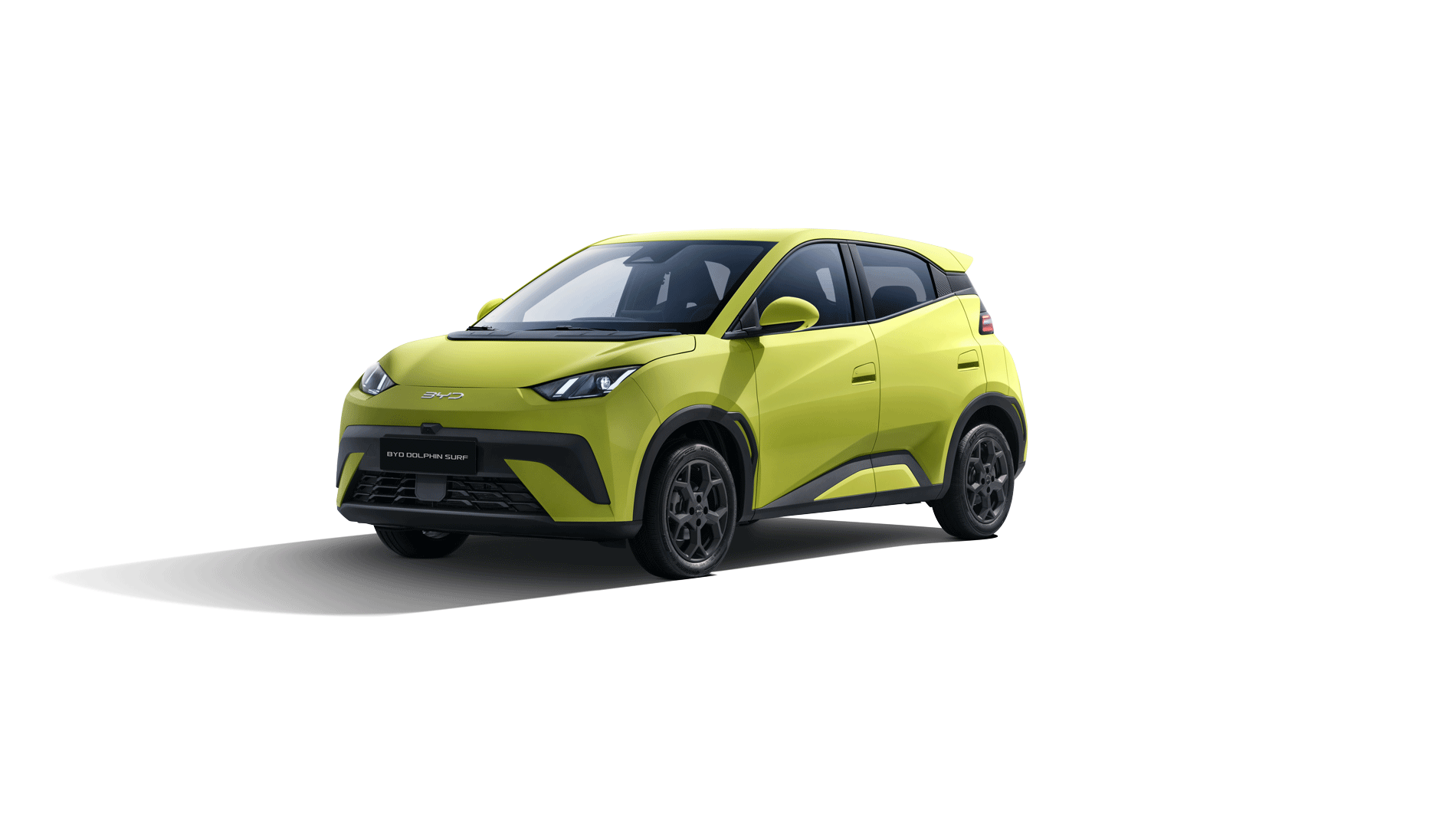
The Dolphin Surf, unveiled in September 2025 as the country’s most affordable EV, is priced at R339,900 for the entry-level Comfort variant — significantly cheaper than other EVs and competing directly with petrol-powered compact cars such as the Volkswagen Polo Vivo, Suzuki Fronx, and Toyota Urban Cruiser.
For years, critics said South Africans wouldn’t buy EVs. Turns out, they just wouldn’t buy them at R600,000-plus. Drop the price to Polo Vivo territory, and watch the queues form outside the showrooms.
But here’s the thing that matters most for the 239 buyers who drove one home in March — and the thousands more who will follow:
the Dolphin Surf starts paying back its small premium over an ICE equivalent relatively quickly for anyone with home charging.
Getting the charger installed properly is the single most important step new owners can take. Let’s walk through exactly what that looks like.
The Numbers That Should Make Every Petrol Station Nervous
In March 2026, the Dolphin Surf sold 239 units to become the country’s best-selling BEV by a wide margin. The second-placed BYD Atto 3 — priced from R699,900 — managed just 28 units, and the Volvo EX30, priced from R835,500, took third place with 19.
The Dolphin Surf outsold the Atto 3 by 8.5 times. It outsold the Volvo EX30 by more than 12 times. This is what happens when price stops being the barrier.
The Dolphin Surf hatchback — currently SA’s most affordable fully electric vehicle, starting at R341,900 — was comfortably BYD’s best-selling product in March, with 239 units registered.
And that was just the BEV story.
In its first month of official reporting, BYD effectively disrupted the local hierarchy, ranking 21st overall and narrowly trailing Mercedes-Benz but significantly outselling long-established names like Honda, Mitsubishi, and Mazda.
EV adoption in South Africa has been slow despite a growing number of battery-powered models arriving in recent years. Early offerings were largely premium vehicles aimed at affluent early adopters, while high import duties and a lack of affordable entry-level options kept volumes low.
But in a price-sensitive market, affordability — rather than environmental concerns — is the decisive factor. With cars such as the Dolphin Surf, the tide may be shifting.
What You Actually Get for R339,900
The Dolphin Surf is available in two variants: a Comfort at R339,900 and a Dynamic at R389,900. Both use BYD’s Blade Battery — the Comfort with a 30 kWh pack offering 232 km of WLTP range, the Dynamic stepping up to 38.8 kWh and 295 km.
The motor is a 55 kW, 135 Nm permanent magnet unit driving the front wheels on both. It’s not quick —
the Dolphin Surf’s 0-100 km/h time of 14-plus seconds won’t excite anyone, and the 232 km base range leaves little room for spontaneity.
But that’s not the brief here.
BYD noted at the Cape Town launch that the average South African daily travel distance sits around 55 km, meaning the base model covers over four days of typical driving on a single charge.
Think about that for a second. Most people are plugging in twice a week. That’s it. And if you’re in Cape Town, Johannesburg, or Pretoria, the vast majority of your daily driving falls well within that comfort zone.
Both models feature V2L (Vehicle-to-Load) capability, allowing you to power camping gear, a laptop, or even a small electric braai setup directly from the car.
A car that can charge your braai and your phone. Only in 2026.
BYD’s Blade Batteries are engineered to last for 1.5 million kilometres, and the brand provides an 8-year/200,000 km warranty on the battery alongside the 3-year vehicle warranty and service plan.
You can check out more on how the Dolphin Surf compares to other EVs entering the market over on our full EV vs petrol running cost breakdown for South Africa — the numbers are more dramatic than most people expect.
How Much Could You Save With an EV?
Use our free calculator to compare your current fuel costs with EV charging costs.
The Home Charging Maths: R20,000 a Year Back in Your Pocket
This is where it gets real. The Dolphin Surf’s modest DC fast-charging ceiling — 30 kW on the Comfort, 40 kW on the Dynamic — means this is a car designed for home charging. That is not a weakness. It’s a feature. You plug in overnight, you wake up to a full battery. Simple.
AC home charging on the Comfort takes around 4.6 hours for a full charge, while the Dynamic needs 5.9 hours. Both come bundled with a 7 kW home wallbox.
At Cape Town’s off-peak electricity tariff of R1.89/kWh, filling the Comfort’s 30 kWh battery costs you around R56.70. The Dynamic’s 38.9 kWh pack runs to about R73.52. Compare that to a VW Polo Vivo 1.4, which drinks around 6.5 litres per 100 km at R24.50 a litre — that’s R159.25 per 100 km in fuel costs alone.
The Dolphin Surf costs approximately R26 per 100 km to run on off-peak home electricity. The Polo Vivo costs R159.25 per 100 km in petrol. That R133 difference adds up to nearly R20,000 saved annually at 15,000 km per year.
Driving on electricity in this class of car costs roughly 50 cents per kilometre for daily commuting, compared to a petrol hatchback averaging R1.80 to R2.20 per km at current fuel prices. Over 15,000 km a year, that is a saving of roughly R20,000 to R25,000 annually just in fuel.
And April 2026 petrol prices have pushed those ICE running costs even higher.
According to Winstone Jordaan, director of charging network GridCars, the cost of running an EV is roughly two-thirds that of a petrol vehicle — and fuel price hikes in April, with further increases expected in May, have added to the appeal of EV ownership.
Want to run these numbers against your own commute? Calculate your exact savings with the Dolphin Surf using your own driving habits and local tariff — it takes about 90 seconds and the result is usually a jaw-drop moment.
What Dolphin Surf Buyers Actually Need for Home Charging
The included 7 kW wallbox handles home charging duties, though the car’s onboard charger limits the actual rate to 6.6 kW.
That 400-watt difference is barely noticeable in practice — you’re still looking at well under six hours for a full charge on either variant. The real question is installation: getting that wallbox properly wired, certified, and CoC-compliant.
A standard 7.4 kW wallbox installation in Cape Town — including the Certificate of Compliance, a qualified electrician, cable management, and mounting — typically runs between R8,000 and R15,000 depending on how far your DB board is from the garage and the condition of your existing wiring.
About 70% of South African residential properties are on single-phase 60–80 amp supplies, which caps your charger at around 7 kW — roughly 30 km of range per hour.
For the Dolphin Surf, that’s perfect. No upgrade needed in most cases.
If you’re in a sectional title complex or a body corporate, the process is slightly more involved. You’ll need written approval from your trustees before any electrical work can begin. The good news: most body corporates have become far more EV-friendly in recent years, and a well-drafted letter explaining the installation scope usually does the job. The charger sits inside your allocated parking bay and draws from your own meter — there’s no cost to neighbours.
The payback period on the charger itself — ignoring solar — is typically 18 to 30 months for a commuter driving 1,800 km/month. Add solar and the payback drops to under a year in many cases.
Given that you’re saving R20,000-plus annually in fuel, even a R15,000 installation pays itself back in under a year.
Ready to get it sorted? Get a free installation quote for your BYD Dolphin Surf home charger and we’ll connect you with a SANS 10142-1 certified installer in your area.
Ready to Install a Home Charger?
Get a free, no-obligation quote for professional EV charger installation in South Africa.
BYD’s Early Adopter Package: What Was on the Table
When BYD launched the Dolphin Surf in September 2025, they didn’t just drop a cheap car on the market — they loaded it with incentives designed to get buyers over the home-charging hump immediately.
At the launch event, held in Cape Town, BYD announced an “Early Adopter Package” which included a V2L socket, portable charger, point-to-point cable, a 7 kW home-charger wallbox, a R999-a-month insurance package through Absa, and a R10,000 cash incentive.
That package effectively meant early buyers received a home charger at no additional cost — a wallbox that would otherwise have set them back R3,000 to R8,000 on hardware alone, before installation. If you missed the early adopter window, the wallbox hardware can still be purchased separately and installed by a certified electrician. The point is: BYD understood from day one that home charging infrastructure was non-negotiable for this car to work in people’s lives.
Six months in, one Durban owner reported it had probably been one of the wisest purchases they’d made. Thanks to the car being parked at home for the majority of the day, they benefit from slow charging via their home solar panels — meaning day charging is basically “free.”
That’s the sweet spot. Solar plus a Dolphin Surf plus a wallbox equals what could be the cheapest-to-run daily vehicle in South African motoring history.
Load Shedding: The Elephant That’s Left the Room
There’s a conversation we need to have, because it’s been the single biggest psychological barrier to EV adoption in this country. Every time someone asked about buying an EV between 2022 and 2024, the response was: “But what about load shedding?” It was a legitimate concern. It’s no longer the conversation stopper it once was.
South Africa has now gone over 328 consecutive days without a single stage of load shedding as of April 2026. Eskom’s Energy Availability Factor has climbed well above 65% — a far cry from the dark days of Stage 6. The grid is not perfect, and anyone who’s lived through the worst of it understandably remains cautious. But the reality on the ground is that home EV charging has become enormously more reliable than it was in 2023.
And here’s the backup plan even if things wobble: the Dolphin Surf’s V2L function means the car itself can power essential household appliances during an outage.
With its Vehicle-to-Load function, it can serve as a mobile energy source, utilising the car’s battery to power external devices.
You can run your router, charge your phone, and keep the lights on. The braai still needs charcoal, but you get the idea.
Smart home charger installation also helps. A wallbox with a scheduled charging window — set to charge between midnight and 6am when grid demand is lowest — means you’re topping up when supply is most stable, and you’re hitting off-peak tariff rates to boot.
Find Charging Stations Near You
Explore our live map of EV charging stations across South Africa — updated in real time.
The SA EV Sales Landscape in One Table
| Model | March 2026 Sales | Price From | Battery | WLTP Range |
|---|---|---|---|---|
| BYD Dolphin Surf | 239 units | R339,900 | 30 kWh / 38.8 kWh | 232 km / 295 km |
| BYD Atto 3 | 28 units | R699,900 | 60.5 kWh | 420 km |
| Volvo EX30 | 19 units | R835,500 | 51 kWh / 69 kWh | 344 km / 480 km |
BYD provides a standard 5-year/100,000 km vehicle warranty across its range, and crucially for EV and PHEV buyers, the Blade power battery carries a separate 8-year/150,000 km warranty — or up to 200,000 km depending on the specific model.
For a sub-R400,000 car, those are genuinely premium-level assurances.
If you want to plan public top-ups for longer trips or the occasional charge away from home, check the live charging map to find stations near you — the network has grown substantially, and the Western Cape in particular has seen rapid infrastructure expansion over the past 18 months.
The Verdict: This Is the EV That Changes the Game
Look, I’ve been covering this market for years. I’ve watched SA journalists write the same “EVs are coming — eventually” story on repeat since 2018. I’ve heard the “not yet, too expensive, load shedding, range anxiety” chorus more times than I care to count.
March 2026 is different. Two hundred and thirty-nine Dolphin Surfs in one month is not a footnote. It’s a signal.
BYD has released its South African sales figures for the first time, and they suggest local motorists have an appetite for electric cars when they’re priced right.
The appetite was always there. The price point just needed to catch up with reality.
The Dolphin Surf is not a perfect EV.
Its charging speeds are modest by contemporary EV standards, its 0-100 km/h time of 14-plus seconds won’t excite anyone, and the 232 km base range leaves little room for spontaneity.
But it is the right car, at the right price, at the right moment in South African motoring history. And every single person who buys one should get a home wallbox installed. The savings math is too good to ignore.
FAQ
Do I need a home charger for the BYD Dolphin Surf?
You don’t need one to use the car, but you’d be leaving serious money on the table without one.
Over 15,000 km a year, home charging delivers a saving of roughly R20,000 to R25,000 annually in fuel costs alone.
A wallbox is the single best accessory you can buy for this car, and it typically pays itself back within a year or two through fuel savings alone.
How long does it take to charge the BYD Dolphin Surf at home?
AC home charging at the effective 6.6 kW rate means the Comfort variant takes 4.6 hours for a full charge, while the Dynamic needs 5.9 hours.
Plug in after dinner, and you wake up to a full battery. For most commuters charging twice a week, this is a non-issue.
How much does a home charger installation cost in Cape Town?
A standard 7.4 kW wallbox installation in Cape Town — including the Certificate of Compliance, a qualified electrician, cable management, and hardware — typically runs between R8,000 and R15,000. The total depends on the distance between your distribution board and your parking bay, and the condition of existing wiring. Get a free, no-obligation quote for an accurate figure specific to your property.
Can I charge the Dolphin Surf from a normal household plug?
Yes — both variants come with a portable 3-pin to charging cable for emergency use. However, a standard 15-amp wall socket delivers only around 2.2 kW, meaning a full charge on the Comfort would take 13-plus hours. It works in a pinch, but a dedicated 7 kW wallbox charges three times faster and is far safer for regular use.
What about load shedding — will I be stuck with a flat battery?
South Africa has gone over 328 consecutive days without load shedding as of April 2026, making this far less of a daily concern than it was in 2023. A smart charger set to charge overnight during off-peak hours maximises grid stability. Additionally,
both Dolphin Surf models feature V2L (Vehicle-to-Load) capability, allowing you to power appliances directly from the car’s battery
during any outage. The Dolphin Surf can function as your home backup power source as well as your daily driver.
How quickly will a home charger pay itself back?
The payback period on the charger itself is typically 18 to 30 months for a commuter driving 1,800 km/month.
Given annual fuel savings of R20,000 or more, even a R15,000 all-in installation pays itself back in under a year. Use the savings calculator to run your own numbers — plug in your actual monthly kilometres and local electricity tariff for a precise figure.
Is the BYD Dolphin Surf really SA’s cheapest EV?
Until the Dolphin Surf’s arrival, a consumer could only get into a new battery-electric passenger car by spending at least R400,000 — the starting price of the little-known Dayun S5. The Dolphin Surf lowered the barrier to new EV ownership to R339,900 when it launched in September 2025.
It remains the most affordable new BEV available in South Africa as of April 2026.
Continue Reading