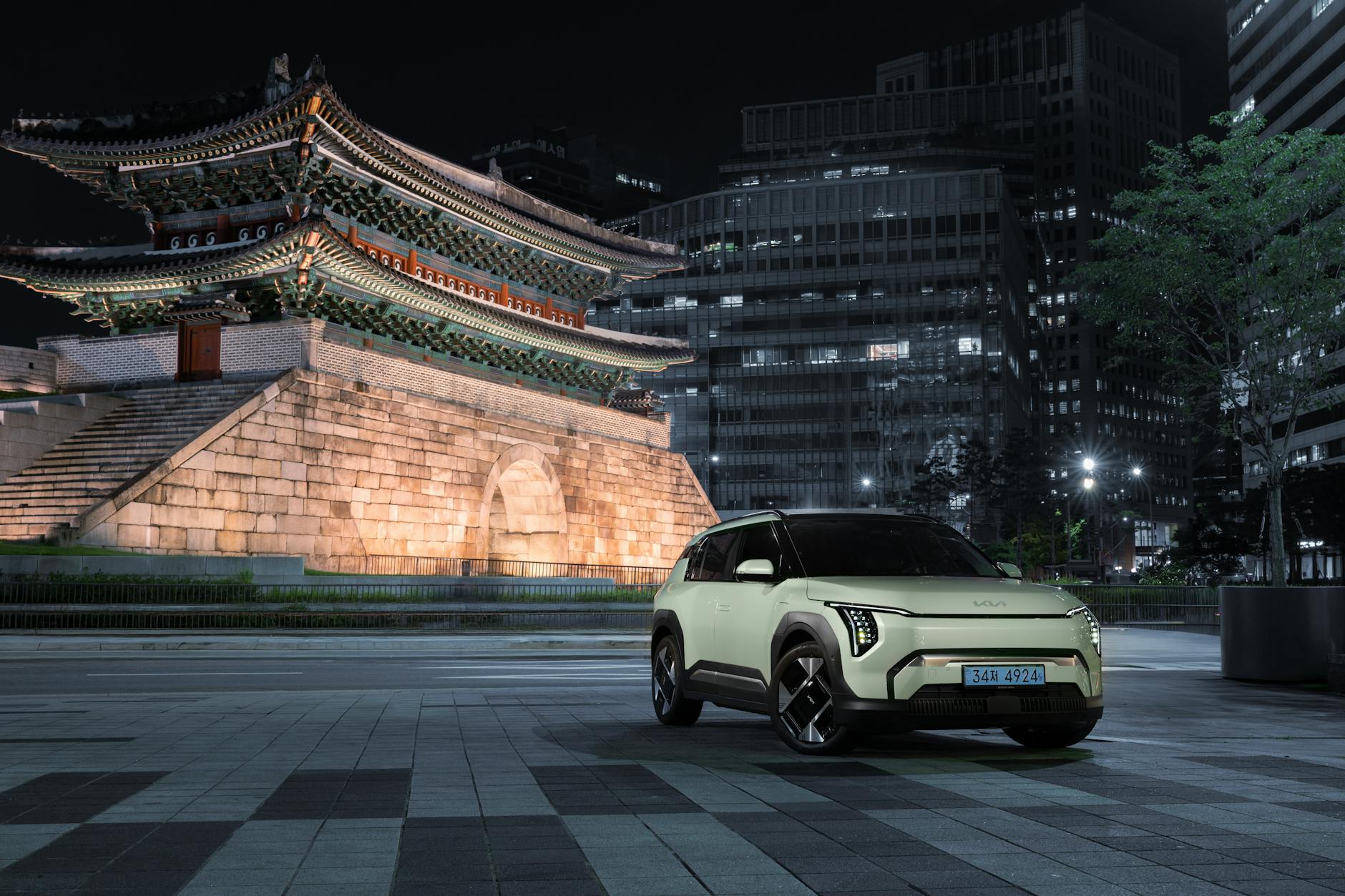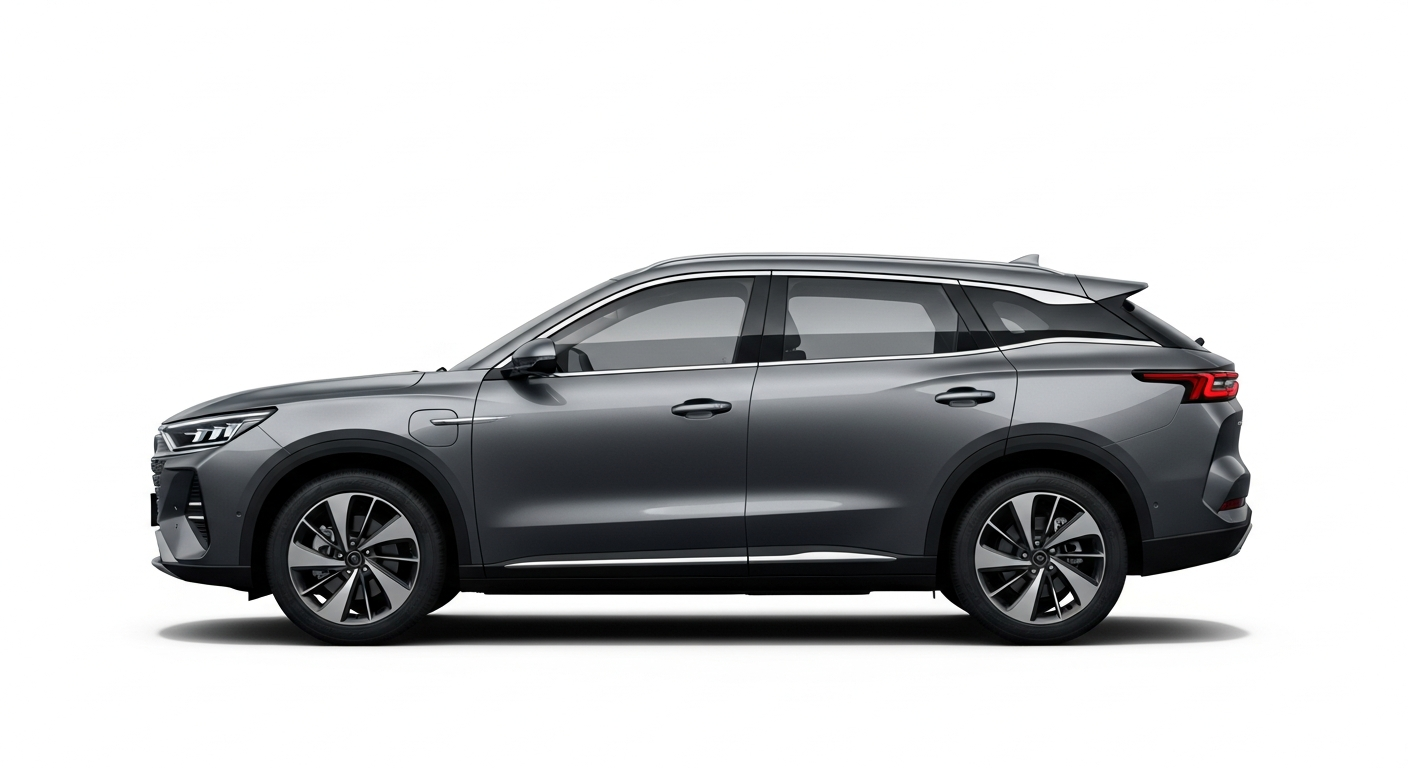
The Dongfeng Vigo is South Africa’s most affordable electric SUV, landing on 10 April 2026 at R499,900 for the E1 and R579,000 for the E3 — smashing the previous price floor by a staggering R200,000. For over two years, that title was jointly held by the BYD Atto 3 and Geely E5, both sitting at R699,900.
China’s EV price war, which has been raging in domestic and European markets for the better part of two years, has officially arrived at our doorstep. The question is no longer whether South Africans can afford an electric SUV — at R499,900, the answer is increasingly yes. The question is: which one do you actually buy?
To answer that, we put the new Vigo head-to-head with the Atto 3, the car that has been setting the benchmark for affordable electric SUVs in Mzansi since 2023. The comparison covers price, range, performance, tech, safety, and the numbers that matter most — what it costs to run the thing day-to-day on South African roads.
Price: The Vigo Changes Everything
Let’s get the headline fact out of the way immediately. The Dongfeng Vigo was launched in South Africa on 10 April 2026, with two variants — the E1 (44.94 kWh) and E3 (51.87 kWh) — and at the time of its introduction, the Vigo was the cheapest battery electric crossover SUV on sale in South Africa.
The Atto 3 hasn’t stood still on price either. The BYD Atto 3 is currently available from R699,900 for the Standard Range variant and R749,900 for the Extended Range model. According to NAAMSA sales data, the Atto 3 sold 28 units in March 2026, making it the second-placed battery electric vehicle in South Africa that month behind the BYD Dolphin Surf. Pricing has moved slightly from launch. Check with your local dealer for the most current pricing.
Here is how the full range stacks up at a glance:
| Spec | Vigo E1 | Vigo E3 | Atto 3 Standard | Atto 3 Extended |
|---|---|---|---|---|
| Price | R499,900 | R579,000 | R699,900 | R749,900 |
| Battery | 44.94 kWh | 51.87 kWh | 49.92 kWh | 60.48 kWh |
| WLTP Range | ~300 km | ~350 km | 345 km | 420 km |
| Power | 120 kW / 230 Nm | 120 kW / 230 Nm | 150 kW / 310 Nm | 150 kW / 310 Nm |
| 0–100 km/h | 7.8 sec | 7.8 sec | 7.3 sec | 7.3 sec |
That price gap between the Vigo E1 and the cheapest Atto 3 is R200,000. That buys you a year’s worth of school fees, a serious home charging installation, or two annual family holidays up the N1 to the Kruger. It is not insignificant.
Want to see exactly what you’d save on fuel over five years? Calculate your savings with our EV running cost tool.
Exterior and Design: Compact Upstart vs Established Crossover
The Dongfeng Vigo measures 4,306 mm in length, 1,868 mm in width, and 1,654 mm in height, placing it firmly in the B-SUV segment — subcompact crossovers that offer a higher driving position and increased cargo space in a compact footprint. Think of it as sitting between a Polo Vivo and a Tiguan — not quite as imposing as a full-size crossover, but more presence than a hatchback.
Standard features on the Vigo E1 include 17-inch wheels, LED headlights, LED daytime running lights, roof rails, auto-folding side mirrors, and a split tailgate opening to a 500-litre boot. Those who upgrade to the E3 get 18-inch alloy rims, heated side mirrors, a panoramic sunroof, ambient lighting with music sync, and a rear centre armrest with cupholders.
The BYD Atto 3 is the larger of the two and looks it. BYD’s “Dragon Face” design language gives the Atto 3 sharper creases, a more assertive front end, and the kind of presence that turns heads at a Sandton traffic light. The expressive upward-sloping waistline and selection of dynamic alloy wheels give the Atto 3 a sporty, aerodynamic design. It sits a full class above the Vigo in terms of visual impact.
And then there is the split tailgate. The Vigo’s split tailgate — where the bottom part falls and the top part lifts — is a genuinely clever piece of design. Braai supplies loaded, gate drops: useful when you’re parked nose-in at a shopping centre. The Atto 3’s conventional power tailgate is more premium, but arguably less practical in tight spaces.
How Much Could You Save With an EV?
Use our free calculator to compare your current fuel costs with EV charging costs.
Interior and Technology: Where the Gap Shows
This is where the R200,000 price difference starts to make itself felt. Inside the Vigo E1, you get a multifunction steering wheel, keyless start, automatic air conditioning, leatherette upholstery, 6 speakers, a 50W wireless charger, an 8.8-inch digital driver display, and a floating 12.8-inch infotainment screen. For under R500K, that list is genuinely impressive.
The E3 builds on the E1’s kit by adding adaptive cruise control and a 360-degree surround-view camera system, while also gaining six-way electric front seat adjustment with heating, ventilation and memory for the driver’s seat, ambient lighting, and a panoramic sunroof. The ambient lighting syncing to music is a party trick, but it is also genuinely pleasant on an evening commute from Rosebank to Randburg.
The BYD Atto 3 punches harder on the tech front. You can use Apple CarPlay or Android Auto via the rotatable 15.6-inch touchscreen, with supported apps like Spotify and HERE Maps, and intelligent voice control to keep your hands free. The DiLink infotainment system with “Hi BYD” voice activation, over-the-air updates, and BYD’s smartphone app integration gives the Atto 3 a tech stack that feels genuinely contemporary. The Vigo’s system works, but it does not match BYD’s polish.
Material quality tells a similar story. The Atto 3’s cabin uses higher-grade materials, more intricate switchgear, and a more cohesive design language. It feels like a car that cost R700,000. The Vigo feels like a car that offers good value at R499,900 — which is a different thing entirely, but not necessarily a bad one.
The Vigo’s 500-litre boot beats its size class. The Atto 3’s flat rear floor, made possible by BYD’s e-Platform 3.0 architecture, makes it the more family-practical choice on long runs.
Performance and Driving Feel
Both Vigo variants are equipped with a single front-mounted electric motor producing 120 kW and 230 Nm, letting the SUV accelerate from 0 to 100 km/h in 7.8 seconds. That is perfectly adequate — enough to merge confidently onto the N2, enough for a spirited pass on the N1 between Joburg and Pretoria, enough to satisfy most buyers who are not interested in drag-strip heroics.
But the Atto 3 is a step up. Its motor delivers 150 kW and 310 Nm — 30 kW more than the Vigo and 80 Nm more torque. The result is a 7.3-second 0–100 km/h sprint that feels more urgent, more confident, and more fun. The torque difference is especially noticeable in urban cut-and-thrust, where instant electric response is your best friend.
The Vigo’s suspension system uses a MacPherson strut front and torsion beam rear construction, with monotube dampers at both ends and coil springs front and rear. The Vigo lets the driver select different drive modes affecting the car’s handling, including Eco, Normal, and Sport settings. Ride comfort should be acceptable for South African roads — torsion beam rears are not uncommon at this price point.
The Atto 3 is built on BYD’s e-Platform 3.0, designed exclusively for pure electric vehicles, giving full play to the advantages of intelligence, efficiency, safety and aesthetics. The result is a more refined driving experience, with better NVH (noise, vibration, harshness) suppression and a more planted feel at highway speeds. If you commute 100 km a day on the R55 between Centurion and Midrand, you will notice the difference.
Range and Charging: Real-World SA Numbers
Range figures from Chinese manufacturers need to be treated with care. The CLTC (Chinese Light Testing Cycle) produces heroic-looking numbers that rarely survive contact with South African summer heat, aircon, and national speed limits.
The E1 uses a 44.94 kWh battery with a claimed CLTC range of 401 km. On the more widely recognised WLTP cycle, its range is approximately 300 km. The E3, with its larger 51.87 kWh battery, claims a CLTC range of 471 km, translating to around 350 km on the WLTP cycle. In real-world South African driving conditions — accounting for aircon use, highway speeds, and typical traffic patterns — expect the E1 to deliver closer to 270 km and the E3 around 310–320 km on a full charge.
Charging speeds are where the two Vigo variants really diverge. The E1’s battery supports DC charging speeds of up to 60 kW, enough to top up from 30% to 80% in around 30 minutes. The E3, however, supports DC charging speeds up to 167 kW — fast enough to recharge from 30% to 80% in just 18 minutes. That is a significant jump for a R79,100 premium, and arguably the most compelling reason to choose the E3 over the E1 if you do any regular highway driving.
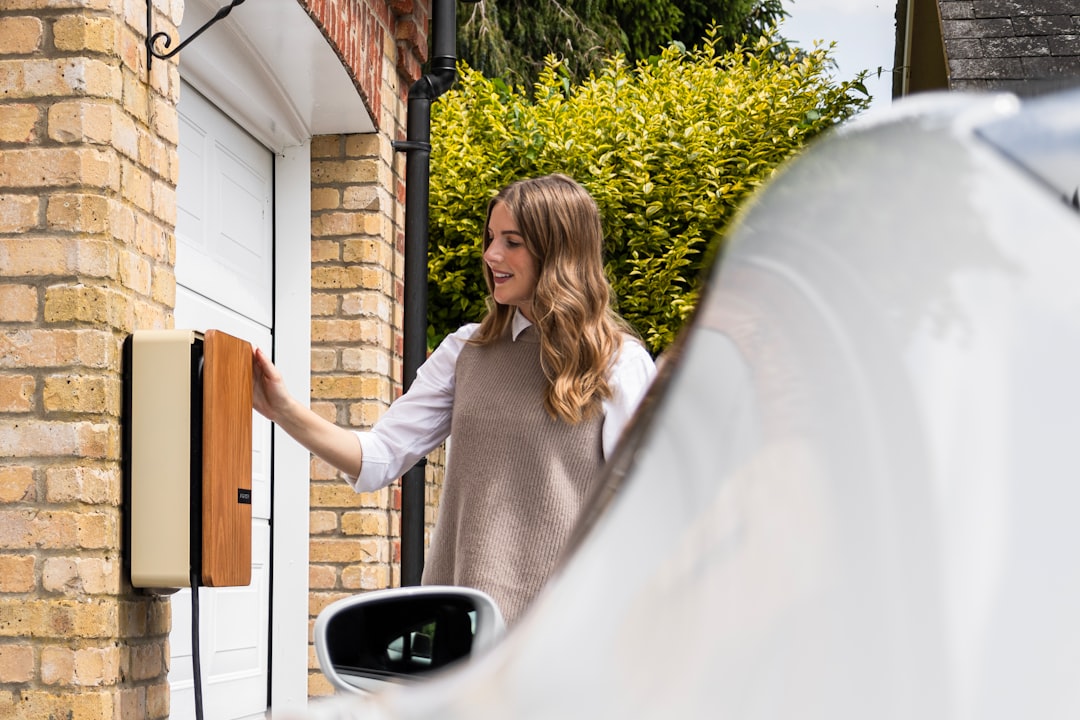
The Atto 3 sits between the two on fast charging. High-speed DC charging is possible at 80 kW, taking the Atto 3 from 30% to 80% in just 29 minutes. Both cars accept standard 7 kW AC home charging, making overnight top-ups from a home wallbox the primary energy source for most owners. Get a free home charger installation quote and have a wallbox fitted within days.
The Atto 3 Extended Range’s 420 km WLTP range is the headline figure for longer-distance users — that Cape Town to Hermanus trip, or the Johannesburg to Nelspruit run — where the Vigo would need a top-up stop. You can use Apple CarPlay or Android Auto via the 15.6-inch touchscreen, making navigation to charging stops seamless. Speaking of which — find charging stations near you on our live SA charging map.
Ready to Install a Home Charger?
Get a free, no-obligation quote for professional EV charger installation in South Africa.
Running Costs: The Real Reason to Go Electric
Here is the number that should dominate every EV conversation in South Africa right now. According to Winstone Jordaan, director of charging network GridCars, the cost of running an EV is roughly two-thirds that of a petrol vehicle, and fuel price hikes in April, with further increases expected, have added to the appeal of EV ownership.
Let’s put proper Rand figures to it. Using Cape Town’s off-peak tariff of around R1.89/kWh and a real-world consumption of approximately 16–17 kWh per 100 km for both these SUVs, you’re looking at roughly R30–R32 per 100 km on home charging. A comparable petrol SUV using 6.5 litres per 100 km at R23.25/litre costs approximately R151 per 100 km — nearly five times more.
Over 15,000 km per year, that translates to roughly R4,500–R4,800 in home charging costs versus R22,650 in petrol. An annual saving in the region of R18,000. Over five years, that is R90,000 back in your pocket — and that assumes petrol prices stay flat, which they never do. If petrol hits R30/litre by year-end (not unthinkable given recent trajectory), the savings accelerate sharply.
At current tariffs, charging either of these EVs at home costs approximately R30–R32 per 100 km, compared to around R151 per 100 km for a comparable petrol SUV. The EV wins on running costs from day one.
The Vigo E1’s lower purchase price also improves its payback proposition significantly over the Atto 3. Use our EV savings calculator to model your personal break-even point based on your annual mileage and local electricity tariff.
Safety and Warranty: Closer Than You’d Expect
Safety is an area where the Atto 3 has a clear technical edge on paper. The Dongfeng Vigo comes with a safety and assistance suite including six airbags, tyre pressure monitoring, traction control, electronic stability control, ABS, hill assist, cruise control, rear parking sensors, and a rearview camera. Solid, thorough, and appropriate for the price point. The E3 adds adaptive cruise control and a 360-degree surround-view system.
The Atto 3 ups the ante with seven airbags and a more comprehensive advanced driver assistance package. BYD’s ADAS suite includes blind spot detection that alerts when a vehicle approaches quickly in rear blind spots, lane keep assistance that can guide the car back to its lane, and intelligent cruise control that automatically follows the car ahead at speeds below 60 km/h. The Atto 3 received a five-star Euro NCAP rating in 2022 testing, giving buyers independent crash test verification. The Vigo is yet to be independently crash-tested for SA markets.
On warranty, both brands offer strong coverage. All Dongfeng cars are sold with a 5-year/100,000 km vehicle warranty, a 5-year/100,000 km service plan, and an 8-year/200,000 km battery warranty. BYD counters with a 6-year/150,000 km vehicle warranty and service plan, also backed by an 8-year battery guarantee. Longer vehicle coverage goes to BYD, but Dongfeng’s battery warranty is class-leading.
Both warranties matter enormously in a South African context. Dongfeng only entered our market in November 2025, so dealer network density is still building. BYD has been here since mid-2023 and has a more established service infrastructure. If you drive to Limpopo or the Eastern Cape regularly, that dealer footprint is worth considering.
Brand Context: The Numbers Don’t Lie
BYD’s SA sales data, released for the first time in April 2026, tells an important story. BYD registered a total of 589 units in South Africa in March 2026 — impressive for an NEV brand, considering a more established brand like Mercedes-Benz sold a total of 595 units in the same period.
The Dolphin Surf proved the concept: 239 new units leaving showroom floors made it the best-selling EV in SA in March 2026. The Atto 3 sold 28 examples in the same month. The Dolphin Surf’s sales spike is the clearest possible proof of what the Vigo’s pricing could achieve: when you price an electric car at a level where ordinary South Africans can access it, they buy it.
It also reinforces a crucial point about the Atto 3. Despite being the more expensive option, it has an established and growing buyer community in SA, a proven track record, and real-world data from owners who have driven them through load-shedding, long weekends, and everything in between. The Vigo is brand new to our market — impressive on paper, but unproven in the field.
If you want context on how these EVs stack up against petrol alternatives in the same price bracket, read our full EV vs petrol running cost breakdown for South Africa.
Find Charging Stations Near You
Explore our live map of EV charging stations across South Africa — updated in real time.
Who Should Buy Which?
Buy the Vigo E1 (R499,900) if your daily drive is under 150 km, you want to minimise the entry cost to EV ownership, and you’re city-focused with occasional highway runs. The tech is adequate, the 500-litre boot is genuinely practical, and you’re getting LED lighting, wireless charging, and full safety kit at a price no other electric SUV in SA can touch.
Buy the Vigo E3 (R579,000) if you want the panoramic sunroof, ambient lighting, and — crucially — the 167 kW DC fast charging capability. That 18-minute 30–80% charge is a real-world advantage if you drive intercity routes regularly. The R79,100 premium over the E1 is well justified for highway users.
Buy the Atto 3 Standard or Extended if you need the confidence of a proven brand with an established SA dealer network, the more refined cabin experience, better driver assistance technology, and — for the Extended variant — that 420 km WLTP range that makes Johannesburg-to-Durban a one-stop trip rather than a two-stop one. The Atto 3 also has a clearer resale value picture, which matters when you’re spending R700,000+.
Verdict: Historic Pricing Reshapes the Market
The Dongfeng Vigo E1 at R499,900 is genuinely historic for the South African EV market. Nothing at that price has offered this combination of features, range, and practicality before. According to the International Energy Agency, EV adoption in South Africa has been slow, with early offerings largely aimed at affluent early adopters, while high import duties and a lack of affordable entry-level options kept volumes low. The Vigo is a direct assault on that problem.
But here is the honest take: the BYD Atto 3 is still the better car. More power, more refinement, better tech, more airbags, longer warranty, proven reliability, and an established brand. If money were no object, it wins every time.
The question is whether R200,000 — the price gap between the Vigo E1 and the cheapest Atto 3 — is worth what the Atto 3 offers over and above. For a buyer already stretching to get into an EV, it is not. For a buyer who drives 200+ km per day, needs 420 km of range, and values cabin refinement, it absolutely is.
The real winner here is the South African EV buyer. Competition has arrived. Prices are falling. Chinese brand BYD’s South African sales figures suggest local motorists have an appetite for electric cars when they’re priced right. The Dongfeng Vigo has just made the price even more right. More brands will follow. The next 24 months in the SA EV market are going to be extraordinary.
FAQ
What is the cheapest electric SUV in South Africa in 2026?
The Dongfeng Vigo E1, launched on 10 April 2026, is currently South Africa’s cheapest electric SUV at R499,900. It undercuts the previous joint title holders — the BYD Atto 3 and Geely E5 — by R200,000.
How does the Dongfeng Vigo range compare to the BYD Atto 3?
On the WLTP cycle, the Vigo E1 offers approximately 300 km and the E3 approximately 350 km. The BYD Atto 3 Standard delivers 345 km and the Extended Range 420 km. For daily commuters under 150 km, the Vigo is sufficient. For intercity travel, the Atto 3 Extended has the edge.
How fast does the Dongfeng Vigo charge?
The E1 supports DC charging at up to 60 kW, topping up from 30% to 80% in around 30 minutes. The larger E3 variant supports up to 167 kW DC charging, achieving the same 30–80% charge in just 18 minutes. Both accept standard 7 kW AC home wallbox charging.
Is the BYD Atto 3 worth R200,000 more than the Dongfeng Vigo?
It depends on your priorities. The Atto 3 offers a more refined cabin, more power (150 kW vs 120 kW), better driver assistance tech, an established dealer network, and up to 420 km of range. If those factors matter to you, the premium is justified. If you primarily need an affordable daily EV with decent range, the Vigo E1 delivers remarkable value.
What warranty does the Dongfeng Vigo come with in South Africa?
All Dongfeng cars in South Africa are sold with a 5-year/100,000 km vehicle warranty, a 5-year/100,000 km service plan, and an 8-year/200,000 km battery warranty. The BYD Atto 3 offers a slightly longer 6-year/150,000 km vehicle and service warranty, with an 8-year battery guarantee.
How much does it cost to charge a Dongfeng Vigo or BYD Atto 3 at home in South Africa?
Using Cape Town’s off-peak tariff of approximately R1.89/kWh and a real-world consumption of around 16–17 kWh per 100 km, home charging costs approximately R30–R32 per 100 km for both vehicles. Over 15,000 km per year, that represents an annual fuel saving of approximately R18,000 compared to a comparable petrol SUV.
Continue Reading