
The electric car that doubles as a backup generator changes the calculation for every fence-sitter in South Africa. BMW South Africa has confirmed the i3 electric sedan will arrive in the first quarter of 2027, and if you’ve been waiting for a proper reason to ditch the petrol pump, this is it. We’re talking 345kW, a claimed 900km of range, and the ability to power your house when Eskom has other ideas. That last part alone is worth sitting down for.
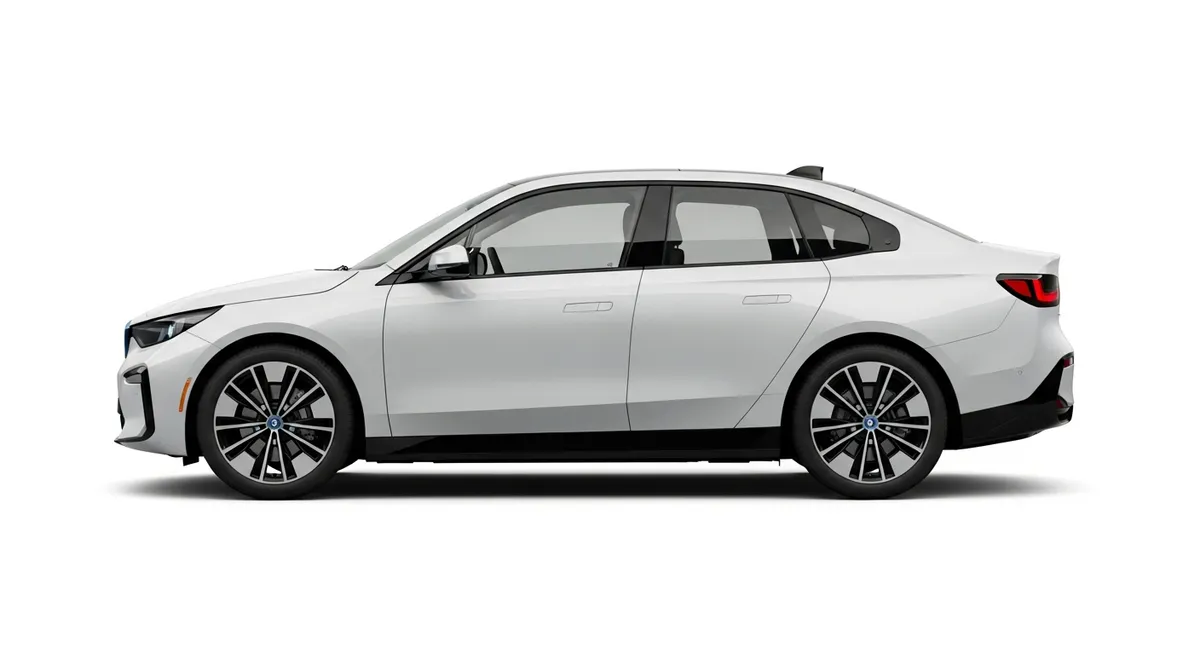
Unveiled initially in 50 xDrive guise, the BMW i3 employs a dual electric-motor powertrain producing a combined system output of 345kW and 645Nm of torque. For context, that’s considerably more than the M340i’s 285kW — and this is the base spec. There’s reportedly an M version with four motors in development, but let’s not get ahead of ourselves. The i3 50 xDrive is already a serious machine.
This isn’t the quirky little carbon-fibre city car BMW sold from 2013. This is the full-fat 3 Series replacement — bigger, faster, further-reaching — and it could be the EV that finally converts the BMW loyalists who’ve been watching the electric revolution from a safe distance. The i3 matters because the 3 Series matters. It is BMW’s core, the car that defines the brand for millions of customers. Electrifying it signals that BMW believes the electric future has arrived — not just for niche models or city cars, but for the sedan that has been the heart of its lineup for decades.
The Big Picture: Why This Is the Moment South Africa’s Premium EV Market Changes
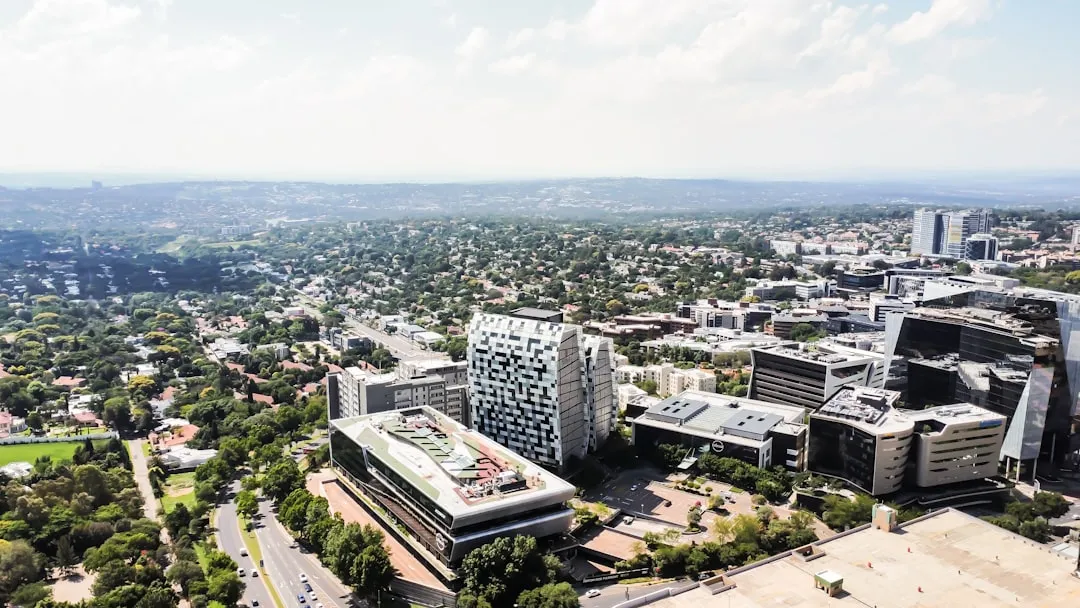
South Africa’s premium EV market has, until now, been a story of near-misses. When it comes to total BEV sales officially reported in 2025, the top brands include the BMW Group (including Mini) at 304 units, Mercedes-Benz with 300 units, and Volvo with 265 units. Those are small numbers for a country of 60 million people. But they tell you who’s buying: premium customers, people with home charging set-ups, the early adopters who aren’t waiting for infrastructure to catch up.
BYD has expanded its local lineup with the Seal, a sleek electric sedan that directly targets the Tesla Model 3. With a claimed range exceeding 500 kilometres and pricing that undercuts its American rival, it’s the most credible electric sedan yet to launch locally. The BYD Seal changed the conversation. It proved that an EV sedan at under R1 million could find buyers in South Africa. Tesla’s Model 3 proved that a premium badge could command real money. Now BMW arrives with the firepower to take on both.
Here’s the thing: BMW has brand equity in this country that no Chinese manufacturer can buy overnight. The 3 Series is aspirational currency. Everyone knows what a 3 Series means on a Sandton street or on the N1 through Paarl. The i3 inherits all of that — and adds specs that make the petrol version look pedestrian by comparison.
If you’re weighing up the premium EV options available today and tomorrow, our EV savings calculator can show you exactly what switching from a current 3 Series to an i3 would mean for your monthly running costs.
The Numbers That Actually Matter
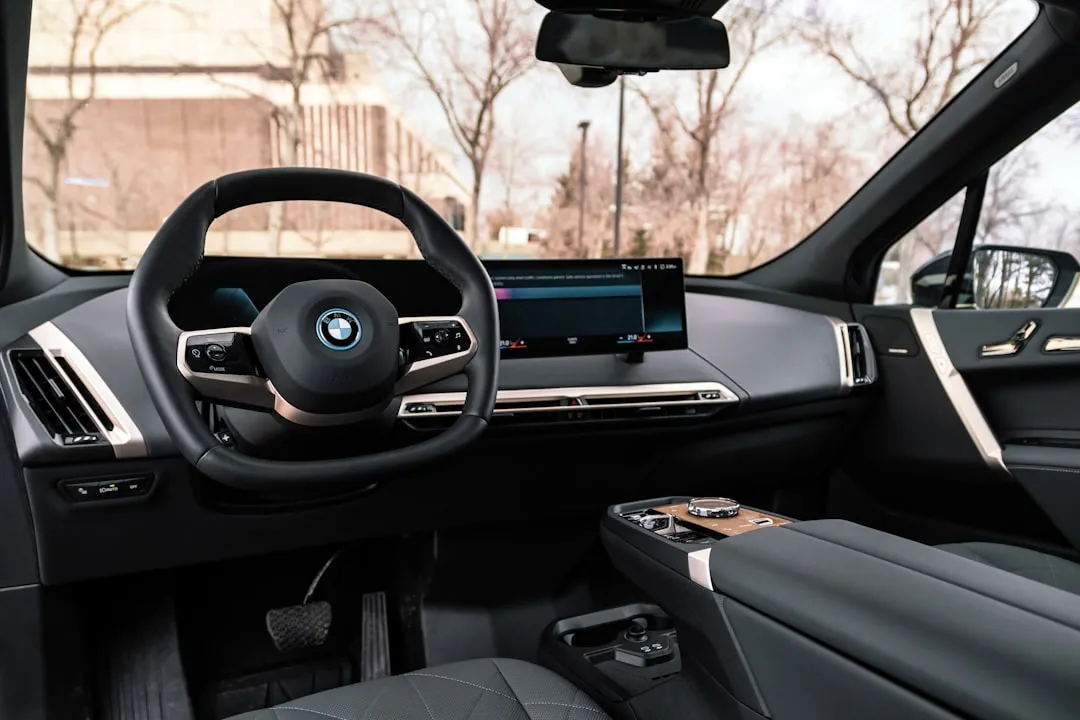
Range is one of the standout figures. BMW claims up to 900km on the WLTP cycle, supported by sixth-generation eDrive technology and an 800-volt electrical system. That’s enough for Johannesburg to Durban with about 130km to spare, or Cape Town to Knysna and back. Real-world figures in South Africa, with our temperatures and highway speeds, will likely settle around 700-750km. That is still, without question, the longest range of any premium sedan ever offered locally.
900km WLTP range — enough for Johannesburg to Durban on a single charge. Real-world South African conditions will likely deliver 700-750km, which comfortably covers Cape Town to Knysna and back (approximately 600km round trip).
The performance figures are equally striking. The first all-electric BMW 3 Series launches as the BMW i3 50 xDrive, which has an electric motor on both the front and rear axles. The combined system power output is 345kW/469hp, with maximum torque of 645Nm. The current M340i produces 285kW and gets to 100km/h in 4.4 seconds. The i3 50 xDrive has more torque, more power, and electric motors don’t need to rev into their powerband — the shove is there from the very first millimetre of throttle.
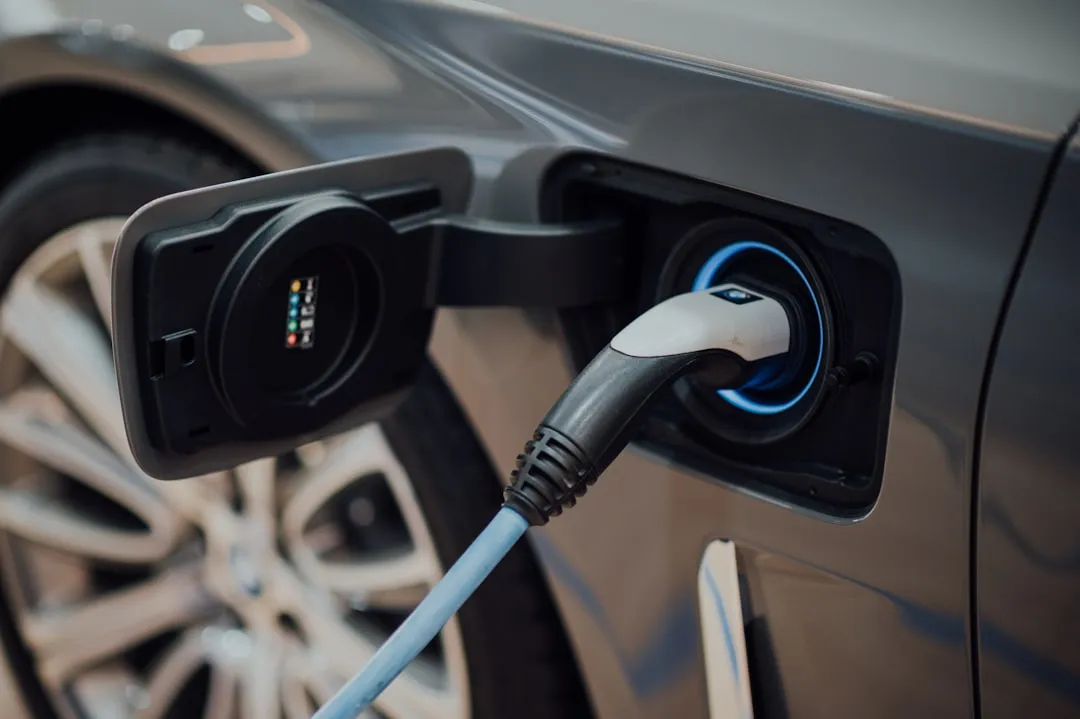
With a maximum charge rate of 400kW, another 400km of range can be added during just 10 minutes of fast charging. Think about that in practical terms. You stop for a coffee at the Wimpy in Colesberg on your way from Jo’burg to Cape Town, and you gain 400km before your flat white is finished. That is not a compromise. That is better than a petrol car.
The new 2026 BMW i3 is the brand’s second Neue Klasse model, a fully electric sport sedan featuring a 900km WLTP range and a 345kW dual-motor powertrain. Utilising an 800-volt architecture, it sets a new industry benchmark by recouping 400km of range in just 10 minutes via 400kW DC fast charging. The 800V architecture also means thinner, lighter cables and more efficient energy transfer — the whole system runs cooler and degrades less over time. It’s a meaningful engineering leap, not marketing noise.
How Much Could You Save With an EV?
Use our free calculator to compare your current fuel costs with EV charging costs.
The Load-Shedding Feature: Your Car as a Backup Generator (With Caveats)
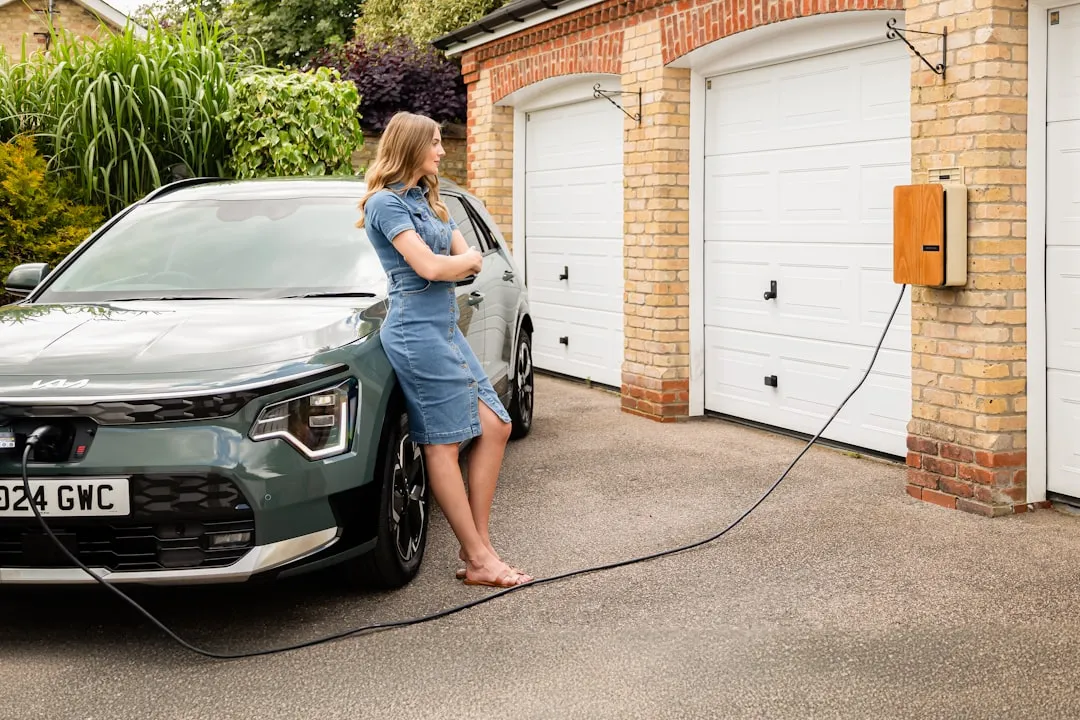
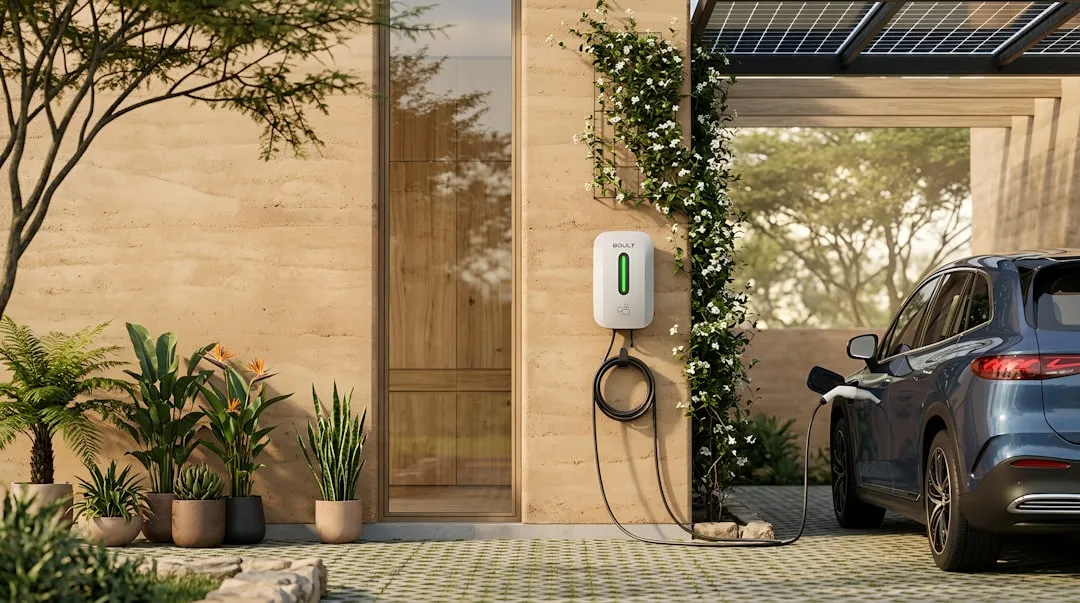
This is the part that could change everything for South African buyers specifically — but it comes with an important asterisk. Vehicle-to-Home (V2H) bidirectional charging turns the BMW i3 into a home energy storage system: in conjunction with the BMW Wallbox Professional, V2H allows the vehicle to function as a backup emergency power supply in the event of an outage. In plain English: when the lights go out, your i3 could keep them on.
The 800V setup allows for bi-directional charging across three formats: Vehicle-to-Load (V2L) — the i3’s battery can power external devices such as small appliances, tools, or camping equipment. Vehicle-to-Home (V2H) — it can act as a power source for a house, particularly useful in a country familiar with load-shedding. Vehicle-to-Grid (V2G) — it can feed energy back into the power grid, potentially allowing owners to sell electricity back during peak times.
BMW hasn’t confirmed the exact battery capacity of the i3, but based on the 900km WLTP range and the Gen6 eDrive’s efficiency figures, an 85-90kWh battery is a reasonable working assumption. A typical South African home in load-shedding Stage 2 draws roughly 1.5-2kW on essential loads — lights, Wi-Fi, a fridge, a TV. An 85kWh battery, even at 70% usable capacity, would provide approximately 30-35 hours of backup power. That’s multiple load-shedding slots without touching your inverter or your generator. It makes a Tesla Powerwall, which tops out at 13.5kWh, look modest by comparison.
“An electric car that can power your home during outages is not just a vehicle — it’s a backup generator on wheels.” — JoBurg Etc
With Vehicle-to-Home in conjunction with the BMW Wallbox Professional and a photovoltaic system, vehicle charging costs and electricity costs throughout the household are reduced. Excess energy from the photovoltaic system is temporarily stored in the vehicle battery and is later fed back into the house when there is no solar power. Combine the i3 with rooftop solar and you have something approaching genuine energy independence — which, in South Africa in 2027, is worth real money.
The critical caveat: the i3 features bidirectional charging with V2L, V2H and V2G functionality, but local details on this capability will be announced “in due course.” Regulatory approval for V2H varies by market, and BMW SA will need to confirm what’s enabled from launch. This is not guaranteed out of the box for South Africa — the hardware is built in, but activation depends on regulatory sign-off. Until BMW SA makes an official announcement, treat V2H as a future possibility rather than a confirmed day-one feature. The car is transformative even without it, but if you’re buying specifically for backup power capability, wait for written confirmation before signing.
While you wait for the i3 to arrive, it’s worth getting your home charging infrastructure sorted now. Get a free home charger installation quote — installations are booked out fast as more EVs hit the market, and you want to be ready for when the i3 lands.
SA Context: Why 2027 Is the Right Time
South Africa spent most of 2023 and 2024 in load-shedding misery. The psychological damage to EV adoption was real — nobody wants an empty battery when the grid is already failing. But the landscape has shifted. The country has recorded well over 300 consecutive days without load-shedding as of mid-2026, and grid stability has removed one of the biggest psychological barriers to EV ownership.
Major cities like Cape Town and Johannesburg have growing charging networks. Home solar systems are becoming popular for energy independence amid load-shedding challenges. The charging infrastructure conversation is also moving in the right direction. GridCars has expanded its network significantly, CHARGE’s solar-powered hubs are appearing along major routes, and more 150kW-plus chargers are coming online every quarter. When the i3 arrives, 400kW charging will still be rare in South Africa — such 800V DC rapid charging stations are not yet exactly prevalent in South Africa — but the car is fully compatible with 400V DC chargers too. You won’t be stranded. The 400kW capability is future-proofing for an infrastructure that is actively catching up.
Petrol is not getting cheaper. With 95 unleaded sitting above R24.50 per litre and fuel levies continuing to creep upward, the running cost calculation for a premium petrol sedan is becoming increasingly painful. According to BusinessTech, starting on 1 March 2026, the government introduced a 150% tax deduction for investments in EV and hydrogen vehicle production. That’s a policy signal that SA’s direction of travel is electric, and it should give corporate fleet buyers confidence when evaluating the i3 as a replacement for their current 3 Series company cars.
Check the live SA charging station map to see what’s available near you right now — and how the network is growing ahead of the i3’s arrival.
Ready to Install a Home Charger?
Get a free, no-obligation quote for professional EV charger installation in South Africa.
How It Stacks Up Against the Competition
The i3 doesn’t exist in a vacuum. The premium electric sedan segment in South Africa is more competitive now than it’s ever been, with three credible alternatives already in market. Here’s how they compare on the numbers that matter most:
| Model | Power | Range (WLTP) | Fast Charge | Est. SA Price | V2H |
|---|---|---|---|---|---|
| BMW i3 50 xDrive (2027) | 345kW / 645Nm | 900km | 400kW (10 min = 400km) | R1.2–1.5M (est.) | Yes (regulatory TBC) |
| Tesla Model 3 Long Range AWD | 366kW / 493Nm | 602km | 250kW Supercharger | ~R1.1M | No (US market only) |
| BYD Seal AWD | 390kW / 670Nm | 570km | 150kW DC | ~R900K | No |
| Mercedes-Benz EQE 350+ | 215kW / 565Nm | 654km | 170kW DC | R1.8M+ | No |
Look at that table and the i3’s position becomes clear. It’s substantially more capable than anything else in the segment on range and charging speed, it undercuts the Mercedes EQE by a significant margin, and it brings something none of the others can match in South Africa: genuine V2H capability in a recognisable, aspirational German package — pending regulatory approval.
BYD’s Seal targets the Tesla Model 3 with pricing that undercuts its American rival, and it’s the most credible electric sedan yet to launch locally. But “credible” and “compelling” aren’t the same thing. The BYD Seal at R900K is excellent value. The BMW i3 at R1.2-1.5M is a different proposition: you’re paying for the brand, for the driving dynamics, for a charging speed that leaves everything else in the dust, and for the possibility of powering your braai area when the grid goes dark. For BMW loyalists, that premium is entirely justified.
Tesla’s Supercharger network remains a genuine advantage for Model 3 owners. It’s reliable, well-distributed across major routes, and getting better. Interestingly, the i3 sports a NACS charging port, which gives the car access to Tesla’s Supercharger network in markets where that’s applicable. Whether that translates to SA remains to be confirmed, but it’s an intriguing detail. In the meantime, the i3’s compatibility with standard CCS chargers means it can use the growing GridCars and other networks without issue.
The Mercedes EQE is the i3’s most direct luxury competitor, but at R1.8M or more it occupies a different price bracket, and its 170kW charging speed looks positively last-generation next to the i3’s 400kW capability.
What We Still Don’t Know
BMW SA has confirmed the arrival, but confirmed pricing hasn’t followed yet. Based on global positioning and the pricing of existing BMW EVs in South Africa, a range of R1.2-1.5 million for the i3 50 xDrive is a reasonable working estimate. That’s a significant chunk of money — but comparable to a well-optioned M340i xDrive, and the i3 is faster, more efficient, and costs a fraction per kilometre to run.
The i3 will be built at BMW’s Munich plant, which has undergone significant upgrades in preparation for the brand’s next generation of electric vehicles. Production is scheduled to begin in August 2026. That gives BMW SA a tight window — roughly five to six months between production start and Q1 2027 local availability. Right-hand-drive markets and local homologation add complexity, so an early Q1 delivery seems optimistic. Late Q1 or possibly early Q2 2027 is a more realistic expectation, but BMW’s confirmation stands.
There’s also the question of which specifications South Africa receives at launch. A full M model is in development for a future date, equipped with four electric motors with reports suggesting it will produce around 1,000kW. South Africa is unlikely to see that at launch — the 50 xDrive will almost certainly be the sole spec available initially, which is no hardship given what it offers.
Local warranty and service plan details are also unconfirmed. BMW SA has historically offered strong service plan packages on its EVs, and the i3 should follow suit. What the service intervals look like — and what BMW’s local dealer network charges for out-of-warranty work — will matter to total cost of ownership calculations.
Find Charging Stations Near You
Explore our live map of EV charging stations across South Africa — updated in real time.
The Verdict: BMW’s Chance to Reclaim EV Leadership in South Africa
Here’s the honest assessment: the BMW i3 is the most technically impressive premium electric sedan confirmed for South Africa — and it isn’t particularly close. The range is unmatched. The charging speed is unmatched. The V2H capability is unique in this segment locally, pending regulatory approval. And it carries a badge that resonates with the exact buyers who’ve been sitting on the fence about going electric.
With 345kW, 900km range, and 10-minute charging, the i3 is not a compromise. It is not an electric car that asks drivers to accept less. It is, on paper at least, a better 3 Series — more powerful, more efficient, more technologically advanced.
The risk is pricing. If BMW SA lands this car above R1.5 million, the BYD Seal’s R900K and Tesla Model 3’s R1.1M become very difficult to ignore for buyers who are primarily motivated by value. But if BMW gets the price right and V2H is enabled from day one, this could be the electric car that genuinely converts the BMW faithful who’ve been nursing their 330i for one more service interval waiting for something worthy of the switch.
And if you’re currently in a Tesla Model 3 or a BYD Seal? Wait until early 2027 and test drive the i3. You might find yourself on the other side of the conversation. According to Top Gear, from an EV perspective, the newcomer is likely to set a new benchmark for driving dynamics, as it is both lighter and has a lower centre of gravity than the excellent iX3, which even raised eyebrows on the racing circuit.
The wait is almost over.
What to Do Right Now
If you’re a premium EV buyer in 2026, our advice is simple: don’t rush into a purchase before seeing the i3. The Q1 2027 timeline is close enough to justify waiting, especially if you’re comparing it against a Tesla Model 3 Long Range or a Mercedes EQE. The spec gap is too large to ignore.
If you already own a petrol 3 Series and you’ve been waiting for the electric version worth switching to — this is it. Start doing your homework on home charging now. Get a home charger installation quote and make sure your garage is i3-ready before the car arrives. And if you’re buying anything electric before the i3, use our EV savings calculator to understand your actual running cost difference — the numbers are genuinely compelling at current petrol prices.
FAQ
When is the BMW i3 electric sedan coming to South Africa?
The BMW i3 will be available for order from Q1 2027. BMW SA has confirmed first-quarter 2027 availability, with production starting at the Munich plant in August 2026. Realistically, the first deliveries are expected between January and March 2027, though local homologation requirements could push this toward the end of Q1.
How much will the BMW i3 cost in South Africa?
BMW SA has not announced local pricing. Based on the global positioning of the i3 relative to existing BMW EVs in the South African market, and comparable markets internationally, a price range of approximately R1.2 million to R1.5 million for the i3 50 xDrive is a reasonable estimate. Official pricing will be confirmed closer to launch.
How does the BMW i3 compare to the Tesla Model 3?
The BMW i3 50 xDrive has a significant range advantage — 900km WLTP versus approximately 602km for the Tesla Model 3 Long Range AWD. Its 400kW DC fast charging capability also outpaces the Tesla’s 250kW Supercharger peak rate. The Tesla Model 3 is likely to remain more affordable and benefits from the established Supercharger network in South Africa. The i3 counters with V2H capability (pending regulatory approval), superior range, and BMW’s established premium service infrastructure locally.
Can the BMW i3 power my house during load-shedding?
Vehicle-to-Home bidirectional charging turns the BMW i3 into a home energy storage system: in conjunction with the BMW Wallbox Professional, V2H allows the vehicle to function as a backup emergency power supply in the event of an outage. However, local details on this V2H capability will be announced “in due course”, meaning regulatory approval for the South African market is still pending. The hardware is built in — but activation depends on BMW SA and local regulatory sign-off.
What is the real-world range of the BMW i3 in South Africa?
The maximum range of the BMW i3 50 xDrive Sedan will be up to 900km (WLTP). Since no binding WLTP values are currently available, these are preliminary values. Real-life values depend on various factors including cargo weight, driving style, route, weather conditions, auxiliary electrical consumption, and battery state of health. In South African conditions — highway speeds, summer heat, and air conditioning use — expect real-world range of approximately 700-750km. That still comfortably covers Johannesburg to Durban on a single charge.
What is BMW’s Neue Klasse platform used in the i3?
The i3 represents the second pillar of the Neue Klasse (following the iX3), departing from traditional combustion-engine architectures and focusing on three pillars: Digital, Circular, and Electric. The Neue Klasse underpins BMW’s entire next-generation EV strategy, with a purpose-built 800V architecture, cylindrical battery cells, and fully integrated software and hardware development. It’s BMW’s answer to Tesla’s in-house platform approach, and the early results — particularly on range and charging speed — suggest it was worth the wait.