
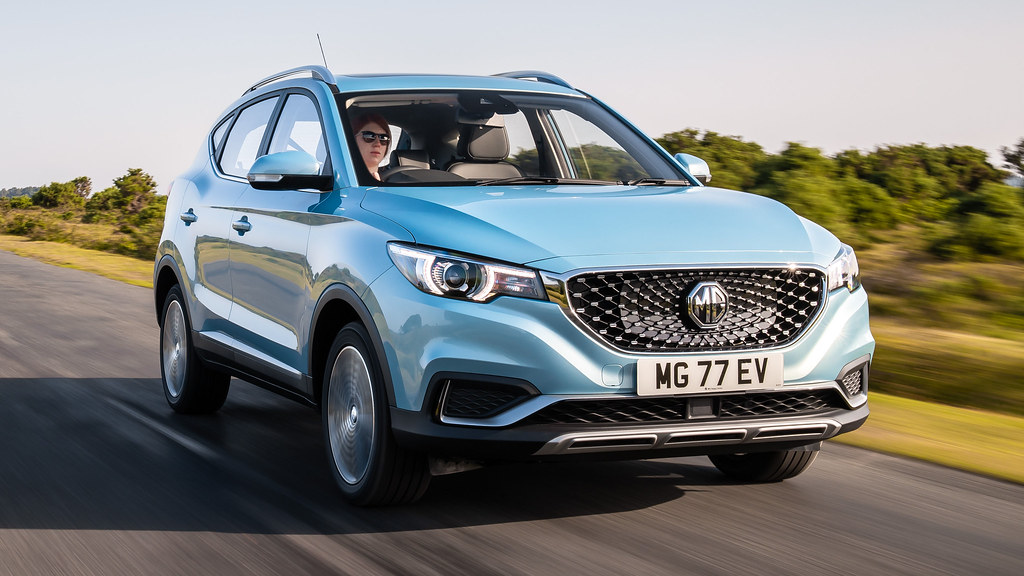
MG ZS EV vs Hyundai Tucson 2.0: Which Should You Buy in 2025?
Considering switching to an EV? This comprehensive comparison between the MG ZS EV and the Hyundai Tucson 2.0 will help you make the right decision for your wallet and lifestyle in South Africa.
📊 Quick Comparison Overview
| Feature | MG ZS EV | Hyundai Tucson 2.0 |
|---|---|---|
| Purchase Price | R650,000 | R550,000 |
| 5-Year Fuel Cost | R60,714 | R122,475 |
| 5-Year Maintenance | R15,000 | R40,000 |
| Total Cost of Ownership | R725,714 | R712,475 |
| Winner | Tucson wins TCO by R13,239, but EV saves R86,761 in running costs! | |
💰 The Real Cost: 5-Year Ownership Analysis
Here’s where the comparison gets interesting. While the MG ZS EV costs R650,000 upfront compared to the Hyundai Tucson 2.0’s R550,000, the running cost savings are substantial.
Understanding the Price Difference
The MG ZS EV commands a R100,000 premium over the Hyundai Tucson 2.0 at purchase. This is typical for electric vehicles in South Africa’s 2025 market, where EV technology still carries higher upfront costs. However, this premium is offset significantly by lower operating expenses over time.
Fuel Costs Breakdown
Based on 15,000 km annual driving, electricity at R2.50/kWh (City Power 2025 residential rate), and petrol at R24.50/L (December 2024 inland average):
- MG ZS EV electricity cost: R12,143/year (16.2 kWh/100km consumption) = R60,714 over 5 years
- Hyundai Tucson 2.0 petrol cost: R24,495/year (8.3 L/100km combined cycle) = R122,475 over 5 years
- Fuel savings with EV: R61,761 over 5 years
Maintenance Costs
- MG ZS EV: R15,000 (minimal – no oil changes, less brake wear, tyre rotations, brake fluid)
- Hyundai Tucson 2.0: R40,000 (regular servicing, oil changes every 15,000 km, filters, spark plugs, transmission service)
- Maintenance savings with EV: R25,000
The Total Picture
While the Tucson has a lower total cost of ownership by R13,239 when you include the purchase price, the EV delivers R86,761 in combined fuel and maintenance savings. If you plan to keep the vehicle beyond 5 years, the MG ZS EV’s lower running costs continue to compound, eventually overtaking the Tucson’s TCO advantage around year 6.
🎯 Who Should Buy the MG ZS EV?
The MG ZS EV is perfect for you if:
- 💰 Budget-conscious long-term: Save R1,446 per month on running costs despite higher purchase price
- 🏠 Home charging available: Wake up to a “full tank” every morning for just R1,012/month
- 🌆 City/suburban driving: Perfect for the 320 km range on a single charge
- 🔧 Low maintenance priority: No oil changes, no exhaust systems, minimal brake wear
- 🌍 Environmental responsibility: Zero tailpipe emissions in SA’s cities
- ⚡ Modern technology: Latest infotainment, over-the-air updates, advanced safety features
- 📊 Long ownership horizon: Planning to keep the vehicle 6+ years to fully recoup the purchase premium
🎯 Who Should Buy the Hyundai Tucson 2.0?
The Hyundai Tucson 2.0 makes sense if:
- 💵 Lower upfront cost needed: R100,000 cheaper to purchase, freeing capital for other uses
- ⛽ Long-distance flexibility: Refuel anywhere in 5 minutes with petrol stations everywhere
- 🚗 Heavy towing/off-road: 2.0L engine provides proven capability for trailers and rough terrain
- 📍 Rural/remote areas: No charging infrastructure concerns in areas beyond major metros
- 🔋 No home charging option: Petrol stations remain more accessible for apartment dwellers or those without dedicated parking
- 👴 Familiar technology: Comfortable with traditional vehicle ownership and maintenance routines
- ⏱️ Short ownership cycle: Planning to sell within 3-4 years before EV savings accumulate
💡 Key Decision Factors
Choose the MG ZS EV if you:
- ✅ Drive less than 320 km per day on average
- ✅ Have access to home charging or workplace charging
- ✅ Want to save R1,446 per month on running costs
- ✅ Prioritise lower maintenance and running costs
- ✅ Want zero tailpipe emissions
- ✅ Can manage the R100,000 higher upfront cost
- ✅ Plan to own the vehicle for 6+ years
Choose the Hyundai Tucson 2.0 if you:
- ✅ Need maximum flexibility for long-distance travel
- ✅ Don’t have reliable charging access
- ✅ Drive more than 320 km daily
- ✅ Need to minimise upfront costs by R100,000
- ✅ Prefer the familiarity of petrol stations
- ✅ Live in an area with limited charging infrastructure
- ✅ Plan to sell within 3-5 years
🔋 Charging Infrastructure in South Africa
South Africa’s EV charging network is growing rapidly, with over 500 public charging points nationwide. Major cities like Johannesburg, Cape Town, Durban, and Pretoria have excellent coverage, with networks like GridCars, Jaguar Power, and Tesla Superchargers expanding monthly.
Home charging transforms the ownership experience: Installing a home charger (R15,000-R30,000) gives you a “full tank” every morning at a fraction of petrol costs. Most EV owners charge overnight on off-peak electricity rates, reducing costs even further to as low as R1.50/kWh in some municipalities.
Load-shedding remains a consideration, but modern EVs can charge during available windows, and many owners install solar systems to guarantee charging availability regardless of Eskom’s schedule. According to GridCars, South Africa’s largest public charging network, uptime has improved to over 95% across their 200+ stations as of December 2024.
🚗 Real-World Ownership Experiences
Understanding how these vehicles perform in daily South African conditions helps paint a clearer picture beyond the numbers.
MG ZS EV Owner Insights
Current MG ZS EV owners in South Africa report excellent reliability with minimal maintenance requirements. The 320 km real-world range proves sufficient for most daily commutes, with home charging eliminating petrol station visits entirely. Winter range drops approximately 15-20% in Gauteng’s colder months, but this rarely impacts daily usability for urban drivers.
The biggest adjustment for new EV owners is trip planning for long-distance travel. While the national charging network continues expanding, routes between major cities require advance planning. Weekend trips from Johannesburg to Durban (570 km) necessitate at least one charging stop, typically 30-45 minutes at a DC fast charger.
Hyundai Tucson 2.0 Owner Insights
The Tucson 2.0’s proven reliability and extensive dealer network provide peace of mind for South African buyers. Owners appreciate the vehicle’s versatility—equally comfortable on Cape Town’s highways and Mpumalanga’s gravel roads. The 8.3 L/100km fuel consumption proves achievable in real-world mixed driving, though highway cruising at 120 km/h can push this to 9.5 L/100km.
Service intervals every 15,000 km align well with typical annual mileage, and Hyundai’s 5-year/150,000 km warranty provides comprehensive coverage. Parts availability through the established dealer network means minimal downtime for repairs or routine maintenance.
📈 Long-Term Value and Resale Considerations
Over 5 years of ownership (15,000 km/year):
- Total running cost savings with MG ZS EV: R86,761 (fuel + maintenance)
- Monthly running cost savings: R1,446
- Cost per kilometre – MG ZS EV: R9.68 (TCO including purchase)
- Cost per kilometre – Hyundai Tucson 2.0: R9.50 (TCO including purchase)
Resale values for EVs in South Africa are still establishing themselves, but early indicators suggest strong demand for used electric vehicles as charging infrastructure improves. The Tucson benefits from Hyundai’s established brand reputation and proven resale performance in the local market.
Industry data from AutoTrader South Africa shows that well-maintained Hyundai Tucson models retain approximately 55-60% of their original value after 5 years. EV resale data remains limited locally, but international markets suggest similar or slightly better retention rates as battery degradation proves minimal (typically less than 10% capacity loss over 5 years).
🔧 Maintenance Deep Dive
MG ZS EV 5-Year Maintenance Schedule
Electric vehicles dramatically simplify maintenance requirements. The MG ZS EV’s 5-year schedule includes:
- Annual inspections: R2,000/year (brake fluid check, tyre rotation, cabin filter, coolant inspection)
- Brake fluid replacement: R1,500 (every 2 years)
- Coolant service: R2,000 (once at 5 years)
- Tyre replacements: R8,000 (estimated, depends on driving style)
- Total 5-year maintenance: R15,000
No oil changes, transmission services, exhaust repairs, or spark plug replacements mean significantly lower maintenance costs and less time at service centres.
Hyundai Tucson 2.0 5-Year Maintenance Schedule
Traditional petrol vehicles require more frequent and complex servicing:
- Oil changes: R1,800 every 15,000 km (5 services) = R9,000
- Major services: R4,500 at 60,000 km and 120,000 km = R9,000
- Brake pads/discs: R6,000 (estimated replacement at 60,000 km)
- Filters and consumables: R8,000 (air filters, fuel filters, spark plugs)
- Tyre replacements: R8,000
- Total 5-year maintenance: R40,000
These figures align with Hyundai South Africa’s published service pricing and typical wear-item replacement intervals.
⚡ Charging Costs vs Petrol: The Monthly Budget Impact
Breaking down the monthly fuel budget reveals the MG ZS EV’s compelling advantage:
MG ZS EV Monthly Electricity Cost
- Monthly distance: 1,250 km (15,000 km/year ÷ 12)
- Consumption: 16.2 kWh/100km
- Monthly electricity needed: 202.5 kWh
- Cost at R2.50/kWh: R506/month
- With 50% off-peak charging at R1.50/kWh: R405/month average
Hyundai Tucson 2.0 Monthly Petrol Cost
- Monthly distance: 1,250 km
- Consumption: 8.3 L/100km
- Monthly petrol needed: 103.75 litres
- Cost at R24.50/L: R2,542/month
Monthly fuel savings with MG ZS EV: R2,137 (or R2,036 with optimised off-peak charging)
This R2,000+ monthly saving represents a significant household budget impact—equivalent to a domestic worker’s salary, a comprehensive medical aid contribution, or substantial grocery savings.
🌍 Environmental Impact
By choosing the MG ZS EV over the Hyundai Tucson 2.0, you’ll prevent approximately 12,301 kg of CO₂ from entering the atmosphere over 5 years, even accounting for South Africa’s coal-heavy electricity grid. This is equivalent to planting roughly 560 trees or taking another car off the road for 8 months.
As South Africa’s renewable energy mix improves through private solar installations and grid renewables, the environmental advantage of EVs will only increase. Current grid emissions are approximately 1.0 kg CO₂/kWh, but rooftop solar charging reduces this to near-zero for daytime charging.
🏁 The Verdict
Recommended: Depends on Your Ownership Timeline
The MG ZS EV offers compelling savings of R86,761 in running costs over 5 years (R1,446/month), but the R100,000 purchase premium means the Hyundai Tucson 2.0 still edges ahead on total cost of ownership by R13,239 at the 5-year mark.
Choose the MG ZS EV if: You have reliable home charging, plan to keep the vehicle 6+ years, and want the lowest possible running costs. The environmental benefits and modern technology are significant bonuses.
Choose the Hyundai Tucson 2.0 if: You need to minimise upfront capital, lack charging infrastructure, frequently drive long distances, or plan to sell within 5 years. The lower purchase price and refuelling flexibility make it the pragmatic choice for many South African drivers.
💰 Calculate Your Own Savings
Want to see how much you could save based on your specific driving habits? Use our EV Cost Savings Calculator to input your exact annual kilometres, electricity rate, and ownership timeline for a personalised comparison.
🚗 Ready to Make the Switch?
Need help installing a home charger for your new EV? Get a free quote for professional EV charger installation anywhere in South Africa. Our certified installers handle everything from electrical compliance certificates to municipal approvals.
Explore South Africa’s growing charging network on our live EV charging map, showing real-time availability at over 500 public charging stations nationwide.
Last updated: 2 December 2025
Continue Reading
Deprecated: File Theme without comments.php is deprecated since version 3.0.0 with no alternative available. Please include a comments.php template in your theme. in /var/www/wordpress/wp-includes/functions.php on line 6085
Leave a Reply