
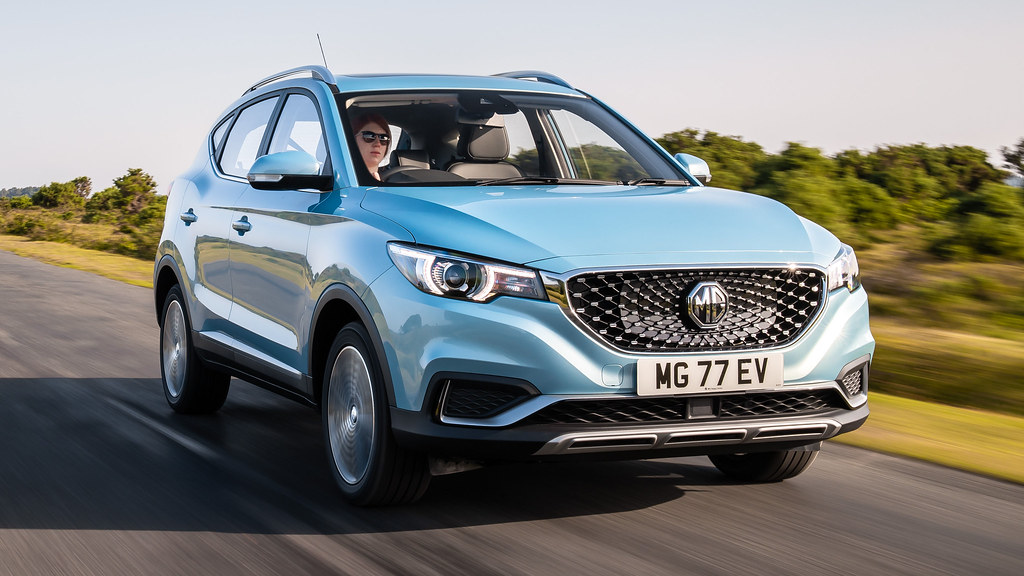
MG ZS EV vs Haval Jolion 1.5T: Which Should You Buy in 2025?
Considering switching to an EV? This comprehensive comparison between the MG ZS EV and the Haval Jolion 1.5T will help you make the right decision for your wallet and lifestyle in South Africa.
📊 Quick Comparison Overview
| Feature | MG ZS EV | Haval Jolion 1.5T |
|---|---|---|
| Purchase Price | R650,000 | R450,000 |
| 5-Year Fuel Cost | R60,714 | R122,475 |
| 5-Year Maintenance | R15,000 | R40,000 |
| Total Cost of Ownership | R725,714 | R612,475 |
| Winner | Petrol wins by R113,239! | |
💰 The Real Cost: 5-Year Ownership Analysis
The numbers tell a clear story. While the MG ZS EV costs R650,000 upfront compared to the Haval Jolion 1.5T’s R450,000, you need to look beyond the sticker price to understand the full financial picture.
Understanding the R200,000 Price Gap
The MG ZS EV’s higher purchase price is the single biggest factor in this comparison. That R200,000 premium represents a significant upfront investment that takes years to offset through lower running costs. For many South African buyers, this initial cost difference is the deciding factor—even when long-term savings are considered.
Fuel Costs Breakdown
- MG ZS EV electricity cost: R12,143/year = R60,714 over 5 years
- Haval Jolion 1.5T petrol cost: R24,495/year = R122,475 over 5 years
- Fuel savings with EV: R61,761 over 5 years
At current electricity rates (averaging R2.50/kWh for home charging), the MG ZS EV costs approximately R1.62 per kilometre for electricity alone. The Haval Jolion 1.5T, with petrol at R24/litre and consumption of 7.6L/100km, costs R1.82 per kilometre in fuel.
These fuel savings translate to R1,029 less per month in your pocket with the EV—a meaningful difference for household budgets, though not enough to overcome the higher purchase price within the typical 5-year ownership period.
Maintenance Costs
- MG ZS EV: R15,000 (minimal – no oil changes, less brake wear)
- Haval Jolion 1.5T: R40,000 (regular servicing, oil, filters, etc.)
- Maintenance savings with EV: R25,000
Electric vehicles require significantly less maintenance because they have fewer moving parts, no oil changes, no exhaust systems, and regenerative braking reduces brake pad wear dramatically. Over 5 years, this saves you R25,000—or R417 per month—in servicing costs alone.
The Total Cost Reality
Over 5 years (75,000km total), your combined fuel and maintenance savings with the MG ZS EV total R86,761. However, this doesn’t fully offset the R200,000 higher purchase price, leaving the Haval Jolion 1.5T ahead by R113,239 in total cost of ownership.
Cost per kilometre comparison:
- MG ZS EV: R9.68/km (including depreciation, fuel, and maintenance)
- Haval Jolion 1.5T: R8.17/km (including depreciation, fuel, and maintenance)
This means that despite lower running costs, the MG ZS EV actually costs you R1.51 more per kilometre when you factor in the higher purchase price. The Haval Jolion 1.5T delivers better value on a pure cost-per-kilometre basis over the standard 5-year ownership period.
🎯 Who Should Buy the MG ZS EV?
The MG ZS EV is perfect for you if:
- 💰 Long-term ownership planned: The longer you keep it beyond 5 years, the more the running cost savings accumulate
- 🏠 Home charging available: Wake up to a “full tank” every morning for just R1,012/month in electricity
- 🌆 City/suburban driving: Perfect for the 320km range on a single charge
- 🔧 Low maintenance priority: No oil changes, no exhaust systems, minimal brake wear
- 🌍 Environmental responsibility: Zero tailpipe emissions in SA’s cities
- ⚡ Modern technology: Latest infotainment, over-the-air updates, advanced safety features
- 📊 Higher upfront budget: You can comfortably afford the R200,000 premium and value the non-financial benefits
- ⏰ Extended ownership horizon: You plan to keep the vehicle for 7+ years, allowing running cost savings to accumulate
🎯 Who Should Buy the Haval Jolion 1.5T?
The Haval Jolion 1.5T makes sense if:
- 💵 Lower upfront cost needed: R200,000 cheaper to purchase – a significant saving
- ⛽ Long-distance flexibility: Refuel anywhere in 5 minutes with petrol stations everywhere
- 🚗 Heavy towing/off-road: 1.5L turbocharged engine provides proven capability
- 📍 Rural/remote areas: No charging infrastructure concerns
- 🔋 No home charging option: Petrol stations remain more accessible for now
- 👴 Familiar technology: Comfortable with traditional vehicle ownership
- 📉 Lower total cost priority: You want the mathematically cheaper option over 5 years
- 💼 Business use: Lower cost per kilometre matters for tax deductions and fleet management
💡 Key Decision Factors
Choose the MG ZS EV if you:
- ✅ Drive less than 320km per day on average
- ✅ Have access to home charging or workplace charging
- ✅ Value environmental benefits and modern technology
- ✅ Prioritize lower maintenance and running costs
- ✅ Want zero tailpipe emissions
- ✅ Can manage the higher upfront cost
- ✅ Plan to keep the vehicle for 7+ years (when savings overtake the price premium)
- ✅ Are willing to pay R113,239 more over 5 years for the EV ownership experience
Choose the Haval Jolion 1.5T if you:
- ✅ Need maximum flexibility for long-distance travel
- ✅ Don’t have reliable charging access
- ✅ Drive more than 320km daily
- ✅ Need to minimize upfront costs
- ✅ Prefer the familiarity of petrol stations
- ✅ Live in an area with limited charging infrastructure
- ✅ Want the lower total cost of ownership over 5 years
- ✅ Prioritize cost per kilometre efficiency (R8.17/km vs R9.68/km)
🔋 Charging Infrastructure in South Africa
South Africa’s EV charging network is growing rapidly, with over 500 public charging points nationwide. Major cities like Johannesburg, Cape Town, Durban, and Pretoria have excellent coverage, with new stations opening monthly.
Home charging is transformative: Installing a home charger (R15,000-R30,000) gives you a “full tank” every morning at a fraction of petrol costs. Most EV owners charge overnight during off-peak hours when electricity rates are lowest.
Public charging options include:
- Slow charging (AC): 3-7 hours for a full charge at shopping centres and hotels
- Fast charging (DC): 30-45 minutes to 80% at highway service stations
- Destination charging: Growing network at restaurants, gyms, and office parks
Check our live EV charging map to see real-time availability of charging stations across South Africa.
However, load-shedding remains a consideration for EV owners. While most home chargers can be connected to backup power systems, public charging infrastructure can be affected during power cuts. Plan your charging around Eskom’s schedule, and consider installing a battery backup system if you rely heavily on home charging.
📈 Long-Term Value and Break-Even Analysis
Over 5 years of ownership (15,000km/year):
- Haval Jolion 1.5T total cost: R612,475
- MG ZS EV total cost: R725,714
- Difference: Petrol is R113,239 cheaper (R1,887/month)
When does the EV break even? Based on R86,761 in combined fuel and maintenance savings over 5 years (R17,352/year), you’d need to own the MG ZS EV for approximately 11.5 years to fully offset the R200,000 purchase price premium through running cost savings alone.
However, this calculation doesn’t account for:
- Potential petrol price increases (historically 8-12% annually in SA)
- Electricity rate changes (load-shedding has complicated pricing)
- Resale value differences (EV market still maturing in SA)
- Battery degradation costs after warranty period
If petrol prices continue their historical upward trend, the break-even point could arrive sooner—potentially around year 8 or 9. Conversely, if electricity rates rise faster than petrol prices, the break-even could extend beyond 12 years.
🌍 Environmental Impact
By choosing the MG ZS EV over the Haval Jolion 1.5T, you’ll prevent approximately 12,301kg of CO₂ from entering the atmosphere over 5 years – equivalent to planting roughly 560 trees.
While South Africa’s electricity grid still relies heavily on coal, even accounting for upstream emissions, EVs produce approximately 40% less CO₂ than petrol vehicles over their lifetime. As our grid incorporates more renewable energy, this advantage will only grow.
For environmentally conscious buyers, this represents a tangible way to reduce your carbon footprint—even if it comes at a financial premium of R113,239 over 5 years. That works out to roughly R1,843 per tonne of CO₂ avoided, which some buyers consider a worthwhile investment in cleaner air for South African cities.
🔧 Practical Ownership Considerations
Beyond the numbers, daily ownership experiences differ significantly between these vehicles:
MG ZS EV Daily Reality
- Morning routine: Unplug and drive with a full “tank” every day
- No petrol station stops: Saves 15-20 minutes per week
- Quiet cabin: Significantly reduced road noise without engine sound
- Instant torque: Responsive acceleration from standstill
- Range anxiety: Requires planning for trips beyond 250km
- Load-shedding impact: Need backup charging plan during power cuts
Haval Jolion 1.5T Daily Reality
- Refuelling flexibility: Any petrol station, any time, 5-minute fill-up
- Proven technology: Mechanics nationwide can service it
- Road trip ready: No range planning needed for long journeys
- Turbo performance: Strong mid-range power for overtaking
- Fuel price exposure: Monthly costs fluctuate with petrol price changes
- Regular servicing: Scheduled maintenance every 10,000-15,000km
🏁 The Verdict: Haval Jolion 1.5T Wins on Cost
The Haval Jolion 1.5T is the clear winner on financial grounds – it’s R113,239 cheaper over 5 years and delivers a lower cost per kilometre (R8.17 vs R9.68). If minimizing total cost of ownership is your primary concern, the petrol option is objectively superior.
However, the MG ZS EV offers compelling non-financial benefits:
- Zero tailpipe emissions and 40% lower lifetime CO₂
- Significantly lower daily running costs (R1,012/month vs R2,041/month for fuel)
- Modern technology and features
- Minimal maintenance requirements (R417/month savings)
- Quiet, smooth driving experience
- Home charging convenience
Our recommendation:
- Choose the Haval Jolion 1.5T if you need the lowest total cost, maximum flexibility, or don’t have reliable charging access. It’s the financially rational choice for most South African buyers.
- Choose the MG ZS EV if you can afford the higher upfront cost, have home charging, plan to keep the vehicle for 7+ years, and value environmental benefits and modern technology enough to accept paying R113,239 more over 5 years.
The Haval Jolion 1.5T wins this comparison on pure economics, making it the better choice for budget-conscious buyers and those prioritizing total cost of ownership.
💰 Calculate Your Own Savings
Want to see how much you could save based on your specific driving habits? Use our EV Cost Savings Calculator to input your exact annual kilometres, electricity rate, and more. You might find that your personal situation differs significantly from our 15,000km/year example—particularly if you drive more than 20,000km annually, where the EV’s running cost advantages become more pronounced.
🚗 Ready to Make the Switch?
Need help installing a home charger for your new EV? Get a free quote for professional EV charger installation anywhere in South Africa. Our certified installers can assess your home’s electrical capacity and recommend the best charging solution for your needs.
Last updated: December 2024
Continue Reading
Deprecated: File Theme without comments.php is deprecated since version 3.0.0 with no alternative available. Please include a comments.php template in your theme. in /var/www/wordpress/wp-includes/functions.php on line 6085
Leave a Reply