
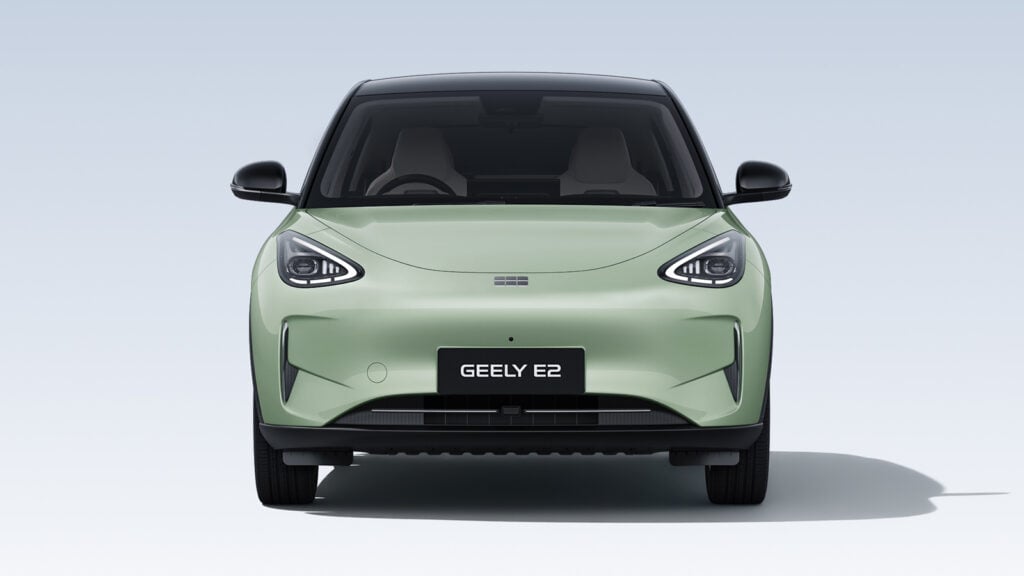
The Geely E2 is one of the most accessible electric vehicles to arrive in South Africa, and its 39.4 kWh LFP battery, 325 km WLTP range, and impressively affordable price point make it a compelling choice for everyday South African drivers. But once you’ve signed the papers and driven it home, a critical question remains: how do you charge it — and are you making the most of your charging setup?
This guide covers everything you need to know about charging your Geely E2 at home and on the road, from the free wallbox included with Geely Finance, to smart 7.4 kW upgrades, solar integration, and load-shedding resilience. We’ve done the calculations in rands, so you can make a genuinely informed decision.
TL;DR: Quick Summary
The Geely E2 comes with a free wallbox (typically 7 kW) and R7,500 charging voucher through Geely Finance. For most drivers doing under 80 km daily, the included wallbox is sufficient. Upgrading to a 7.4 kW smart charger adds load management, solar integration, and app scheduling — ideal for off-peak charging (as low as R0.20/km) and solar setups. The E2 charges 30–80% in ~25 minutes on public 70 kW DC fast chargers. Home charging costs approximately R114–R126 for a full charge at standard tariffs (R3.20–R3.55/kWh across major metros), saving over R15,000 yearly versus petrol. LFP batteries handle SA heat well and tolerate frequent fast charging without degradation.
1. The Geely E2’s Included Wallbox — What You Actually Get
If you purchase the Geely E2 through Geely Finance, you qualify for a free wallbox home charger as part of the deal, along with a R7,500 charging voucher for use on the public charging network. This is a significant value-add, but it’s worth understanding exactly what’s included before you assume it covers all your needs.
The bundled wallbox is typically a single-phase unit operating at 7.2 kW or lower — in many cases, a 3.7 kW or 7 kW unit depending on the package confirmed at point of sale. Installation is generally included up to a basic standard, meaning a straightforward wall-mount within a set cable distance from your DB board. If your garage is far from your distribution board, or you require additional conduit, trunking, or a DB board upgrade, additional costs will apply.
Key T&Cs to be aware of:
- The free wallbox offer is linked to a qualifying Geely Finance agreement — cash buyers or external finance may not qualify.
- Installation must be carried out by a Geely-approved installer. DIY installation will void the warranty.
- The R7,500 charging voucher is typically loaded onto a specific network account and may have an expiry date — confirm this with your dealer.
- Basic installation is included, but non-standard installations (trenching, long cable runs, upgraded DB protection) are for the owner’s account.
Always confirm the exact wallbox model, charging speed, and installation scope in writing with your Geely dealer before signing. For more on EV charger installation standards in South Africa, see SABS technical standards.
2. When the Included Wallbox Is Enough
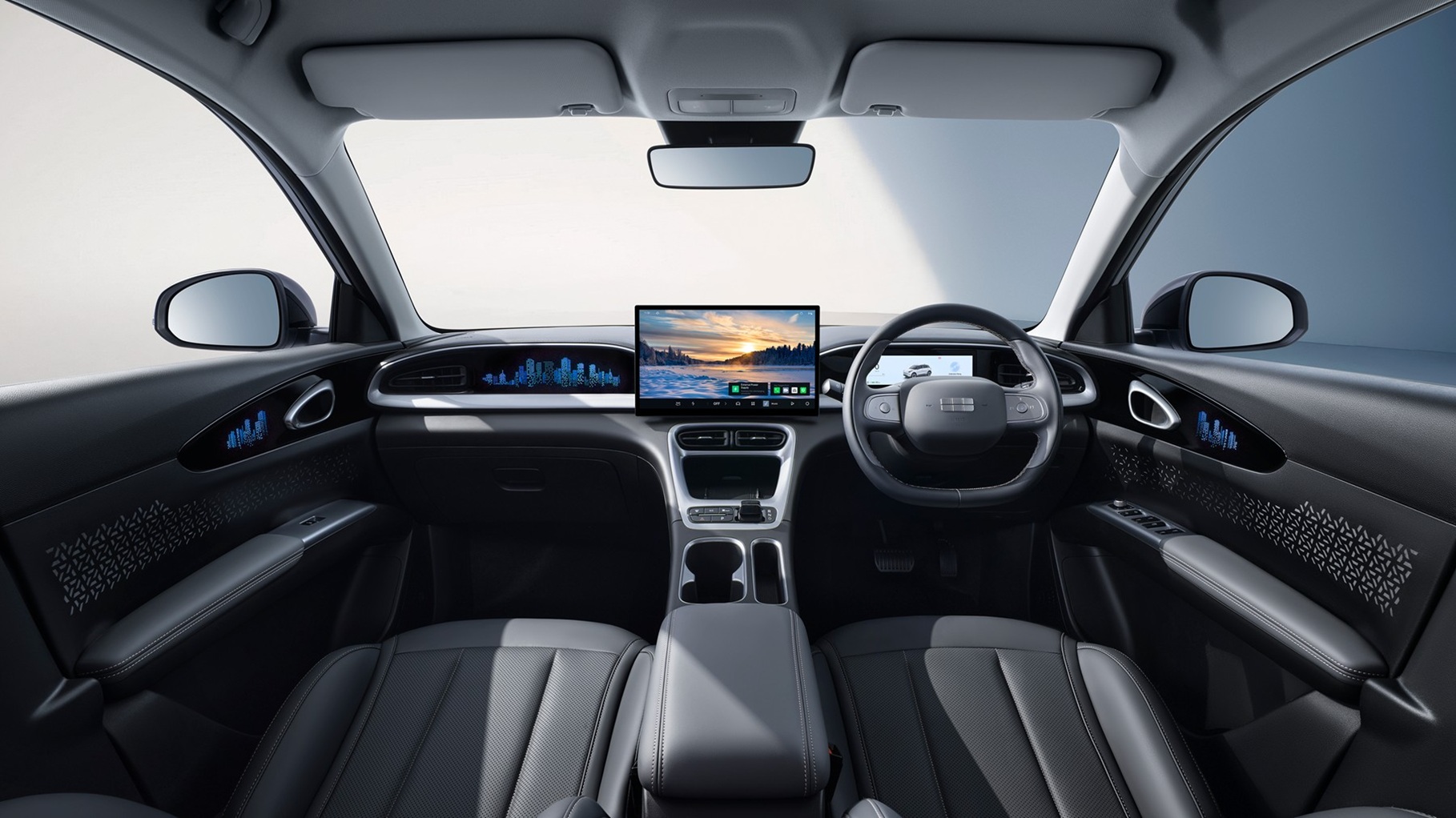
For a large portion of Geely E2 owners — particularly those in urban and suburban areas — the included wallbox will be perfectly sufficient. Here’s why.
The Geely E2’s onboard AC charger is rated at 6.6 kW. This means that even if you install a 7.4 kW or 11 kW charger, the car will only ever draw up to 6.6 kW from the wall. A 7.2 kW or 7 kW included wallbox is very close to the car’s maximum AC acceptance rate, meaning you’re not leaving much performance on the table.
If your daily commute is under 80 km per day, you’re using roughly 12–16 kWh of battery capacity (at approximately 15–20 kWh/100 km in mixed driving). At a 7 kW charge rate, you can replenish that in under 2.5 hours — well within an overnight charging window.
The included wallbox is the right choice if you:
- Drive fewer than 80 km per day on average
- Charge overnight and don’t need rapid turnaround during the day
- Have a stable single-phase electrical supply at home
- Don’t want to integrate smart charging, load management, or solar
- Are happy with basic plug-and-charge functionality without an app
Get a Quote for Your Geely E2 Charger
ChargePoint SA installs the right charger for your Geely E2 — whether you use the included wallbox or upgrade.
3. When to Upgrade: The Case for a Dedicated 7.4 kW Smart Charger
While the included wallbox does the job, a dedicated smart charger — such as a ChargePoint Home Flex or equivalent — unlocks a range of features that make a meaningful difference to the South African EV ownership experience, particularly given our unique energy environment.
Reasons to upgrade to a 7.4 kW smart charger:
Load Management
South Africa’s grid is under pressure, and even outside of formal load-shedding, many older residential properties have limited amperage available. A smart charger with dynamic load management monitors your home’s total electricity consumption in real time and automatically reduces charging speed when other appliances are running — preventing tripped breakers and avoiding the need for a costly DB board upgrade.
App Control and Scheduling
Smart chargers connect to your home Wi-Fi and allow you to schedule charging remotely via a smartphone app. This is essential for taking advantage of off-peak tariffs (see Section 6), and lets you pause, start, or adjust charging from anywhere.
Solar Integration
A smart charger can communicate with your home solar inverter to prioritise solar energy for charging, meaning you can charge your Geely E2 directly from your panels during the day. More on this in Section 7.
Energy Monitoring
Track exactly how much energy you’ve used for charging, monitor costs over time, and export data for business or tax purposes. Particularly useful for small business owners who use their E2 for work.
Warranty and Support
A branded, professionally installed smart charger typically carries a 3–5 year warranty and ongoing software support — reassuring over the long term.
4. Geely E2 Charge Time Comparison
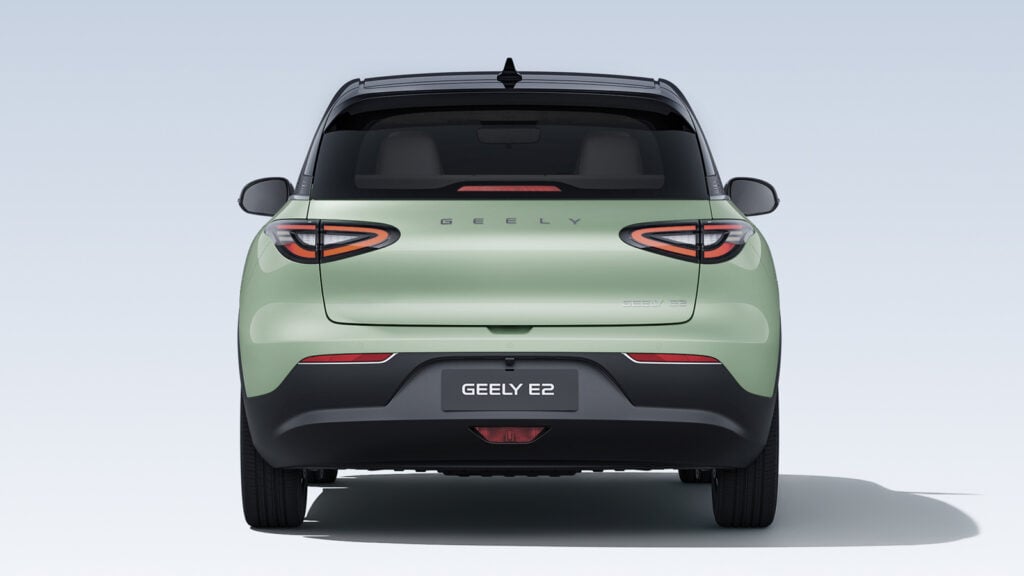
The table below shows realistic charge times for the Geely E2’s 39.4 kWh LFP battery (assuming 90% usable capacity = approximately 35.5 kWh for a practical full charge from near-empty).
| Charging Method | Power | 0–100% (est.) | 30–80% (est.) | Best For |
|---|---|---|---|---|
| Standard 3-pin plug (Mode 2) | 2.3 kW | ~15.4 hours* | ~7.7 hours | Emergency only |
| Included Wallbox (est. 7 kW) | 7 kW | ~5.5 hours | ~2.8 hours | Overnight charging |
| Smart Wallbox 7.4 kW | 7.4 kW | ~5.2 hours | ~2.6 hours | Recommended upgrade |
| Three-phase 11 kW wallbox | 6.6 kW** | ~5.5 hours** | ~2.8 hours** | Future-proofing only |
| Public DC Fast Charger (CCS2) | 70 kW | ~40 minutes | ~25 minutes | Road trips, top-ups |
*Based on 35.5 kWh usable capacity (90% of 39.4 kWh total). Full 0–100% charge of the entire 39.4 kWh battery would take ~17.1 hours at 2.3 kW, but practical charging to 90% usable takes ~15.4 hours.
**The Geely E2’s onboard AC charger is limited to 6.6 kW, so an 11 kW three-phase charger will not improve AC charge speed beyond the car’s built-in limit. The 11 kW charger is only beneficial if you plan to charge a future vehicle with a higher onboard AC charger. DC charging bypasses the onboard charger entirely.
Calculate Your Geely E2 Charging Costs
See exactly how much it costs to charge a Geely E2 at home based on your city’s electricity tariffs.
5. Cost to Charge at Home
One of the biggest advantages of driving the Geely E2 is the dramatically lower running cost compared to a petrol vehicle. Let’s break it down in real rands.
Using a national average electricity tariff of R3.20/kWh (Eskom and typical municipal tariffs for residential users in 2026), and accounting for typical municipal variations between R3.20–R3.55/kWh across major metros:
- Full charge (0–100%, ~35.5 kWh usable): approximately R114–R126 (R3.20 × 35.5 = R113.60 at lower bound; R3.55 × 35.5 = R126.03 at upper bound)
- Cost per kilometre: approximately R0.38–R0.39/km
- Compared to petrol at R23.50/litre (6L/100km): approximately R1.41/km — more than 3.5× more expensive
Over 15,000 km per year, that’s a saving of approximately R15,300 per year on fuel alone. In five years, that’s over R76,000 in fuel savings — a compelling case for switching. For current Eskom tariff structures, see Eskom’s official tariff page.
6. Off-Peak Charging Strategy: Charge Smarter, Save More
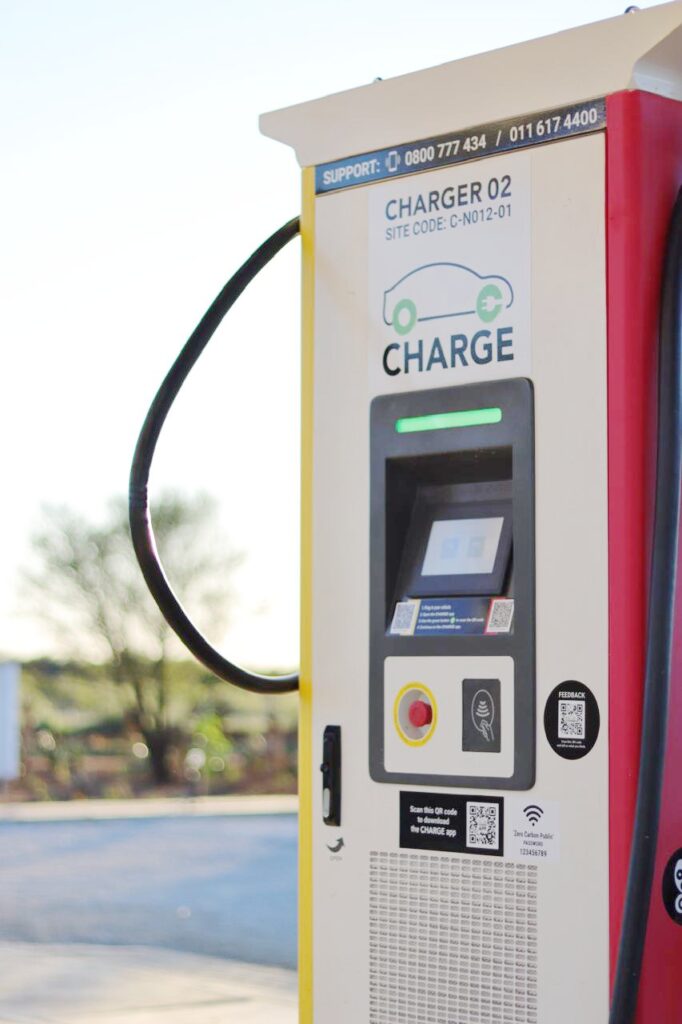
South Africa’s time-of-use tariffs offer a significant opportunity for EV owners to reduce charging costs further. Many municipalities and Eskom’s Homeflex tariff offer off-peak rates as low as R1.75–R1.89/kWh during late-night and early-morning windows (typically 22:00–06:00).
At R1.80/kWh, a full charge costs just R64 — or approximately R0.20/km. That’s extraordinary value compared to any petrol vehicle.
How to implement an off-peak charging strategy:
- Check your municipality’s tariff structure — not all areas offer time-of-use tariffs. Contact your local municipality or check your latest electricity bill.
- Install a smart charger with scheduling — set your charger to begin charging at 22:00 and complete by 06:00 via the app.
- Use the Geely E2’s onboard scheduling — some vehicles allow departure time programming so the car manages charging internally.
- Combine with load-shedding awareness — check your municipality’s load-shedding schedule and ensure your off-peak window doesn’t coincide with a Stage 4+ outage. A smart charger can be rescheduled remotely if plans change.
Load-shedding tip: LFP batteries like the one in the Geely E2 are highly tolerant of partial charges. You don’t need to charge to 100% every night — charging to 80% is excellent for battery longevity and reduces your charge window. Set a charge limit in the app and let the car top up during off-peak windows only when needed.
Find Public Fast Chargers
The Geely E2 supports 70kW DC fast charging. Find compatible stations near you.
7. Solar Integration: Charging Your Geely E2 for Free
South Africa enjoys some of the best solar irradiance in the world, and the combination of rooftop solar, a home battery backup system, and an EV charger is increasingly the gold standard for South African homeowners looking to escape Eskom dependency entirely.
If you already have — or are planning — a rooftop solar system, your Geely E2 becomes the single largest beneficiary of that investment. Here’s why:
A typical 5 kW residential solar installation in South Africa generates 20–25 kWh per day in good conditions. The Geely E2 consumes roughly 12–16 kWh for an 80 km commute. On most sunny days, your solar panels can fully cover your daily driving energy needs — essentially giving you free fuel.
Solar Charging Options for the Geely E2
Option 1: Charge directly from solar via inverter
If your inverter supports AC output (most hybrid inverters do), you can plug your wallbox into your home solar circuit. During daylight hours, your charger draws from solar generation. A smart charger with solar integration (such as those supporting communication protocols like SunSpec Modbus that link to your inverter) can automatically increase or decrease charging speed based on available solar surplus — ensuring you don’t export energy unnecessarily while your car sits in the driveway.
Option 2: Charge from battery storage overnight
If you have a battery backup system (e.g., a BYD LVL, Freedom Won, or similar), your panels can charge your home batteries during the day, and you charge your car from stored energy at night — completely off-grid. A typical 10 kWh home battery can comfortably cover an average daily commute in the Geely E2.
Option 3: Hybrid approach
Charge from solar during the day when possible, supplement with off-peak grid power at night when solar is insufficient. In most South African metros, this combination brings your effective charging cost to near zero on average.
ChargePoint smart chargers are compatible with leading South African solar inverter brands and support solar-first charging logic. Speak to our team about the right configuration for your specific solar setup. For more on residential solar integration standards, see SAPVIA guidelines.
8. Public DC Fast Charging with the Geely E2

The Geely E2 supports DC fast charging at up to 70 kW via CCS2 — the standard connector used across South Africa’s growing public charging network. This is a genuinely usable fast-charge speed that makes longer trips practical.
Real-world DC charging performance:
- 30–80% charge: approximately 25 minutes at a 70 kW+ charger
- 0–80% charge: approximately 35–40 minutes
- Replenish 150 km of range: approximately 20–25 minutes
The R7,500 public charging voucher included with your Geely Finance purchase gives you a healthy head start on public charging. At typical public DC charging rates of R6–R8/kWh, that voucher covers roughly 7–9 full charges on the public network — enough for several long-distance road trips while you settle into EV ownership.
LFP battery advantage: Unlike NMC chemistry batteries (nickel-manganese-cobalt, the chemistry used in many other EVs), the Geely E2’s LFP battery can be regularly fast-charged without significant long-term degradation. LFP cells are chemically more stable at high charge rates and high states of charge, meaning you can confidently use DC fast chargers on road trips without worrying about damaging your battery.
Finding a CCS2 charger in South Africa: Use apps such as PlugShare, ChargePoint, or Gridcars to locate CCS2-compatible fast chargers near you. The South African network is expanding rapidly along major routes including the N1, N2, N3, and N4 corridors.
9. Frequently Asked Questions
Can I charge the Geely E2 with a standard 3-pin plug?
Yes, the Geely E2 comes with a Mode 2 cable (granny charger) that allows charging from a standard 15-amp earthed socket. However, at approximately 2.3 kW, this will take around 15.4 hours for a practical full charge (to 90% usable capacity) and is not recommended as a primary charging method. It is suitable for occasional top-ups when a wallbox is not available.
Is the included wallbox a Type 2 charger?
Yes. The Geely E2’s AC charging port is a Type 2 connector, which is the South African and European standard. The included wallbox and any compatible aftermarket charger will use a Type 2 cable or socket.
Will an 11 kW charger charge the Geely E2 faster?
No. The Geely E2’s onboard charger is limited to 6.6 kW AC. Installing an 11 kW three-phase wallbox will not increase your AC charge speed beyond 6.6 kW. The 7.4 kW single-phase charger is the practical sweet spot for this vehicle. That said, an 11 kW charger may be worth considering if you plan to upgrade to a vehicle with a higher onboard AC charge rate in future.
How does load-shedding affect EV charging?
During a load-shedding outage, grid-connected chargers will not function. The best strategies are: charge overnight before your scheduled stage begins, use a solar-plus-battery setup to charge off-grid, or use your R7,500 public charging voucher for a top-up at a shopping centre or public charger during daylight hours. A smart charger with remote scheduling lets you adapt your charging plan quickly when load-shedding schedules change.
Is the Geely E2’s LFP battery good for South African conditions?
LFP (lithium iron phosphate) batteries are well-suited to South African conditions. They handle heat better than NMC batteries, degrade less from frequent fast charging, and can be charged to 100% regularly without the same longevity concerns. The trade-off is slightly lower energy density, but the 39.4 kWh pack and 325 km WLTP range are more than adequate for the majority of South African daily drivers.
Can I get the free wallbox if I pay cash for the Geely E2?
The free wallbox offer is specifically linked to a Geely Finance agreement. Cash buyers and customers using external finance may not qualify. Confirm the current promotion terms with your authorised Geely dealer, as offers may change.
What is the best ChargePoint charger for the Geely E2?
For most South African homeowners, we recommend a single-phase 7.4 kW smart charger with load management, solar integration capability, and app-based scheduling. This matches the Geely E2’s onboard charger limit, supports off-peak scheduling, and integrates with solar systems — delivering the best combination of speed, intelligence, and value. Contact the ChargePoint SA team for a free site assessment and personalised recommendation.
Ready to optimise your Geely E2 charging setup? Whether you want to make the most of the included wallbox, upgrade to a smart charger, or integrate your EV with a solar system, ChargePoint SA’s team of certified EV charging specialists is here to help. Contact us today for a free consultation and site assessment.
Continue Reading

Deprecated: File Theme without comments.php is deprecated since version 3.0.0 with no alternative available. Please include a comments.php template in your theme. in /var/www/wordpress/wp-includes/functions.php on line 6085
Leave a Reply