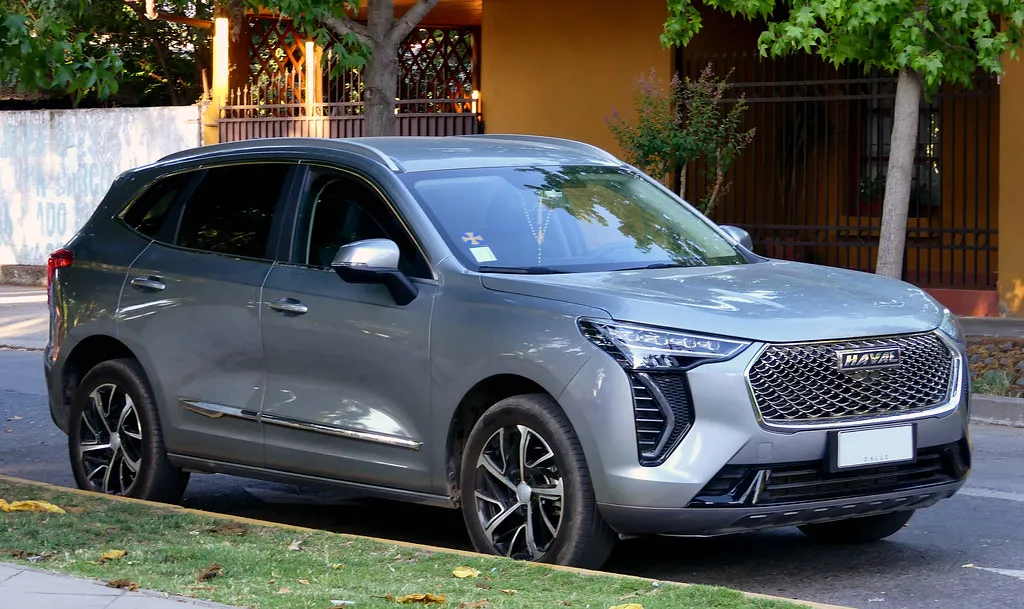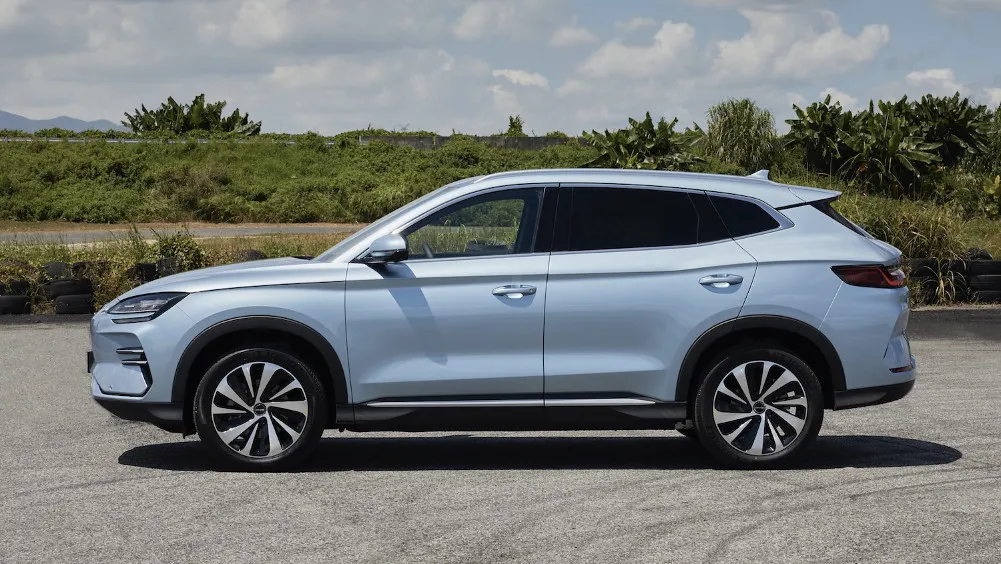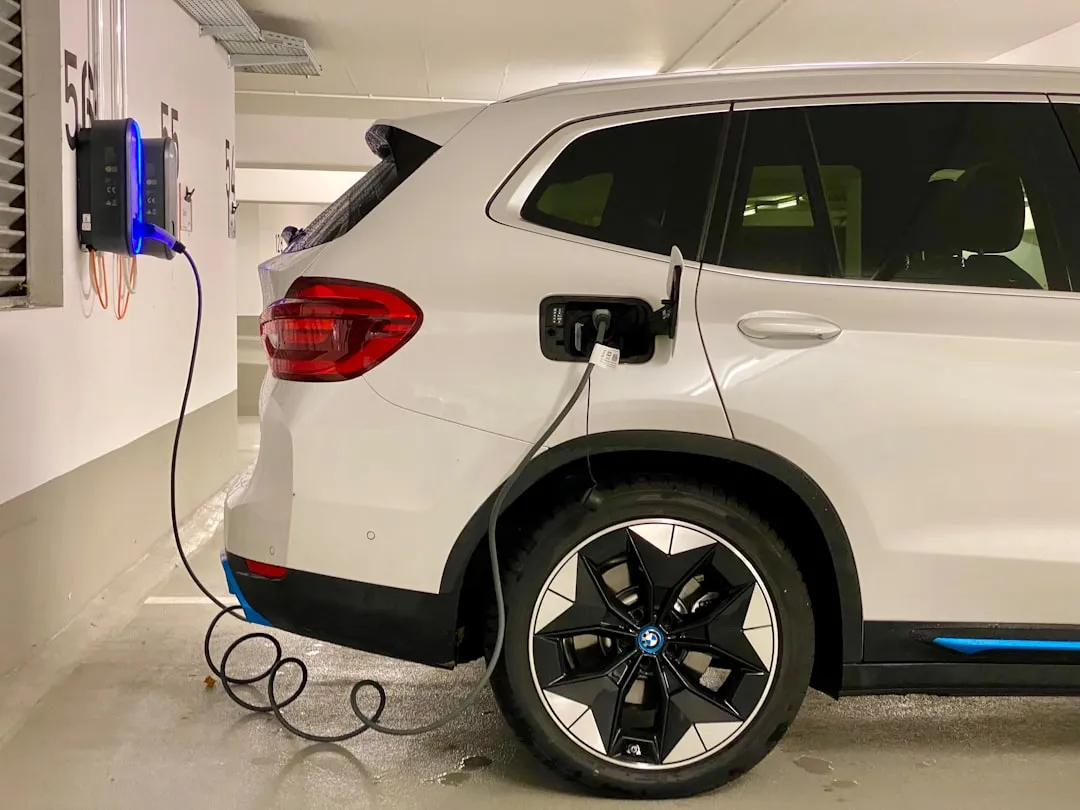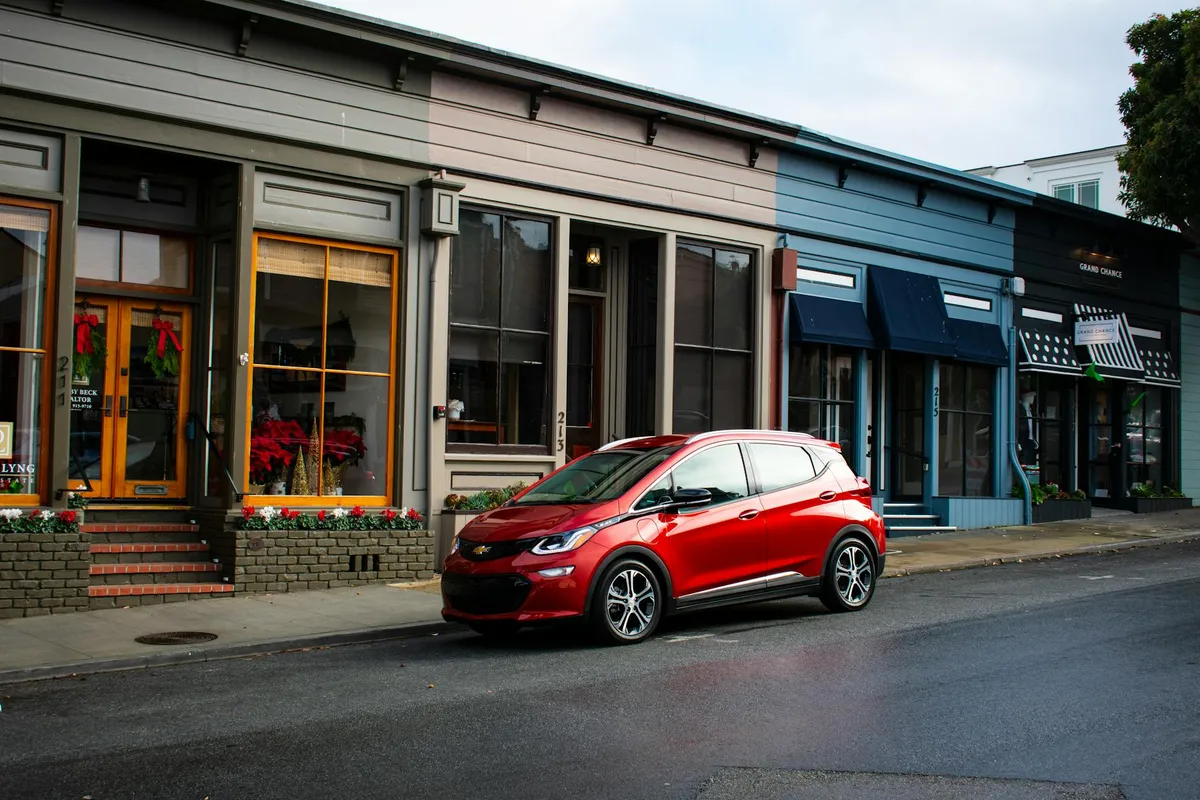

Bolt is deploying 500 electric vehicles across Cape Town by December 2026 through a partnership with YugoRide, centred on Dongfeng Box and 007 models—the first large-scale EV ride-hailing operation in the Western Cape. The May 2026 launch follows Uber’s deployment of 70 Henrey Minicar EVs in Johannesburg in late November 2025, which scaled to 350 vehicles by January 2026 with Valternative Energy’s 60-second battery-swap network.

The Bolt electric vehicle Cape Town launch signals a geographic and strategic shift: while Uber proved the commercial EV model in Gauteng with battery-swap infrastructure, Bolt is betting on the Western Cape’s more stable grid and existing public charging network to support a larger, faster rollout. As one Reddit user on r/electriccars observed, “the biggest shift is happening in large cities, where electric vehicles are gradually becoming not just an alternative, but a logical choice for clear reasons: petrol is expensive, city trips are short, there is home or reliable public charging.”
What happened: Bolt brings electric ride-hailing to Cape Town with Dongfeng fleet
Bolt’s May 2026 Cape Town launch introduces a different infrastructure model than Uber’s Johannesburg rollout. Rather than building dedicated battery-swap stations, Bolt is partnering with YugoRide to deploy 500 Dongfeng electric vehicles by December 2026, relying on Cape Town’s expanding public charging network and the Western Cape’s more stable electricity supply. The fleet will comprise Dongfeng Box compact EVs and Dongfeng 007 E1 620 sedans (73.5 kWh, 620 km range, 200 kW DC charging capability, R859,000), offering drivers longer range and faster charging than Uber’s Henrey Minicars.
The economics mirror Uber’s Gauteng experience. Drivers can expect fuel cost savings of 30–40% compared to petrol vehicles—a margin that matters when clocking 200+ km per day. As u/TallWall6378 noted about commercial EV use: “My average daily mileage is around 45. I live 10 miles from town and usually make about 6 job site and supplier stops around town per day… My night time electrical rate is $.09/kWh… Gas transit, basically identical load, route, driver, got 14 MPG.” The same logic applies to ride-hailing: short urban trips, predictable routes, and off-peak charging create ideal conditions for fleet electrification.
Uber set the template in Johannesburg
Uber Go Electric’s November 2025 launch wasn’t just about adding a few EVs to the fleet—it introduced a fundamentally different charging model. Partnering with Valternative Energy, Uber deployed battery-swap stations across Gauteng that allow drivers to exchange depleted packs for fully charged ones in under 60 seconds. The initial 70 Henrey Minicars scaled to 350 vehicles by January 2026, supported by WattSpot’s dedicated fleet charging network, which recorded 18,884 sessions and dispensed 205,845 kWh across three Gauteng sites in its first three months.
Bolt’s Cape Town approach differs in key ways: the 500-vehicle target is 43% larger than Uber’s current Gauteng fleet, the Dongfeng models offer significantly longer range (620 km vs ~200 km for Henrey Minicars), and the reliance on public charging rather than proprietary swap stations means lower infrastructure costs but potentially longer charging stops. The broader e-hailing sector received a regulatory boost in September 2025 when the amended National Land Transport Act formally recognised e-hailing as legal public transport—ending years of regulatory limbo. Drivers must now obtain operating licences and install panic buttons, while platforms face R100,000 fines for unlicensed drivers. The new framework gives fleet operators like Bolt the certainty needed to invest in long-term EV infrastructure.

Background: why commercial fleets are electrifying faster than private buyers
South Africa’s EV market has long been a story of slow private adoption and rapid infrastructure build-out. Consumer EV sales remain modest—roughly 1–3% of total vehicle sales—but plug-in hybrid (PHEV) sales jumped 280% in 2025 versus 2024, reflecting persistent range anxiety. Yet commercial operators are committing to EVs at scale, driven by total-cost-of-ownership calculations rather than range fears.
The pattern is visible globally. As u/Fragrant-System-7755 observed: “In my area I’m seeing: Electric taxi cars pretty regularly Delivery vans (local courier services, grocery delivery) Some municipal vehicles Even non-emergency medical transport (NEMT) switching parts of their fleets… the shift isn’t just consumer-driven anymore – fleets seem to be moving too. And honestly, that might matter more long term than individual adoption.”
In South Africa, that shift is accelerating. Golden Arrow Bus Services operates 30 high-speed charging stations (150–240 kW Autel MaxiCharger DC Fast units) at Cape Town’s Arrowgate Depot, expanding to 50 units by end-2025 to support 120 electric buses. Meanwhile, CHARGE secured R114-million DBSA funding for solar-powered EV truck charging along the N3 corridor, with two stations expected by June 2026. The common thread: operators with predictable routes and centralised charging can monetise EV economics immediately.
Policy tailwinds: tax incentives and regulatory clarity
Government support is finally catching up to market momentum. President Ramaphosa signed a 150% tax deduction for EV manufacturers into law on 24 December 2024, effective 1 March 2026. The incentive allows manufacturers to claim a 150% deduction on new-energy-vehicle (NEV) production facilities for 10 years. Three Chinese automakers have entered non-disclosure agreements with NAAMSA, signalling potential local assembly investment.
The September 2025 e-hailing regulations add another layer of certainty. Platforms can now plan multi-year fleet investments without fearing legal challenges from taxi associations or municipal authorities. For Uber, Bolt, and future entrants, that regulatory clarity is as important as charging infrastructure.
The numbers: charging infrastructure is scaling fast
South Africa’s public charging network grew 122% between 2022 and 2025, maintaining a 1:7 EV-to-charger ratio—better than the global 1:10 benchmark. By mid-2025, over 500 public stations were operational across all charge-point operators. The pace is accelerating:
| Operator | Current footprint | 2026 plans |
|---|---|---|
| GridCars | 450+ public AC/DC stations (650 chargers, 1,200+ connectors) as of late 2025 | New 75% investor (Energex) to accelerate scaling |
| Rubicon | 103 public stations + 20 OEM dealership stations (Feb 2026); 625 MWh dispensed in 2025 (up 142%) | 11 new Eastern Cape stations (9 DC fast) added Jan–Feb 2026 |
| BYD Flash | None yet | 200–300 megawatt-level stations (up to 1,000 kW) by end-2026, starting Q2 at dealerships |
| CHARGE | Limited pilot sites | 120 passenger + 120 truck stations by 2026; 2 N3 ultra-fast sites by June 2026 |
| WattSpot | 3 Gauteng fleet sites (18,884 sessions, 205,845 kWh in 3 months) | 200+ charge points nationally by 2027; Durban expansion next |
BYD’s 1MW Flash network is the headline act: the company plans to blanket South Africa with 200–300 megawatt-scale stations by year-end 2026, starting at BYD dealerships in April or May. At 1,000 kW peak output, a Flash charger can add 400 km of range in under 10 minutes to compatible vehicles—eliminating the “charging wait” that has long deterred commercial operators.

What this means for SA EV buyers and ride-hailing drivers
For private buyers: watch the used fleet market
If you’re shopping for an EV in 2026, the Uber and Bolt electric vehicle fleet rollouts will indirectly shape your options. Fleet vehicles typically cycle out after 3–5 years, creating a secondary market of high-mileage, well-maintained EVs at steep discounts. The Dongfeng models in Bolt’s Cape Town fleet will eventually enter the used market, while the infrastructure they’re driving—WattSpot’s 200+ charge points by 2027, BYD’s Flash network—will serve private owners too.
Price compression is already visible at the entry level. BYD’s Dolphin Surf launched in September 2025 at R389,900 (38.8 kWh, 295 km WLTP), undercutting the Dayun S5 and becoming SA’s most affordable EV. The standard BYD Dolphin Premium Extended Range (60.48 kWh, 427 km) sits at R602,900, while the Atto 3 Extended Range (60.48 kWh, 420 km) costs R783,900. These are the models likely to trickle into fleet service—and eventually, the used market.
For ride-hailing drivers: how to evaluate EV economics
If you’re an Uber or Bolt driver considering an EV, the 30–40% fuel savings cited by Uber Go Electric drivers are real—but only if you have access to affordable charging. Here’s the calculation framework:
- Daily mileage: 200 km is typical for full-time drivers. At 15 kWh/100 km (realistic urban consumption), that’s 30 kWh per day.
- Charging cost: Off-peak charging at public stations or home installations varies widely by location and time of use. Calculate your specific costs based on your charging access.
- Petrol equivalent: 200 km at 7 ℓ/100 km = 14 ℓ. Compare current petrol prices in your area to your charging costs.
- Savings: The 30–40% savings Uber reports in Gauteng translate to substantial monthly reductions in operating costs for high-mileage drivers.
Battery-swap networks like Valternative’s change the equation by eliminating home-charging dependency, but subscription costs aren’t yet public. Bolt’s Cape Town model relies on public charging and the Dongfeng 007’s 200 kW DC fast-charging capability (26 minutes for 30–80%), meaning drivers will need to plan charging stops rather than quick swaps. If you’re financing an EV, factor in the higher upfront cost: a BYD Dolphin at R602,900 or a Dongfeng 007 at R859,000 costs significantly more than a comparable petrol vehicle, though fuel savings accumulate quickly at ride-hailing usage levels.
Stakeholder reactions: automakers, government, installers
Automakers: racing to capture fleet demand
BYD’s dominance is hard to miss—the brand became SA’s #1 EV seller by Q4 2025, driven by aggressive pricing and the upcoming Flash charging network. But Chinese rivals are circling. Dongfeng’s 007 E1 620 (73.5 kWh, 620 km, 200 kW DC charging, R859,000) launched in December 2025, and Bolt’s selection of Dongfeng Box and 007 models for its Cape Town fleet gives the brand immediate visibility in the ride-hailing market. GWM’s Ora 03 400 Ultra Luxury (63 kWh, 420 km, R835,950) and Volvo’s EX30 Single Motor Extended Range (476 km WLTP, R835,500) offer European and Chinese alternatives at similar price points.
The 150% NEV manufacturing tax deduction is the wildcard. If Chinese OEMs commit to local assembly, fleet pricing could drop 15–20% within 24 months, making EVs cost-competitive with petrol vehicles on sticker price alone.
Government: cautious optimism
The Department of Transport’s September 2025 e-hailing regulations signal acceptance of EVs in the public-transport mix, but municipal electricity tariffs remain a friction point. NERSA approved an 8.76% increase for April 2026—moderate compared to recent years, but still eroding the EV cost advantage incrementally. Off-peak charging remains far cheaper than petrol per kilometre, but the gap is narrowing.
Installers: commercial fleets are the growth engine
For charge-point operators like GridCars, Rubicon, and new entrants, commercial fleet contracts offer predictable revenue streams that residential installs can’t match. WattSpot’s 18,884 sessions in three months—averaging 210 sessions per day across three sites—demonstrate the utilisation rates fleet charging can achieve. That’s why GridCars welcomed a new 75% investor in January 2026: scaling to meet fleet demand requires capital, and the business case is finally proven.
What’s next: three things to watch in 2026
1. BYD’s Flash network rollout (Q2 2026)
If BYD delivers 200–300 megawatt-scale stations by year-end 2026 as promised, South Africa will leapfrog most African markets in charging density. The first installations at BYD dealerships in April or May will set the benchmark for charging speed and reliability. Watch for partnerships with fuel retailers—if BYD can co-locate Flash chargers at Engen or Shell forecourts, the psychological barrier between “petrol station” and “charging station” collapses.
2. Bolt’s Cape Town fleet expansion and Johannesburg entry
Bolt’s 500-vehicle Cape Town target by December 2026 is ambitious—43% larger than Uber’s current Gauteng fleet. The YugoRide partnership and Dongfeng Box/007 fleet composition will be tested against Cape Town’s public charging infrastructure and driver economics. If the model succeeds, expect Bolt to announce Johannesburg expansion plans by late 2026, setting up direct competition with Uber’s established battery-swap network. The key variable is charging infrastructure—whether Bolt partners with WattSpot, builds its own network, or relies solely on public chargers will determine driver downtime and profitability.
3. NEV manufacturing announcements (post-March 2026)
The 150% tax deduction goes live 1 March 2026. If Chinese OEMs announce local assembly plants by mid-2026, expect a flood of sub-R500,000 EVs by 2027–2028. That would fundamentally alter the fleet economics, making EVs the default choice for ride-hailing rather than a premium option.

Ready to charge smarter?
If you’re considering an EV—or already own one—now’s the time to future-proof your charging setup. ChargePoint SA installs home and commercial charging solutions across South Africa, from 7.4 kW AC units for overnight top-ups to 22 kW three-phase systems for high-mileage drivers. We work with body corporates, fleet operators, and homeowners to design charging infrastructure that scales with your needs. Get a free site assessment and see what’s possible at your location.
Image credits
“Dark Days Ahead: Eskom Rolling Blackouts and Loadshedding” by Axel Bührmann (CC BY 2.0, via flickr) · “Eskom – they’re rolling blackouts, dammit” by Axel Bührmann (CC BY 2.0, via flickr) · “Eskom en Eksdom” by Axel Bührmann (CC BY 2.0, via flickr) · “Green Machine” by jurvetson (CC BY 2.0, via flickr)