
Eskom’s Mkondeni pilot station went live in August 2024 with 60kW DC fast chargers — but if you’re driving more than 50km daily in Pietermaritzburg, waiting in queue at the city’s handful of public chargers isn’t a long-term strategy. Home charging setups cost R12,000-R25,000 installed and pay for themselves in 6-12 months through fuel savings, making them the foundation of practical EV ownership in KZN.
With Pietermaritzburg’s municipal electricity tariff at R3.12/kWh, overnight charging costs roughly 50-60 cents per kilometre versus R1.92/km for petrol. This guide walks you through every rand, every regulation, and every practical consideration for a certified EV charger installation in Pietermaritzburg in 2026.

Why install an EV charger in Pietermaritzburg?
Pietermaritzburg sits in a unique position within South Africa’s EV adoption curve. The city’s temperate climate (average 17-25°C year-round) is kinder to lithium-ion battery longevity than Gauteng’s temperature extremes. Most residential properties feature single garages or carports with direct access to municipal electricity — ideal for wall-mounted AC chargers. And with record EV sales in March 2026 hitting 389 units nationally and the BYD Dolphin Surf now priced at R339,900, the barrier to EV ownership has dropped substantially.
But here’s the catch: KwaZulu-Natal remains underserved by public charging infrastructure compared to Gauteng and the Western Cape. As of early 2026, Eskom operates a pilot station at Mkondeni with 60kW DC fast chargers and 22kW AC chargers, and GridCars maintains 445 sites nationally representing 650 chargers — but the density in Pietermaritzburg proper is thin. For daily commuters driving the N3 corridor to Durban or navigating the city’s hilly suburbs, home charging isn’t just convenient — it’s the foundation of reliable EV ownership.
The economics: municipal tariff vs petrol
Pietermaritzburg’s municipal electricity rate of R3.12/kWh translates to roughly 50-60 cents per kilometre for a typical EV consuming 16-18 kWh/100km. Compare that to a petrol vehicle averaging 8L/100km at R24/L: you’re paying R1.92 per kilometre. The savings are immediate and measurable — charging a 60kWh battery from 20% to 80% (36kWh usable) costs R112 and delivers approximately 250km of range. The same distance in a petrol car costs R480.
Factor in NERSA’s 9.01% municipal tariff increase effective 1 July 2026, and that R3.12/kWh climbs to roughly R3.40/kWh by year-end. Even at the higher rate, home charging remains 75% cheaper than petrol per kilometre. If you drive 100km daily, the annual fuel saving is approximately R51,000 — enough to recover a R20,000 charger installation in under five months.

The installation process in Pietermaritzburg: step-by-step
Every compliant EV charger installation in South Africa follows a five-stage process governed by SANS 10142-1 (Low-voltage installations) and overseen by a registered electrician. Here’s what happens in Pietermaritzburg specifically:
1. Site assessment
A qualified installer visits your property to evaluate three critical factors: your distribution board (DB) capacity, the cable run from the DB to the proposed charger location, and your earth-leakage protection. Pietermaritzburg homes built before 2000 often have 60A single-phase mains; newer developments may have 80A or 100A single-phase, and some estates offer three-phase supply. The installer measures voltage drop over the cable run (typically 10-25 metres from garage to DB) and checks whether your existing earth leakage can handle the additional 16A or 32A continuous load.
2. DB board upgrade (if required)
If your DB board lacks spare ways (circuit slots) or your main breaker can’t support a 7.4kW charger (32A at 230V), the electrician will install a dedicated sub-board or upgrade the main board. This adds R3,000-R8,000 to the project depending on complexity. Three-phase homes have an advantage here: a 22kW charger (32A per phase) distributes the load evenly, reducing strain on any single phase.
3. Charger installation and wiring
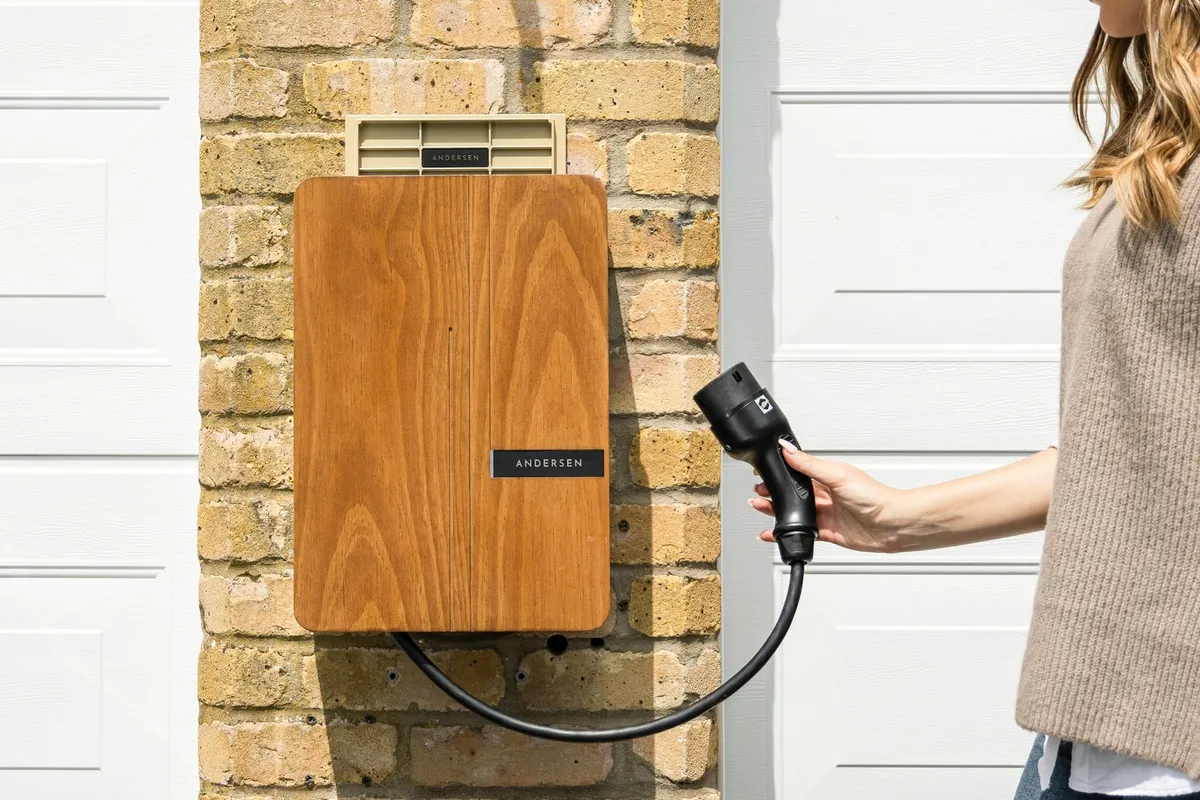
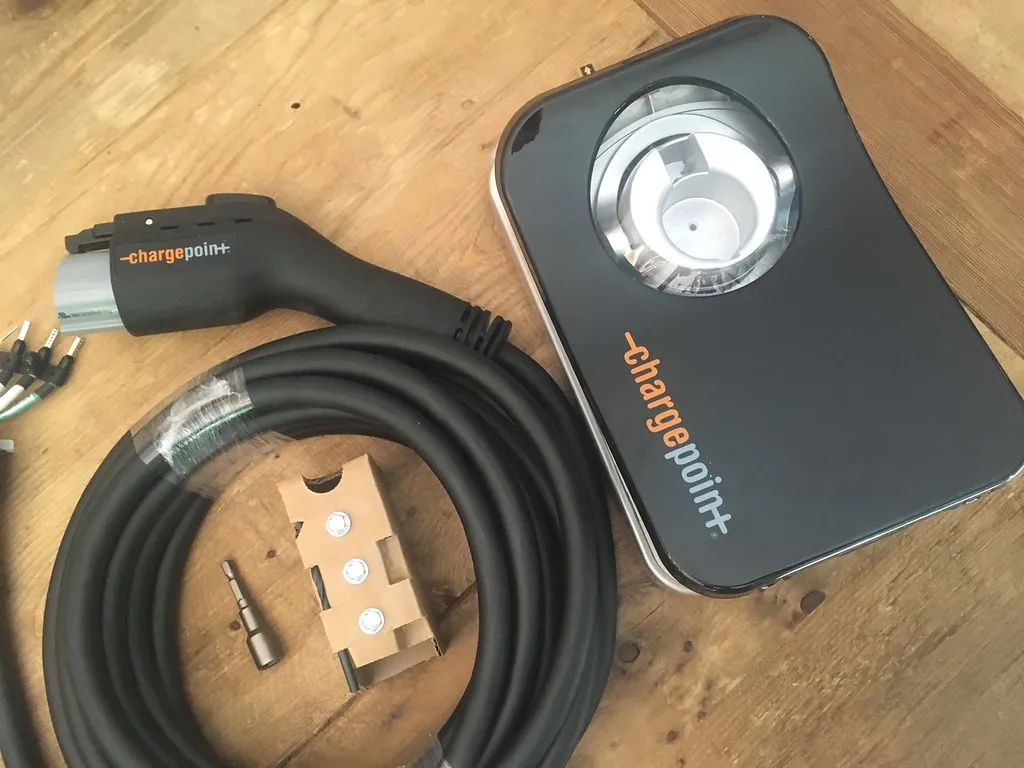
The electrician runs 4mm² or 6mm² copper cable (depending on current and distance) from the DB to the charger mounting point, installs a dedicated 40A Type B RCD (residual current device), and mounts the wall unit. SANS 10142-1 mandates that EV charging circuits must have independent earth-leakage protection — your existing household RCD isn’t sufficient. The charger itself is typically a tethered unit (cable attached) or a socket-only unit; tethered models are more common in SA because they eliminate the need for a separate Type 2 cable.
4. Certificate of Compliance (CoC)
Once wiring is complete, the electrician conducts insulation resistance tests, earth continuity tests, and polarity checks, then issues a CoC. This document is legally required and must be submitted to the Msunduzi Municipality if you’re within the Pietermaritzburg municipal boundary. CoC fees range from R500-R1,500 depending on the installer. Keep this certificate — it’s essential for insurance claims and future property sales.
5. Commissioning and app pairing
The installer connects the charger to your home Wi-Fi (if it’s a smart unit), pairs it with the manufacturer’s app, and runs a test charge. Modern units let you schedule charging windows to avoid load-shedding slots or take advantage of off-peak rates. The entire process from site assessment to commissioning takes 1-3 days for straightforward installs, longer if DB upgrades or trenching are needed.

Typical pricing in Pietermaritzburg (2026)
Here’s what a certified home EV charger installation costs in Pietermaritzburg as of mid-2026, broken down by component:
| Component | Cost range (ZAR) | Notes |
|---|---|---|
| 7.4kW AC charger (32A, single-phase) | R8,000 – R12,000 | Tethered Type 2, basic smart features |
| 22kW AC charger (32A, three-phase) | R14,000 – R18,000 | Requires three-phase supply |
| Installation labour | R5,000 – R10,000 | Standard garage mount, <20m cable run |
| DB board upgrade (if needed) | R3,000 – R8,000 | New sub-board or main breaker replacement |
| Type B RCD (40A) | R1,200 – R2,000 | Mandatory for EV circuits per SANS 10142-1 |
| Certificate of Compliance | R500 – R1,500 | Issued by registered electrician |
| Total (typical single-phase) | R12,000 – R25,000 | Includes hardware, labour, CoC |
These figures align with national averages for 2026. Pietermaritzburg pricing sits slightly below Johannesburg and Cape Town due to lower labour rates, but expect to pay a premium if your property requires trenching across a long driveway or if your DB board is outdated.
What drives cost variation?
Three factors account for most price swings: cable run length (every additional 10 metres adds R800-R1,500 in materials and labour), DB board condition (older boards often need full replacement rather than simple upgrades), and charger features (units with load management, solar integration, or OCPP compatibility cost R3,000-R6,000 more than basic models). If you’re planning to add solar in the next 12-24 months, invest in a solar-ready charger now — retrofitting costs more.
Single-phase vs three-phase supply in Pietermaritzburg
Most residential properties in Pietermaritzburg receive single-phase 230V supply at 60A or 80A. This limits you to a 7.4kW charger (32A), which delivers roughly 40km of range per hour of charging — sufficient for overnight top-ups if you’re driving under 200km daily. A 60kWh battery charges from 20% to 80% in approximately 6 hours on a 7.4kW unit.
Three-phase supply (400V, 32A per phase) is more common in newer estates, industrial areas, and properties with workshop facilities. A 22kW three-phase charger delivers 120km of range per hour — three times faster than single-phase. But here’s the catch: upgrading from single-phase to three-phase costs R15,000-R30,000 and requires municipal approval, new cabling from the street transformer, and a new meter. Unless you’re driving a high-mileage vehicle (Uber, delivery fleet) or charging multiple EVs, the payback period on a three-phase upgrade is 3-5 years. For most Pietermaritzburg homeowners, single-phase is adequate.
Which phase supply do you have?
Open your DB board and count the incoming cables at the main breaker. Single-phase has two thick cables (live and neutral) plus an earth. Three-phase has four thick cables (three lives and a neutral) plus earth. If you’re unsure, your municipal electricity bill will state “Single Phase” or “Three Phase” near the tariff breakdown.

Load-shedding and solar pairing in Pietermaritzburg
Load-shedding remains a reality in 2026 despite improved Eskom performance. Pietermaritzburg typically experiences Stage 1-2 during winter peak demand, with 2-4 hour outages per day. If your EV is your primary vehicle and you can’t charge at work, you have three options:
Option 1: Smart scheduling (free)
Most modern EV chargers let you set charging windows. Check your municipal load-shedding schedule (Msunduzi publishes a monthly calendar) and program the charger to start only during grid-available hours. A 7.4kW charger delivers 40km/hour, so a 4-hour window between 11pm and 3am adds 160km of range — enough for most daily commutes. This costs nothing but requires discipline.
Option 2: Solar + battery (R80,000-R150,000)
A 5kW solar array with a 10kWh lithium battery costs R80,000-R120,000 installed. This setup charges the battery during the day, then powers your home and EV charger during load-shedding. Pietermaritzburg receives approximately 5.2 peak sun hours daily (annual average), so a 5kW array generates 26kWh per day — enough to charge an EV and run essential household loads. Payback period is 5-7 years when factoring in both fuel savings and grid independence. If you’re already considering solar for household use, adding EV charging to the system is a marginal cost increase.
Option 3: Hybrid approach
Install the EV charger now, add solar later. Many installers offer solar-ready chargers with built-in load management — when the sun is shining and your solar inverter has excess capacity, the charger draws from solar first, then tops up from the grid. This staged approach spreads the capital outlay over 12-24 months while still delivering immediate fuel savings.
Public charging options in Pietermaritzburg
If you’re not ready to commit to a home installation, Pietermaritzburg’s public charging network is growing — albeit slowly. As of mid-2026, your options include:
- Eskom Mkondeni pilot station: Launched August 2024, this site offers 60kW DC fast charging (80% in 30-45 minutes for most EVs) and 22kW AC charging. Tariffs are competitive but expect queues during peak hours.
- GridCars network: GridCars operates 445 sites nationally with over 1,200 connectors. Pietermaritzburg has two confirmed GridCars locations (Liberty Midlands Mall and one N3 service station). Standard tariffs as of August 2025 are R7.35/kWh for DC fast charging and R5.88/kWh for AC — more than double home charging rates.
- Shell Recharge: Shell has announced plans to expand its Recharge network into KZN by late 2026, with Pietermaritzburg earmarked for at least one site. No confirmed locations yet.
Public charging works if you drive under 50km daily and can top up during shopping trips or gym visits. But as u/walkaboutdavid noted on r/electricvehicles: “I’ve found EVs just a joy to drive: the instant torque, smooth engine, lack of transmission shifts, low centre of gravity. So, even looking past the fuel issues, I doubt I could ever go back.” That joy diminishes when you’re planning your day around charger availability. For drivers covering 100km+ daily, home charging is non-negotiable.
Common mistakes Pietermaritzburg homeowners make
After reviewing dozens of installations across KZN, five mistakes appear repeatedly:
1. Skipping the site assessment
Some homeowners buy a charger online, then discover their DB board can’t support it or the cable run exceeds 30 metres. Always get a site assessment before purchasing hardware. Reputable installers offer free assessments and will spec the right charger for your electrical infrastructure.
2. Choosing the cheapest charger
A R6,000 no-name charger from an online marketplace might work for six months, then fail without support. Stick to a charger backed by a local installer network — the ChargePointSA CP-AC7-CP is supplied and supported through our own team, so there is one number to call if anything goes wrong, not a call centre in another country.
3. Ignoring future solar plans
If there’s any chance you’ll add solar in the next two years, spend an extra R3,000 on a solar-ready charger with load management. Retrofitting solar integration later costs more and may require a charger replacement.
4. Undersizing the charger
A 3.6kW charger (16A) costs R2,000 less than a 7.4kW unit but takes twice as long to charge. If you drive 150km daily, a 3.6kW charger can’t keep up with overnight charging — you’ll arrive home at 6pm with 30% battery, plug in, and wake up at 6am with 70%. A 7.4kW unit gets you to 100%. Don’t save R2,000 today only to regret it for five years.
5. DIY installation
South African law requires a registered electrician to issue a CoC for any electrical work. A DIY install voids your home insurance, violates SANS 10142-1, and creates a fire risk. The R5,000-R10,000 you save isn’t worth the liability.

Frequently asked questions
How long does a full install take in Pietermaritzburg?
Site assessment: 1 hour. Installation (if no DB upgrade needed): 4-6 hours. CoC processing: same day. Total elapsed time: 1-2 days for straightforward installs. If a DB upgrade is required, add 1-2 days. If trenching or conduit work is needed, add 2-3 days.
Can I install a charger in a complex or estate?
Yes, but you need written permission from the body corporate or homeowners’ association. Most complexes require you to use their approved electrical contractor and may charge an administration fee (R500-R2,000). Check your lease or title deed for clauses about electrical modifications.
What if I don’t have a garage?
You can mount a charger on an external wall under a carport, but it must be weatherproof (IP54 rating minimum) and the cable must be secured to prevent theft. Some Pietermaritzburg installers recommend a lockable charging post for open parking bays. Add R2,000-R4,000 for a weatherproof enclosure.
Do I need a smart charger or is a basic unit fine?
A basic “dumb” charger works — plug in, it charges at full power until the car is full. But a smart charger (R2,000-R4,000 more) offers scheduling, energy monitoring, and remote start/stop via an app. Given Pietermaritzburg’s load-shedding reality, the scheduling feature alone justifies the premium.
Can I charge during load-shedding with a generator?
Technically yes, but most petrol generators (5-8kW) can’t sustain the continuous 7.4kW load of an EV charger. You’d need a 10kW+ diesel generator (R30,000-R50,000) and a changeover switch (R5,000-R8,000). At that cost, a solar + battery system makes more financial sense.
What’s the lifespan of a home EV charger?
Quality AC chargers last 10-15 years with minimal maintenance. The main wear item is the charging cable (the tethered part), which may need replacement after 5-7 years of daily use. Replacement cables cost R2,000-R4,000 depending on the brand.
Ready to charge smarter in Pietermaritzburg?
Home EV charging isn’t just about convenience — it’s about taking control of your fuel costs, your daily routine, and your environmental footprint. With Pietermaritzburg’s R3.12/kWh municipal tariff, a certified installation pays for itself in under a year for most drivers. And as BYD rolls out 200-300 megawatt charging stations by end-2026 and networks like CHARGE expand solar-powered off-grid infrastructure, the public charging landscape will improve — but home charging will remain the foundation of practical EV ownership in KZN.
Get a free Pietermaritzburg site assessment from ChargePoint SA today. We’ll evaluate your DB board, measure your cable run, spec the right charger for your vehicle and electrical supply, and deliver a fixed-price quote with no hidden fees. Request your free assessment here — most quotes are delivered within 24 hours, and installations are completed within a week of approval.

Image credits
“ChargePoint EV Full” by earthandmain (CC BY-SA 2.0, via flickr) · “Setting JuiceBox Install” by earthandmain (CC BY-SA 2.0, via flickr) · “ChargePoint Home Charger Installed” by ken fields (CC BY-SA 2.0, via flickr) · “ChargePoint Home Charger Out Of Box” by artisanalpv (CC BY-SA 2.0, via flickr) · “Closer ChargePoint Install At Home” by ken fields (CC BY-SA 2.0, via flickr) · “Electric car charger” by Janitors (CC BY 2.0, via flickr)