
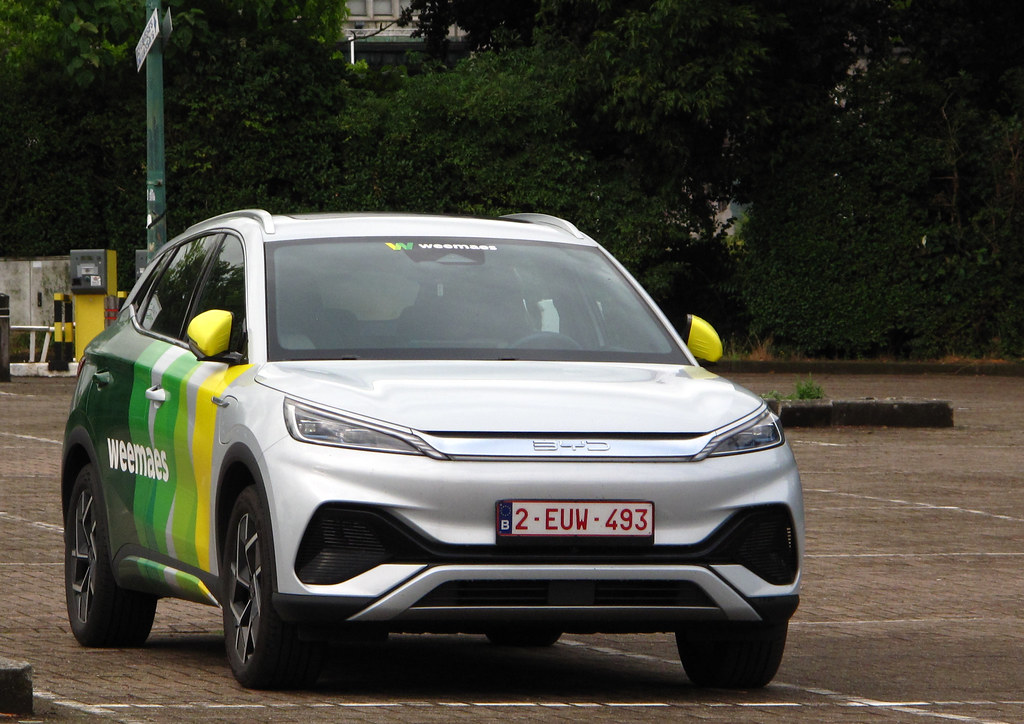
BYD Atto 3 vs Haval Jolion 1.5T: Which Should You Buy in 2025?
Considering switching to an EV? This comprehensive comparison between the BYD Atto 3 and the Haval Jolion 1.5T will help you make the right decision for your wallet and lifestyle in South Africa. We’ve analysed purchase prices, fuel costs, maintenance expenses, and total cost of ownership over 5 years to give you the complete picture.
📊 Quick Comparison Overview
| Feature | BYD Atto 3 | Haval Jolion 1.5T |
|---|---|---|
| Purchase Price | R689,900 | R450,000 |
| 5-Year Fuel Cost | R55,546 | R122,475 |
| 5-Year Maintenance | R15,000 | R40,000 |
| Total Cost of Ownership | R760,446 | R612,475 |
| Winner | Haval Jolion 1.5T wins by R147,971 lower total cost | |
💰 The Real Cost: 5-Year Ownership Analysis
When comparing these two popular SUVs, the numbers reveal an interesting story. While the BYD Atto 3 costs R689,900 upfront compared to the Haval Jolion 1.5T’s R450,000, the running costs differ dramatically. However, the higher purchase price of the EV means the petrol vehicle comes out ahead on total cost of ownership over 5 years.
Understanding the Total Cost Picture
The Haval Jolion 1.5T has a lower total cost of ownership at R612,475 compared to the BYD Atto 3’s R760,446 over 5 years. This R147,971 difference works out to approximately R2,466 per month in favour of the petrol vehicle, primarily due to the R239,900 lower purchase price.
While the BYD Atto 3 delivers substantial savings on fuel and maintenance—totalling R91,929 over 5 years—these operational savings aren’t sufficient to overcome the significant upfront price premium within a 5-year ownership period. The petrol Jolion remains the more economical choice for buyers planning to keep their vehicle for 5 years or less.
Fuel Costs Breakdown
- BYD Atto 3 electricity cost: R11,109/year = R55,546 over 5 years
- Haval Jolion 1.5T petrol cost: R24,495/year = R122,475 over 5 years
- Fuel savings with EV: R66,929 over 5 years
The BYD Atto 3 delivers significant fuel savings, costing just R0.74 per kilometre for electricity versus the Jolion’s R1.63 per kilometre for petrol (based on 15,000km annual driving). This R0.89 per kilometre advantage adds up substantially over time, making the EV increasingly attractive for higher-mileage drivers or those planning longer ownership periods.
Maintenance Costs
- BYD Atto 3: R15,000 (minimal—no oil changes, less brake wear)
- Haval Jolion 1.5T: R40,000 (regular servicing, oil, filters, etc.)
- Maintenance savings with EV: R25,000
Electric vehicles require significantly less maintenance due to fewer moving parts. The BYD Atto 3 eliminates oil changes, exhaust system repairs, and experiences reduced brake wear thanks to regenerative braking. Over 5 years, this translates to R25,000 in maintenance savings—fewer trips to the workshop and more time on the road.
Cost Per Kilometre Analysis
When you divide total cost of ownership by total kilometres driven (75,000km over 5 years):
- BYD Atto 3: R10.14 per kilometre
- Haval Jolion 1.5T: R8.17 per kilometre
The Jolion’s lower purchase price gives it an advantage of R1.97 per kilometre over the 5-year period. However, this gap narrows significantly if you keep the vehicle longer than 5 years, as the BYD’s lower running costs continue to accumulate savings. The break-even point occurs at approximately 7–8 years of ownership, after which the BYD Atto 3 becomes the more economical choice.
🔋 Why the Numbers Matter for Your Decision
The R147,971 total cost advantage for the Haval Jolion 1.5T over 5 years is substantial—equivalent to R2,466 per month. However, this advantage stems entirely from the lower purchase price. The BYD Atto 3’s combined fuel and maintenance savings of R91,929 demonstrate that operational costs heavily favour the EV.
For buyers who drive more than 15,000km annually, the BYD’s cost-per-kilometre advantage accelerates the break-even timeline. A driver covering 25,000km per year would see the total cost gap narrow considerably, with break-even occurring around year 5 instead of year 7–8.
The Long-Term Ownership Advantage
Beyond the 5-year mark, the BYD Atto 3’s lower running costs compound significantly. From year 6 onwards, the EV saves approximately R18,386 annually in fuel and maintenance compared to the Jolion. This means:
- Year 6: Total cost gap narrows to R129,585 in favour of the Jolion
- Year 7: Gap reduces to R111,199
- Year 8: Gap shrinks to R92,813
- Year 9: BYD Atto 3 becomes the more economical choice overall
Buyers planning to keep their vehicle for 8+ years will ultimately spend less with the BYD Atto 3, despite the higher initial investment. The longer you own the EV, the more the operational savings outweigh the purchase price premium.
🎯 Who Should Buy the BYD Atto 3?
The BYD Atto 3 is perfect for you if:
- 💰 Long-term ownership planned: The longer you keep it, the more the fuel and maintenance savings offset the higher purchase price—break-even occurs around year 7–8
- 🏠 Home charging available: Wake up to a “full tank” every morning for just R926/month in electricity costs
- 🌆 City/suburban driving: Perfect for the 420km range on a single charge, ideal for daily commutes and errands
- 🔧 Low maintenance priority: No oil changes, no exhaust systems, minimal brake wear means less time at the workshop
- 🌍 Environmental responsibility: Zero tailpipe emissions in SA’s cities, reducing your carbon footprint by approximately 12,301kg CO₂ over 5 years
- ⚡ Modern technology: Latest infotainment, over-the-air updates, advanced safety features
- 💵 Can afford higher upfront cost: You have the budget for the R239,900 premium and want to invest in lower running costs
- 🚗 High-mileage driver: The more you drive, the faster the fuel savings accumulate and offset the purchase price difference
🎯 Who Should Buy the Haval Jolion 1.5T?
The Haval Jolion 1.5T makes sense if:
- 💵 Lower upfront cost needed: R239,900 cheaper to purchase, making it more accessible
- 💰 Short-term ownership planned: Lower total cost of ownership over 5 years by R147,971—the clear winner for buyers keeping the vehicle 5 years or less
- ⛽ Long-distance flexibility: Refuel anywhere in 5 minutes with petrol stations everywhere
- 🚗 Heavy towing/off-road: 1.5L turbocharged engine provides proven capability for varied terrain
- 📍 Rural/remote areas: No charging infrastructure concerns in areas without reliable electricity or frequent load-shedding
- 🔋 No home charging option: Petrol stations remain more accessible if you live in a flat or don’t have dedicated parking
- 👴 Familiar technology: Comfortable with traditional vehicle ownership and maintenance routines
- 📊 Lower cost per kilometre priority: At R8.17/km vs R10.14/km over 5 years, the Jolion delivers better value for shorter ownership periods
💡 Key Decision Factors
Choose the BYD Atto 3 if you:
- ✅ Drive less than 420km per day on average
- ✅ Have access to home charging or workplace charging
- ✅ Plan to keep the vehicle for 7+ years (when total costs equalise and the EV becomes cheaper)
- ✅ Prioritise lower maintenance and running costs
- ✅ Want zero tailpipe emissions and reduced environmental impact
- ✅ Can manage the higher upfront cost of R689,900
- ✅ Value the latest technology and connected features
- ✅ Drive high annual mileage (20,000km+), accelerating the break-even timeline
Choose the Haval Jolion 1.5T if you:
- ✅ Need maximum flexibility for long-distance travel
- ✅ Don’t have reliable charging access at home or work
- ✅ Drive more than 420km daily or frequently take long road trips
- ✅ Need to minimise upfront costs and total 5-year ownership costs
- ✅ Prefer the familiarity and convenience of petrol stations
- ✅ Live in an area with limited charging infrastructure or unreliable electricity supply
- ✅ Want the lower cost per kilometre over 5 years (R8.17 vs R10.14)
- ✅ Plan to sell or trade-in within 5 years
🔋 Charging Infrastructure in South Africa
South Africa’s EV charging network is growing rapidly, with over 500 public charging points nationwide. Major cities like Johannesburg, Cape Town, Durban, and Pretoria have excellent coverage, with new stations being added monthly by providers like GridCars, Jaguar Power, and independent operators.
Home charging transforms the EV experience: Installing a home charger (R15,000–R30,000) gives you a “full tank” every morning at a fraction of petrol costs. Most EV owners charge overnight during off-peak hours when electricity rates are lowest, making home charging the most economical option. With Eskom’s time-of-use tariffs, overnight charging can cost as little as R0.60 per kWh in some municipalities.
Public DC fast chargers can add 200km of range in approximately 30 minutes, making longer trips feasible. The ChargePoint SA live charging map shows real-time availability of charging stations across the country, helping you plan routes with confidence.
Load-Shedding Considerations
Load-shedding remains a reality in South Africa, but EV owners have adapted successfully. Home charging typically occurs overnight when load-shedding schedules are predictable, and many owners install battery backup systems or solar panels to ensure charging capability during outages. Public fast chargers increasingly feature battery storage or generator backup, maintaining service during load-shedding periods.
📈 Long-Term Value Considerations
Over 5 years of ownership (15,000km/year):
- Total cost advantage: Haval Jolion 1.5T is R147,971 cheaper overall
- Monthly cost difference: R2,466 in favour of the petrol vehicle
- Cost per kilometre—BYD Atto 3: R10.14
- Cost per kilometre—Haval Jolion 1.5T: R8.17
- Break-even point: Approximately 7–8 years of ownership, after which the BYD’s lower running costs make it more economical
- Annual operational savings (EV): R18,386 in fuel and maintenance from year 6 onwards
The financial equation changes if you drive more than 15,000km annually. Higher-mileage drivers will see the BYD Atto 3 reach cost parity sooner, as the R0.89 per kilometre fuel cost advantage accumulates faster. A driver covering 25,000km per year would save approximately R22,250 annually in fuel costs alone, bringing the break-even point forward to around year 5.
Resale Value Considerations
EV resale values in South Africa remain uncertain due to the nascent market, though global trends suggest EVs retain value well as battery technology improves and charging infrastructure expands. The BYD Atto 3’s 8-year/150,000km battery warranty provides reassurance for second-hand buyers, potentially supporting stronger resale values compared to early-generation EVs.
Petrol vehicles like the Haval Jolion 1.5T have established resale markets with predictable depreciation curves. For buyers planning to sell within 5 years, the Jolion’s proven resale track record reduces financial uncertainty.
🌍 Environmental Impact
By choosing the BYD Atto 3 over the Haval Jolion 1.5T, you’ll prevent approximately 12,301kg of CO₂ from entering the atmosphere over 5 years. This is equivalent to planting roughly 560 trees or taking a petrol car off the road for an entire year.
While South Africa’s electricity grid still relies heavily on coal, EVs remain significantly cleaner than petrol vehicles on a well-to-wheel basis. According to research from the CSIR, even when charged from South Africa’s coal-heavy grid, EVs produce approximately 40% less CO₂ per kilometre than equivalent petrol vehicles. As the grid transitions to renewable energy sources—with major solar and wind projects coming online—the environmental advantage of EVs will only increase.
Beyond carbon emissions, EVs eliminate local air pollution in urban areas, improving air quality in cities where millions of South Africans live and work. This public health benefit doesn’t appear in cost calculations but represents significant societal value.
🏁 The Verdict
The Numbers Favour Petrol for 5 Years—But Consider Your Timeline
Over 5 years, the Haval Jolion 1.5T has a lower total cost of ownership by R147,971 (R2,466/month), primarily due to its R239,900 lower purchase price. The BYD Atto 3’s fuel and maintenance savings of R91,929 over 5 years aren’t enough to overcome this initial price difference in the short term. For buyers planning to keep their vehicle 5 years or less, the Jolion is the clear financial winner.
However, your decision should extend beyond pure 5-year costs:
- Choose the BYD Atto 3 if you plan to keep the vehicle 7+ years, have home charging, prioritise environmental impact, drive high annual mileage, and value modern technology. The longer ownership period allows the running cost savings to offset the higher purchase price, with the EV becoming cheaper overall from year 8 onwards.
- Choose the Haval Jolion 1.5T if you need lower upfront and 5-year total costs, require maximum flexibility for long-distance travel, lack reliable charging access, prefer traditional vehicle technology, or plan to sell within 5 years. The R8.17 per kilometre cost over 5 years makes it the budget-conscious choice for shorter ownership periods.
Both are solid choices at their respective price points, serving different buyer priorities and use cases effectively. The “right” choice depends on your ownership timeline, driving patterns, charging access, and whether you prioritise short-term affordability or long-term operational savings.
💰 Calculate Your Own Savings
Want to see how much you could save based on your specific driving habits? Use our EV Cost Savings Calculator to input your exact annual kilometres, electricity rate, and ownership period to get a personalised comparison. The calculator accounts for your local electricity tariffs, driving patterns, and planned ownership duration to show when the BYD Atto 3 becomes more economical than the Haval Jolion 1.5T for your specific situation.
🚗 Ready to Make the Switch?
Need help installing a home charger for your new EV? Get a free quote for professional EV charger installation anywhere in South Africa. Our certified installers can assess your home’s electrical capacity and recommend the best charging solution for your needs, including load-shedding backup options and solar integration.
Explore South Africa’s growing charging network with our live EV charging map, showing real-time availability, charging speeds, and pricing at over 500 locations nationwide.
Last updated: December 2024
Continue Reading

Deprecated: File Theme without comments.php is deprecated since version 3.0.0 with no alternative available. Please include a comments.php template in your theme. in /var/www/wordpress/wp-includes/functions.php on line 6085
Leave a Reply