
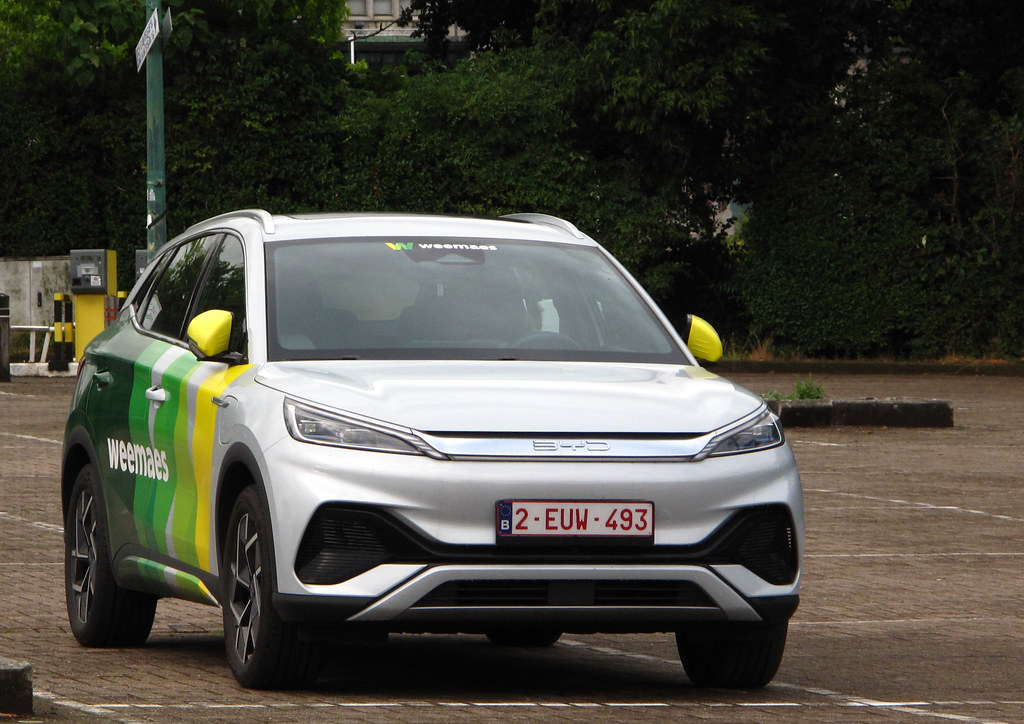
BYD Atto 3 vs Hyundai Tucson 2.0: Which Should You Buy in 2025?
Considering switching to an EV? This comprehensive comparison between the BYD Atto 3 and the Hyundai Tucson 2.0 will help you make the right decision for your wallet and lifestyle in South Africa.
📊 Quick Comparison Overview
| Feature | BYD Atto 3 | Hyundai Tucson 2.0 |
|---|---|---|
| Purchase Price | R689,900 | R650,000 |
| 5-Year Fuel Cost | R55,546 | R122,475 |
| 5-Year Maintenance | R15,000 | R40,000 |
| Total Cost of Ownership | R760,446 | R812,475 |
| Winner | EV wins by R52,029! | |
Note: Total Cost of Ownership includes purchase price, fuel, and maintenance only. Depreciation and insurance vary by individual circumstances and are excluded from this comparison.
💰 The Real Cost: 5-Year Ownership Analysis
Here’s where electric vehicles shine. While the BYD Atto 3 costs R689,900 upfront compared to the Hyundai Tucson 2.0’s R650,000, the total cost of ownership tells a different story.
Fuel Costs Breakdown
- BYD Atto 3 electricity cost: R11,109/year = R55,546 over 5 years
- Hyundai Tucson 2.0 petrol cost: R24,495/year = R122,475 over 5 years
- Fuel savings with EV: R66,929 over 5 years
These calculations assume 15,000km annual driving, R2.50/kWh electricity rate for home charging, and R23.50/litre petrol prices. The BYD Atto 3’s efficiency of 15.8kWh/100km delivers approximately 926km of range per R1,000 spent on electricity, while the Tucson 2.0’s 8.5L/100km fuel consumption provides roughly 612km per R1,000 of petrol.
Maintenance Costs
- BYD Atto 3: R15,000 (minimal – no oil changes, less brake wear)
- Hyundai Tucson 2.0: R40,000 (regular servicing, oil, filters, etc.)
- Maintenance savings with EV: R25,000
Electric vehicles eliminate oil changes, exhaust system repairs, and spark plug replacements. Regenerative braking reduces brake pad wear by up to 70%, while simpler drivetrains mean fewer moving parts to service. The Tucson 2.0 requires servicing every 15,000km, with major services costing R4,000–R6,000 including labour.
🎯 Who Should Buy the BYD Atto 3?
The BYD Atto 3 is perfect for you if:
- 💰 Budget-conscious long-term: Save R867 per month on running costs
- 🏠 Home charging available: Wake up to a “full tank” every morning for just R926/month
- 🌆 City/suburban driving: Perfect for the 420km range on a single charge
- 🔧 Low maintenance priority: No oil changes, no exhaust systems, minimal brake wear
- 🌍 Environmental responsibility: Zero tailpipe emissions in SA’s cities
- ⚡ Modern technology: Latest infotainment, over-the-air updates, advanced safety features
🎯 Who Should Buy the Hyundai Tucson 2.0?
The Hyundai Tucson 2.0 makes sense if:
- 💵 Lower upfront cost needed: R39,900 cheaper to purchase
- ⛽ Long-distance flexibility: Refuel anywhere in 5 minutes with petrol stations everywhere
- 🚗 Heavy towing/off-road: 2.0L engine provides proven capability
- 📍 Rural/remote areas: No charging infrastructure concerns
- 🔋 No home charging option: Petrol stations remain more accessible for now
- 👴 Familiar technology: Comfortable with traditional vehicle ownership
💡 Key Decision Factors
Choose the BYD Atto 3 if you:
- ✅ Drive less than 420km per day on average
- ✅ Have access to home charging or workplace charging
- ✅ Want to save R867 per month on running costs
- ✅ Prioritize lower maintenance and running costs
- ✅ Want zero tailpipe emissions
- ✅ Can manage the higher upfront cost
Choose the Hyundai Tucson 2.0 if you:
- ✅ Need maximum flexibility for long-distance travel
- ✅ Don’t have reliable charging access
- ✅ Drive more than 420km daily
- ✅ Need to minimize upfront costs
- ✅ Prefer the familiarity of petrol stations
- ✅ Live in an area with limited charging infrastructure
🔋 Charging Infrastructure in South Africa
South Africa’s EV charging network is growing rapidly, with over 500 public charging points nationwide. Major cities like Johannesburg, Cape Town, Durban, and Pretoria have excellent coverage, though rural areas still lag behind.
Home charging transforms the ownership experience: Installing a home charger (R15,000-R30,000) gives you a “full tank” every morning at a fraction of petrol costs. A typical 7kW wall-box charger fully replenishes the Atto 3’s battery in 6–8 hours overnight, perfect for off-peak electricity rates. For drivers without home charging, public charging stations are expanding but still require more planning than traditional refuelling.
The ChargePoint SA Live Charging Map shows real-time availability of charging stations across South Africa, helping you plan trips with confidence.
Load-Shedding Considerations
Load-shedding remains a concern for EV owners without backup power. During Stage 4 or higher, charging windows shrink significantly. Smart EV owners install solar panels with battery storage (R80,000–R150,000) or time their charging during available grid windows. Petrol stations also face load-shedding challenges with card machines and pumps, though most have generators.
📈 Long-Term Value
Over 5 years of ownership (15,000km/year):
- Total savings with BYD Atto 3: R52,029
- Monthly savings: R867
- Cost per kilometre – BYD Atto 3: R10.14
- Cost per kilometre – Hyundai Tucson 2.0: R10.83
What About Depreciation and Insurance?
The “Total Cost of Ownership” figures above include purchase price, fuel, and maintenance over 5 years. They do not include depreciation or insurance, which vary significantly based on individual circumstances, driving history, and market conditions.
EVs historically depreciated faster than petrol cars, but this trend is reversing as demand grows and battery technology improves. Current data suggests the BYD Atto 3 retains approximately 55–60% of its value after 3 years, comparable to the Tucson 2.0’s 58–62% retention. Insurance costs for the BYD Atto 3 and Hyundai Tucson 2.0 are typically comparable at R1,200–R1,500 monthly for comprehensive cover, though some insurers offer 5–10% EV discounts recognizing lower accident rates and theft risk.
🌍 Environmental Impact
By choosing the BYD Atto 3 over the Hyundai Tucson 2.0, you’ll prevent significant CO₂ emissions over 5 years. The Tucson 2.0 emits approximately 199g CO₂/km, totalling roughly 14,925kg over 75,000km. The Atto 3’s emissions depend on electricity source—using South Africa’s current grid mix (approximately 80% coal), lifecycle emissions are around 110g CO₂/km, saving roughly 6,700kg CO₂ over 5 years compared to the Tucson.
Even accounting for South Africa’s coal-heavy electricity grid, EVs produce significantly lower lifetime emissions than petrol vehicles. As the grid transitions to renewable energy sources through initiatives like the Renewable Energy Independent Power Producer Procurement Programme, this advantage will only increase. Charging with home solar panels reduces your carbon footprint to near-zero for daily driving.
🚗 Real-World Ownership Experiences
South African EV owners consistently report lower-than-expected running costs and higher-than-expected convenience with home charging. The biggest adjustment? Planning longer trips around charging stops rather than quick petrol station visits. Johannesburg to Durban (570km) requires one 30-minute charging stop, while Johannesburg to Cape Town needs overnight charging in Bloemfontein.
Petrol car owners value the flexibility of refuelling anywhere, anytime—especially important during load-shedding periods when home charging may be interrupted. Many SA drivers keep a petrol vehicle as a second car while transitioning to EV ownership, using the EV for daily commutes and the petrol car for long weekend trips or when load-shedding schedules conflict with charging needs.
Common Ownership Challenges
BYD Atto 3 owners report excellent build quality but note limited service centre availability outside major metros. Warranty claims require travelling to authorized dealers in Johannesburg, Cape Town, or Durban. Parts availability has improved since launch but still lags behind established brands like Hyundai, which has 58 service centres nationwide.
Tucson 2.0 owners appreciate Hyundai’s 5-year/150,000km warranty and extensive dealer network but cite higher-than-expected fuel costs when petrol prices spiked to R25/litre in mid-2024. Service costs also creep up after the 3-year/45,000km service plan expires.
🏁 The Verdict
Recommended: BYD Atto 3 (With Conditions)
The BYD Atto 3 offers solid savings of R52,029 over 5 years (R867/month), but this only works if you have reliable charging access. Without home charging, the Hyundai Tucson 2.0 might still be more practical despite higher running costs.
If you can install a home charger and your daily driving fits within the 420km range, go electric. The savings compound over time, maintenance is minimal, and you’ll enjoy guilt-free acceleration without petrol price anxiety. Otherwise, the Hyundai Tucson 2.0 remains a sensible choice—particularly for rural drivers or those frequently travelling long distances without charging infrastructure along their routes.
💰 Calculate Your Own Savings
Want to see how much you could save based on your specific driving habits? Use our EV Cost Savings Calculator to input your exact annual kilometres, electricity rate, and more. The calculator accounts for your local electricity tariffs, driving patterns, and even load-shedding schedules to give you personalized cost projections.
🚗 Ready to Make the Switch?
Need help installing a home charger for your new EV? Get a free quote for professional EV charger installation anywhere in South Africa. Our certified installers handle everything from electrical compliance to municipal approvals, ensuring your home charging setup is safe, legal, and optimized for off-peak electricity rates.
Last updated: December 2024
Continue Reading
Deprecated: File Theme without comments.php is deprecated since version 3.0.0 with no alternative available. Please include a comments.php template in your theme. in /var/www/wordpress/wp-includes/functions.php on line 6085
Leave a Reply