
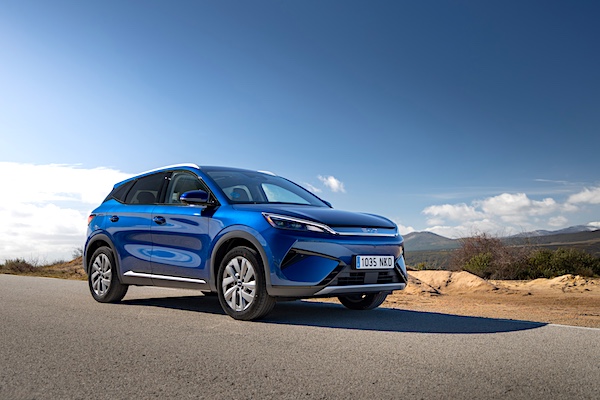
BYD Atto 3 vs Hyundai Creta in South Africa 2026: Electric SUV vs Petrol — The Real Numbers
South Africa’s car market is at a crossroads. For years, the Hyundai Creta has been a default choice for middle-class SUV buyers — reliable, well-equipped, and priced accessibly. But in 2026, BYD’s Atto 3 has entered the conversation with enough range, performance, and feature content to make buyers genuinely pause. The problem? It costs R138,100 more at the outset. The question every rational buyer must ask is simple: does that gap close over time, and if so, how quickly?
We’ve crunched every number that matters — fuel costs, service intervals, depreciation estimates, insurance, and total cost of ownership over five years — to give you the most honest head-to-head comparison available in the South African market right now.
The Specs at a Glance
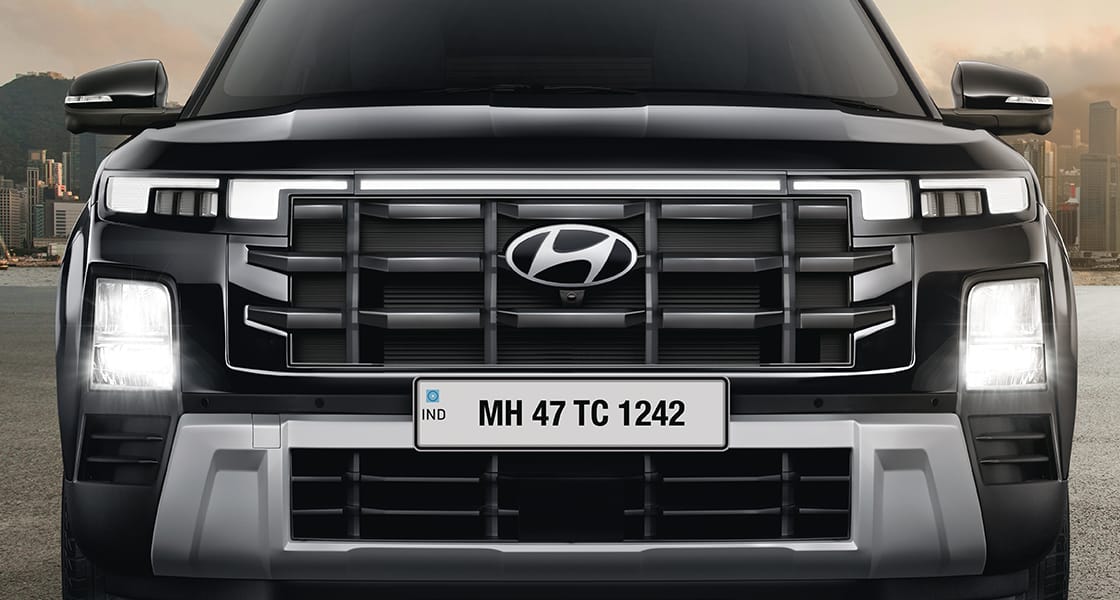
| Specification | BYD Atto 3 | Hyundai Creta 1.5 Executive |
|---|---|---|
| Price (2026) | ~R588,000 | ~R449,900 |
| Powertrain | Electric — 60.5 kWh battery | 1.5L naturally aspirated petrol |
| Power Output | 150 kW / 310 Nm | 115 kW / 144 Nm |
| 0–100 km/h | 7.3 seconds | ~10.5 seconds (estimated) |
| Range / Fuel Economy | 420 km (WLTP) | 6.8L/100km |
| Drivetrain | FWD (single motor) | FWD (CVT or 6-speed auto) |
| Warranty | 6yr/150,000km vehicle; 8yr/160,000km battery | 5yr/150,000km |
Calculate Your Real Savings
See the exact 5-year cost difference between the BYD Atto 3 and Hyundai Creta based on your driving habits.
1. The Price Gap: R138,100 — How Long to Recoup It?
The Atto 3 costs R138,100 more than the Creta 1.5 Executive off the showroom floor. That’s a meaningful chunk of money. But the running cost difference is equally meaningful — and it compounds every single month.
At 15,000 km per year (the South African average for private buyers), here’s how the numbers stack up:
- Atto 3 energy cost: Approximately 17 kWh/100km × R3.13/kWh (average home tariff Gauteng 2026) = R0.53/km
- Creta fuel cost: 6.8L/100km × R24.50/L = R1.67/km
- Saving per kilometre: R1.14/km
- Annual saving at 15,000 km: R1.14 × 15,000 = R17,100/year
- Break-even on price gap: R138,100 ÷ R17,100 = approximately 8.1 years on fuel alone
Eight years sounds discouraging — until you factor in service costs, which dramatically accelerate the payback period. With servicing included (see Section 3), the break-even point drops to approximately 5.5 to 6 years. For buyers planning to keep the vehicle long-term, the Atto 3 becomes the financially superior choice. For those who change cars every three years, the Creta wins on pure short-term economics.
2. Running Costs — The Day-to-Day Reality
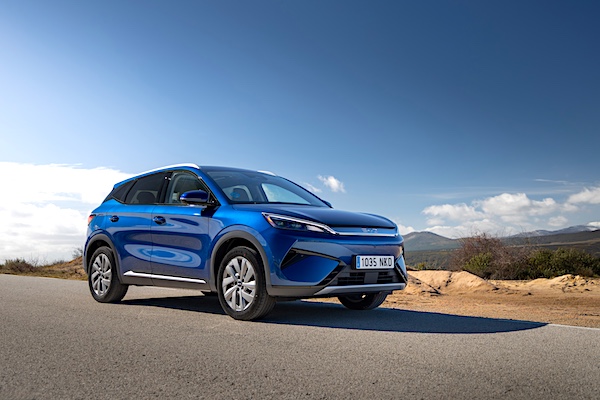
BYD Atto 3: Cost Per Kilometre
Charging the Atto 3 at home on a standard overnight rate in Johannesburg (approximately R3.13/kWh including network charges and time-of-use tariff) delivers the following:
- Full charge (60.5 kWh): ~R189 to fill from near-empty
- Real-world range (allowing for South African conditions, HVAC use, highways): approximately 350–380 km
- Effective cost: approximately R0.50–R0.55 per km
Using public DC fast chargers (ChargePoint SA network, approximately R4.80–R6.50/kWh depending on location) raises this to roughly R0.82–R1.10/km — still cheaper than the Creta on petrol, but the gap narrows. Buyers who charge mostly at home enjoy the full saving.
Hyundai Creta 1.5 Executive: Cost Per Kilometre
- Fuel: 6.8L/100km × R24.50/L = R1.666/km ≈ R1.67/km
- At 15,000 km/year: R25,050/year in fuel
- Atto 3 equivalent: R7,950/year in electricity (home charging)
- Annual fuel saving: R17,100
3. Five-Year Total Cost of Ownership (TCO) at 15,000 km/year
TCO is where the full picture emerges. We’ve used conservative South African market estimates for 2026.
| Cost Component | BYD Atto 3 (5 years) | Hyundai Creta (5 years) |
|---|---|---|
| Purchase price | R588,000 | R449,900 |
| Fuel / Electricity (75,000 km) | R39,750 | R125,250 |
| Scheduled servicing | ~R8,000 | ~R28,000 |
| Tyres (2 sets estimated) | R14,000 | R12,000 |
| Insurance (estimated avg p/a) | R72,500 (R14,500/yr) | R57,500 (R11,500/yr) |
| Home charger installation (once-off) | R12,000 | — |
| Estimated residual value (after 5 yrs) | – R264,600 (45% retained) | – R202,455 (45% retained) |
| Net 5-Year TCO | ~R469,650 | ~R470,195 |
The verdict on TCO: Over five years at 15,000 km/year, the two vehicles arrive at virtually the same net cost — within R600 of each other under these assumptions. The Atto 3’s energy and service savings almost exactly offset its higher purchase price and insurance premium. Drive more kilometres per year and the Atto 3 wins convincingly. Drive fewer, and the Creta retains the advantage.
Note: Service estimates for the Atto 3 reflect its simplified drivetrain — no oil changes, no timing belt, no spark plugs. Hyundai Creta service costs are based on the standard 15,000 km interval schedule with parts and labour at a franchised dealer.
Get a Home Charger for Your Atto 3
Maximise your Atto 3 savings with overnight charging at off-peak rates.
4. Performance and Features: Side by Side
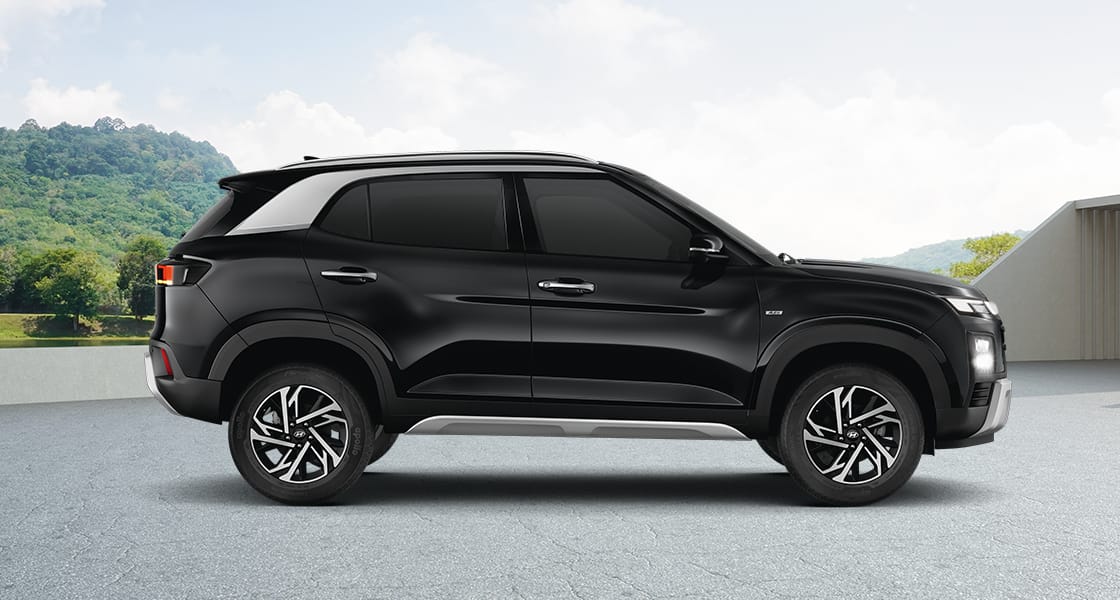
On paper, the Atto 3 has a meaningful performance advantage. Its 310 Nm of torque is delivered instantaneously — electric motors don’t need to build revs — which makes the 7.3-second 0–100 km/h figure feel even quicker in practice. Urban overtaking and highway merging are genuinely effortless.
The Creta’s 1.5L petrol is a more modest performer. Its 115 kW and 144 Nm are adequate for everyday driving but feel strained when carrying a full load or climbing mountain passes. The estimated 10.5-second 0–100 km/h time reflects that reality.
Feature Highlights — BYD Atto 3
- 15.6-inch rotating touchscreen infotainment
- 360-degree camera system
- Adaptive cruise control with lane-keeping assist
- Vehicle-to-Load (V2L) — power external devices from the car
- Heated and ventilated front seats
- DiLink 4.0 with wireless Apple CarPlay and Android Auto
- BYD Blade Battery (LFP chemistry — safer, longer cycle life)
Feature Highlights — Hyundai Creta 1.5 Executive
- 10.25-inch infotainment with BlueLink connectivity
- Rear-view camera
- Driver attention warning
- Wireless phone charging
- Hyundai SmartSense safety suite (on higher specs)
- Ambient lighting and panoramic sunroof (trim dependent)
The Atto 3 offers more technology per rand at this price point. The Creta’s infotainment is well-executed but feels a generation behind BYD’s immersive screen experience.
5. Practicality: Boot Space, Interior, and Passenger Comfort
Both vehicles are compact SUVs aimed at families and urban commuters, but they have meaningfully different interior personalities.
The BYD Atto 3 offers 440 litres of boot space with rear seats up — competitive in its class and sufficient for airport runs and weekly grocery shops. The flat floor (no transmission tunnel) creates excellent middle-seat legroom. BYD’s interior design is bold, with guitar-string door panel details and an architectural feel that either delights or divides opinion. Build quality has improved significantly over earlier models, with soft-touch materials now more prevalent on the dashboard and door cards.
The Hyundai Creta offers 433 litres — essentially identical in practical terms. Rear legroom is generous for the segment, and Hyundai’s interior ergonomics are class-leading: everything is where you expect it, buttons are sensibly placed, and the quality of materials in Executive trim is solid rather than spectacular. Families will appreciate the Creta’s more conservative, easy-to-clean interior.
For long-distance family trips, the Creta has an advantage in one specific respect: refuelling takes three minutes. The Atto 3’s 420 km real-world range (closer to 350–380 km in SA conditions) means a Johannesburg-to-Cape Town trip requires planning around charging stops — something that is becoming easier, but remains more friction-heavy than a quick petrol fill.
6. Charging the Atto 3: What You Need to Know
Home Charging (Recommended Setup)
For most Atto 3 owners, home charging will account for 80–90% of all energy consumed. BYD recommends an 11 kW AC wallbox installed by a certified electrician. At this rate, a full charge from empty takes approximately 5.5 hours — perfectly suited to overnight charging.
- Installation cost: R8,000–R15,000 depending on panel upgrades needed
- Standard 2.3 kW (Type 2 on domestic circuit): ~26 hours — not recommended as a primary solution
- 7.4 kW wallbox: ~8.5 hours — a viable budget alternative
Eskom loadshedding is a legitimate concern. Most Atto 3 owners in major metros manage by charging after midnight on time-of-use tariffs, and many pair their wallbox with a home solar and battery backup system — an investment that dramatically reduces effective charging costs.
DC Fast Charging (On the Road)
The Atto 3 supports DC fast charging at up to 80 kW. At this rate, a 20–80% charge takes approximately 35–40 minutes. The ChargePoint SA network, along with GridCars and Rubicon stations at Engen and selected Woolworths Food forecourts, now provides reasonable corridor coverage on the N1, N2, and N3 routes. Charging from 20–80% costs approximately R145–R175 at public DC rates — still cheaper than a Creta tank-up, but the time cost is real.
Find Chargers on the Road
Planning a road trip with your Atto 3? Check charger availability.
7. Resale Value: The Honest Conversation
Resale value for electric vehicles in South Africa remains the single biggest financial unknown. The used EV market is still thin, and auction data is limited. Our TCO table assumed a 45% residual value for both vehicles after five years — optimistic for the Atto 3, conservative for the Creta.
In practice, the Creta’s residual values are well-established and consistently strong. Hyundai holds its value reliably in the South African market. The Atto 3 is newer territory. Positive factors include the 8-year/160,000 km battery warranty, which significantly de-risks second-hand purchase. Negative factors include lingering consumer uncertainty around Chinese brands and the speed at which EV technology evolves — a 2026 Atto 3 may feel dated against 2030 competition.
Our realistic assessment: budget for a 40–45% residual on the Atto 3 in a best-case scenario, and closer to 35% if the used EV market remains underdeveloped. The Creta is likely to retain 45–50% of its value under equivalent conditions.
8. Frequently Asked Questions
Can I charge the BYD Atto 3 during loadshedding?
Not directly from the grid during an outage, but many owners use solar-plus-battery home installations to charge uninterrupted. Some also use the Atto 3’s V2L function to power household appliances during outages — a genuinely useful feature unique to the BYD.
Is the BYD Atto 3 reliable in South Africa?
BYD’s service network in SA has expanded significantly through 2025–2026, with authorised dealers now present in all major metros. The Blade Battery’s LFP chemistry is proven across millions of global units and carries lower thermal risk than older lithium-ion variants. Early SA owner feedback has been largely positive, with software-over-the-air updates resolving most reported issues.
Which car is better for Johannesburg traffic?
The Atto 3, without question. Stop-start traffic actually improves EV efficiency through regenerative braking. The Creta burns fuel idling; the Atto 3 recovers energy. Joburg commuters will find the Atto 3’s range anxiety is minimal in daily use — most will add 40–60 km per day at most.
What about servicing the BYD in smaller towns?
This remains a genuine concern. BYD’s dealer footprint, while growing, does not match Hyundai’s extensive network. Buyers in secondary cities should confirm dealer proximity before committing. The Creta’s service availability anywhere in the country is a meaningful practical advantage.
Which has better safety ratings?
The BYD Atto 3 received a 5-star ANCAP rating (tested in Australia/New Zealand, applicable to SA specification). The Hyundai Creta has received a 3-star ASEAN NCAP rating in certain configurations — a genuine point of difference in the Atto 3’s favour for safety-conscious buyers.
Should I finance the Atto 3 or pay cash?
At current South African interest rates (prime approximately 11.25% in 2026), financing the additional R138,100 costs roughly R2,600–R3,100/month depending on term and deposit. The monthly fuel and service savings of approximately R1,425 do not cover this additional finance cost alone — making cash purchase or a substantial deposit the most financially efficient approach for the Atto 3.
The Verdict
These two vehicles serve different buyers. The Hyundai Creta 1.5 Executive remains one of the most sensible, well-rounded compact SUV purchases in South Africa in 2026 — proven, practical, supported everywhere, and cheaper to walk into. If you change cars every three years, drive fewer than 12,000 km annually, or frequently travel beyond charging infrastructure, the Creta is still the rational choice.
The BYD Atto 3 wins on technology, safety, performance, and long-term running economics — but only for buyers who charge primarily at home, keep their vehicles for five or more years, and live in or near a major metro. For those buyers, the TCO maths are compelling: five years from now, you will have spent approximately the same total amount, but driven a significantly more capable, better-equipped vehicle while producing zero tailpipe emissions.
The gap between these two worlds is closing faster than most buyers realise. For now, both choices are defensible — but the conversation is shifting.
Deprecated: File Theme without comments.php is deprecated since version 3.0.0 with no alternative available. Please include a comments.php template in your theme. in /var/www/wordpress/wp-includes/functions.php on line 6085
Leave a Reply