
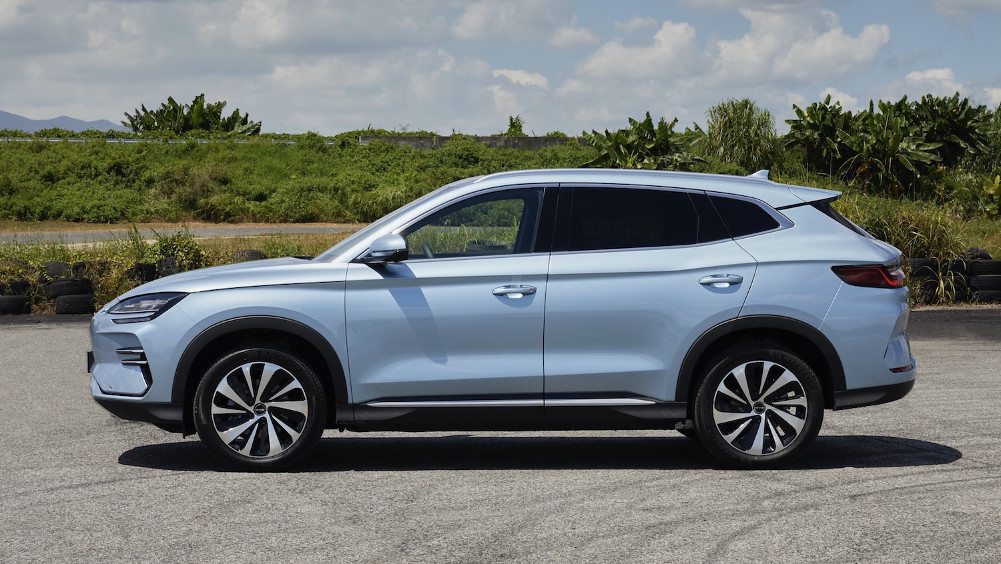
BYD Sealion 6 DM-i vs Hyundai Tucson 2.0: Which Should You Buy in 2025?
Considering switching to a hybrid? This comprehensive comparison between the BYD Sealion 6 DM-i and the Hyundai Tucson 2.0 will help you make the right decision for your wallet and lifestyle in South Africa.
📊 Quick Comparison Overview
| Feature | BYD Sealion 6 DM-i | Hyundai Tucson 2.0 |
|---|---|---|
| Purchase Price | R699,900 | R640,000 |
| 5-Year Fuel Cost | R70,684 | R122,475 |
| 5-Year Maintenance | R15,000 | R40,000 |
| Total Cost of Ownership | R785,584 | R802,475 |
| Winner | Hybrid wins by R16,891! | |
💰 The Real Cost: 5-Year Ownership Analysis
Here’s where plug-in hybrid vehicles shine. While the BYD Sealion 6 DM-i costs R699,900 upfront compared to the Hyundai Tucson 2.0 Elite’s R640,000, the total cost of ownership tells a different story.
Understanding the BYD Sealion 6 DM-i
The BYD Sealion 6 DM-i is a plug-in hybrid electric vehicle (PHEV) available in the South African market. It combines a petrol engine with an electric motor and battery, offering approximately 80km of pure electric range before the petrol engine kicks in. This means most daily commutes can be completed on electricity alone, with petrol as a backup for longer trips.
It’s worth noting that BYD markets this vehicle as the “DM-i” hybrid variant in South Africa, not as a traditional PHEV. The DM-i designation refers to BYD’s proprietary hybrid technology that prioritizes electric driving with petrol as a range extender.
Fuel Costs Breakdown
The BYD’s fuel costs assume mixed driving: electric-only for shorter trips (charged at home overnight at R2.50/kWh) and hybrid mode for longer journeys. Based on 15,000km annual driving with 60% electric and 40% petrol:
- BYD Sealion 6 DM-i combined cost: R14,137/year = R70,684 over 5 years (calculated using 16kWh/100km for electric driving at R2.50/kWh, and 5.5L/100km in hybrid mode at R23.50/L petrol)
- Hyundai Tucson 2.0 petrol cost: R24,495/year = R122,475 over 5 years (based on 8.5L/100km at R23.50/L)
- Fuel savings with hybrid: R51,791 over 5 years
Maintenance Costs
- BYD Sealion 6 DM-i: R15,000 (reduced servicing intervals, regenerative braking reduces brake wear, but still requires oil changes for the petrol engine)
- Hyundai Tucson 2.0: R40,000 (regular servicing, oil, filters, transmission maintenance)
- Maintenance savings with hybrid: R25,000
🔌 How Plug-In Hybrid Technology Works
The BYD Sealion 6 DM-i’s plug-in hybrid system offers the best of both worlds. You can charge the battery at home (taking 4-6 hours on a standard wall charger) and drive up to 80km on electricity alone—perfect for daily commutes. When the battery depletes, the efficient petrol engine takes over seamlessly, giving you unlimited range for road trips.
This flexibility means you’re never stranded looking for a charging station, yet you still enjoy the low running costs of electric driving for most of your journeys. The DM-i system is designed to keep the battery charged and maximize electric-only driving, switching to the petrol engine primarily for highway speeds or when additional power is needed.
🎯 Who Should Buy the BYD Sealion 6 DM-i?
The BYD Sealion 6 DM-i is perfect for you if:
- 💰 Budget-conscious long-term: Save R280 per month on running costs
- 🏠 Home charging available: Wake up to a “full battery” every morning for daily commutes
- 🌆 City/suburban driving: Most trips under 80km can run on electricity alone
- 🔧 Lower maintenance priority: Reduced brake wear, fewer oil changes than conventional petrol
- 🌍 Environmental responsibility: Significantly lower emissions for urban driving
- ⚡ Modern technology: Latest infotainment, over-the-air updates, advanced safety features
- 🛣️ Long-trip flexibility: Petrol backup means no range anxiety on road trips
🎯 Who Should Buy the Hyundai Tucson 2.0?
The Hyundai Tucson 2.0 makes sense if:
- 💵 Lower upfront cost needed: R59,900 cheaper to purchase
- ⛽ Simplicity preferred: No need to plug in or manage charging schedules
- 🚗 Heavy towing/off-road: 2.0L engine provides proven capability
- 📍 Rural/remote areas: No dependency on electricity supply or load-shedding concerns
- 🔋 No home charging option: Apartment living or no dedicated parking
- 👴 Familiar technology: Comfortable with traditional vehicle ownership
- 🏢 Established brand trust: Hyundai’s proven reliability and service network
💡 Key Decision Factors
Choose the BYD Sealion 6 DM-i if you:
- ✅ Drive less than 80km per day on average
- ✅ Have access to home charging or workplace charging
- ✅ Want to save R280 per month on running costs
- ✅ Prioritize lower fuel and maintenance costs
- ✅ Want reduced emissions without range anxiety
- ✅ Can manage the higher upfront cost
- ✅ Appreciate cutting-edge automotive technology
Choose the Hyundai Tucson 2.0 if you:
- ✅ Need maximum simplicity—just fill and go
- ✅ Don’t have reliable charging access at home
- ✅ Drive more than 80km daily without charging opportunities
- ✅ Need to minimize upfront costs
- ✅ Prefer the familiarity of petrol-only vehicles
- ✅ Live in an area with frequent load-shedding
- ✅ Want established brand heritage and resale value
🔋 Charging Infrastructure in South Africa
South Africa’s EV charging network is growing rapidly, with over 500 public charging points nationwide. Major cities like Johannesburg, Cape Town, Durban, and Pretoria have excellent coverage. However, the beauty of a plug-in hybrid like the Sealion 6 DM-i is that you’re never dependent on public charging—your petrol engine provides backup.
Home charging is the game-changer: Installing a home charger (R15,000-R30,000) gives you a “full battery” every morning at a fraction of petrol costs. For the Sealion 6 DM-i, even a standard wall socket works, though a dedicated charger is faster and more convenient.
Want to find charging stations near you? Check out our live EV charging map to see real-time availability across South Africa.
📈 Long-Term Value
Over 5 years of ownership (15,000km/year):
- Total savings with BYD Sealion 6 DM-i: R16,891
- Monthly savings: R280
- Cost per kilometre – BYD Sealion 6 DM-i: R10.47
- Cost per kilometre – Hyundai Tucson 2.0: R10.70
These figures demonstrate that while the hybrid costs more upfront, the combination of lower fuel and maintenance costs creates meaningful savings over time. The break-even point occurs around year 3, after which you’re saving money every month.
🌍 Environmental Impact
By choosing the BYD Sealion 6 DM-i over the Hyundai Tucson 2.0 and driving 60% of your kilometres on electricity, you’ll prevent approximately 7,380kg of CO₂ from entering the atmosphere over 5 years. This calculation assumes the hybrid uses no petrol for 9,000km annually (charged from the grid) and runs in hybrid mode for the remaining 6,000km, compared to the Tucson’s full petrol consumption of 8.5L/100km producing 2.31kg CO₂/L.
Even accounting for South Africa’s coal-heavy electricity grid, the emissions reduction is substantial. As the national grid incorporates more renewable energy, the environmental benefits of electric driving will only increase.
🔧 Real-World Ownership Considerations
Load-Shedding Impact
South Africa’s load-shedding can affect home charging, but with the Sealion 6 DM-i, you simply use more petrol when charging isn’t available. Schedule charging during off-peak hours (23:00-06:00) when load-shedding is less frequent and electricity is cheaper.
Many hybrid owners report that even with load-shedding, they can charge enough overnight to cover their daily commute. The key is having a flexible mindset—some days you’ll drive electric, other days you’ll rely more on petrol. Either way, you’re still saving money compared to a pure petrol vehicle.
Resale Value
The Tucson benefits from Hyundai’s established reputation and service network. The Sealion 6 DM-i is newer to the market, so long-term resale values are still being established. However, BYD’s rapid growth and competitive pricing are building strong market presence.
Early indicators suggest that hybrid vehicles are holding their value well in South Africa as fuel prices continue to rise and environmental awareness grows. The key is maintaining service records and battery health documentation.
Warranty and Service
Both manufacturers offer competitive warranties. BYD provides a 6-year/150,000km vehicle warranty and 8-year battery warranty. Hyundai offers a 5-year/150,000km warranty with an extensive dealer network across South Africa.
BYD is rapidly expanding its service network in major South African cities, though Hyundai currently has broader coverage in smaller towns and rural areas. Consider proximity to authorized service centres when making your decision.
🏁 The Verdict
A Clear Winner for Most Buyers
The BYD Sealion 6 DM-i offers compelling value if you can charge at home. You’ll save R16,891 over 5 years (R280/month) while enjoying the latest technology and reduced emissions. The 80km electric range covers most daily driving, and the petrol backup eliminates range anxiety.
However, the Hyundai Tucson 2.0 remains the smarter choice if you lack home charging, need maximum simplicity, or want to minimize upfront costs. The R59,900 price difference is significant and may outweigh long-term savings depending on your financial situation.
Bottom line: If you have home charging and drive mostly in the city, choose the BYD. If you need simplicity and lower upfront cost, choose the Tucson. Both are excellent vehicles—your choice depends on your specific circumstances and priorities.
💰 Calculate Your Own Savings
Want to see how much you could save based on your specific driving habits? Use our EV Cost Savings Calculator to input your exact annual kilometres, electricity rate, and daily driving patterns to get a personalized comparison.
The calculator accounts for your local electricity tariffs, typical petrol prices in your area, and even load-shedding patterns to give you a realistic picture of what hybrid ownership would mean for your budget.
🚗 Ready to Make the Switch?
Need help installing a home charger for your new plug-in hybrid? Get a free quote for professional EV charger installation anywhere in South Africa. Our certified installers can assess your home’s electrical capacity and recommend the best charging solution for your needs.
Professional installation ensures your charger is safely integrated with your home’s electrical system, optimized for off-peak charging, and ready to deliver years of reliable service.
Last updated: 2 December 2024
Continue Reading
Deprecated: File Theme without comments.php is deprecated since version 3.0.0 with no alternative available. Please include a comments.php template in your theme. in /var/www/wordpress/wp-includes/functions.php on line 6085
Leave a Reply