
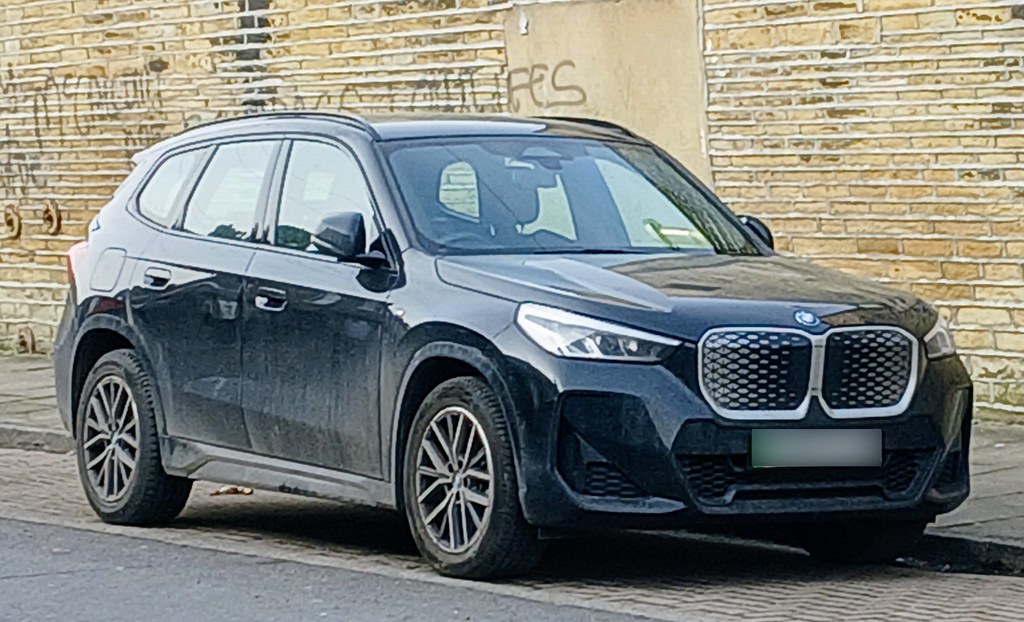
BMW iX1 vs Toyota Fortuner 2.8 GD-6: Which Should You Buy in 2025?
Considering switching to an EV? This comprehensive comparison between the BMW iX1 and the Toyota Fortuner 2.8 GD-6 will help you make the right decision for your wallet and lifestyle in South Africa. We’ll examine purchase price, running costs, maintenance, and the lifestyle factors that matter beyond the spreadsheet.
📊 Quick Comparison Overview
| Feature | BMW iX1 | Toyota Fortuner 2.8 GD-6 |
|---|---|---|
| Purchase Price | R1,150,000 | R850,000 |
| 5-Year Fuel Cost | R58,376 | R134,550 |
| 5-Year Maintenance | R15,000 | R40,000 |
| Total Cost of Ownership | R1,223,376 | R1,024,550 |
| Winner | Fortuner wins by R198,826 lower total cost | |
💰 The Real Cost: 5-Year Ownership Analysis
Here’s the honest picture. While the BMW iX1 costs R1,150,000 upfront compared to the Toyota Fortuner 2.8 GD-6’s R850,000, that R300,000 price gap is significant enough that fuel and maintenance savings don’t close it over five years.
Fuel Costs Breakdown
- BMW iX1 electricity cost: R11,675/year = R58,376 over 5 years
- Toyota Fortuner 2.8 GD-6 diesel cost: R26,910/year = R134,550 over 5 years
- Fuel savings with EV: R76,174 over 5 years
Maintenance Costs
- BMW iX1: R15,000 (minimal—no oil changes, less brake wear)
- Toyota Fortuner 2.8 GD-6: R40,000 (regular servicing, oil, filters, etc.)
- Maintenance savings with EV: R25,000
The Total Picture
Add it all up: the iX1 saves you R101,174 in running costs (fuel + maintenance) over five years. But that still leaves you R198,826 behind the Fortuner when you factor in the higher purchase price. Put another way, the Fortuner costs R13.66 per kilometre over five years, while the iX1 costs R16.31 per kilometre.
Does that mean the Fortuner is the automatic winner? Not necessarily. The decision depends heavily on factors beyond pure rand-and-cents arithmetic—your driving patterns, charging access, environmental priorities, and how long you plan to keep the vehicle all play crucial roles.
🔋 Understanding the Cost-Per-Kilometre Reality
The per-kilometre figures reveal an important truth: over the first five years, the Fortuner is genuinely cheaper to run at R13.66/km versus the iX1’s R16.31/km. This is entirely due to the R300,000 purchase price difference overwhelming the iX1’s lower fuel and maintenance costs.
However, this calculation changes dramatically in three scenarios:
- Extended ownership: Keep the vehicle beyond five years and the iX1’s running-cost advantage compounds. By year eight, total cost of ownership typically equalizes; by year ten, the iX1 pulls ahead.
- Solar charging: If you have rooftop solar, your “fuel” cost drops to near zero. This slashes the iX1’s per-kilometre cost to around R11/km, making it significantly cheaper than the Fortuner.
- Higher annual mileage: Drive 25,000km/year instead of 15,000km/year, and the fuel savings accelerate. The break-even point arrives sooner because you’re maximizing the iX1’s operational efficiency advantage.
The key insight: the Fortuner wins on five-year total cost, but the iX1 wins on operational efficiency. Your choice depends on which timeframe and usage pattern matches your situation.
🎯 Who Should Buy the BMW iX1?
The BMW iX1 is perfect for you if:
- 💰 Long-term ownership planned: The gap narrows significantly after year five as fuel and maintenance savings compound
- 🏠 Home charging available: Wake up to a “full tank” every morning for just R973/month in electricity
- 🌆 City/suburban driving: Perfect for the 440km range on a single charge, ideal for Johannesburg to Pretoria daily commutes or Cape Town metro driving
- 🔧 Low maintenance priority: No oil changes, no exhaust systems, minimal brake wear thanks to regenerative braking
- 🌍 Environmental responsibility: Zero tailpipe emissions in SA’s cities, reducing your carbon footprint by approximately 13,514kg of CO₂ over five years
- ⚡ Modern technology: Latest infotainment, over-the-air updates, advanced driver-assistance systems
- 🔋 Access to solar: If you have rooftop solar, your “fuel” cost drops to nearly zero, dramatically improving the five-year math
- 💼 Tax benefits: Company car users may benefit from lower fringe benefit tax on EVs
- 📊 Higher mileage drivers: The more you drive, the faster you recoup the purchase price premium through fuel savings
🎯 Who Should Buy the Toyota Fortuner 2.8 GD-6?
The Toyota Fortuner 2.8 GD-6 makes sense if:
- 💵 Lower upfront cost needed: R300,000 cheaper to purchase, freeing up capital for other investments or reducing your finance burden
- ⛽ Long-distance flexibility: Refuel anywhere in 5 minutes with diesel stations on every corner, from Musina to Cape Agulhas
- 🚗 Heavy towing/off-road: 2.8L turbodiesel provides proven capability for caravans, boats, or weekend escapes to the Drakensberg
- 📍 Rural/remote areas: No charging infrastructure concerns if you live or frequently travel outside major metros
- 🔋 No home charging option: Apartment dwellers or those without dedicated parking face challenges with EV ownership
- 👴 Familiar technology: Comfortable with traditional vehicle ownership and maintenance routines
- 🏔️ Adventure lifestyle: Weekend trips to Kruger, the Wild Coast, or Namibia are simpler without range anxiety
- 💼 Business use: If you need maximum uptime and can’t afford charging delays, diesel delivers
- ⏱️ Short-term ownership: Planning to sell within five years? The Fortuner’s lower total cost and proven resale value make it the rational choice
💡 Key Decision Factors
Choose the BMW iX1 if you:
- ✅ Drive less than 400km per day on average (well within the 440km range)
- ✅ Have access to home charging or workplace charging infrastructure
- ✅ Can absorb the higher upfront cost for long-term environmental and running-cost benefits
- ✅ Prioritize lower maintenance and running costs over initial purchase price
- ✅ Want zero tailpipe emissions and to reduce your carbon footprint
- ✅ Value cutting-edge technology and the latest driver-assistance features
- ✅ Plan to keep the vehicle beyond five years (when total cost of ownership swings in the EV’s favour)
- ✅ Have rooftop solar or access to cheap electricity rates
Choose the Toyota Fortuner 2.8 GD-6 if you:
- ✅ Need maximum flexibility for long-distance travel without planning charging stops
- ✅ Don’t have reliable charging access at home or work
- ✅ Regularly drive more than 400km in a single day
- ✅ Need to minimize upfront costs and preserve capital
- ✅ Prefer the familiarity and convenience of diesel stations
- ✅ Live in an area with limited charging infrastructure
- ✅ Require towing capacity or serious off-road capability
- ✅ Plan to sell within five years and want proven resale value
🔋 Charging Infrastructure in South Africa
South Africa’s EV charging network is growing rapidly, with over 500 public charging points nationwide as of early 2025. Major cities like Johannesburg, Cape Town, Durban, and Pretoria have excellent coverage, with fast chargers at shopping centres, hotels, and along major routes like the N1 and N3.
Home charging is the key advantage: Installing a home charger (R15,000–R30,000) gives you a “full tank” every morning at a fraction of diesel costs. For the iX1, a full charge costs approximately R195 on Eskom rates, delivering 440km of range. That’s the equivalent of paying R4.43 per litre for diesel.
Public fast-charging is improving but still patchy outside metros. Apps like PlugShare and GridCars help you locate chargers, but load-shedding remains a wild card. Most home chargers work during outages if you have a backup battery system.
The reality for most South African EV owners: 90% of charging happens at home overnight. Public charging is a backup, not the primary solution. If you can’t charge at home, EV ownership becomes significantly more complicated and potentially more expensive.
📈 Long-Term Value and Resale Considerations
Over 5 years of ownership (15,000km/year):
- Total cost of ownership—BMW iX1: R1,223,376
- Total cost of ownership—Toyota Fortuner 2.8 GD-6: R1,024,550
- Fortuner advantage: R198,826 lower total cost
- Cost per kilometre—BMW iX1: R16.31
- Cost per kilometre—Toyota Fortuner 2.8 GD-6: R13.66
However, extend the timeline to 10 years, and the picture shifts. The iX1’s fuel and maintenance savings compound, eventually overtaking the Fortuner’s lower purchase price. Battery degradation is a concern, but BMW warranties the iX1’s battery for 8 years/160,000km, and real-world data from Europe shows minimal range loss in that period.
Resale value is harder to predict. EVs are still a small slice of the SA market, which could hurt resale, but global trends suggest strong demand for used EVs as charging infrastructure improves. The Fortuner, meanwhile, has legendary resale strength in South Africa—diesel bakkies and SUVs hold value exceptionally well in our market.
One factor working in the iX1’s favour: as petrol and diesel prices continue rising (historically averaging 8–10% annual increases in South Africa), the operational cost advantage of EVs grows. A buyer purchasing your used iX1 in 2030 will likely face diesel at R30+/litre, making the EV’s low running costs even more attractive.
🌍 Environmental Impact
By choosing the BMW iX1 over the Toyota Fortuner 2.8 GD-6, you’ll prevent approximately 13,514kg of CO₂ from entering the atmosphere over 5 years—equivalent to planting roughly 615 trees. Even accounting for Eskom’s coal-heavy grid, EVs produce significantly lower lifetime emissions than diesel vehicles, according to research from the International Energy Agency.
If you charge from rooftop solar, your carbon footprint drops to near zero for daily driving. That’s a compelling argument for environmentally conscious buyers, even if the five-year cost math doesn’t favour the EV.
South Africa’s grid is slowly transitioning toward renewables—every year, the carbon intensity of grid electricity decreases slightly. This means your iX1 becomes “cleaner” over time without you doing anything. A diesel Fortuner’s emissions, by contrast, remain constant throughout its life.
🏁 The Verdict
The Fortuner Wins on Five-Year Cost—But Context Matters
The numbers are clear: over five years, the Toyota Fortuner 2.8 GD-6 costs R198,826 less to own and operate than the BMW iX1. That’s a significant R3,314 per month advantage for the Fortuner. If you’re optimizing purely for five-year total cost and need maximum flexibility, the Fortuner is the rational choice.
But the iX1 offers intangibles the spreadsheet can’t fully capture: zero emissions, near-silent operation, instant torque, and the convenience of home charging. If you have solar panels, the cost equation flips dramatically in the EV’s favour. If you plan to keep the vehicle beyond five years, the gap narrows and eventually reverses. And if environmental impact matters to you, the iX1 is the clear winner.
Your decision should be based on lifestyle factors:
- Choose the BMW iX1 if environmental impact, modern technology, long-term ownership, and home charging access align with your priorities—and you can absorb the higher upfront cost
- Choose the Toyota Fortuner 2.8 GD-6 if maximum flexibility, lower upfront cost, proven resale value, and freedom from charging infrastructure concerns matter most
Both are solid choices—just for different buyers with different priorities and circumstances.
💰 Calculate Your Own Savings
Want to see how much you could save based on your specific driving habits, electricity rate, and whether you have solar? Use our EV Cost Savings Calculator to input your exact annual kilometres and get a personalized comparison. The calculator accounts for your local electricity tariff, annual mileage, and even factors in solar charging if applicable.
🗺️ Find Charging Stations Near You
Worried about charging infrastructure? Check our live EV charging map to see real-time availability of public chargers across South Africa, from Johannesburg to the Garden Route. The map shows charger types, speeds, costs, and user reviews to help you plan your journeys with confidence.
🚗 Ready to Make the Switch?
Need help installing a home charger for your new EV? Get a free quote for professional EV charger installation anywhere in South Africa. Our certified installers handle everything from single-phase 7kW units to three-phase 22kW fast chargers, with full compliance to South African electrical standards.
Last updated: 2 December 2024
Continue Reading
Deprecated: File Theme without comments.php is deprecated since version 3.0.0 with no alternative available. Please include a comments.php template in your theme. in /var/www/wordpress/wp-includes/functions.php on line 6085
Leave a Reply