
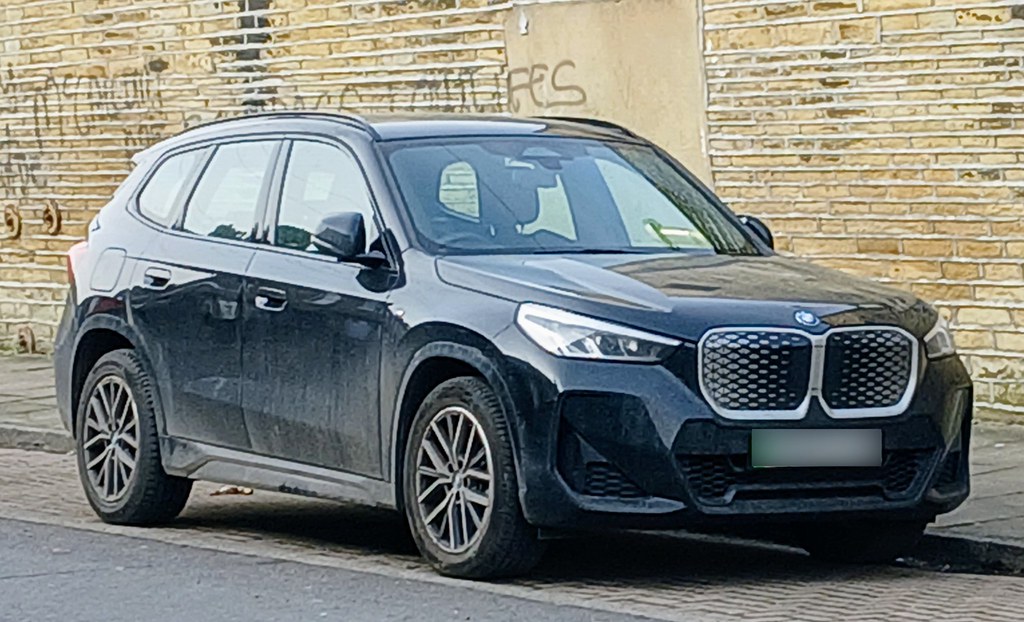
BMW iX1 vs VW Tiguan 2.0 TSI: Which Should You Buy in 2025?
Considering switching to an EV? This comprehensive comparison between the BMW iX1 and the VW Tiguan 2.0 TSI will help you make the right decision for your wallet and lifestyle in South Africa. While the iX1 offers lower running costs, the higher upfront price means the petrol Tiguan remains cheaper overall for typical 5-year ownership—but the gap narrows significantly for high-mileage drivers and longer ownership periods.
📊 Quick Comparison Overview
| Feature | BMW iX1 | VW Tiguan 2.0 TSI |
|---|---|---|
| Purchase Price | R1,150,000 | R800,000 |
| 5-Year Fuel Cost | R58,376 | R124,200 |
| 5-Year Maintenance | R15,000 | R40,000 |
| Total Cost of Ownership | R1,223,376 | R964,200 |
| Winner | Petrol wins by R259,176! | |
💰 The Real Cost: 5-Year Ownership Analysis
The numbers tell a clear story: while the BMW iX1 costs R1,150,000 upfront compared to the VW Tiguan 2.0 TSI’s R800,000, that R350,000 price difference is the deciding factor. Even with lower running costs, the iX1 doesn’t recover the initial premium over a typical 5-year ownership period.
Fuel Costs Breakdown
- BMW iX1 electricity cost: R11,675/year = R58,376 over 5 years
- VW Tiguan 2.0 TSI petrol cost: R24,840/year = R124,200 over 5 years
- Annual fuel savings with iX1: R13,165 (R65,824 total over 5 years)
Maintenance Costs
- BMW iX1: R15,000 (minimal—no oil changes, less brake wear)
- VW Tiguan 2.0 TSI: R40,000 (regular servicing, oil, filters, etc.)
- Annual maintenance savings with iX1: R5,000 (R25,000 total over 5 years)
The Bottom Line on Costs
Over 5 years, the iX1 saves you R90,824 in combined fuel and maintenance costs. However, the R350,000 higher purchase price means the Tiguan still comes out R259,176 cheaper overall. The iX1’s running cost advantage of R1,514/month doesn’t offset the upfront premium in a 5-year timeframe—though it significantly narrows the gap compared to the purchase price difference alone.
Cost per kilometre breakdown (based on 15,000km/year):
- BMW iX1: R16.31/km (higher due to purchase price amortisation)
- VW Tiguan 2.0 TSI: R12.86/km
The per-kilometre cost reflects total ownership divided by distance travelled. While the iX1’s fuel and maintenance costs are substantially lower, the R350,000 purchase premium pushes the per-kilometre figure higher when amortised over 75,000km (5 years × 15,000km/year).
🔋 Where the BMW iX1 Excels
Despite the higher total cost of ownership over 5 years, the iX1 offers compelling advantages in specific areas:
Daily Running Costs
If you already own the vehicle or can access favourable financing, the iX1’s day-to-day costs are significantly lower. You’ll spend just R973/month on electricity versus R2,070/month on petrol—a difference of R1,097 monthly in fuel costs alone. Add the R417/month maintenance savings, and you’re looking at R1,514/month in lower running expenses.
Maintenance Simplicity
Electric vehicles have fewer moving parts. No oil changes, no exhaust system repairs, and regenerative braking means brake pads last far longer. Over 5 years, you’ll save R25,000 in maintenance—and countless hours at the service centre.
Home Charging Convenience
With a home charger (R15,000–R30,000 installed), you wake up to a “full tank” every morning. No more petrol station stops during your weekly routine. For city and suburban driving within the 440km range, this convenience is substantial.
Environmental Impact
By choosing the BMW iX1 over the VW Tiguan 2.0 TSI, you’ll prevent approximately 12,474kg of CO₂ from entering the atmosphere over 5 years—equivalent to planting roughly 570 trees.
Technology and Features
The iX1 comes with BMW’s latest infotainment system, over-the-air software updates, and advanced driver assistance features. You’re buying into a platform that improves over time, similar to a smartphone.
Performance and Refinement
Electric motors deliver instant torque from standstill, providing smooth, silent acceleration that petrol engines can’t match. The iX1’s low centre of gravity (battery mounted in the floor) also improves handling dynamics compared to traditional SUVs.
⛽ Where the VW Tiguan 2.0 TSI Wins
Lower Total Cost
The Tiguan’s R259,176 advantage over 5 years is significant—equivalent to R4,320/month in total cost difference. For budget-conscious buyers, this difference could cover insurance, tyres, or other ownership costs. While the iX1 saves R1,514/month in running costs, the Tiguan’s lower purchase price more than compensates in a 5-year timeframe.
Flexibility and Range
Petrol stations are everywhere in South Africa. You can refuel in 5 minutes and continue a long-distance trip without range anxiety. For regular travel beyond 440km, or to remote areas with limited charging infrastructure, the Tiguan offers unmatched convenience.
Lower Purchase Price
At R800,000, the Tiguan is R350,000 cheaper upfront. This means lower monthly finance payments, reduced deposit requirements, and less capital tied up in a depreciating asset. On a typical 72-month finance agreement, this translates to roughly R4,860 lower monthly instalments (before interest).
Proven Technology
The 2.0 TSI engine is well-established with a known service network across South Africa. Parts are readily available, and any mechanic can work on it. There’s no learning curve for ownership.
Resale Value Certainty
Petrol vehicle resale values are well-established and predictable. While EV resale is improving, the market is still maturing in South Africa, creating some uncertainty around long-term values.
🎯 Who Should Buy the BMW iX1?
The BMW iX1 makes sense if:
- 💰 You can absorb the higher upfront cost: The R350,000 premium won’t strain your budget
- 🏠 Home charging is available: You have off-street parking and can install a charger
- 🌆 City/suburban driving dominates: Your daily routine fits within the 440km range
- 🔧 You value convenience: Never visiting a petrol station appeals to you
- 🌍 Environmental impact matters: Reducing your carbon footprint is a priority
- ⚡ You want cutting-edge technology: Latest features and over-the-air updates excite you
- 📅 You plan to keep it long-term: Beyond 7–8 years, the running cost savings become more significant
- 📊 You’re a high-mileage driver: The more kilometres you cover, the faster the running cost savings accumulate
🎯 Who Should Buy the VW Tiguan 2.0 TSI?
The VW Tiguan 2.0 TSI makes sense if:
- 💵 Lower total cost is essential: Saving R259,176 over 5 years matters to your budget
- ⛽ Long-distance flexibility is needed: You regularly drive beyond 440km or to remote areas
- 🚗 Heavy towing or off-road use: The 2.0L engine provides proven capability
- 📍 Charging infrastructure is limited: Your area lacks reliable public charging
- 🔋 No home charging option: You park on-street or in a complex without charger access
- 👴 You prefer familiar technology: Traditional vehicle ownership is more comfortable
- 💳 Lower finance payments matter: The R350,000 lower price means more affordable monthly instalments
- ⏱️ You replace vehicles frequently: Shorter ownership periods (3–5 years) favour the Tiguan’s lower total cost
🔋 Charging Infrastructure in South Africa
South Africa’s EV charging network is expanding rapidly, with over 500 public charging points nationwide as of 2025. Major cities like Johannesburg, Cape Town, Durban, and Pretoria have excellent coverage, with charging stations at shopping centres, hotels, and along major routes.
Home charging is the key advantage: Installing a home charger (R15,000–R30,000) gives you a “full tank” every morning at a fraction of petrol costs. Most iX1 owners charge overnight on off-peak electricity rates, further reducing costs.
However, if you live in an apartment without dedicated parking, or in a rural area with limited public charging, the infrastructure may not yet support convenient EV ownership. This is where the Tiguan’s petrol flexibility remains valuable.
Check real-time charging station availability and plan routes using our live EV charging map covering all of South Africa.
💡 Key Decision Factors
Choose the BMW iX1 if you:
- ✅ Drive less than 400km per day on average
- ✅ Have access to home charging or workplace charging
- ✅ Can afford the R350,000 higher purchase price
- ✅ Prioritise lower daily running costs (R1,514/month savings on fuel and maintenance)
- ✅ Want zero tailpipe emissions and reduced environmental impact
- ✅ Value the convenience of home charging over petrol station visits
- ✅ Plan to keep the vehicle for 7+ years to maximise running cost savings
- ✅ Cover high annual mileage (20,000km+ per year accelerates payback)
Choose the VW Tiguan 2.0 TSI if you:
- ✅ Need the lowest total cost of ownership (R259,176 cheaper over 5 years)
- ✅ Require maximum flexibility for long-distance travel
- ✅ Don’t have reliable home or workplace charging access
- ✅ Regularly drive more than 400km in a day
- ✅ Need to minimise upfront costs and monthly finance payments
- ✅ Prefer the familiarity and convenience of petrol stations
- ✅ Live in an area with limited charging infrastructure
- ✅ Plan to sell or trade within 5 years
📊 Long-Term Ownership Scenarios
5-Year Ownership (Our Analysis Above)
The Tiguan wins by R259,176 total cost. The iX1’s R90,824 in running cost savings don’t offset the R350,000 higher purchase price.
10-Year Ownership Projection
If you keep the vehicle for 10 years (150,000km total), the iX1’s running cost advantage doubles to approximately R181,648. The total cost gap narrows to around R168,352 in the Tiguan’s favour—still cheaper, but the margin shrinks significantly. The longer you own the iX1, the more its efficiency advantage compounds.
High-Mileage Drivers
If you drive 25,000km/year instead of 15,000km/year, the iX1’s fuel savings increase to R21,942 annually. Over 5 years, that’s R109,710 in fuel savings alone, plus R25,000 in maintenance savings (R134,710 total). This reduces the total cost gap to just R215,290. The more you drive, the more the EV’s efficiency advantage matters.
Break-Even Analysis
At 15,000km/year, the iX1 never fully breaks even within typical ownership periods due to the R350,000 purchase premium. However, at 25,000km/year, the break-even point occurs around year 13. For fleet vehicles or high-mileage drivers planning very long-term ownership, the economics shift in the iX1’s favour.
🏁 The Verdict
The VW Tiguan 2.0 TSI Wins on Total Cost
For a typical 5-year ownership period at 15,000km/year, the Tiguan is R259,176 cheaper overall. The iX1’s lower running costs (R1,514/month advantage) simply don’t overcome the R350,000 higher purchase price in this timeframe. If minimising total expenditure is your priority, the Tiguan is the clear winner.
But the BMW iX1 Wins on Daily Costs and Convenience
If you can afford the higher upfront cost, the iX1 offers significantly lower day-to-day expenses, minimal maintenance, and the convenience of home charging. For environmentally conscious buyers with charging access and long-term ownership plans, these benefits may justify the higher total cost.
Your Decision Depends On:
- Budget priority: Lowest total cost (Tiguan) vs lowest running costs (iX1)
- Charging access: Reliable home/work charging makes the iX1 viable
- Driving patterns: Mostly local (iX1) vs frequent long-distance (Tiguan)
- Ownership timeline: 5 years (Tiguan wins) vs 10+ years (gap narrows)
- Environmental values: Zero emissions matter (iX1) vs cost-focused (Tiguan)
- Annual mileage: Higher kilometres favour the iX1’s efficiency advantage
Both are excellent vehicles. The Tiguan offers proven value and flexibility at a lower total cost. The iX1 represents the future of motoring with substantially lower running costs and cutting-edge technology—but you’ll pay a premium for those benefits over a 5-year period. Choose based on what matters most to your lifestyle, budget, and values.
💰 Calculate Your Own Savings
Want to see how much you could save based on your specific driving habits? Use our EV Cost Savings Calculator to input your exact annual kilometres, electricity rate, and ownership timeline for a personalised comparison.
🚗 Ready to Make the Switch?
If you’re leaning toward the BMW iX1, home charging installation is essential for maximising your savings. Get a free quote for professional EV charger installation anywhere in South Africa. Our certified installers handle everything from electrical compliance to municipal approvals.
Last updated: November 2024
Continue Reading
Deprecated: File Theme without comments.php is deprecated since version 3.0.0 with no alternative available. Please include a comments.php template in your theme. in /var/www/wordpress/wp-includes/functions.php on line 6085
Leave a Reply