
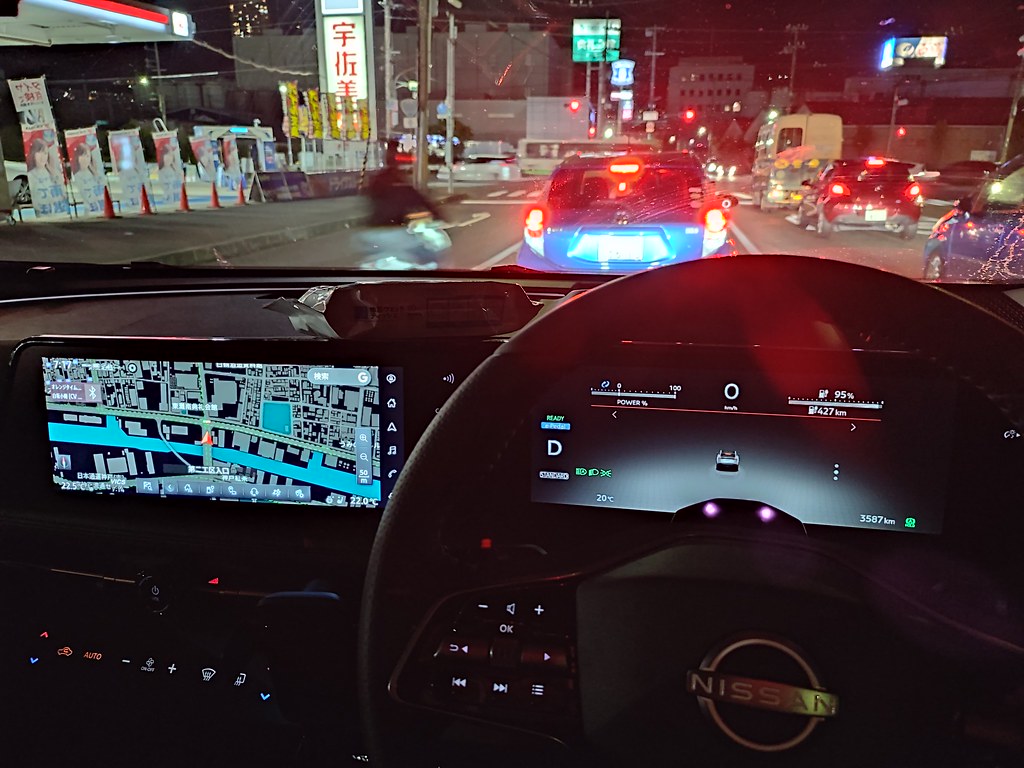
Nissan Ariya vs VW Tiguan 2.0 TSI: Which Should You Buy in 2025?
Considering switching to an EV? This comprehensive comparison between the Nissan Ariya and the VW Tiguan 2.0 TSI will help you make the right decision for your wallet and lifestyle in South Africa. While the Tiguan wins decisively on total cost of ownership—saving you R315,423 over five years—the Ariya offers compelling advantages in monthly running costs and environmental impact that may justify the premium for the right buyer.
📊 Quick Comparison Overview
| Feature | Nissan Ariya | VW Tiguan 2.0 TSI |
|---|---|---|
| Purchase Price | R1,200,000 | R800,000 |
| 5-Year Fuel Cost | R64,623 | R124,200 |
| 5-Year Maintenance | R15,000 | R40,000 |
| Total Cost of Ownership | R1,279,623 | R964,200 |
| Winner | Petrol wins by R315,423! | |
💰 The Real Cost: 5-Year Ownership Analysis
The numbers tell a clear story. While the Nissan Ariya costs R1,200,000 upfront compared to the VW Tiguan 2.0 TSI’s R800,000, the R400,000 price premium is only partially offset by lower running costs over five years. The Tiguan emerges as the more economical choice when considering total cost of ownership.
Understanding the Total Cost Picture
Over 5 years of ownership (15,000 km/year), the Tiguan’s lower purchase price gives it a decisive advantage:
- Nissan Ariya total cost: R1,279,623
- VW Tiguan 2.0 TSI total cost: R964,200
- Tiguan advantage: R315,423 cheaper overall (R5,257/month)
- Cost per kilometre – Nissan Ariya: R17.06
- Cost per kilometre – VW Tiguan 2.0 TSI: R12.86
This means the Tiguan is cheaper to own and cheaper to run on a per-kilometre basis. However, the Ariya’s advantage lies in its lower monthly operating expenses (fuel and maintenance combined), which we’ll explore below.
Where the Ariya Wins: Monthly Operating Costs
While the Ariya costs more overall, it delivers significant monthly savings on fuel and maintenance:
Fuel Costs Breakdown
- Nissan Ariya electricity cost: R12,925/year = R64,623 over 5 years (R1,077/month)
- VW Tiguan 2.0 TSI petrol cost: R24,840/year = R124,200 over 5 years (R2,070/month)
- Monthly fuel savings with Ariya: R993/month
Maintenance Cost Advantage
- Nissan Ariya: R15,000 over 5 years (R250/month) – minimal servicing, no oil changes, less brake wear
- VW Tiguan 2.0 TSI: R40,000 over 5 years (R667/month) – regular servicing, oil, filters, etc.
- Monthly maintenance savings with Ariya: R417/month
The Bottom Line on Costs
The Ariya saves you R1,410 per month in combined fuel and maintenance costs (R84,577 over 5 years). This is a genuine monthly cash-flow advantage. However, this doesn’t overcome the R400,000 higher purchase price, leaving the Tiguan R315,423 cheaper overall when you factor in the upfront cost.
The key insight: If you’re financing both vehicles, the Ariya’s R1,410/month operating savings partially offset higher monthly payments. If you’re buying cash, the Tiguan is unambiguously cheaper. The Ariya’s value proposition depends on whether you prioritize lower monthly running costs or lowest total ownership cost.
🔋 Range and Charging Considerations
The Nissan Ariya offers up to 520 km of range on the WLTP test cycle. However, real-world South African driving conditions—particularly highway speeds, air conditioning use, and load-shedding impacts on charging availability—typically reduce this to 400-450 km. For most daily driving, this is more than adequate, but it’s important to plan longer trips carefully.
Home charging is the game-changer: Installing a home charger (R15,000-R30,000) gives you a “full tank” every morning. At typical Eskom rates, a full charge costs around R215, compared to R800+ to fill the Tiguan’s tank. This convenience factor is difficult to quantify financially but represents significant lifestyle value for many EV owners.
🔋 Charging Infrastructure in South Africa
South Africa’s EV charging network is growing rapidly, with over 500 public charging points nationwide according to PlugShare’s South Africa network data. Major cities like Johannesburg, Cape Town, Durban, and Pretoria have excellent coverage, though rural areas remain underserved.
Public charging costs vary widely—from R3-R8 per kWh depending on the network and charging speed. Fast chargers (50 kW+) can add 200 km of range in 30-45 minutes, while slower AC chargers take 6-8 hours for a full charge. GridCars and Jaguar Powerway operate two of South Africa’s largest public charging networks.
Want to see charging stations near you? Check our live EV charging map for real-time availability across South Africa.
🎯 Who Should Buy the Nissan Ariya?
The Nissan Ariya is perfect for you if:
- 💰 Lower monthly running costs matter: Save R1,410/month on fuel and maintenance combined—genuine cash-flow relief
- 🏠 Home charging available: Wake up to a “full tank” every morning for just R215 per charge
- 🌆 City/suburban driving: Your daily driving is well within the 400-450 km real-world range
- 🔧 Low maintenance priority: No oil changes, no exhaust systems, minimal brake wear
- 🌍 Environmental responsibility: Zero tailpipe emissions in SA’s cities
- ⚡ Modern technology: Latest infotainment, over-the-air updates, advanced safety features
- 💵 Can absorb higher total cost: You understand the Ariya costs R315,423 more over 5 years but value the EV benefits and monthly savings
- 📊 Cash flow over total cost: Monthly operating savings are more important to your budget than overall ownership cost
🎯 Who Should Buy the VW Tiguan 2.0 TSI?
The VW Tiguan 2.0 TSI makes sense if:
- 💵 Lower upfront cost needed: R400,000 cheaper to purchase—a significant saving
- 💰 Total cost of ownership matters most: R315,423 cheaper over 5 years (R5,257/month advantage)
- 📉 Lowest cost per kilometre: R12.86/km vs R17.06/km for the Ariya
- ⛽ Long-distance flexibility: Refuel anywhere in 5 minutes with petrol stations everywhere
- 🚗 Heavy towing/off-road: 2.0L engine provides proven capability
- 📍 Rural/remote areas: No charging infrastructure concerns
- 🔋 No home charging option: Petrol stations remain more accessible for now
- 👴 Familiar technology: Comfortable with traditional vehicle ownership
- ⚡ Load-shedding concerns: Worried about charging availability during power cuts
- 💼 Business/tax considerations: Lower purchase price may offer better depreciation benefits
💡 Key Decision Factors
Choose the Nissan Ariya if you:
- ✅ Drive less than 400 km per day on average
- ✅ Have access to home charging or workplace charging
- ✅ Value R1,410/month savings on fuel and maintenance (even though total ownership costs more)
- ✅ Prioritize environmental impact and zero emissions
- ✅ Value cutting-edge technology and driving experience
- ✅ Can manage the R315,423 higher total ownership cost over 5 years
- ✅ Have reliable electricity supply or backup charging options
- ✅ Prefer lower monthly operating expenses over lowest total cost
Choose the VW Tiguan 2.0 TSI if you:
- ✅ Need to minimize upfront costs (R400,000 saving)
- ✅ Want the lowest total cost of ownership (R315,423 cheaper)
- ✅ Prefer the lowest cost per kilometre (R12.86 vs R17.06)
- ✅ Need maximum flexibility for long-distance travel
- ✅ Don’t have reliable charging access
- ✅ Regularly drive more than 400 km daily
- ✅ Prefer the familiarity of petrol stations
- ✅ Live in an area with limited charging infrastructure
- ✅ Need proven towing and off-road capability
- ✅ Prioritize total ownership cost over monthly operating savings
🌍 Environmental Impact
By choosing the Nissan Ariya over the VW Tiguan 2.0 TSI, you’ll prevent approximately 12,474 kg of CO₂ from entering the atmosphere over 5 years—equivalent to planting roughly 570 trees. For environmentally conscious buyers, this represents significant impact reduction, though it comes at a financial premium of R315,423.
It’s worth noting that South Africa’s electricity grid still relies heavily on coal (approximately 80% of generation according to Eskom), so EVs aren’t entirely zero-emission when considering the full energy chain. However, they’re still substantially cleaner than petrol vehicles on a well-to-wheel basis, and as our grid incorporates more renewable energy, this advantage will grow.
🏁 The Verdict
The Tiguan Wins on Pure Economics
From a strict financial perspective, the VW Tiguan 2.0 TSI is the clear winner, costing R315,423 less over 5 years. That’s R5,257 per month in your pocket. The Ariya’s R400,000 higher purchase price simply isn’t recovered through fuel and maintenance savings within a typical ownership period. The Tiguan is also cheaper per kilometre (R12.86 vs R17.06), making it the more economical choice by every total-cost metric.
But the Ariya Offers Genuine Monthly Savings
While the Ariya costs more overall, it delivers R1,410/month in fuel and maintenance savings. This monthly cash-flow advantage is real and meaningful for budgeting, even though it doesn’t overcome the higher purchase price over five years.
Your Decision Depends on Priorities
- Choose the Nissan Ariya if environmental impact, R1,410/month operating savings, modern technology, and the EV driving experience justify paying R315,423 more over 5 years
- Choose the VW Tiguan 2.0 TSI if minimizing total cost (R315,423 saving), lowest cost per kilometre, maximum flexibility, and proven petrol-vehicle convenience are your priorities
Both are excellent vehicles—the Tiguan offers superior value for money and lower total ownership cost, while the Ariya offers a glimpse into the future of motoring with tangible monthly operating savings and environmental benefits that come at a measurable financial premium.
💰 Calculate Your Own Savings
Want to see how the numbers work based on your specific driving habits and electricity rates? Use our EV Cost Savings Calculator to input your exact annual kilometres, electricity rate, and more. Your personal circumstances—particularly if you drive significantly more than 15,000 km/year—might shift the equation in the Ariya’s favour by amplifying the monthly fuel savings.
🚗 Ready to Make the Switch?
If you’ve decided the Ariya is right for you despite the higher total cost, proper home charging infrastructure is essential to realize those R1,410/month operating savings. Get a free quote for professional EV charger installation anywhere in South Africa. Professional installation ensures safety, optimal charging speeds, and compliance with electrical regulations—critical for maximizing your investment.
Last updated: December 2025. Prices and specifications subject to change. The Nissan Ariya pricing reflects estimated high-specification models available in the South African market; confirm exact pricing and trim levels with local dealers. The 520 km range figure is based on WLTP testing; real-world South African conditions typically yield 400-450 km.
Continue Reading
Deprecated: File Theme without comments.php is deprecated since version 3.0.0 with no alternative available. Please include a comments.php template in your theme. in /var/www/wordpress/wp-includes/functions.php on line 6085
Leave a Reply