
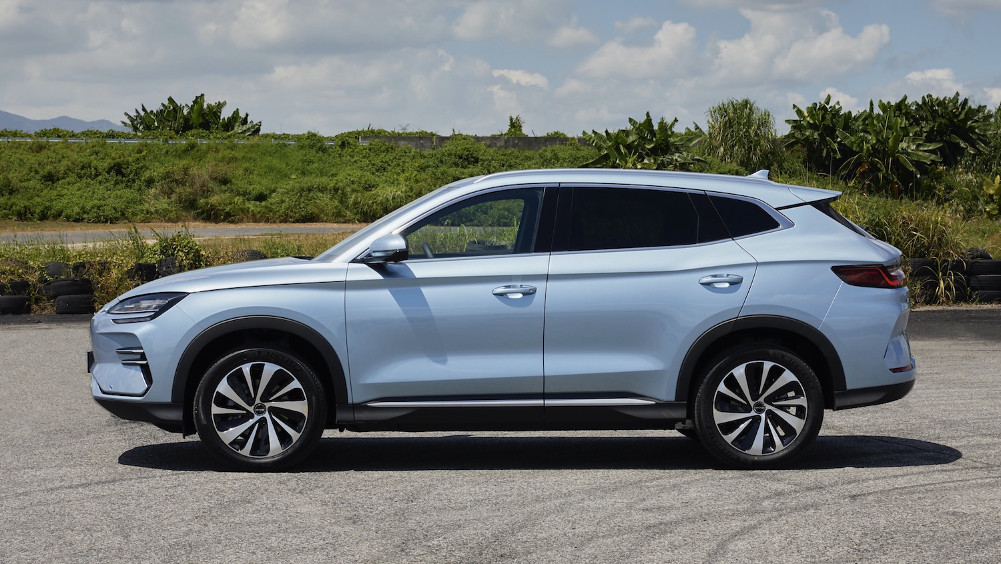
BYD Sealion 6 PHEV vs Toyota Fortuner 2.8 GD-6: Which Should You Buy in 2025?
Considering switching to a plug-in hybrid? This comprehensive comparison between the BYD Sealion 6 PHEV and the Toyota Fortuner 2.8 GD-6 will help you make the right decision for your wallet and lifestyle in South Africa.
📊 Quick Comparison Overview
| Feature | BYD Sealion 6 PHEV | Toyota Fortuner 2.8 GD-6 |
|---|---|---|
| Purchase Price | R699,900 | R850,000 |
| 5-Year Fuel Cost | R70,684 | R134,550 |
| 5-Year Maintenance | R15,000 | R40,000 |
| Total Cost of Ownership | R785,584 | R1,024,550 |
| Winner | PHEV wins by R238,966! | |
💰 The Real Cost: 5-Year Ownership Analysis
Here’s where plug-in hybrid vehicles shine. While the BYD Sealion 6 PHEV costs R699,900 upfront compared to the Toyota Fortuner 2.8 GD-6’s R850,000, the total cost of ownership tells a different story.
Understanding the BYD Sealion 6 PHEV
The BYD Sealion 6 is a plug-in hybrid electric vehicle (PHEV), meaning it combines both an electric motor and a petrol engine. This dual powertrain gives you the best of both worlds: electric driving for daily commutes and petrol backup for longer journeys.
The vehicle offers approximately 100km of pure electric range on a single charge. For most South African drivers who travel less than 100km daily, this means you can complete your entire commute on electricity alone, only using petrol when you exceed that range or take longer trips.
Important: Unlike pure electric vehicles, the Sealion 6 PHEV has both an electric motor and a conventional petrol engine with an exhaust system. When the battery depletes or you need extra power, the petrol engine activates automatically, producing tailpipe emissions like any conventional vehicle. This hybrid design eliminates range anxiety while still delivering significant fuel savings for daily driving.
Fuel Costs Breakdown
The fuel cost calculations below assume optimal PHEV usage: charging daily and completing 80% of your driving on electric power, with the remaining 20% using the petrol engine for longer trips.
- BYD Sealion 6 PHEV combined cost: R14,137/year = R70,684 over 5 years (80% electric at R11,310/year + 20% petrol at R2,827/year)
- Toyota Fortuner 2.8 GD-6 diesel cost: R26,910/year = R134,550 over 5 years
- Fuel savings with PHEV: R63,866 over 5 years
Note: The Fortuner 2.8 GD-6 runs on diesel, not petrol. Diesel prices in South Africa typically track slightly below petrol prices, but the consumption difference makes diesel vehicles more economical than petrol equivalents in the same class. The PHEV’s blended electric-plus-petrol operation still delivers substantial savings even against efficient diesel engines.
Real-World PHEV Fuel Usage
Understanding how PHEVs consume fuel in practice is crucial. The 100km electric range means that if you drive 125km in a day, the first 100km runs on battery power (costing roughly R8 in electricity), while the final 25km uses the petrol engine (costing roughly R5 in petrol). Your total daily fuel cost would be R13 instead of R28 for a pure diesel vehicle covering the same distance.
This blended operation is why our calculations include both electricity costs (80% of driving) and petrol costs (20% of driving). The PHEV isn’t “zero emissions”—it’s “reduced emissions” compared to conventional vehicles, with the exact reduction depending on how often you charge and your typical journey lengths.
Maintenance Costs
PHEVs require less maintenance than conventional vehicles because the electric motor handles most daily driving, reducing wear on the petrol engine, brakes, and other components. However, they still need regular petrol-engine servicing including oil changes, air filters, and exhaust system maintenance.
- BYD Sealion 6 PHEV: R15,000 (reduced oil changes, less brake wear, simpler servicing, but still requires petrol-engine maintenance)
- Toyota Fortuner 2.8 GD-6: R40,000 (regular diesel servicing, oil, filters, etc.)
- Maintenance savings with PHEV: R25,000
🔌 How PHEVs Work in Real-World South African Conditions
The BYD Sealion 6 PHEV’s dual powertrain adapts to your driving patterns. Charge it overnight at home, and your daily 40km commute to work runs entirely on electricity with zero tailpipe emissions. On weekends, when you drive 300km to visit family in another province, the petrol engine seamlessly takes over once the battery depletes, giving you unlimited range without range anxiety.
This flexibility makes PHEVs ideal for South Africa’s diverse driving needs: electric efficiency for city driving and petrol reliability for our vast distances and areas with limited charging infrastructure.
Load-Shedding Considerations
Even during load-shedding, PHEV owners maintain flexibility. If you can’t charge overnight due to power cuts, the petrol engine ensures you’re never stranded. Many PHEV owners install small battery backup systems (from R15,000) to charge during off-peak hours or use workplace charging stations during the day.
The beauty of PHEV ownership is that charging is optional rather than essential. Miss a few charging sessions during extended load-shedding, and your vehicle simply operates more like a conventional hybrid, still delivering better fuel economy than a pure petrol or diesel vehicle thanks to regenerative braking and electric-assist acceleration.
🎯 Who Should Buy the BYD Sealion 6 PHEV?
The BYD Sealion 6 PHEV is perfect for you if:
- 💰 Budget-conscious long-term: Save R3,983 per month on running costs
- 🏠 Home charging available: Wake up to a full battery every morning for just R942/month (80% of your driving)
- 🌆 City/suburban driving: Perfect for daily commutes under 100km on pure electric power
- 🔧 Low maintenance priority: Fewer oil changes, reduced brake wear, simpler servicing
- 🌍 Environmental responsibility: Dramatically reduced emissions for daily driving (though not zero—the petrol engine still produces emissions when active)
- ⚡ Modern technology: Latest infotainment, over-the-air updates, advanced safety features
- 🛣️ Occasional long trips: Petrol backup means no range anxiety for weekend getaways
🎯 Who Should Buy the Toyota Fortuner 2.8 GD-6?
The Toyota Fortuner 2.8 GD-6 makes sense if:
- 💵 Lower upfront cost needed: R150,100 cheaper to purchase
- ⛽ Constant long-distance driving: Refuel anywhere in 5 minutes with fuel stations everywhere
- 🚗 Heavy towing/off-road: 2.8L diesel engine provides proven capability for serious 4×4 work
- 📍 Rural/remote areas: No dependency on charging infrastructure
- 🔋 No home charging option: Apartment living or no dedicated parking
- 👴 Familiar technology: Comfortable with traditional diesel vehicle ownership
- ⚡ Unreliable electricity supply: Frequent extended load-shedding in your area
💡 Key Decision Factors
Choose the BYD Sealion 6 PHEV if you:
- ✅ Drive less than 100km per day on average (electric-only range)
- ✅ Have access to home charging or workplace charging
- ✅ Want to save R3,983 per month on running costs
- ✅ Prioritize lower maintenance and running costs
- ✅ Want reduced emissions without range anxiety
- ✅ Can manage the higher upfront cost for long-term savings
- ✅ Take occasional long trips but mostly drive locally
Choose the Toyota Fortuner 2.8 GD-6 if you:
- ✅ Need maximum flexibility for constant long-distance travel
- ✅ Don’t have reliable charging access
- ✅ Regularly drive more than 100km daily
- ✅ Need to minimize upfront costs
- ✅ Prefer the simplicity of diesel refuelling
- ✅ Live in an area with limited charging infrastructure
- ✅ Require proven off-road and towing capability
🔋 Charging Infrastructure in South Africa
South Africa’s EV charging network is growing rapidly, with over 500 public charging points nationwide according to PlugShare. Major cities like Johannesburg, Cape Town, Durban, and Pretoria have excellent coverage, with new stations opening monthly.
For PHEV owners, public charging is a bonus rather than a necessity. Home charging is the key advantage: Installing a home charger (R15,000–R30,000) gives you a full battery every morning at a fraction of diesel costs. Most PHEV owners charge overnight during off-peak hours when electricity rates are lowest.
The National Association of Automobile Manufacturers of South Africa (NAAMSA) reports steady growth in charging infrastructure, with major fuel retailers like Engen and Shell investing in rapid-charging networks along key routes. This expansion makes long-distance PHEV travel increasingly convenient, though the petrol engine ensures you’re never dependent on finding a charger.
📈 Long-Term Value and Depreciation
Over 5 years of ownership (15,000km/year):
- Total savings with BYD Sealion 6 PHEV: R238,966
- Monthly savings: R3,983
- Cost per kilometre – BYD Sealion 6 PHEV: R10.47
- Cost per kilometre – Toyota Fortuner 2.8 GD-6: R13.66
These savings assume you charge at home regularly and complete most daily driving on electric power. Even if you only achieve 60% electric driving (rather than the optimal 80%), you’ll still save over R180,000 across five years.
Resale Value Considerations
While the South African PHEV market is still developing, global trends show strong resale values for plug-in hybrids as fuel prices rise and environmental awareness grows. The Fortuner holds excellent resale value due to Toyota’s reputation and proven reliability in the local market.
Battery degradation is a common concern, but modern PHEV batteries typically retain 80–90% capacity after 8–10 years according to US Department of Energy studies. BYD offers competitive warranty coverage on the Sealion 6 PHEV battery pack, providing peace of mind for first and second owners alike.
🌍 Environmental Impact
By choosing the BYD Sealion 6 PHEV over the Toyota Fortuner 2.8 GD-6, you’ll prevent approximately 13,514kg of CO₂ from entering the atmosphere over 5 years, assuming 80% electric driving. That’s equivalent to planting roughly 615 trees.
It’s important to note that PHEVs are not zero-emission vehicles. When the petrol engine runs (during the 20% of driving beyond electric range), it produces tailpipe emissions including CO₂, NOx, and particulates. However, these emissions are significantly lower than a conventional vehicle covering the same total distance, because the electric motor handles the majority of daily driving and the petrol engine operates more efficiently thanks to electric assistance during acceleration.
South Africa’s electricity grid is still heavily coal-dependent, so even electric driving has an indirect carbon footprint. However, studies show that even with coal-heavy grids, PHEVs and EVs produce fewer lifecycle emissions than conventional vehicles when accounting for fuel extraction, refining, and combustion.
🔧 Practical Ownership Considerations
Warranty and Support
BYD offers competitive warranty coverage on the Sealion 6 PHEV, including extended battery warranties that protect against significant capacity degradation. Toyota’s legendary reliability and extensive South African dealer network provide peace of mind for Fortuner owners, with service centres in virtually every major town.
Both manufacturers have established parts supply chains in South Africa, though BYD’s network is newer and still expanding. Urban buyers will find excellent support for both vehicles, while rural buyers may prefer Toyota’s more established presence.
Insurance Costs
Insurance premiums for PHEVs are typically 10–15% higher than equivalent conventional vehicles due to battery replacement costs and specialized repair requirements. However, this difference (roughly R200–R300/month) is more than offset by the fuel and maintenance savings, still leaving you ahead by over R3,600 monthly.
Home Charging Installation
Installing a dedicated home charger requires a qualified electrician to assess your electrical panel capacity and install appropriate wiring. Most South African homes can accommodate a 3.5kW or 7kW charger without major electrical upgrades, though older properties may need panel upgrades (R5,000–R15,000 additional cost).
A 7kW home charger will fully charge the Sealion 6 PHEV’s battery in approximately 3–4 hours, meaning overnight charging easily covers daily driving needs. Even a standard 15A wall socket can charge the battery overnight, though more slowly (8–10 hours for a full charge).
🏁 The Verdict
Clear Winner: BYD Sealion 6 PHEV
The numbers speak for themselves. Despite the higher purchase price, the BYD Sealion 6 PHEV will save you a staggering R238,966 over 5 years compared to the Toyota Fortuner 2.8 GD-6. That’s R3,983 per month back in your pocket.
If you have access to home charging and complete most of your driving within the 100km daily electric range, the BYD Sealion 6 PHEV is the smarter financial choice. The fuel and maintenance savings alone make it worthwhile, and you still have the petrol engine for longer trips—eliminating the range anxiety that stops many buyers from considering pure electric vehicles.
The Fortuner remains an excellent choice for buyers who need proven off-road capability, constant long-distance driving, or lack reliable charging access. Its diesel engine and traditional design offer simplicity and universal refuelling convenience that some buyers still prefer.
💰 Calculate Your Own Savings
Want to see how much you could save based on your specific driving habits? Use our EV Cost Savings Calculator to input your exact annual kilometres, electricity rate, and driving patterns for a personalised comparison.
🚗 Ready to Make the Switch?
Need help installing a home charger for your new PHEV? Get a free quote for professional EV charger installation anywhere in South Africa. Our certified installers can assess your home’s electrical capacity and recommend the best charging solution for your needs.
Explore our live EV charging map to see public charging stations near you and plan your routes with confidence.
Last updated: December 2024
Continue Reading
Deprecated: File Theme without comments.php is deprecated since version 3.0.0 with no alternative available. Please include a comments.php template in your theme. in /var/www/wordpress/wp-includes/functions.php on line 6085
Leave a Reply