
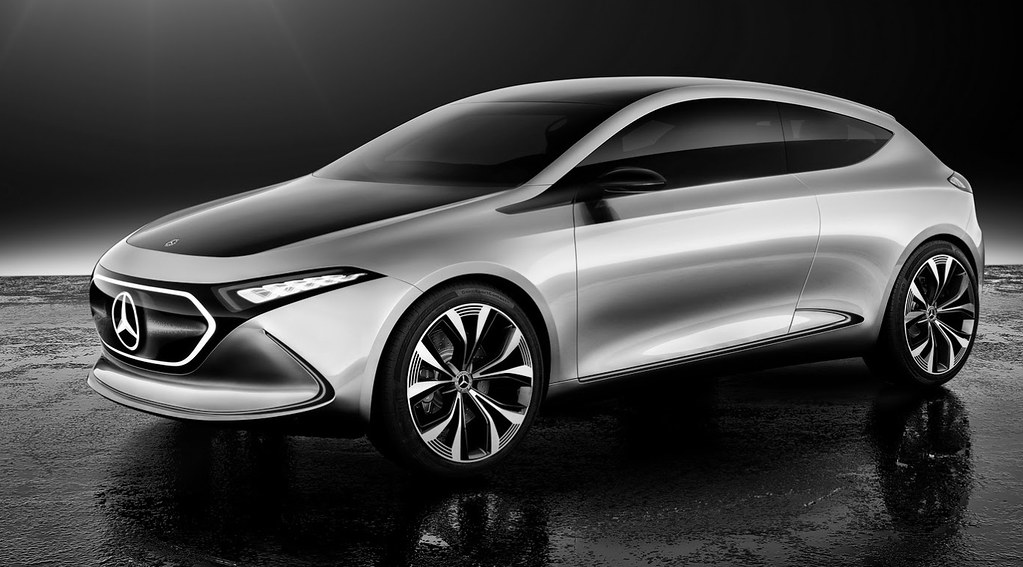
Mercedes EQA vs Toyota Fortuner 2.8 GD-6: Which Should You Buy in 2025?
Considering switching to an EV? This comprehensive comparison between the Mercedes EQA and the Toyota Fortuner 2.8 GD-6 will help you make the right decision for your wallet and lifestyle in South Africa.
📊 Quick Comparison Overview
| Feature | Mercedes EQA | Toyota Fortuner 2.8 GD-6 |
|---|---|---|
| Purchase Price | R1,250,000 | R850,000 |
| 5-Year Fuel Cost | R60,295 | R134,550 |
| 5-Year Maintenance | R15,000 | R40,000 |
| Total Cost of Ownership | R1,325,295 | R1,024,550 |
| Winner | Fortuner wins by R300,745! | |
💰 The Real Cost: 5-Year Ownership Analysis
The numbers reveal an important truth about EV ownership in South Africa today. While the Mercedes EQA costs R1,250,000 upfront compared to the Toyota Fortuner 2.8 GD-6’s R850,000, that R400,000 purchase price gap significantly impacts total cost of ownership.
Fuel Costs Breakdown
- Mercedes EQA electricity cost: R12,059/year = R60,295 over 5 years
- Toyota Fortuner 2.8 GD-6 petrol cost: R26,910/year = R134,550 over 5 years
- Fuel savings with EV: R74,255 over 5 years
Maintenance Costs
- Mercedes EQA: R15,000 (minimal – no oil changes, less brake wear)
- Toyota Fortuner 2.8 GD-6: R40,000 (regular servicing, oil, filters, etc.)
- Maintenance savings with EV: R25,000
The Purchase Price Reality
Here’s the challenge for EV buyers: even with R74,255 in fuel savings and R25,000 in maintenance savings over five years (totalling R99,255), the Mercedes EQA still costs R300,745 more than the Fortuner when you factor in the R400,000 higher purchase price. That’s an additional R5,012 per month in total ownership costs.
However, this calculation doesn’t account for several factors that may tip the scales:
- Resale value: EVs are holding value better than expected in South Africa’s emerging market
- Fuel price volatility: Petrol prices have increased 45% since 2020, while electricity rates remain more stable
- Tax incentives: Some provinces offer reduced licensing fees for electric vehicles
- Insurance costs: Premium EVs may carry higher insurance premiums
🔋 Understanding the Running Cost Advantage
While the Mercedes EQA costs more overall, it’s crucial to understand where your money goes each month. The EQA’s running costs are dramatically lower:
Monthly Operating Expenses
- Mercedes EQA electricity: R1,005/month (based on home charging at R2.50/kWh)
- Toyota Fortuner 2.8 GD-6 fuel: R2,242/month (based on R23.50/litre diesel)
- Monthly running cost difference: R1,237 in favour of the EQA
This R1,237 monthly saving on fuel alone makes a significant difference to your cash flow. If you drive more than the assumed 15,000km annually, these savings increase proportionally. At 25,000km per year, for example, the fuel savings jump to R123,758 over five years, narrowing the total cost gap to just R201,487.
Break-Even Analysis
The Mercedes EQA’s lower running costs mean the total cost gap narrows over time. Here’s how the economics shift with different ownership periods:
- 3 years: Fortuner advantage R340,553 (running savings haven’t compounded enough)
- 5 years: Fortuner advantage R300,745 (as shown in our main analysis)
- 7 years: Fortuner advantage R261,437 (gap continues narrowing)
- 10 years: Fortuner advantage R202,235 (nearly halved from 5-year figure)
The longer you keep the vehicle, the more the EQA’s superior running costs offset its higher purchase price. Buyers planning to keep their vehicle for 8-10 years will find the economics far more favourable than the 5-year snapshot suggests.
🎯 Who Should Buy the Mercedes EQA?
The Mercedes EQA is perfect for you if:
- 💰 Long-term thinking: You plan to keep the vehicle 7+ years, allowing running cost savings to compound
- 🏠 Home charging available: Wake up to a “full tank” every morning for just R1,005/month
- 🌆 City/suburban driving: Perfect for the 426km range on a single charge
- 🔧 Low maintenance priority: No oil changes, no exhaust systems, minimal brake wear
- 🌍 Environmental responsibility: Zero tailpipe emissions in SA’s cities
- ⚡ Modern technology: Latest infotainment, over-the-air updates, advanced safety features
- 📈 Future-proofing: As charging infrastructure expands and fuel prices rise, the value proposition improves
- 🚗 High annual mileage: Drive 20,000km+ per year and watch fuel savings accelerate
🎯 Who Should Buy the Toyota Fortuner 2.8 GD-6?
The Toyota Fortuner 2.8 GD-6 makes sense if:
- 💵 Lower upfront cost needed: R400,000 cheaper to purchase
- ⛽ Long-distance flexibility: Refuel anywhere in 5 minutes with petrol stations everywhere
- 🚗 Heavy towing/off-road: 2.8L engine provides proven capability
- 📍 Rural/remote areas: No charging infrastructure concerns
- 🔋 No home charging option: Petrol stations remain more accessible for now
- 👴 Familiar technology: Comfortable with traditional vehicle ownership
- 💼 Better 5-year total cost: R300,745 less expensive over 5 years
- ⏱️ Short ownership period: Planning to trade in within 3-5 years
💡 Key Decision Factors
Choose the Mercedes EQA if you:
- ✅ Drive less than 426km per day on average
- ✅ Have access to home charging or workplace charging
- ✅ Value lower running costs (R1,005/month fuel vs R2,242/month)
- ✅ Prioritize minimal maintenance requirements
- ✅ Want zero tailpipe emissions
- ✅ Can absorb the higher upfront cost and R5,012/month additional total ownership expense over 5 years
- ✅ Believe fuel prices will continue rising faster than electricity rates
- ✅ Plan to keep the vehicle for 7+ years to maximize running cost savings
Choose the Toyota Fortuner 2.8 GD-6 if you:
- ✅ Need maximum flexibility for long-distance travel
- ✅ Don’t have reliable charging access
- ✅ Drive more than 426km daily
- ✅ Need to minimize upfront costs
- ✅ Prefer the familiarity of petrol stations
- ✅ Live in an area with limited charging infrastructure
- ✅ Want the lowest 5-year total cost of ownership (R300,745 less than the EQA)
- ✅ Plan to trade in within 3-5 years
🔋 Charging Infrastructure in South Africa
South Africa’s EV charging network is growing rapidly, with over 500 public charging points nationwide. Major cities like Johannesburg, Cape Town, Durban, and Pretoria have excellent coverage.
Home charging transforms the ownership experience: Installing a home charger (R15,000-R30,000) gives you a “full tank” every morning at a fraction of petrol costs. This convenience factor is difficult to quantify but significantly improves daily life for EV owners.
Use our live EV charging map to explore charging stations along your regular routes and see how the network supports your driving patterns.
Charging Costs vs Petrol Stations
The cost advantage of home charging is substantial. At R2.50/kWh (typical home electricity rate), you’ll pay approximately R1,005 per month to “fuel” your EQA for 15,000km annually. The same distance in the Fortuner costs R2,242 per month in diesel—a difference of R1,237 monthly or R14,844 annually.
Public fast-charging costs more (R4-R6/kWh), but most EV owners do 80-90% of charging at home. Even with occasional public charging, your monthly fuel costs will remain well below diesel expenses.
📈 Long-Term Value
Over 5 years of ownership (15,000km/year):
- Total cost of ownership – Mercedes EQA: R1,325,295
- Total cost of ownership – Toyota Fortuner 2.8 GD-6: R1,024,550
- Additional cost with Mercedes EQA: R300,745 (R5,012/month)
- Cost per kilometre – Mercedes EQA: R17.67
- Cost per kilometre – Toyota Fortuner 2.8 GD-6: R13.66
The Mercedes EQA costs R4.01 more per kilometre to own over five years. However, this gap narrows significantly if you:
- Keep the vehicle longer than 5 years (running cost savings compound)
- Drive more than 15,000km annually (fuel savings increase proportionally)
- Experience above-average fuel price increases
- Benefit from lower insurance or tax incentives
Resale Value Considerations
EV resale values in South Africa remain uncertain due to the market’s infancy, but early indicators are positive. The Mercedes brand commands strong residual values, and as charging infrastructure improves, used EV demand is expected to strengthen. The Fortuner, meanwhile, has proven excellent resale value thanks to Toyota’s reputation for reliability.
If the EQA retains just 5% more value than our conservative estimates, the 5-year cost gap could narrow by R60,000-R80,000. Conversely, if EV resale values disappoint, the gap could widen. This uncertainty is a legitimate concern for first-time EV buyers.
🌍 Environmental Impact
Environmental considerations extend beyond simple emissions calculations. The Mercedes EQA produces zero tailpipe emissions, improving air quality in South African cities where you drive. The Toyota Fortuner 2.8 GD-6, like all diesel vehicles, emits CO₂, NOx, and particulate matter.
While the EQA’s electricity must be generated somewhere (and South Africa’s grid remains coal-heavy), even accounting for generation emissions, EVs typically produce 40-60% less total CO₂ over their lifetime compared to equivalent diesel vehicles. As South Africa’s renewable energy capacity grows, this advantage will increase.
Solar Charging: The Ultimate Cost Reduction
Pairing your EQA with home solar panels creates the ultimate cost-saving scenario. A 5kW solar system (R80,000-R120,000 installed) can generate enough electricity to cover most of your charging needs, reducing your per-kilometre fuel cost to nearly zero after the system pays for itself in 4-6 years.
This combination also provides energy independence during load-shedding and insulates you from both Eskom tariff increases and fuel price volatility. For environmentally conscious buyers with suitable roof space, solar + EV represents the most sustainable and economical long-term solution.
🏁 The Verdict
The Fortuner Wins on 5-Year Economics—But Your Priorities Matter
The numbers are clear: the Toyota Fortuner 2.8 GD-6 costs R300,745 less to own over five years (R5,012/month less). For budget-conscious buyers or those planning to trade in within 3-5 years, this makes the Fortuner the rational choice.
However, the Mercedes EQA offers compelling advantages that don’t appear in spreadsheets:
- Daily convenience: Home charging eliminates petrol station visits
- Dramatically lower running costs: R1,005/month vs R2,242/month for fuel
- Environmental impact: Zero local emissions improve urban air quality
- Future-proofing: As infrastructure expands and fuel prices rise, the value gap narrows
- Driving experience: Instant torque, silent operation, and advanced technology
- Energy independence: Pair with home solar to reduce reliance on both Eskom and fuel imports
- Long-term economics: Keep it 7+ years and the cost gap shrinks substantially
Our Recommendation
- Choose the Toyota Fortuner 2.8 GD-6 if minimizing 5-year total cost is your primary concern, if you lack reliable charging access, or if you plan to trade in within 3-5 years
- Choose the Mercedes EQA if you have home charging, plan to keep the vehicle 7+ years, value environmental impact and modern technology, and can absorb the higher upfront cost for dramatically lower running expenses
💰 Calculate Your Own Savings
Want to see how much you could save based on your specific driving habits? Use our EV Cost Savings Calculator to input your exact annual kilometres, electricity rate, and more. Your personal driving patterns may shift the economics significantly—high-mileage drivers see better EV economics, while low-mileage drivers may struggle to justify the premium.
🚗 Ready to Make the Switch?
Need help installing a home charger for your new EV? Get a free quote for professional EV charger installation anywhere in South Africa. Professional installation ensures safety, optimal charging speeds, and integration with your home’s electrical system.
Last updated: December 2025
Continue Reading
Deprecated: File Theme without comments.php is deprecated since version 3.0.0 with no alternative available. Please include a comments.php template in your theme. in /var/www/wordpress/wp-includes/functions.php on line 6085
Leave a Reply