
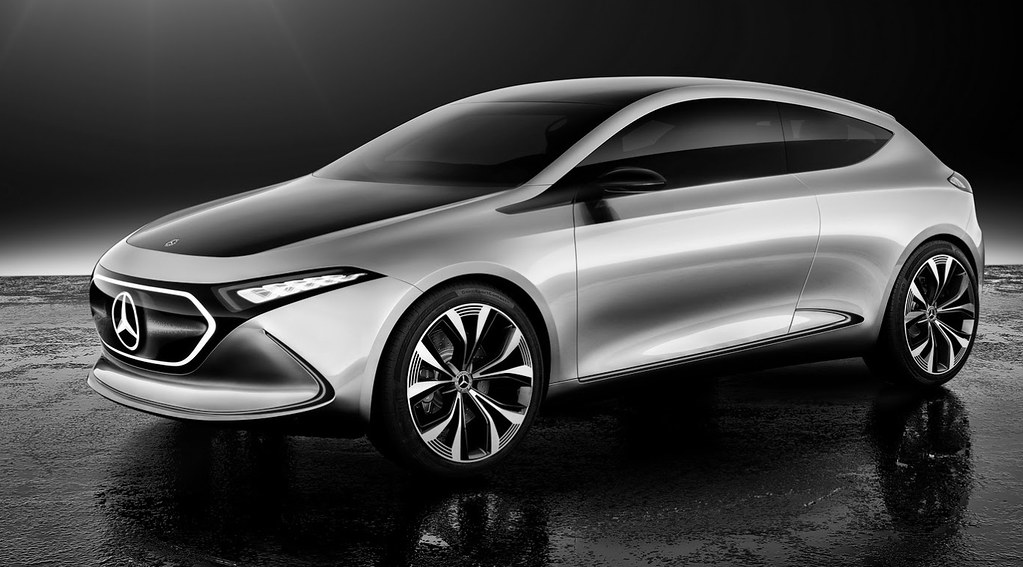
Mercedes EQA vs VW Tiguan 2.0 TSI: Which Should You Buy in 2025?
Considering switching to an EV? This comprehensive comparison between the Mercedes EQA and the VW Tiguan 2.0 TSI will help you make the right decision for your wallet and lifestyle in South Africa. While electric vehicles promise lower running costs, the higher purchase price means the total cost equation isn’t always straightforward—and in this case, the petrol SUV wins on pure economics over a typical ownership period.
📊 Quick Comparison Overview
| Feature | Mercedes EQA | VW Tiguan 2.0 TSI |
|---|---|---|
| Purchase Price | R1,250,000 | R800,000 |
| 5-Year Fuel Cost | R60,295 | R124,200 |
| 5-Year Maintenance | R15,000 | R40,000 |
| Total Cost of Ownership | R1,325,295 | R964,200 |
| Winner | Petrol wins by R361,095! | |
💰 The Real Cost: 5-Year Ownership Analysis
The numbers reveal an important truth about EV ownership in South Africa today. While the Mercedes EQA offers significantly lower running costs, its R1,250,000 purchase price compared to the VW Tiguan 2.0 TSI’s R800,000 creates a substantial R450,000 upfront gap that the EV simply cannot close within a typical five-year ownership period.
Over five years with typical driving (15,000km annually), the EQA saves R88,905 in combined fuel and maintenance costs. However, this saving represents less than 20% of the initial price premium, leaving the Tiguan as the more economical choice by R361,095 over five years. Put another way, the EQA costs you an additional R6,018 per month compared to the Tiguan when all ownership expenses are factored in.
Fuel Costs Breakdown
- Mercedes EQA electricity cost: R12,059/year = R60,295 over 5 years
- VW Tiguan 2.0 TSI petrol cost: R24,840/year = R124,200 over 5 years
- Annual fuel savings with EQA: R12,781/year (R63,905 over 5 years)
The EQA’s electricity costs are calculated based on home charging at typical Eskom residential rates (averaging R2.50/kWh including demand charges). Public charging stations typically cost R4–R6/kWh, which would increase running costs but still remain below petrol expenses. At current petrol prices (approximately R24/litre), the Tiguan’s 9.3L/100km consumption translates to R2.23 per kilometre for fuel alone.
Maintenance Costs
- Mercedes EQA: R15,000 over 5 years (minimal—no oil changes, less brake wear)
- VW Tiguan 2.0 TSI: R40,000 over 5 years (regular servicing, oil, filters, etc.)
- Annual maintenance savings with EQA: R5,000/year (R25,000 over 5 years)
Electric vehicles benefit from simpler drivetrains with fewer moving parts. The EQA requires only brake fluid changes, tyre rotations, and cabin filter replacements. The Tiguan needs regular oil changes every 15,000km, transmission servicing, exhaust system maintenance, and more frequent brake pad replacements due to the absence of regenerative braking.
The Purchase Price Premium: The Decisive Factor
The R450,000 price difference between these vehicles is the elephant in the room. Even with the EQA’s combined fuel and maintenance savings of R17,781 per year, it would take 25.3 years of ownership to break even on the initial investment—well beyond the typical vehicle ownership cycle in South Africa.
This calculation assumes stable electricity and petrol prices, which is optimistic. However, even if electricity remains cheap while petrol prices double, the payback period would still exceed 12 years—longer than most South Africans keep a vehicle.
🎯 Who Should Buy the Mercedes EQA?
The Mercedes EQA is perfect for you if:
- 🏠 Home charging available: Wake up to a “full tank” every morning for just R1,005/month in electricity
- 🌆 City/suburban driving: Perfect for the 426km range on a single charge
- 🔧 Low maintenance priority: No oil changes, no exhaust systems, minimal brake wear
- 🌍 Environmental responsibility matters more than cost: Zero tailpipe emissions in SA’s cities
- ⚡ Modern technology enthusiast: Latest infotainment, over-the-air updates, advanced safety features
- 💰 Very long-term ownership planned: Keeping the vehicle 10+ years where cumulative savings eventually matter
- 🔌 Workplace charging access: Some employers offer free or subsidised charging, improving the economics
- 💵 Purchase price is not your primary concern: You can comfortably afford the R450,000 premium
The EQA makes particular sense if you’re planning to keep the vehicle well beyond the typical ownership cycle. While it won’t achieve cost parity within five years, buyers who keep vehicles for a decade or more will see the gap narrow significantly. Additionally, if you have access to free workplace charging or own solar panels for home charging, the running cost advantage increases substantially.
🎯 Who Should Buy the VW Tiguan 2.0 TSI?
The VW Tiguan 2.0 TSI makes sense if:
- 💵 Lower upfront cost needed: R450,000 cheaper to purchase—money that could be invested elsewhere
- ⛽ Long-distance flexibility: Refuel anywhere in 5 minutes with petrol stations everywhere
- 🚗 Heavy towing/off-road: 2.0L turbocharged engine provides proven capability
- 📍 Rural/remote areas: No charging infrastructure concerns
- 🔋 No home charging option: Petrol stations remain more accessible than public EV chargers
- 👴 Familiar technology: Comfortable with traditional vehicle ownership and maintenance
- ⏱️ Typical ownership cycle: Planning to keep the vehicle 3–7 years
- 💼 Business use: Easier to claim fuel expenses with traditional receipts and established processes
- 📊 Cost-conscious decision-making: Want the most economical option based on total cost of ownership
For buyers who prioritise upfront affordability or need maximum flexibility, the Tiguan remains the practical choice. Its established dealer network, proven reliability, universal refuelling infrastructure, and significantly lower total cost of ownership make it a lower-risk option for most South African drivers.
💡 Key Decision Factors
Choose the Mercedes EQA if you:
- ✅ Drive less than 350km per day consistently
- ✅ Have access to reliable home charging or workplace charging
- ✅ Prioritise environmental impact over financial return
- ✅ Want zero tailpipe emissions and cutting-edge technology
- ✅ Can comfortably afford the R450,000 price premium
- ✅ Plan to keep the vehicle for 10+ years
- ✅ Value minimal maintenance and the EV driving experience
- ✅ Have backup power solutions for load-shedding
Choose the VW Tiguan 2.0 TSI if you:
- ✅ Need maximum flexibility for long-distance travel
- ✅ Don’t have reliable charging access at home or work
- ✅ Frequently drive more than 350km in a day
- ✅ Need to minimise upfront costs and total ownership expenses
- ✅ Prefer the familiarity and convenience of petrol stations
- ✅ Live in an area with limited charging infrastructure
- ✅ Require proven towing capacity for caravans or trailers
- ✅ Want the most economical option over a 5-year period
- ✅ Follow a typical 3–7 year vehicle ownership cycle
🔋 Charging Infrastructure in South Africa
South Africa’s EV charging network is growing rapidly, with over 500 public charging points nationwide as of early 2025. Major cities like Johannesburg, Cape Town, Durban, and Pretoria have excellent coverage, with charging stations at shopping centres, hotels, and along major routes. However, coverage remains sparse in rural areas and smaller towns.
Home charging transforms the ownership experience: Installing a home charger (R15,000–R30,000) gives you a “full tank” every morning at a fraction of petrol costs. Most EV owners charge overnight during off-peak hours, taking advantage of lower electricity rates where time-of-use tariffs are available.
Public charging options include:
- AC charging (7–22kW): Available at shopping centres and hotels, takes 3–6 hours for a full charge
- DC fast charging (50–150kW): Found along major routes, provides 80% charge in 30–45 minutes
- Destination charging: Hotels, restaurants, and some office parks increasingly offer charging facilities
However, load-shedding remains a significant consideration for EV owners. Most home chargers work during scheduled outages only if you have backup power (generator or battery storage). Public fast chargers typically have generator backup, but availability during higher load-shedding stages can be unpredictable. This infrastructure uncertainty adds hidden complexity to EV ownership that doesn’t affect petrol vehicles.
📈 Long-Term Value and Cost Per Kilometre
Over 5 years of ownership (15,000km/year = 75,000km total):
- Total cost difference: Tiguan is R361,095 cheaper overall
- Monthly cost difference: EQA costs R6,018 more per month
- Cost per kilometre—Mercedes EQA: R17.67/km
- Cost per kilometre—VW Tiguan 2.0 TSI: R12.86/km
The cost-per-kilometre figures include purchase price depreciation, fuel, and maintenance spread across 75,000km. While the EQA’s running costs (fuel + maintenance) are significantly lower at R1.00/km versus the Tiguan’s R2.19/km, the higher purchase price adds R16.67/km in depreciation cost versus R10.67/km for the Tiguan.
Extended ownership beyond seven years begins to shift the equation in the EQA’s favour as the initial price premium becomes less significant per kilometre driven. By year 10, assuming both vehicles remain reliable, the cost per kilometre gap narrows to approximately R2/km, and by year 15, the EQA could theoretically become the more economical choice—though few owners keep vehicles that long.
Resale Value Considerations
Both vehicles hold value differently. The Tiguan benefits from an established used car market with predictable depreciation curves—typically retaining 50–55% of purchase price after five years. The EQA’s resale value is less certain as South Africa’s EV market matures, though global trends suggest premium EVs maintain value well due to lower wear and tear. However, battery degradation concerns and rapid EV technology advancement may impact long-term values.
One consideration: the Tiguan’s resale market is broader, with more potential buyers comfortable with petrol technology. The EQA’s resale pool is currently limited to buyers with charging access and EV knowledge, potentially affecting liquidity when selling.
🌍 Environmental Impact
By choosing the Mercedes EQA over the VW Tiguan 2.0 TSI, you’ll prevent approximately 12,474kg of CO₂ from entering the atmosphere over 5 years (75,000km). This assumes South Africa’s current electricity grid mix (approximately 80% coal-based generation), meaning the EQA isn’t truly “zero emission”—it simply shifts emissions from your tailpipe to Eskom’s power stations.
However, this still represents a meaningful reduction compared to burning petrol directly. As South Africa transitions to renewable energy sources—albeit slowly—the environmental advantage of EVs will increase further. Solar panel owners who charge their EVs with rooftop solar can achieve truly zero-emission driving, maximising both environmental and cost benefits (eliminating the R60,295 five-year electricity cost entirely).
For environmentally conscious buyers, the EQA offers a way to reduce your carbon footprint today while betting on a cleaner grid tomorrow. Whether that environmental benefit justifies the R361,095 cost premium is a personal values decision rather than a purely financial one.
🏁 The Verdict
The Numbers Clearly Favour Petrol
Over a 5-year ownership period, the VW Tiguan 2.0 TSI is R361,095 cheaper than the Mercedes EQA when considering total cost of ownership—that’s R6,018 per month you save by choosing petrol. The EQA’s lower running costs, saving R88,905 in fuel and maintenance, cannot overcome its R450,000 higher purchase price within this timeframe. The cost-per-kilometre analysis confirms this: R12.86/km for the Tiguan versus R17.67/km for the EQA.
However, your decision should consider more than just five-year costs:
- Choose the Mercedes EQA if you value environmental impact over economics, want cutting-edge technology and minimal maintenance, have reliable home charging, and plan very long-term ownership (10+ years) where cumulative running cost savings eventually narrow the gap. You must be comfortable paying a significant premium for these benefits.
- Choose the VW Tiguan 2.0 TSI if you prioritise lower upfront cost, maximum flexibility, proven technology, and want the most economical option over a typical 3–7 year ownership cycle. The Tiguan wins decisively on pure financial grounds for the vast majority of buyers.
Both are excellent vehicles that serve different priorities. The Tiguan wins on pure economics for typical ownership periods and offers greater flexibility. The EQA appeals to early adopters willing to pay a substantial premium for environmental benefits, lower maintenance, and future-proof technology—understanding that the financial payback may never materialise within their ownership period.
🔗 Useful Resources
Making the switch to electric? These tools will help you plan:
- EV Database – Comprehensive specifications for all electric vehicles available globally, including detailed range and charging data
- Zap-Map – Real-time charging station availability and route planning (UK-focused but useful for understanding charging networks)
- NAAMSA – South African automotive industry statistics and EV market data, including monthly sales figures
- GridCars – South Africa’s largest EV charging network with real-time station availability
💰 Calculate Your Own Savings
Want to see how the numbers work for your specific situation? Use our EV Cost Savings Calculator to input your exact annual kilometres, electricity rate, and ownership period. The calculator accounts for your unique circumstances including daily driving distance, access to home charging, local electricity costs, and planned ownership duration to show whether an EV makes financial sense for you.
🗺️ Find Charging Stations Near You
Concerned about charging infrastructure in your area? Check our live EV charging map to see real-time availability of charging stations across South Africa. The map shows AC and DC fast chargers, current pricing, user reviews, and whether stations have backup power for load-shedding periods.
🚗 Ready to Make the Switch?
If you’ve decided the EQA’s benefits outweigh the cost premium and need help installing a home charger, get a free quote for professional EV charger installation anywhere in South Africa. Our certified installers handle everything from electrical compliance certificates to municipal approvals, ensuring your home charging setup is safe and legal.
Last updated: January 2025
Continue Reading
Deprecated: File Theme without comments.php is deprecated since version 3.0.0 with no alternative available. Please include a comments.php template in your theme. in /var/www/wordpress/wp-includes/functions.php on line 6085
Leave a Reply