
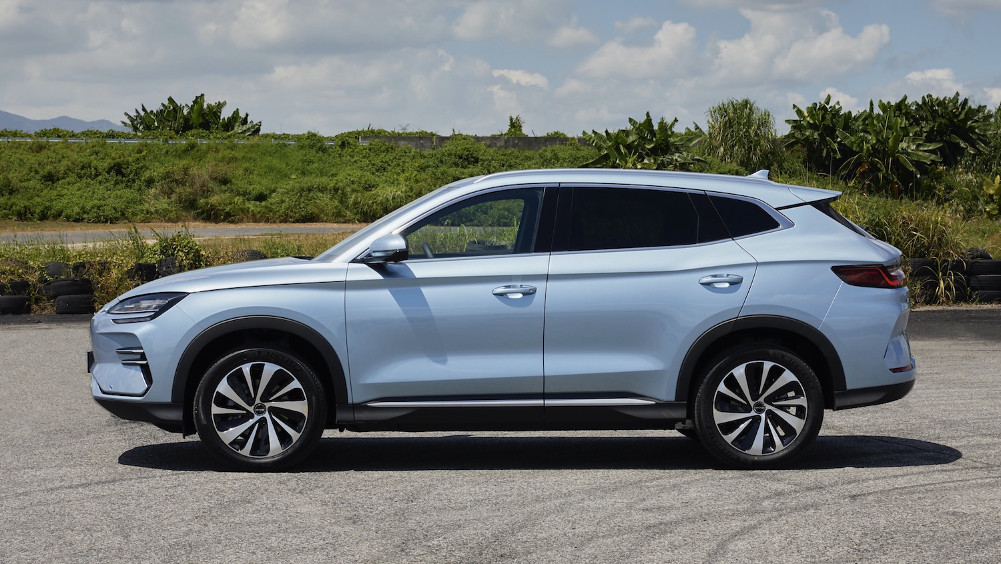
BYD Sealion 6 PHEV vs Toyota Corolla Cross 1.8: Which Should You Buy in 2025?
Considering a plug-in hybrid? This comprehensive comparison between the BYD Sealion 6 PHEV and the Toyota Corolla Cross 1.8 will help you make the right decision for your wallet and lifestyle in South Africa.
📊 Quick Comparison Overview
| Feature | BYD Sealion 6 PHEV | Toyota Corolla Cross 1.8 |
|---|---|---|
| Purchase Price | R699,900 | R550,000 |
| 5-Year Fuel Cost | R70,684 | R100,050 |
| 5-Year Maintenance | R15,000 | R40,000 |
| Total Cost of Ownership | R785,584 | R690,050 |
| Winner | Toyota wins by R95,534 | |
💰 The Real Cost: 5-Year Ownership Analysis
While the BYD Sealion 6 PHEV costs R699,900 upfront compared to the Toyota Corolla Cross 1.8’s R550,000, the plug-in hybrid offers significant savings on fuel and maintenance. However, the higher purchase price means the Toyota still wins on total cost of ownership over five years, coming in R95,534 cheaper overall.
Understanding the BYD Sealion 6 PHEV
The BYD Sealion 6 PHEV is a plug-in hybrid electric vehicle, not a pure EV. This means it combines a petrol engine with an electric motor and battery. You can drive on electric power alone for shorter trips (approximately 100km electric-only range), but the petrol engine kicks in for longer journeys or when the battery is depleted. This dual-power system gives you the efficiency of electric driving for daily commutes while maintaining the flexibility of petrol for road trips.
Because it’s a PHEV, the Sealion 6 still has a conventional petrol engine, exhaust system, and produces tailpipe emissions when running on petrol. The environmental benefits depend entirely on how often you charge and drive in electric mode versus petrol mode.
Fuel Costs Breakdown
- BYD Sealion 6 PHEV combined cost: R14,137/year = R70,684 over 5 years (assumes 70% electric driving, 30% petrol)
- Toyota Corolla Cross 1.8 petrol cost: R20,010/year = R100,050 over 5 years
- Annual fuel savings with PHEV: R5,873 (R29,366 over 5 years)
Note: PHEV fuel costs vary significantly based on charging habits. Drivers who charge daily and drive mostly short trips can achieve up to 80-90% electric driving, while those who rarely charge may see costs closer to a conventional petrol vehicle. The 100km range refers to electric-only driving; total range with a full battery and full petrol tank exceeds 1,000km.
Maintenance Costs
- BYD Sealion 6 PHEV: R15,000 (reduced servicing intervals, regenerative braking reduces brake wear, but still requires oil changes and exhaust system maintenance for the petrol engine)
- Toyota Corolla Cross 1.8: R40,000 (regular servicing, oil, filters, brake pads, exhaust components, etc.)
- Annual maintenance savings with PHEV: R5,000 (R25,000 over 5 years)
The Bottom Line on Costs
The BYD Sealion 6 PHEV saves you R10,873 per year on running costs (R5,873 on fuel + R5,000 on maintenance), which totals R54,366 over five years. However, the R149,900 higher purchase price means you’ll spend R95,534 more overall compared to the Toyota Corolla Cross 1.8. This translates to paying an additional R1,592 per month in total ownership costs for the privilege of lower running expenses and modern PHEV technology.
🎯 Who Should Buy the BYD Sealion 6 PHEV?
The BYD Sealion 6 PHEV is perfect for you if:
- 💰 Lower running costs matter: Save R906 per month on fuel and maintenance combined (R10,873 annually)
- 🏠 Home charging available: Maximize electric driving with overnight charging for just R98/100km on electricity vs R133/100km on petrol
- 🌆 City/suburban driving: Perfect for daily commutes under 100km on electric power alone
- 🔧 Reduced maintenance priority: Fewer oil changes, less brake wear thanks to regenerative braking (though still more maintenance than a pure EV)
- 🌍 Environmental responsibility: Significantly lower emissions when driving on electric power (though not zero-emission like a pure EV)
- ⚡ Modern technology: Latest infotainment, over-the-air updates, advanced safety features
- 🛣️ Best of both worlds: Electric efficiency for daily driving, petrol flexibility for road trips without range anxiety
- 💵 Can absorb higher upfront cost: You’re willing to pay R95,534 more over 5 years for the benefits of PHEV ownership
🎯 Who Should Buy the Toyota Corolla Cross 1.8?
The Toyota Corolla Cross 1.8 makes sense if:
- 💵 Lower total cost priority: R95,534 cheaper over 5 years despite higher running costs
- 💰 Lower upfront cost needed: R149,900 cheaper to purchase
- ⛽ Simplicity preferred: No need to manage charging schedules or dual fuel systems
- 🚗 Proven reliability: Toyota’s reputation for long-term dependability and strong resale value in South Africa
- 📍 Rural/remote areas: No charging infrastructure concerns or dependence on electricity supply
- 🔋 No home charging option: Petrol stations remain more accessible nationwide, especially during load-shedding
- 👴 Familiar technology: Comfortable with traditional vehicle ownership and maintenance
- 🏢 Business use: Simpler expense tracking without dual-fuel complexity
💡 Key Decision Factors
Choose the BYD Sealion 6 PHEV if you:
- ✅ Drive less than 100km per day on average (maximizes electric-only driving)
- ✅ Have access to home charging or workplace charging
- ✅ Want to minimize fuel and maintenance costs (save R906/month on running costs)
- ✅ Value modern technology and features
- ✅ Want to reduce your carbon footprint when driving on electric power
- ✅ Can absorb the higher upfront cost and higher total ownership cost for the PHEV experience
- ✅ Appreciate the flexibility of both electric and petrol power
- ✅ Have reliable electricity supply or backup charging options during load-shedding
Choose the Toyota Corolla Cross 1.8 if you:
- ✅ Need the lowest total cost of ownership (R95,534 cheaper over 5 years)
- ✅ Want to minimize upfront costs (R149,900 cheaper to purchase)
- ✅ Don’t have reliable charging access or stable electricity supply
- ✅ Drive more than 100km daily without charging opportunities
- ✅ Prefer simplicity over dual-fuel complexity
- ✅ Value Toyota’s proven reliability and strong resale value in the South African market
- ✅ Live in an area with limited charging infrastructure
- ✅ Want predictable, straightforward ownership costs
🔋 Charging Infrastructure in South Africa
South Africa’s EV charging network is growing rapidly, with over 500 public charging points nationwide. Major cities like Johannesburg, Cape Town, Durban, and Pretoria have excellent coverage, making it increasingly practical to own a plug-in hybrid. However, load-shedding remains a consideration—having a backup charging plan or solar power can ensure you’re never caught without a charge.
Home charging is the game-changer: Installing a home charger (R15,000-R30,000) gives you a “full battery” every morning at a fraction of petrol costs. For the BYD Sealion 6 PHEV, this means you can complete most daily driving on electricity alone, only using petrol for longer trips. Many South African PHEV owners pair their home chargers with solar panels to further reduce electricity costs and ensure charging availability during load-shedding.
Check ChargePoint SA’s live EV charging map to see charging stations near you and plan your routes with confidence.
📈 Long-Term Value Comparison
Over 5 years of ownership (15,000km/year):
- BYD Sealion 6 PHEV total cost: R785,584
- Toyota Corolla Cross 1.8 total cost: R690,050
- Difference: Toyota is R95,534 cheaper overall
- Monthly cost difference: R1,592 more for the BYD
- Cost per kilometre – BYD Sealion 6 PHEV: R10.47
- Cost per kilometre – Toyota Corolla Cross 1.8: R9.20
Break-Even Analysis
The BYD Sealion 6 PHEV saves R10,873 per year on running costs (fuel + maintenance). At this rate, you would need to own the vehicle for approximately 13.8 years to recover the higher purchase price through running cost savings alone. However, this calculation doesn’t account for potential petrol price increases, which could accelerate the break-even point, or for battery degradation, which might reduce electric-only range over time.
🌍 Environmental Impact
The BYD Sealion 6 PHEV’s environmental benefit depends heavily on how often you charge and drive on electric power. As a plug-in hybrid, it produces emissions whenever the petrol engine runs, so it’s not a zero-emission vehicle like a pure EV.
Assuming 70% electric driving (the typical usage pattern for PHEV owners who charge regularly), the Sealion 6 will still produce emissions from its petrol engine for 30% of your driving. Compared to the Toyota Corolla Cross 1.8 running on petrol 100% of the time, you’ll prevent approximately 2,110kg of CO₂ from entering the atmosphere over 5 years—a 30% reduction in emissions.
If you charge daily and achieve 90% electric driving, CO₂ savings could reach 2,700kg over five years (a 38% reduction). Conversely, if you rarely charge and run primarily on petrol, emissions will be similar to a conventional petrol vehicle, as the PHEV’s additional weight actually reduces efficiency when running on petrol alone.
🏁 The Verdict
The Toyota Wins on Total Cost, But the BYD Offers Compelling Benefits
From a pure cost perspective, the Toyota Corolla Cross 1.8 is R95,534 cheaper over five years—a significant saving that makes it the clear winner for budget-conscious buyers. However, the BYD Sealion 6 PHEV offers substantially lower running costs (R906/month savings on fuel and maintenance), modern technology, and reduced environmental impact when driven primarily on electric power.
Your decision should be based on these priorities:
- Choose the BYD Sealion 6 PHEV if you have home charging, drive mostly short daily trips under 100km, value modern technology and lower running costs, and want to reduce your carbon footprint—even if it costs R95,534 more overall over five years
- Choose the Toyota Corolla Cross 1.8 if lowest total cost, proven reliability, simplicity, and no charging dependency are your top priorities
For most South African buyers, the Toyota’s R95,534 lower total cost of ownership makes it the more financially sensible choice. The BYD Sealion 6 PHEV is best suited for early adopters who have reliable home charging, drive predictable daily distances under 100km, and are willing to pay a premium for the PHEV experience and environmental benefits.
💰 Calculate Your Own Savings
Want to see how much you could save based on your specific driving habits and charging access? Use our EV Cost Savings Calculator to input your exact annual kilometres, electricity rate, and charging frequency for a personalized comparison. The calculator accounts for PHEV dual-fuel scenarios and can help you determine your likely electric-to-petrol driving ratio.
🚗 Ready to Make the Switch?
If you’ve decided on the BYD Sealion 6 PHEV, you’ll need a home charger to maximize your savings and ensure you can drive primarily on electric power. Get a free quote for professional EV charger installation anywhere in South Africa. Our certified installers will help you choose the right charger and ensure safe, compliant installation—including solutions that work during load-shedding.
🔌 Charging Costs and Electricity Rates
Understanding your electricity costs is crucial for PHEV ownership. The BYD Sealion 6 PHEV’s battery capacity allows for approximately 100km of electric-only driving per charge. At typical South African residential electricity rates (averaging R2.50/kWh), a full charge costs approximately R98, giving you an effective rate of R0.98/km on electric power.
Compare this to petrol costs: at R23/litre and the Toyota Corolla Cross 1.8’s consumption of 6.5L/100km, you’re paying R1.50/km—53% more expensive than electric driving. This cost difference is why maximizing your electric driving percentage is crucial to PHEV ownership satisfaction.
However, electricity rates vary significantly across South Africa. Municipal rates, time-of-use tariffs, and solar power can all affect your charging costs. Some owners with solar installations achieve near-zero charging costs, dramatically improving the PHEV’s value proposition.
🛠️ Maintenance Realities for PHEVs
While the BYD Sealion 6 PHEV requires less maintenance than a conventional petrol vehicle, it’s important to understand that it’s not maintenance-free like a pure EV. The PHEV still has:
- A petrol engine requiring regular oil changes (though less frequently than pure petrol vehicles)
- An exhaust system that needs periodic inspection
- A more complex dual-powertrain system with both electric and petrol components
- A high-voltage battery system requiring specialized service knowledge
The maintenance savings come primarily from reduced brake wear (thanks to regenerative braking) and less frequent oil changes (because the petrol engine runs less often). However, when maintenance is needed, ensure your service center has PHEV-trained technicians—not all workshops are equipped to service plug-in hybrid vehicles safely.
📱 Technology and Features Comparison
The BYD Sealion 6 PHEV comes with significantly more advanced technology than the Toyota Corolla Cross 1.8. Standard features include a large rotating touchscreen infotainment system, over-the-air software updates, advanced driver assistance systems, and smartphone integration for remote climate control and charging monitoring.
The Toyota Corolla Cross 1.8 offers proven, reliable technology with a more traditional interface. While less flashy, Toyota’s systems are known for long-term reliability and ease of use. The choice between cutting-edge tech and proven simplicity is a personal preference that should factor into your decision.
🏆 Resale Value Considerations
Toyota vehicles historically hold their value exceptionally well in the South African market, with the Corolla nameplate being particularly strong. The Corolla Cross 1.8 can be expected to retain 50-55% of its value after five years.
The BYD Sealion 6 PHEV’s resale value is harder to predict, as it’s a newer model in the South African market. PHEV resale values globally have been mixed, depending on battery condition, charging infrastructure development, and buyer education. Conservative estimates suggest 40-45% retention after five years, though this could improve as the EV market matures in South Africa.
Last updated: December 2024
Continue Reading
Deprecated: File Theme without comments.php is deprecated since version 3.0.0 with no alternative available. Please include a comments.php template in your theme. in /var/www/wordpress/wp-includes/functions.php on line 6085
Leave a Reply