South Africa’s fuel prices hit record highs on 1 April 2026 — and the pain is far from over. Petrol increased by R3.06 a litre, while diesel jumped by R7.37 to R7.51 a litre, making it the single biggest monthly fuel price shock in the country’s history. Petrol 95 now sits at R23.36 inland and R22.53 coastal, while diesel wholesale prices range from R25.90 to R26.11 inland and R25.07 to R25.35 on the coast. And if the May forecasts hold? Diesel motorists could see increases of between R13.07 and R13.13 per litre. That is not a typo.
The immediate consequence has been panic at the forecourt and a very different kind of panic in living rooms across the country: South Africans are doing the maths on electric vehicles for the first time in earnest. AutoTrader South Africa CEO George Mienie revealed that search queries for fully electric models on the platform increased by 45% month-on-month over the preceding 30 days, with EV sales growing by 10% over the same period. That is not a trend. That is a pivot.
Here at ChargePoint SA, we install home EV chargers every day of the week. And right now, our phones are ringing off the hook. This article cuts through the noise: what the fuel crisis actually means for your wallet, whether EVs genuinely make financial sense in 2026, and what you need to know before making the switch.
The Numbers That Broke the Camel’s Back
Following the United States’ initiation of war against Iran on 28 February in “Operation Epic Fury”, retaliatory strikes by Iran and the closure of the Strait of Hormuz sent global oil prices soaring past $100 a barrel, while investors pulled out of riskier markets, impacting the rand. With both sides of the price equation — crude oil AND the exchange rate — working against motorists simultaneously, the result was inevitable.
Due to the ongoing US-Iran conflict, a temporary reduction in the general fuel levy of R3.00 per litre was implemented in the price structures of petrol and diesel from the 1st of April to the 5th of May 2026. That R3/litre reprieve from Treasury saved motorists billions — but it expires on 5 May. If the government does not extend the R3.00 levy relief, May 2026 will see one of the largest single-month fuel price increases in South African history.
While early-April projections feared a R11.00 jump for diesel, the latest forecast has settled to a combined hike of roughly R11.53 per litre for May — levy expiry included.
The April increases were mainly due to the ongoing war in the Middle East, which has disrupted oil supplies and pushed Brent crude prices up by around 38% in the past month, combined with a weaker rand and existing fuel levies. Diesel prices are expected to rise the most dramatically, posing serious challenges for sectors such as freight, agriculture and manufacturing, and higher diesel costs typically filter through the economy, pushing up transportation expenses, food prices and inflation. Your braai pack costs more because diesel costs more. It really is that direct.
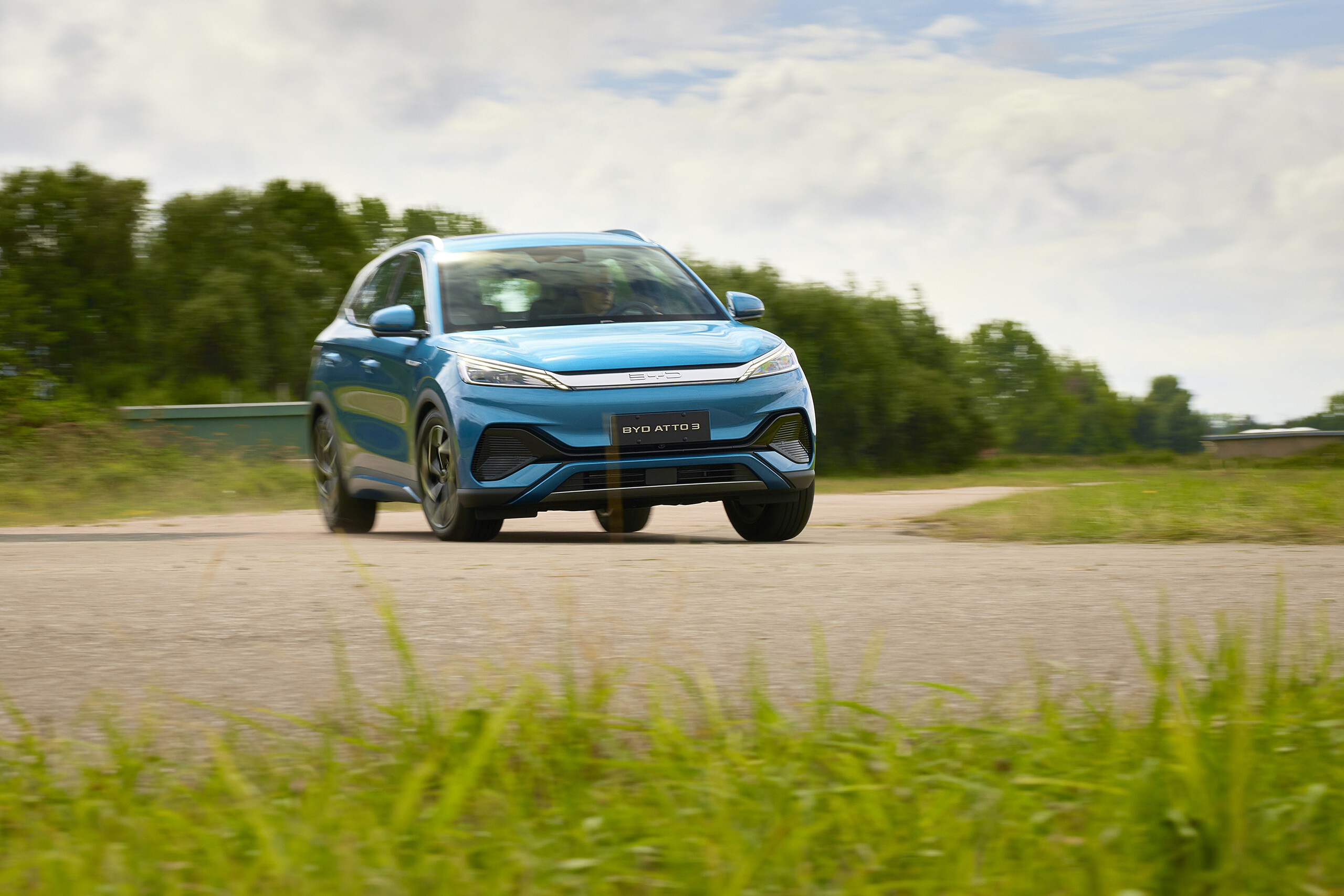
Why EV Searches Jumped 45% in a Single Month
People are not sentimental about switching fuels. They switch when the numbers force them to. And right now, the numbers are forcing the conversation. Recent data from AutoTrader South Africa reveals a clear pattern — interest in fully electric vehicles has jumped sharply, with searches rising by 45 percent in just one month. At the same time, AutoTrader data shows an 18% drop in diesel enquiries over the last four weeks, with growing demand for electric and hybrid vehicles signalling changing showroom dynamics.
What is particularly notable is that this growing demand for battery electric vehicles is not yet being matched by stock availability in South Africa. EV listings are down 3% even as demand has risen sharply, pointing to a market where supply may already be tightening. So if you are thinking about making the switch, waiting is not necessarily a smart play.
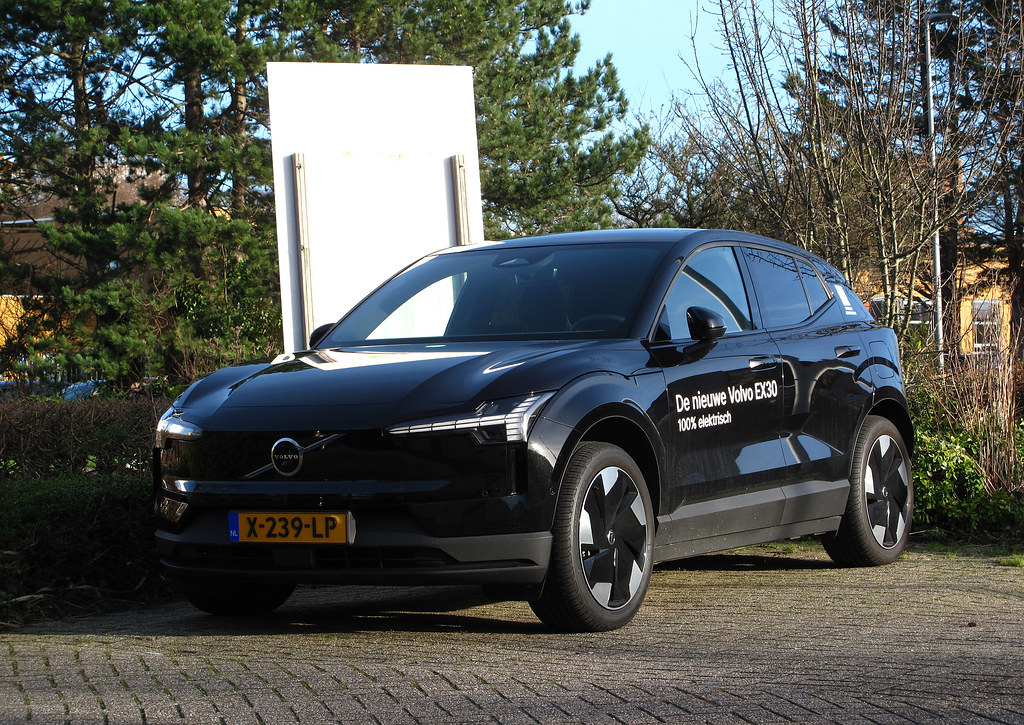
Volvo Car South Africa has been one of the loudest voices in this conversation — and they have skin in the game. The Swedish car company is a leading figure in South Africa’s EV market, with the EX30 being the highest-selling EV. Volvo said that it has seen a massive increase in interest in its electric vehicle range over the last month, with fuel costs remaining the catalyst.
But Volvo’s MD Grant Locke is clear that the fuel price spike is the start of the conversation, not the end of it. “Fuel price increases may start the conversation, but they are not the full story,” says Grant Locke, Managing Director of Volvo Car South Africa. “When you look at the total cost of ownership, the flexibility, and the advancements in battery technology, electric vehicles begin to make a compelling case on their own.”
WhatsApp-based research company Yazi found that 84% of respondents in its March 2026 SA Fuel and Energy Sentiment Study said they would consider a hybrid as their next vehicle. Hybrids and PHEVs are a legitimate bridge — but the real savings, as we’ll show you below, live in full battery-electric vehicles charged at home.
How Much Could You Save With an EV?
Use our free calculator to compare your current fuel costs with EV charging costs.
The Maths: EV at Home vs Petrol at the Pump
Let us be blunt about something the internet tends to gloss over: public fast charging is expensive. A 50kWh top-up at a DC fast charger runs around R400 — depending on location and network — giving you roughly 250–300km of range. Run your daily commute exclusively on public charging and you have not saved nearly as much as the brochure suggests.
Home charging is where the equation flips completely in the EV’s favour. Cape Town’s standard residential tariff sits at roughly R2.92 to R4.20/kWh depending on your time of use. At an average EV consumption of around 16kWh per 100km, you are paying between R46 and R67 to drive 100km. A typical family petrol SUV doing 10 litres per 100km now costs R233/100km just in fuel at April 2026 prices of R23.36/litre. An EV on home charging at R4.20/kWh does the same distance for R67. That is a R166-per-100km saving.
Scale that to 12,000km per year — the average South African mileage — and the home-charging EV saves you R19,920 annually versus a petrol equivalent. That covers a large chunk of a home charger installation in year one alone. Calculate your exact savings at April 2026 fuel prices using our EV savings calculator.
The effective cost per kilometre for electricity is around 30% to 50% of petrol or diesel at current prices. Electricity prices are also less volatile, with adjustments made annually rather than monthly.
Affordable EVs Available in South Africa Right Now
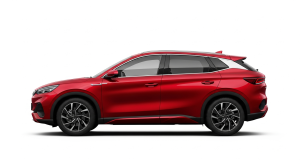
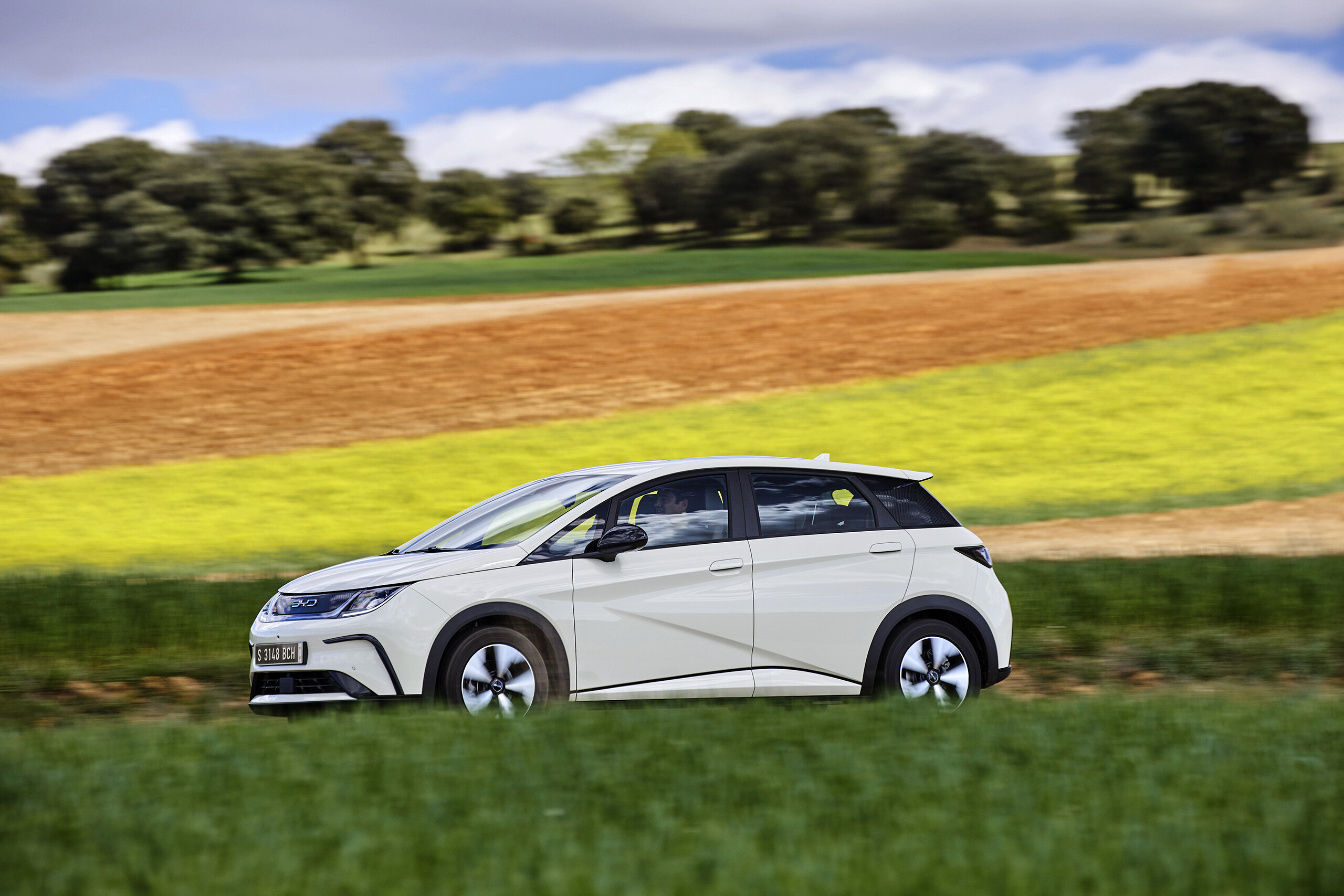
The sub-R400,000 EV used to be a pipe dream in South Africa. That changed. The BYD Dolphin Surf at R339,900 is now the most accessible new EV on sale in the country — a legitimate urban runabout with a real-world range comfortably covering the average South African daily commute of around 55km. Step up to the BYD Dolphin at R539,900 for more range and a bigger battery, or the BYD Atto 3 at R699,900 if you need family SUV practicality.
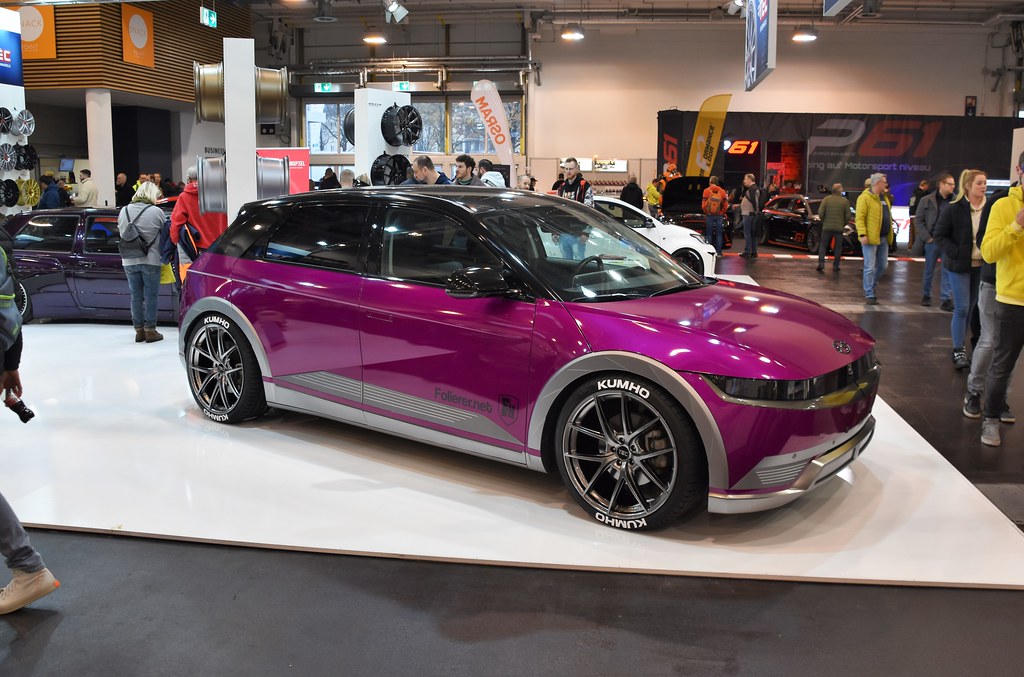
Volvo’s EX30, which was the best-selling EV in SA for March 2026, comes in as a premium option that punches well above its price point in build quality and technology. The GWM Ora 03 at R686,950, the Geely E5 at R699,900, and the Hyundai Ioniq 5 round out a genuinely competitive field that did not exist three years ago.
The market now offers more accessible EV models, with prices starting at R339,000, and there is a notable surge in demand for pre-owned electric vehicles. Battery durability is also evolving quickly, as most manufacturers now offer battery warranties of up to eight years or 160,000 kilometres, which provides peace of mind for many buyers.
| Model | Price (2026) | Range (est.) | Best For |
|---|---|---|---|
| BYD Dolphin Surf | R339,900 | ~340km | Urban commuting |
| BYD Dolphin | R539,900 | ~427km | City + weekend trips |
| GWM Ora 03 | R686,950 | ~420km | Value-focused buyers |
| Geely E5 | R699,900 | ~480km | Family sedan |
| BYD Atto 3 | R699,900 | ~420km | Family SUV |
| Volvo EX30 | From ~R799,900 | ~480km | Premium urban EV |
Ready to Install a Home Charger?
Get a free, no-obligation quote for professional EV charger installation in South Africa.
Load-Shedding: Why 2026 Is Different From 2022
The single biggest objection to EV ownership in South Africa for the past decade has been load-shedding. And honestly, it was a valid concern. Charging a car during rolling blackouts is not a plan. But here is what has changed: South Africa has now logged over 200 consecutive days without load-shedding, and grid stability has held through most of 2026.
Even accounting for Eskom’s upcoming 8.74% electricity price increase, EVs remain considerably cheaper to run than conventional vehicles. The grid is not perfect, and solar-plus-charger setups remain the gold standard for South African EV owners who want true energy independence. But for the majority of homeowners in Joburg, Cape Town, and Durban, plugging in overnight is now as routine as charging a phone.
The load-shedding obstacle has not disappeared entirely — it may return — but it has diminished enough that it can no longer be used as a blanket reason to avoid EVs. If you have the option of adding solar to your home charger setup, the economics become even more compelling. You are essentially driving on sunshine at effectively zero per-kilometre cost once the solar system pays itself off.
Home Charger Installation: What You Actually Need
Here is where ChargePoint SA fits into this picture. An EV without a home charger is like a smartphone you can only charge at the airport. Technically functional, chronically inconvenient, and not the experience anyone signed up for.
A standard home charger installation in South Africa typically involves a 7.4kW single-phase or 11kW three-phase wall-mounted unit. Installation costs range from roughly R8,000 on the affordable end to R28,000 for a full three-phase setup with dedicated wiring, protection gear, and a Certificate of Compliance (CoC) — which is mandatory. The CoC is not optional. It protects your home insurance, satisfies body corporate requirements, and ensures your installation is safe and legal.
If you are in a sectional title property — a flat or a cluster home — the process is slightly more involved because body corporate approval is typically required. It is worth knowing that the Sectional Titles Schemes Management Act does give owners the right to apply for EV charger installations, and the industry has well-established processes for navigating this. It is not a dealbreaker.
The payback period on a home charger installation? Based on the R19,920 annual savings calculated above, a mid-range R18,000 installation pays for itself in under one year at current fuel prices. At May 2026 fuel prices, that timeline shortens further. Get a free home charger installation quote from ChargePoint SA and we will scope your specific property and electrical setup at no cost.
Find Charging Stations Near You
Explore our live map of EV charging stations across South Africa — updated in real time.
Public Charging: The Backup Network Exists — But Home Is King
South Africa’s public charging network has grown substantially. Recent reports indicate over 500 public charging points are available across South Africa, concentrated in Gauteng, the Western Cape, and KwaZulu-Natal. Private operators, such as Zero Carbon Charge, have been expanding networks along key corridors, and off-grid solar-powered sites are beginning to appear, addressing some practicality concerns.
The network is good enough for road trips and emergency top-ups. It is not good enough to be your primary charging strategy if you are trying to save money. As Volvo’s Grant Locke put it: “The ability to charge at home fundamentally changes the economics of driving. Whether it is overnight charging on lower tariffs or making use of solar power.” Although public fast charging remains an option, it is typically the most expensive method.
Think of public DC fast charging as the petrol station equivalent — there for when you need it on a long run between Cape Town and Hermanus, or up the N1 to Johannesburg. But for your daily 55km commute? That should happen at home, overnight, at off-peak tariffs. That is where the R19,920 annual saving lives. See the full public charging network across South Africa on our live map.
The Bottom Line: Is April 2026 South Africa’s EV Tipping Point?
Look, South Africa has “flirted with EVs” before. Every time fuel prices spiked, EV searches went up, a few think-pieces got written, and then Eskom did something terrible and everyone went back to buying petrol bakkies. This time feels genuinely different.
The scale of the fuel shock is unprecedented. With both sides of the fuel price equation working against motorists, this led to steep under-recoveries, putting petrol and diesel prices on the block for the biggest increases in South Africa’s history. The May outlook — even in the more optimistic scenarios — still points to diesel at R33–35 per litre retail if the temporary levy is extended. If it is not extended, the numbers get significantly uglier. Assuming it is extended and that the ceasefire holds, South Africa’s diesel prices, at a retail level, are likely to average around R33 to R35 in May.
And this time, there are actual affordable EVs on South African showroom floors. The BYD Dolphin Surf at R339,900 is genuinely attainable for a middle-income household. The maths on home charging is definitively positive. The grid is stable. Battery warranties are credible. The only missing piece for most buyers is a home charger — and that is a solved problem.
AutoTrader’s Mienie believes the country has reached a tipping point. “The migration away from internal combustion engines is real,” he said, drawing comparisons to Europe’s first significant EV surge following the start of the Russia-Ukraine war in 2022.
Our honest verdict: if you drive more than 40km per day, have access to home charging, and are coming up on a vehicle replacement cycle — the April 2026 fuel crisis has just made an EV the financially rational choice. Not the eco-warrior choice. Not the early-adopter risk play. The boring, sensible, spreadsheet-approved choice. That is a first for South Africa, and it matters.
FAQ
What is the petrol price in South Africa in April 2026?
Petrol 93 currently sits at R23.25 inland and R22.46 coastal, while 95 is at R23.36 inland and R22.53 coastal as of April 2026, following the largest single-month increase in South African history.
What is the diesel price in South Africa in April 2026?
Diesel 0.05% sulphur (wholesale) costs R25.90 inland, and Diesel 0.005% sulphur (wholesale) costs R26.11 inland, with coastal prices slightly lower. Retail pump prices may be higher. These are wholesale reference figures.
Will diesel hit R40 per litre in May 2026?
Early projections were alarming, but more recent data suggests a somewhat lower outcome. Assuming the government’s R3/litre levy relief is extended and the ceasefire holds, South Africa’s diesel prices at a retail level are likely to average around R33 to R35 in May. A R40/litre outcome remains a worst-case scenario dependent on further geopolitical escalation. Final prices will be confirmed by the DMRE on 6 May 2026.
Is it cheaper to charge an EV at home than to fill up with petrol?
Yes, significantly so. At Cape Town’s residential electricity tariffs of around R2.92–R4.20/kWh, charging an EV costs the equivalent of roughly R0.47–R0.67 per kilometre — compared to over R2.30 per kilometre for a petrol car at April 2026 pump prices. The effective cost per kilometre for electricity is around 30% to 50% of petrol or diesel at current prices. Home charging at off-peak tariffs widens the gap further.
How much does a home EV charger installation cost in South Africa?
A home EV charger installation in South Africa typically ranges from around R8,000 for a basic 7.4kW single-phase setup to R28,000 for a full three-phase 11kW system with dedicated wiring and a Certificate of Compliance (CoC). The CoC is a legal requirement and must be issued by a registered electrician. Based on current fuel savings, most installations pay for themselves within one year for average-mileage drivers. Get a free, no-obligation quote from ChargePoint SA.
Where can I charge my EV publicly in South Africa?
Over 500 public charging points are available across South Africa, concentrated in Gauteng, the Western Cape, and KwaZulu-Natal. The network covers major highways and urban centres well enough for daily and intercity use. Check our live EV charging map to find stations near you.
Continue Reading