
Mercedes-Benz EQA vs Mercedes-Benz GLA: Which Compact SUV Makes Sense for South Africa?
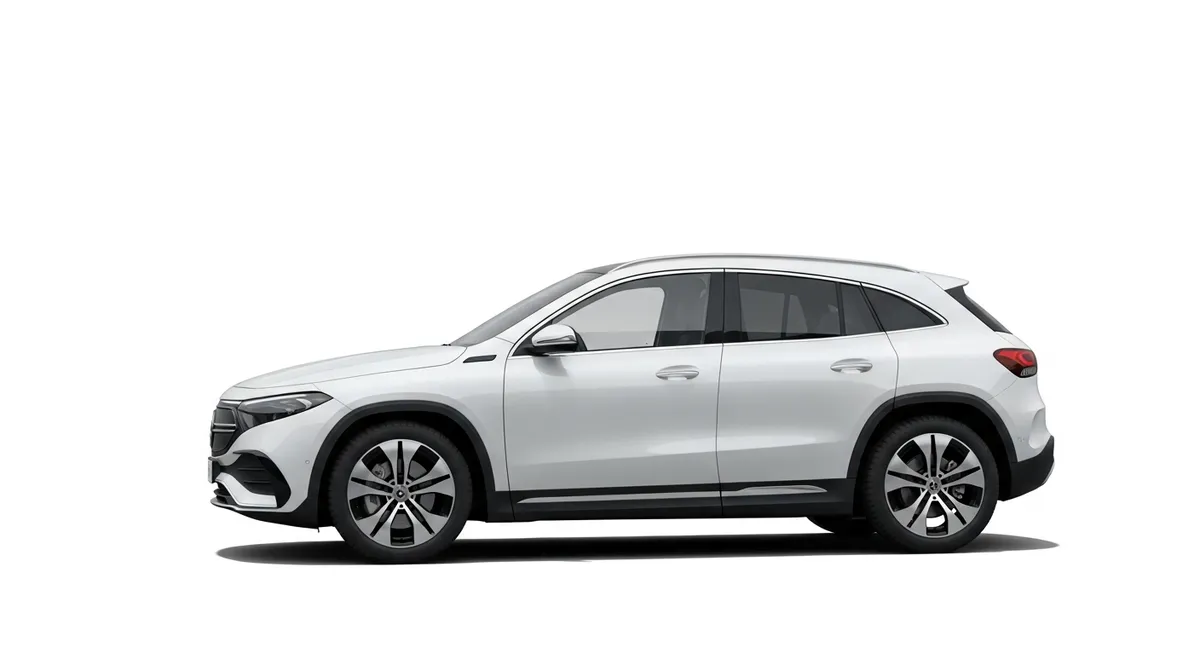
The Mercedes-Benz EQA vs Mercedes-Benz GLA decision represents one of the most direct electric-versus-petrol comparisons available to South African premium compact SUV buyers in 2026. Both vehicles share the same platform and occupy identical market positions, yet offer fundamentally different ownership experiences. The EQA delivers electric efficiency and lower running costs, while the GLA provides familiar petrol convenience and a lower entry price. For buyers considering the EV upgrade within the Mercedes-Benz family, understanding the real-world cost differences is essential.
This comparison examines purchase prices, fuel versus electricity costs, maintenance requirements, insurance, depreciation, and total five-year ownership expenses for both models in the South African market. We’ve grounded every figure in current 2026 data to help you make an informed decision between these two premium compact SUVs.
Purchase Price & Specifications
The Mercedes-Benz EQA 250+ starts at approximately R1,150,000 in South Africa as of early 2026, positioning it firmly in the premium electric segment. The petrol-powered Mercedes-Benz GLA 200, meanwhile, enters the market at around R850,000—a R300,000 difference that represents the current EV premium for this platform. Mercedes-Benz South Africa introduced the GLA 200 Night Edition in January 2026 at R972,387, suggesting the standard GLA 200 remains competitively priced as the brand prepares for the third-generation model later this year.
The EQA 250+ delivers 140 kW and 375 Nm from its single electric motor, with a 70.5 kWh battery providing a WLTP range of approximately 560 km. The GLA 200 produces 120 kW and 250 Nm from its 1.3-litre turbocharged four-cylinder petrol engine, paired with a seven-speed dual-clutch transmission. Both vehicles seat five, offer similar boot space (around 340–395 litres), and share Mercedes-Benz’s MBUX infotainment system with the same premium interior quality.
| Specification | Mercedes-Benz EQA 250+ | Mercedes-Benz GLA 200 |
|---|---|---|
| Starting price (2026) | ~R1,150,000 | ~R850,000 |
| Power output | 140 kW / 375 Nm | 120 kW / 250 Nm |
| Drivetrain | Single electric motor, FWD | 1.3L turbo petrol, FWD |
| Range / fuel tank | 560 km (WLTP) | ~650 km (43L tank) |
| 0-100 km/h | 8.6 seconds | 8.9 seconds |
| Battery / consumption | 70.5 kWh / 19.8 kWh/100km | 6.5L/100km (claimed) |
The R300,000 purchase-price gap is the starting point for any Mercedes-Benz EQA vs Mercedes-Benz GLA comparison. Whether that premium pays for itself depends entirely on your driving patterns, charging access, and ownership timeline.
Fuel Costs vs Electricity Costs: The Daily Difference
Running costs reveal where the EQA begins to claw back its initial premium. With petrol hovering around R24.50 per litre in coastal areas and R23.80 inland as of March 2026, the GLA 200’s real-world consumption of approximately 7.5 litres per 100 km translates to R1.84 per kilometre for fuel alone. Over 20,000 km annually, that’s R36,750 in petrol costs.
The EQA 250+ consumes around 19.8 kWh per 100 km in mixed driving. Charging at home on Eskom’s Homepower 2 tariff (approximately R2.20 per kWh including VAT after the April 2026 increase) costs R0.44 per kilometre—less than a quarter of the GLA’s fuel expense. Annual electricity cost for 20,000 km: R8,712. That’s a R28,038 annual saving, or R2,336 per month, assuming predominantly home charging.
Public charging shifts the equation. GridCars charges R5.88 per kWh for AC and R7.35 per kWh for DC fast charging as of August 2025, with no reported increases into 2026. At R7.35 per kWh on DC, the EQA’s cost rises to R1.45 per kilometre—still cheaper than petrol, but the margin narrows significantly. Rubicon’s network charges R7.00 per kWh for DC and R5.88 for AC. For drivers without reliable home charging, the EQA’s fuel-cost advantage shrinks from 76% to around 21% versus the GLA.
| Charging / fuelling scenario | EQA cost per km | GLA cost per km | Annual saving (20,000 km) |
|---|---|---|---|
| Home charging (R2.20/kWh) | R0.44 | R1.84 | R28,038 |
| Public AC (R5.88/kWh) | R1.16 | R1.84 | R13,600 |
| Public DC fast (R7.35/kWh) | R1.45 | R1.84 | R7,800 |
| Mixed (70% home, 30% public DC) | R0.74 | R1.84 | R22,000 |
The NERSA-approved 8.76% electricity tariff increase for Eskom customers from April 2026 adds roughly R760 annually to home-charging costs for a typical EQA driver, narrowing but not eliminating the cost advantage over petrol. Even with rising electricity prices, the EQA remains significantly cheaper to run when charged at home.
Maintenance & Service Costs
The Mercedes-Benz EQA’s electric drivetrain eliminates oil changes, transmission services, exhaust systems, and most brake wear thanks to regenerative braking. Mercedes-Benz South Africa’s service plan for the EQA covers scheduled maintenance for three years or 100,000 km, but the actual service requirements are minimal—typically cabin filter replacement, brake fluid checks, tyre rotations, and software updates. Estimated annual maintenance cost: R3,500–R5,000.
The GLA 200 requires full petrol-engine servicing: oil and filter changes every 15,000 km, transmission fluid, spark plugs, air filters, and more frequent brake servicing. Mercedes-Benz’s petrol service plans run approximately R8,000–R12,000 annually depending on mileage and service intervals. Over five years, the GLA’s maintenance bill will likely exceed the EQA’s by R25,000–R35,000.
Tyre costs are comparable—both vehicles use similar 18-inch or 19-inch wheel sizes—though the EQA’s additional 300 kg weight may accelerate tyre wear slightly. Battery degradation is the EQA’s long-term concern: Mercedes-Benz warranties the battery for eight years or 160,000 km, but replacement outside warranty could cost R150,000–R200,000. For buyers planning to keep the vehicle beyond eight years, this risk must be factored into total ownership cost.
Insurance, Depreciation & Resale Value
Insurance premiums for the EQA run approximately 15–20% higher than the GLA due to the higher purchase price and specialised repair requirements. On a R1,150,000 EQA, expect to pay around R18,000–R22,000 annually for comprehensive cover. The R850,000 GLA will cost approximately R14,000–R17,000. Over five years, that’s an additional R20,000–R25,000 in insurance costs for the electric model.
Depreciation is where the EQA faces its biggest challenge. South Africa’s EV market remains small—NEV market share was still under 2% in 2025 despite total vehicle sales hitting a decade high of 596,818 units. Limited buyer demand for used EVs, concerns about battery life, and rapid technology advancement mean the EQA will likely depreciate faster than the GLA in percentage terms, though both will lose significant value in absolute rands given their premium positioning.
Assuming 50% depreciation over five years for the EQA (R575,000 loss) and 45% for the GLA (R382,500 loss), the EQA loses an additional R192,500 in resale value. However, if South Africa’s EV incentives improve—such as the proposed reduction in import duties from 25% to 18% to match ICE vehicles, as advocated by CHARGE in February 2026—and the charging network expands significantly, used EV demand could strengthen, improving resale values.
Total Cost of Ownership: Five-Year Comparison
Bringing together purchase price, fuel or electricity, maintenance, insurance, and depreciation gives us the full five-year ownership picture for 100,000 km of driving. We’ve modelled two scenarios: one assuming 80% home charging for the EQA (realistic for buyers with off-street parking and reliable electricity), and one assuming 50% home charging (for buyers facing more load-shedding or relying partly on public infrastructure).
| Cost category (5 years, 100,000 km) | EQA (80% home charging) | EQA (50% home charging) | GLA 200 |
|---|---|---|---|
| Purchase price | R1,150,000 | R1,150,000 | R850,000 |
| Fuel / electricity (5 years) | R46,200 | R62,500 | R183,750 |
| Maintenance (5 years) | R22,500 | R22,500 | R50,000 |
| Insurance (5 years) | R100,000 | R100,000 | R75,000 |
| Depreciation (5 years) | R575,000 | R575,000 | R382,500 |
| Total cost of ownership | R1,893,700 | R1,910,000 | R1,541,250 |
| Difference vs GLA | +R352,450 | +R368,750 | — |
Even with substantial fuel savings, the Mercedes-Benz EQA costs approximately R352,000–R369,000 more to own over five years than the GLA 200, primarily due to higher depreciation and the initial purchase premium. The EQA’s running-cost advantage—R137,550 in fuel savings with 80% home charging—isn’t enough to offset the R300,000 purchase gap and R192,500 additional depreciation hit.
The equation changes if you drive significantly more than 20,000 km per year. At 30,000 km annually (150,000 km over five years), the fuel saving grows to R206,000, narrowing the total ownership gap to around R246,000. For high-mileage drivers with home charging, the EQA becomes more financially competitive, though still not cheaper overall.
Charging Infrastructure: The EQA’s Practical Reality
The Mercedes-Benz EQA vs Mercedes-Benz GLA comparison isn’t purely financial—it’s also about infrastructure confidence. South Africa’s public charging network has grown substantially, with ChargePoint SA operating over 450 public AC and DC charging stations across the country as of late 2025, representing approximately 650 chargers and over 1,200 connectors accessible through the ChargePocket app. GridCars announced plans in December 2025 to introduce ultra-fast liquid-cooled chargers to deliver global-standard charging speeds, while Rubicon’s network handled 21,606 transactions and dispensed 625 MWh of energy in 2025 across 103 public stations and 20 OEM partner dealership locations.
Rubicon added 11 new charging stations in the Eastern Cape between January and February 2026, nine supporting DC fast charging, through a partnership with the Automotive Industry Development Centre. Everlectric is building 120 solar-powered stations for passenger vehicles and another 120 for trucks by 2026, with work beginning in November 2025 on two ultra-fast chargers along the N3 corridor located approximately 180 km from Johannesburg and 200 km from Durban. GridCars plans to bring flash charging with up to 1,000 kW charging power to South Africa, with first locations set to go live in April or May 2026, aiming for 200 to 300 flash charging stations by end of 2027.
For EQA buyers, this expansion is encouraging but still incomplete. Long-distance travel requires route planning around charging stops, and load-shedding remains a wildcard for home charging reliability. The GLA 200 offers the convenience of a 650 km range and a five-minute refuel at any petrol station—an advantage that matters for buyers who regularly drive beyond major urban centres or lack reliable home charging infrastructure.
Environmental Impact & Future-Proofing
The EQA produces zero tailpipe emissions, reducing urban air pollution and contributing to lower lifetime carbon emissions even when charged on South Africa’s coal-heavy grid. As the grid transitions toward renewables—and as more EV owners install home solar—the EQA’s environmental advantage will grow. The GLA 200, despite modern engine efficiency, emits approximately 150 g CO₂/km, adding roughly 15 tonnes of CO₂ over 100,000 km.
Future-proofing considerations also favour the EQA. South Africa’s 150% tax deduction for EV manufacturers took effect on 1 March 2026, aiming to attract Chinese and global EV investment and potentially lower EV prices through local assembly. If import duties on EVs drop from 25% to 18% as CHARGE has advocated, new EV prices could fall by 5–7%, improving used EV resale values. The GLA, meanwhile, faces an uncertain future as Mercedes-Benz accelerates its shift toward electrification—the third-generation GLA arriving later in 2026 may be the last fully petrol iteration before hybridisation or full electrification.
Who Should Choose the EQA, and Who Should Choose the GLA?
Choose the Mercedes-Benz EQA if:
- You have reliable home charging with off-street parking and stable electricity supply
- Your daily driving is under 200 km, with occasional longer trips on routes with charging infrastructure
- You drive 25,000+ km per year, maximising fuel-cost savings
- You value instant torque, silent operation, and zero tailpipe emissions
- You’re comfortable with EV technology and route planning for long trips
- You plan to keep the vehicle for 8+ years to maximise savings and minimise depreciation impact
Choose the Mercedes-Benz GLA 200 if:
- You lack reliable home charging or face frequent load-shedding
- You regularly drive long distances beyond major urban centres with limited charging infrastructure
- You drive under 15,000 km per year, where fuel savings don’t justify the EV premium
- You prioritise lower upfront cost and proven resale value
- You need the flexibility of five-minute refuelling anywhere in South Africa
- You plan to sell the vehicle within 3–5 years, where depreciation hits the EQA harder
For most South African buyers in 2026, the GLA 200 remains the more financially rational choice despite the EQA’s lower running costs. The R300,000 purchase premium and steeper depreciation outweigh the fuel savings unless you drive high annual mileage with consistent home charging access. However, the EQA offers a glimpse of the future—lower running costs, reduced maintenance, and environmental benefits—that will become increasingly compelling as charging infrastructure expands, electricity costs stabilise relative to petrol, and EV prices fall through local production incentives.
Final Verdict: Mercedes-Benz EQA vs Mercedes-Benz GLA
The Mercedes-Benz EQA vs Mercedes-Benz GLA comparison reveals a market in transition. The EQA is the better vehicle to drive daily—quieter, smoother, cheaper to run—but the GLA is the better financial decision for most buyers in 2026. The R352,000 five-year ownership premium for the EQA is substantial, and only high-mileage drivers with excellent home charging will approach break-even.
Yet the gap is narrowing. As public charging expands, electricity tariffs stabilise, and EV incentives improve, the EQA’s total ownership cost will become more competitive. For early adopters with the right charging setup and driving profile, the EQA delivers a premium electric experience within the familiar Mercedes-Benz compact SUV package. For everyone else, the GLA 200 offers proven value, convenience, and lower financial risk.
The choice between the Mercedes-Benz EQA and Mercedes-Benz GLA ultimately depends on your personal circumstances: charging access, annual mileage, ownership timeline, and willingness to embrace EV technology. Both are excellent compact SUVs—one represents the future, the other represents the present. Which one suits your South African reality?
Ready to compare insurance quotes for the Mercedes-Benz EQA or GLA? Get a personalised quote and see how ownership costs stack up for your specific driving profile.