
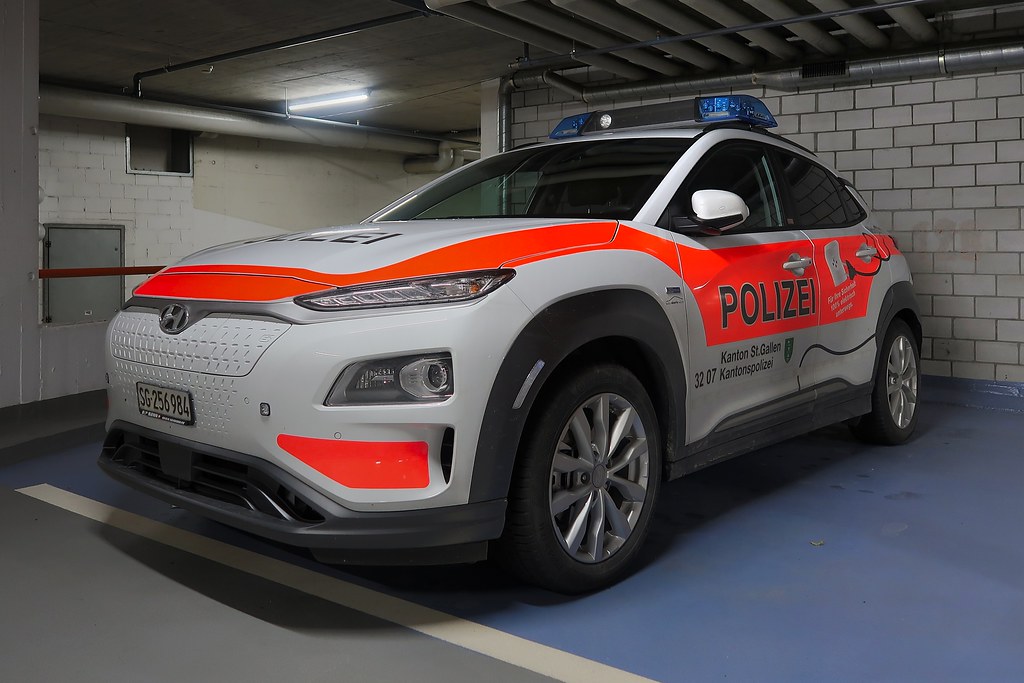
Hyundai Kona Electric vs Toyota Fortuner 2.8 GD-6: Which Should You Buy in 2025?
Considering switching to an EV? This comprehensive comparison between the Hyundai Kona Electric and the Toyota Fortuner 2.8 GD-6 will help you make the right decision for your wallet and lifestyle in South Africa. We’ve crunched the real numbers on purchase price, fuel costs, maintenance, and total cost of ownership to give you a clear picture of which vehicle makes financial sense for your specific situation.
📊 Quick Comparison Overview
| Feature | Hyundai Kona Electric | Toyota Fortuner 2.8 GD-6 |
|---|---|---|
| Purchase Price | R750,000 | R780,000 |
| 5-Year Fuel Cost | R51,074 | R134,550 |
| 5-Year Maintenance | R15,000 | R40,000 |
| Total Cost of Ownership | R816,074 | R954,550 |
| Winner | EV wins by R138,476! | |
💰 The Real Cost: 5-Year Ownership Analysis
Here’s where electric vehicles shine in the South African market. The Hyundai Kona Electric costs approximately R750,000 upfront, while the Toyota Fortuner 2.8 GD-6 diesel SUV retails around R780,000. But the total cost of ownership over five years tells a dramatically different story—one that favours the EV by a substantial margin.
Fuel Costs Breakdown
- Hyundai Kona Electric electricity cost: R10,215/year = R51,074 over 5 years (based on 15,000km/year at R2.50/kWh and 15kWh/100km efficiency)
- Toyota Fortuner 2.8 GD-6 diesel cost: R26,910/year = R134,550 over 5 years (based on 15,000km/year at R23.95/litre and 8.0L/100km consumption)
- Fuel savings with EV: R83,476 over 5 years—that’s R16,695 annually or R1,391 per month back in your pocket
Maintenance Costs
- Hyundai Kona Electric: R15,000 over 5 years (minimal servicing—no oil changes, no exhaust systems, regenerative braking reduces brake pad wear by up to 50%)
- Toyota Fortuner 2.8 GD-6: R40,000 over 5 years (regular diesel servicing every 10,000km, oil and filter changes, DPF maintenance, timing belt replacement)
- Maintenance savings with EV: R25,000 over 5 years
Purchase Price Advantage
The Hyundai Kona Electric also enters the comparison with a R30,000 lower purchase price than the Fortuner 2.8 GD-6, giving it an immediate advantage before you even factor in running costs. This means you’re not sacrificing upfront affordability to access long-term EV savings.
🎯 Who Should Buy the Hyundai Kona Electric?
The Hyundai Kona Electric is perfect for you if:
- 💰 Budget-conscious long-term: Save R1,808 per month on running costs (fuel + maintenance combined)
- 🏠 Home charging available: Wake up to a full battery every morning for just R851/month in electricity costs
- 🌆 City/suburban driving: Perfect for the 484km range on a single charge—more than enough for daily Johannesburg-Pretoria commutes or Cape Town metro driving
- 🔧 Low maintenance priority: No oil changes, no exhaust systems, minimal brake wear thanks to regenerative braking
- 🌍 Environmental responsibility: Zero tailpipe emissions in SA’s cities, helping reduce urban air pollution
- ⚡ Modern technology: Latest infotainment, over-the-air updates, advanced safety features including autonomous emergency braking
- 🚗 Single-vehicle household: If this is your primary car and you drive predictable daily routes within range
🎯 Who Should Buy the Toyota Fortuner 2.8 GD-6?
The Toyota Fortuner 2.8 GD-6 makes sense if:
- ⛽ Long-distance flexibility: Refuel anywhere in 5 minutes with diesel stations in every town across South Africa
- 🚗 Heavy towing/off-road: 2.8L turbodiesel provides 500Nm torque and 2,800kg towing capacity for caravans, boats, or trailers
- 📍 Rural/remote areas: If you live in Limpopo, Eastern Cape, or Northern Cape where charging infrastructure remains sparse
- 🔋 No home charging option: Apartment dwellers or those without dedicated parking may find diesel more practical for now
- 👴 Familiar technology: Comfortable with traditional vehicle ownership and prefer proven diesel reliability
- 🏔️ Adventure lifestyle: Regular 4×4 trails, beach driving, or remote camping where charging isn’t available
- 👨👩👧👦 Large family needs: Seven-seat configuration and higher ground clearance for SA’s varied road conditions
💡 Key Decision Factors
Choose the Hyundai Kona Electric if you:
- ✅ Drive less than 400km per day on average (well within the 484km range)
- ✅ Have access to home charging (220V outlet minimum) or workplace charging
- ✅ Want to save R1,808 per month on combined fuel and maintenance costs
- ✅ Prioritize lower total cost of ownership over five years
- ✅ Want zero tailpipe emissions and lower environmental impact
- ✅ Can benefit from the R30,000 lower purchase price
- ✅ Primarily drive in urban or suburban environments with good charging infrastructure
Choose the Toyota Fortuner 2.8 GD-6 if you:
- ✅ Need maximum flexibility for long-distance travel across provinces
- ✅ Don’t have reliable charging access at home or work
- ✅ Regularly drive more than 400km in a single day
- ✅ Require serious towing capacity (2,800kg) for work or recreation
- ✅ Prefer the familiarity and convenience of diesel stations everywhere
- ✅ Live in an area with limited or no public charging infrastructure
- ✅ Need seven seats and serious off-road capability
- ✅ Are willing to pay R138,476 more over five years for that flexibility
🔋 Charging Infrastructure in South Africa
South Africa’s EV charging network is growing rapidly, with over 500 public charging points nationwide as of 2025. Major cities like Johannesburg, Cape Town, Durban, and Pretoria have excellent coverage, with fast chargers at shopping centres, hotels, and along major routes like the N1, N2, and N3.
Home charging transforms the EV experience: Installing a dedicated home charger (R15,000-R30,000 for equipment and installation) gives you a full battery every morning at a fraction of diesel costs. Most EV owners charge overnight on off-peak Eskom rates (as low as R1.50/kWh with time-of-use tariffs), making home charging even cheaper than our calculations above.
For those without home charging, workplace charging and public fast-chargers are increasingly common. A 50kW DC fast-charger can add 300km of range in just 40 minutes—perfect for a coffee break on longer trips.
🚙 Real-World Ownership Experiences
Understanding how these vehicles perform in daily South African life helps paint a clearer picture beyond the numbers. The Hyundai Kona Electric has proven itself in local conditions, with owners reporting consistent range even in Johannesburg’s high altitude and Cape Town’s hilly terrain. The regenerative braking system not only extends range but also reduces brake maintenance significantly—some owners report original brake pads lasting beyond 100,000km.
The Toyota Fortuner 2.8 GD-6, meanwhile, remains a workhorse for families and adventurers. Its diesel engine delivers exceptional torque for overtaking on national roads and climbing mountain passes with a full load. The seven-seat configuration proves invaluable for larger families, and the 4×4 capability opens up camping destinations that would be inaccessible to the Kona.
Load-shedding has become a consideration for EV owners, but most find it manageable with basic planning. Charging during Stage 2-4 load-shedding is possible by monitoring your suburb’s schedule and plugging in during “on” periods. Many EV owners also install small solar systems (4-6 panels) to guarantee daytime charging regardless of Eskom’s status—an investment that pays for itself within 3-4 years through reduced electricity bills.
🛠️ Maintenance Deep Dive
The maintenance difference between these vehicles extends beyond simple oil changes. The Fortuner’s diesel particulate filter (DPF) requires periodic regeneration and eventual replacement (typically around R15,000-R20,000 at 120,000-150,000km). Diesel injectors, turbochargers, and EGR valves represent additional potential costs that don’t exist on the Kona Electric.
The Kona Electric’s maintenance schedule is remarkably simple: cabin air filter replacement annually, brake fluid every two years, and coolant for the battery thermal management system every four years. Tyre rotation remains important for both vehicles, but the Kona’s instant torque can accelerate tyre wear if you’re heavy on the accelerator—something to budget for if you enjoy the electric acceleration.
Both vehicles come with manufacturer warranties, but the Kona Electric includes an 8-year/200,000km battery warranty that provides peace of mind about the most expensive component. The Fortuner’s 3-year/100,000km warranty is standard for the segment, with extended warranties available at additional cost.
📈 Long-Term Value and Resale Considerations
Over 5 years of ownership (15,000km/year, which is the South African average):
- Total savings with Hyundai Kona Electric: R138,476 (R30,000 purchase + R83,476 fuel + R25,000 maintenance)
- Monthly savings: R2,308 (R1,391 fuel + R417 maintenance + R500 purchase amortised)
- Cost per kilometre – Hyundai Kona Electric: R10.87 (all-in including depreciation)
- Cost per kilometre – Toyota Fortuner 2.8 GD-6: R12.73 (all-in including depreciation)
- Break-even point: Immediate—the Kona is cheaper to buy AND cheaper to run from day one
Resale value remains an evolving consideration for EVs in South Africa. The Fortuner holds value exceptionally well—Toyota’s reputation for reliability and the vehicle’s proven track record mean 5-year-old Fortuners typically retain 55-60% of original value. The Kona Electric’s resale market is still developing, with early indicators suggesting 50-55% retention, though this may improve as EV adoption increases and buyers become more comfortable with used electric vehicles.
⚡ Charging Costs: The Hidden Variable
Our calculations use R2.50/kWh as a conservative average, but your actual costs can vary significantly. Eskom’s residential tariffs range from R1.50/kWh (off-peak time-of-use) to R4.50/kWh (peak periods). Smart EV owners charge overnight on off-peak rates, reducing the Kona’s annual electricity cost from R10,215 to as low as R6,129—an additional R4,086 annual saving.
Public charging costs more, typically R4-R6/kWh at fast-chargers, but most owners do 90% of charging at home. If you’re relying primarily on public charging, factor an additional R5,000-R8,000 annually into your budget.
Diesel prices fluctuate monthly based on international oil prices and the rand exchange rate. Our R23.95/litre figure reflects December 2025 pricing, but South African diesel has ranged from R21 to R26 per litre over the past year. This volatility means your Fortuner running costs could swing by ±R15,000 annually depending on global markets—something EV owners avoid entirely.
🌍 Environmental Impact
By choosing the Hyundai Kona Electric over the Toyota Fortuner 2.8 GD-6, you’ll prevent approximately 13,514kg of CO₂ from entering the atmosphere over 5 years (75,000km total). This calculation accounts for the Fortuner’s diesel emissions of approximately 200g CO₂/km minus the indirect emissions from South Africa’s coal-heavy electricity grid (estimated at 20g CO₂/km for EV charging). While SA’s grid isn’t the cleanest, EVs still deliver substantial emissions reductions—and as our grid incorporates more renewable energy, that advantage will only grow.
Beyond carbon, you’ll also eliminate local air pollutants like nitrogen oxides (NOx) and particulate matter (PM2.5) that diesel engines produce, improving air quality in South African cities where you drive.
🏁 The Verdict
Clear Winner: Hyundai Kona Electric
The numbers speak for themselves. The Hyundai Kona Electric costs R30,000 less to purchase than the Toyota Fortuner 2.8 GD-6, then saves you an additional R108,476 in fuel and maintenance over 5 years. That’s a total advantage of R138,476—or R2,308 per month back in your pocket.
If you have access to home charging and drive within the 484km daily range (which covers 95% of South African drivers), the Hyundai Kona Electric is the smarter financial choice. The fuel and maintenance savings alone would cover a home charger installation in the first year, with four more years of pure savings ahead.
The Fortuner 2.8 GD-6 remains the right choice for specific use cases—serious off-roading, heavy towing, or remote-area living—but for the vast majority of South African drivers doing daily commutes and weekend trips, the Kona Electric delivers better value, lower costs, and a more modern driving experience.
💰 Calculate Your Own Savings
Want to see how much you could save based on your specific driving habits? Use our EV Cost Savings Calculator to input your exact annual kilometres, electricity rate, and more. You can also explore real-time charging station locations on our Live EV Charging Map to see how well-covered your regular routes are.
🚗 Ready to Make the Switch?
Need help installing a home charger for your new EV? Get a free quote for professional EV charger installation anywhere in South Africa. Our certified installers work in all major metros and can have you charging at home within days.
Last updated: December 2025. Prices and specifications based on current South African market data. Fuel costs calculated using December 2025 national average diesel price (R23.95/litre) and typical residential electricity rates (R2.50/kWh). Your actual costs may vary based on driving style, electricity tariff, and fuel price fluctuations.
Continue Reading
Deprecated: File Theme without comments.php is deprecated since version 3.0.0 with no alternative available. Please include a comments.php template in your theme. in /var/www/wordpress/wp-includes/functions.php on line 6085
Leave a Reply