April 2026 is the moment the EV conversation in South Africa changed forever.
Diesel increased by between R7.37 and R7.51 per litre in April alone
, and
the wholesale price of diesel now sits at R26.11 per litre in Gauteng.
That’s before May’s hike.
The expected reinstatement of the government’s general fuel levy cut could compound projected increases, potentially pushing petrol prices towards R30/L and diesel closer to R40/L.
If you drive a diesel Fortuner, Hilux or any workhorse bakkie, that number should be making your stomach turn. And if you’ve been fence-sitting on an EV, the fence just got a lot more uncomfortable to sit on.
In total, 389 EVs were sold in South Africa in March 2026 — a new monthly record for full-electric sales, with BYD the clear leader at 316 fully electric car sales.
For context, that’s 35.7% of the entire 2025 full year in a single month.
With 239 new units leaving showroom floors, the BYD Dolphin Surf became the best-selling EV in SA in March 2026.
The sub-R400,000 EV market has arrived. The question isn’t whether EVs make sense anymore — it’s whether they make sense for you, right now.
This article doesn’t do hype. It does maths. Three real South African scenarios, the honest catches, and a straight verdict. Let’s go.
Scenario 1: The Diesel Commuter (Joburg to Pretoria, Fortuner Driver)
You know who you are. The diesel Fortuner is South Africa’s status vehicle, family hauler and load-shedding-survivor in one. But at 10L/100km and 25,000 km per year, the numbers are now brutal. At R26/L, you’re spending R65,000 a year just on fuel.
Motorists are still facing a historic increase scheduled for Wednesday, 6 May 2026.
If diesel hits R35/L in May — a realistic mid-range outcome — that annual fuel bill climbs to R87,500. At R40/L it’s R100,000. Per year. Just to move yourself around.
Compare that to a BYD Atto 3.
The BYD Atto 3, priced from R699,900, managed 28 units in March 2026, while the Volvo EX30 at R835,500 took third place with 19.
At 16.5 kWh/100km and Joburg’s off-peak electricity rate of R1.75/kWh, you’re spending R29 per 100 km. Over 25,000 km that’s R7,250 per year. Not a typo.

The savings? R57,750 per year at current diesel prices. At R40/L diesel, R92,750 per year. The Atto 3 costs roughly R100,000 more than a base Fortuner — payback on that premium is under 2 years at R40/L diesel. Even at today’s R26/L, you’re back in the black inside two years on the running cost difference alone. That is a genuinely transformational financial case. If you’re a high-mileage diesel driver with access to home charging, this is as close to a no-brainer as the SA car market has ever produced.
If you want to plug in your own numbers and calculate your exact savings, our EV calculator will do the heavy lifting for you.
At R40/L diesel and 25,000 km/year, a Fortuner driver spends R100,000 per year on fuel. A BYD Atto 3 owner spends R7,250. The gap is R92,750 — every single year.
Scenario 2: The Petrol City Driver (Polo Vivo Owner, Cape Town)
This is where it gets more nuanced. The Polo Vivo is South Africa’s best-selling car for a reason — it’s affordable, reliable, and cheap to run. At 5.9L/100km and
petrol 95 currently sitting at R23.36 inland
, a Cape Town commuter covering 15,000 km per year spends around R20,700 on fuel annually. That’s already painful, but it’s not existential.
The Dolphin Surf, unveiled in September 2025 as the country’s most affordable EV, at R341,900 for the entry-level Comfort variant, competes directly with petrol-powered compact cars such as the Volkswagen Polo Vivo.
At 13.8 kWh/100km and Cape Town’s off-peak rate of R1.89/kWh, you’re spending R26 per 100 km — or R3,900 per year on the same 15,000 km. That’s a saving of R16,800 per year over the Vivo.
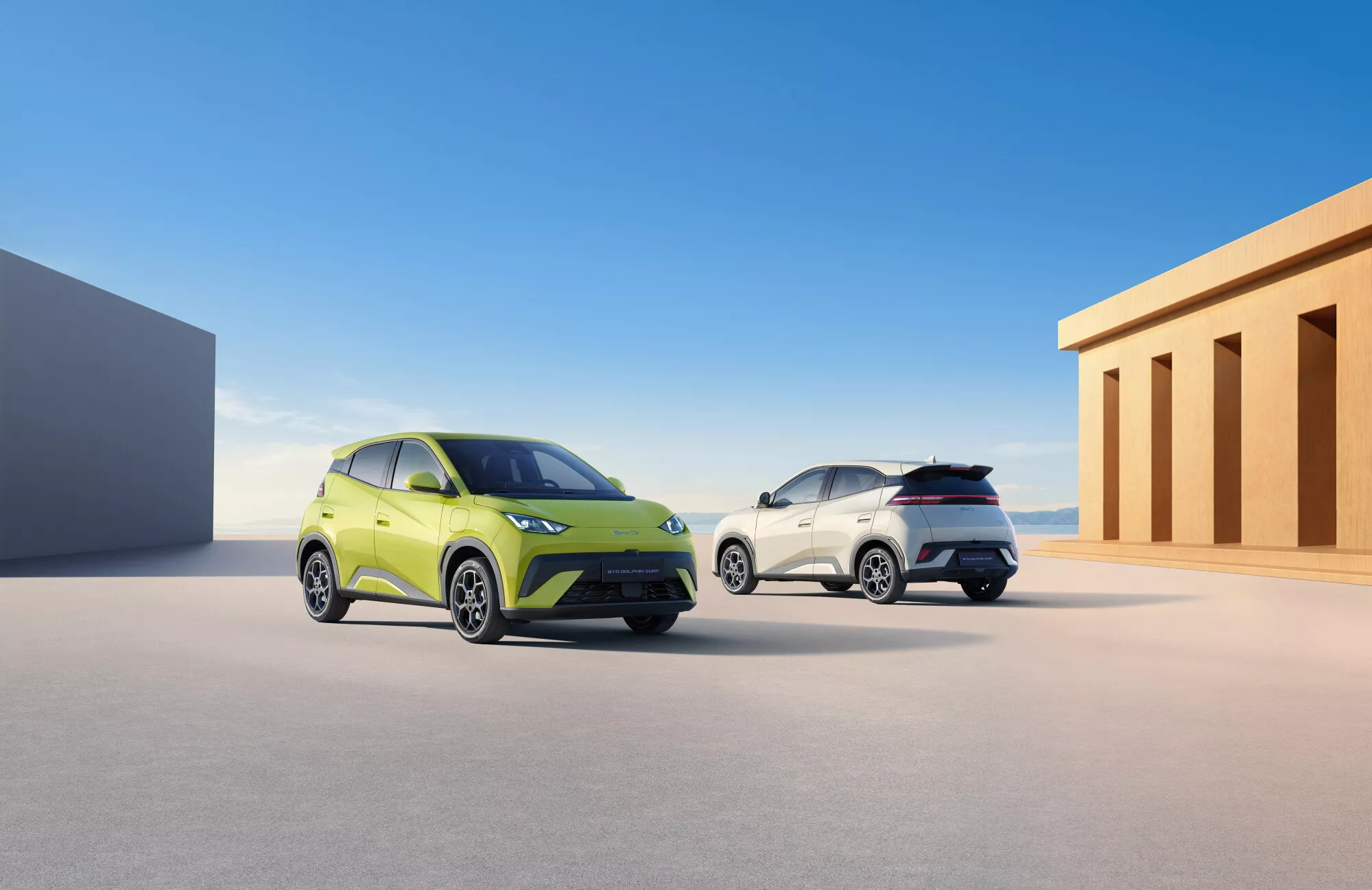
The Vivo starts at around R268,900. The Dolphin Surf at R341,900 — a R73,000 premium. At R16,800/year in fuel savings, payback is 4.3 years. That’s reasonable. But here’s where I’d pump the brakes slightly:
BYD claims operating ranges of up to 232 km for the Comfort spec Dolphin Surf and 295 km for the Dynamic.
That’s fine for daily Cape Town commuting — nobody’s doing 232 km per day on the Atlantic Seaboard — but it does mean that weekend trip to Hermanus requires some planning, and Joburg-Cape Town road trips are out.
The verdict here: Buy the Dolphin Surf if it’s your second car, or if you live and work in the city and have a garage to charge in. Wait if you regularly need 400+ km range in a single stretch or if you’re in a sectional title property with a difficult body corporate. The maths work, but only if your lifestyle fits.
How Much Could You Save With an EV?
Use our free calculator to compare your current fuel costs with EV charging costs.
Scenario 3: The Fleet Operator (10 Vehicles, 200,000 km/Year)
This is where the EV case becomes genuinely unassailable. Ten diesel vehicles, 200,000 km combined per year, at 10L/100km: that’s R520,000 in fuel annually at current prices. At R40/L diesel in May, R800,000. Those are numbers that rewrite P&L statements.
Ten BYD Atto 3s running on Joburg off-peak electricity: R57,750 per year total.
For many companies, fuel is an inflection point that turns a tight year into a financial crisis. Logistics and mining sectors operate on thin margins — an R4/litre jump can lead to contract renegotiations or, in worst cases, business liquidations.
The fleet premium over equivalent diesel vehicles might be R1 million across 10 cars. At current diesel prices, payback is 2.2 years. At R40/L in May, 1.3 years. After that, you’re banking the difference every year.
According to Winstone Jordaan, director of charging network GridCars, the cost of running an EV is roughly two-thirds that of a petrol vehicle, and the fuel price hikes in April, with further increases expected in May, have added to the appeal of EV ownership.
For fleet operators, the decision isn’t really about “should we?” anymore. It’s about “how fast can we?”
The Honest Catches Nobody Tells You About
Right. Let’s stop admiring the maths for a moment and get real about the friction. Because there’s plenty of it.
Home charging is non-negotiable (almost)
The R26-R29/100km running cost only happens if you charge at home, overnight, on off-peak tariffs.
GridCars’ standard charging rates for eMSP customers are R5.88 per kWh for AC charging and R7.35 per kWh for DC fast charging.
At R7.35/kWh DC fast charging, you’re spending roughly R101 per 100km on the Atto 3 — still cheaper than R26/L diesel, but nowhere near the magic home-charging number. If you don’t have a garage, you need to run the numbers on public-charging economics specifically.
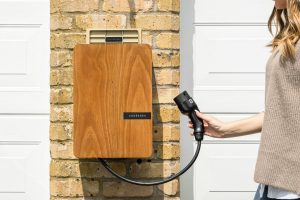
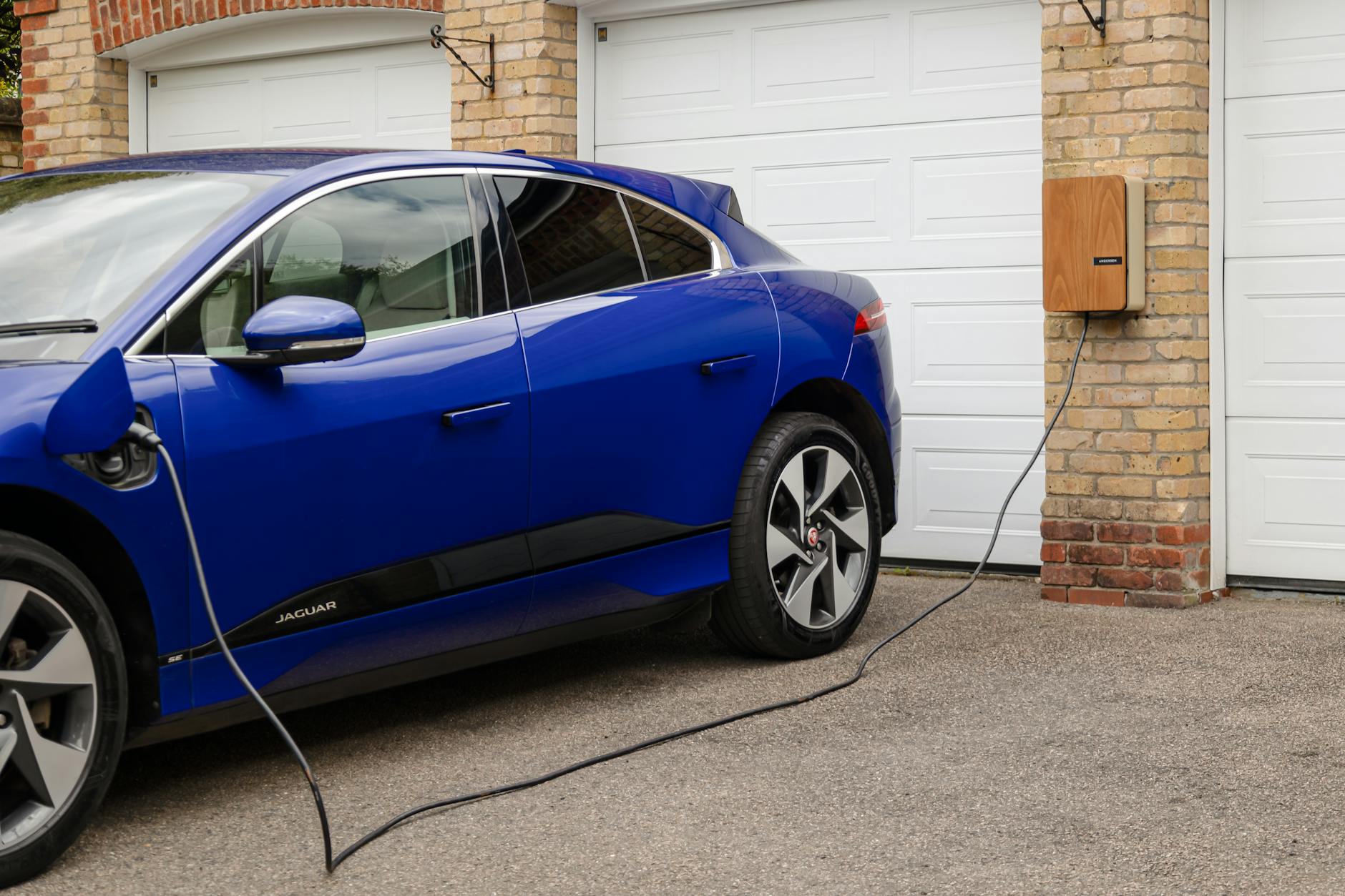
Getting a wallbox installed at home is the foundation of EV ownership in South Africa. Get a free installation quote and sort that out before you sign anything at a dealership.
Body corporate drama is real
If you’re in sectional title, you’ll need body corporate approval for a home charger. This is improving — approvals that took 3–6 months in 2024 are now averaging 2–6 weeks in many schemes — but some trustees still say no, some misunderstand SANS 10142, and a few will simply drag their feet. It’s getting better, but it’s still friction. Plan for it.
Load shedding: it’s manageable, not solved
The load shedding situation has improved significantly in 2026, but it hasn’t disappeared. The good news: off-peak charging (midnight to 6am) is rarely affected even during Stage 4. The bad news: Stage 6 can kill your charging window entirely. Most EV owners on solar with a battery backup don’t worry about this at all. Everyone else needs a backup plan — office charging, a nearby public charger, or simply plugging in earlier in the evening when supply is more reliable.
Ongoing load shedding remains a barrier for many consumers.

Range reality check
The Dolphin Surf claims ranges of up to 232 and 295 km for the Comfort and Dynamic specs respectively, with a maximum DC fast-charging capacity of 40 kW.
The Atto 3’s extended range version stretches to 420 km. For 90% of South African commuters averaging 40 km per day, any of these is more than adequate. But Joburg to Durban without charging stops? That takes planning. Range anxiety is real for some people — be honest with yourself about whether your life fits an EV before you buy one.
Resale value: the unknown variable
Here’s the one that keeps me up at night.
EV adoption in South Africa has been slow, with early offerings largely premium vehicles aimed at affluent early adopters.
BYD, Geely and Dongfeng have been in SA for 2–3 years at most. Their depreciation curves are uncharted territory. The Volvo EX30 and Tesla have better-established resale values. BYD does back its batteries with an 8-year/200,000 km warranty, which helps confidence, but be aware that when you come to sell in 5 years, the market might still be thin for used Chinese EVs. Price accordingly.
Ready to Install a Home Charger?
Get a free, no-obligation quote for professional EV charger installation in South Africa.
SA’s Charging Infrastructure: Better Than You Think, Not Great Yet
GridCars is today the largest public charging network operator in the country, with its Charge Pocket app connecting drivers to 445 charging sites, representing 650 chargers, including more than 1,200 connectors.
That’s up from fewer than 100 public chargers in 2020 — remarkable progress. Most major shopping centres in Johannesburg, Cape Town, Pretoria and Durban now have DC fast chargers in their parking bays.
GridCars is preparing for a year of bold moves, introducing ultra-fast charging technology designed to limit downtime and make EV travel effortless, with ultra-fast liquid-cooled chargers bringing global-standard charging speeds to South Africa.
Meanwhile, Zero Carbon Charge (CHARGE) is building out solar-powered ultra-fast charging hubs along national highway corridors —
CHARGE ultra-fast chargers can recharge most EVs from 10% to 80% in about 25 minutes.
42% of GridCars’ chargers across the country are already using solar.
That matters for load shedding resilience and for the carbon footprint of your EV. Long-distance highway travel still requires planning — the N1 Joburg-Cape Town corridor has coverage, but it’s not Germany. Stick to our live EV charging map to plan trips and check real-time availability before you leave.
The honest summary: urban EV life in SA’s big three cities is genuinely viable in 2026. Highway road trips are manageable with planning. Rural living without home solar and a DC charger nearby? Still tricky.
What the Government Is (and Isn’t) Doing
Let’s not oversell the policy support. There are no consumer EV purchase incentives in South Africa — no rebates, no stamp duty relief, no cash back. You’re paying full whack at import, and
petrol and diesel vehicles imported from the EU into South Africa have a customs duty of 18%, while for electric vehicles it is 25%.
That’s backwards, and industry has been lobbying hard to fix it.
What has happened:
President Cyril Ramaphosa signed the tax amendment into law on 24 December 2024, enabling manufacturers to claim a 150% tax deduction on investments in NEV production facilities, effective from 1 March 2026.
This matters long-term — local EV assembly means lower prices eventually. But it won’t help your bank account this year when you’re buying a Dolphin Surf at full import duty.
On fuel:
National Treasury introduced a temporary R3/litre reduction in the general fuel levy to reduce pressure on consumers,
but
this R3.00 “relief” reduction in the General Fuel Levy is currently set to expire on May 5, 2026.
When that expires — and barring a levy extension or ceasefire in the Middle East — diesel prices jump again. The government has softened the blow slightly, but the underlying crisis hasn’t gone away.
Find Charging Stations Near You
Explore our live map of EV charging stations across South Africa — updated in real time.
Side-by-Side: The Numbers That Matter
| Scenario | Current fuel cost (p/a) | EV running cost (p/a) | Annual saving | Payback (R26 diesel) | Payback (R40 diesel) |
|---|---|---|---|---|---|
| Diesel commuter (25K km) | R65,000 | R7,250 | R57,750 | ~1.7 yrs | ~1.1 yrs |
| Petrol city driver (15K km) | R20,700 | R3,900 | R16,800 | ~4.3 yrs | ~2.8 yrs |
| Fleet (10 vehicles, 200K km) | R520,000 | R57,750 | R462,250 | ~2.2 yrs | ~1.3 yrs |
Payback calculated on approximate EV premium over ICE equivalent. Home charging at off-peak rates assumed. Public charging only changes the economics significantly — recalculate using the figures above if that applies to you.
The Verdict: Buy, Wait, or Walk Away?
Here’s where I call it. No hedging.
Buy now if: You drive 20,000 km or more per year, especially on diesel. You have a garage or dedicated parking where a wallbox can be installed. You can stretch to R340,000–R700,000 upfront. And 90% of your trips are under 200 km. In that scenario, the fuel crisis has made the EV case undeniable. You will save meaningful money, and if May’s diesel hike hits as projected, the payback period shrinks to under two years. Do it.
Wait if: You have no home charging option. You regularly need 500+ km range in a single leg. You cannot afford the upfront premium. Or you’re in sectional title with a body corporate that’s still in the Stone Age about EV chargers. Forced public charging erodes the financial case, though it doesn’t eliminate it. Wait six months, sort your charging situation, and revisit.
Chery’s announcement means there may soon be three new EV models priced under R400,000 in the local market — a significant shift in a market dominated by expensive, premium EVs until very recently. BYD’s March sales numbers proved there is appetite for cheaper EVs in South Africa.
Naamsa figures show 1,088 BEVs were sold in 2025, up from only 92 units in 2020
— and March 2026 alone delivered 389. The trajectory is unmistakable. The question is whether the infrastructure friction eases quickly enough for the broader market to follow.
The fuel crisis didn’t create the EV argument in South Africa. It just made it impossible to ignore. And for high-mileage diesel drivers especially,
the May cliff is a math problem that South Africa can no longer avoid.
If you’re serious about making the switch, start with two things: calculate your exact savings based on your real mileage and electricity rate, then get a free quote on home charger installation. Those two steps will tell you everything you need to know about whether this makes sense for your specific situation.
For more context on how the running cost numbers stack up across different models and driving profiles, read our full EV vs petrol running cost breakdown for South Africa. And if you’re weighing up the BYD Dolphin Surf specifically against comparable petrol hatchbacks, our BYD Dolphin Surf review covers everything from real-world range to load shedding resilience.
FAQ
Will South African fuel prices stay this high?
The crisis was triggered when the United States initiated conflict against Iran in “Operation Epic Fury”, with retaliatory strikes by Iran and the closure of the Strait of Hormuz sending global oil prices past $100 a barrel.
The R3.00 fuel levy relief is currently set to expire on May 5, 2026 — if Treasury does not extend it, add an automatic R3.00/L on top of already high prices.
Until the Middle East conflict resolves and/or the levy is extended permanently, elevated fuel prices are the base case, not the worst case.
What if I can only charge at public stations?
Your EV economics still work, but the numbers change significantly.
GridCars’ standard charging rates are R5.88 per kWh for AC and R7.35 per kWh for DC fast charging.
At R7.35/kWh, the Atto 3 costs roughly R121 per 100 km — still cheaper than diesel at R26/L in the same SUV class, but the payback period extends meaningfully. For city cars like the Dolphin Surf at 13.8 kWh/100km, public charging costs around R101/100km — compare that to R137/100km for a petrol Polo Vivo at R23.36/L. Still a saving, but not the dramatic one home charging delivers.
Is 232 km range enough for most South Africans?
For the vast majority, yes. The average South African commuter covers around 40 km per day, which means the Dolphin Surf’s 232 km Comfort range represents nearly six days of typical use.
The Dolphin Surf delivers a driving range of up to 295 km on a single charge, with fast charging from 30% to 80% in 30 minutes.
Weekend trips to the coast, the Winelands, or even Clarens are doable. Joburg to Durban in one shot without stopping? Not realistic — plan for at least one 30-minute fast charge along the way.
Should I wait for the Chery Q or Geely E2 instead?
The Geely E2 has already made its local debut, promising a driving range of up to 325 km with fast charging from 30% to 80% in roughly 25 minutes, starting at R339,900.
Chery is set to showcase the electric Q at Auto China 2026, and has confirmed it forms part of an expanding line-up for South Africa later this year.
If you can wait 6–12 months and want sub-R340,000 pricing with a longer range, there’s a case for patience. If fuel pain is real and immediate, the Dolphin Surf is available today with a nationwide dealer network and BYD’s battery warranty.
What about EV depreciation — is it risky with Chinese brands?
EV adoption in South Africa has been slow, with early offerings largely targeting affluent early adopters
, which means the used EV market is still thin and depreciation curves for BYD, Geely and Dongfeng are genuinely unknown. BYD’s 8-year/200,000 km battery warranty provides some floor on residual values.
The Volvo EX30 at R835,500 has better-established resale values
, as does Tesla, but you pay a significant premium for that track record. For budget buyers, BYD’s warranty is the best hedge available right now.
Does the 150% tax incentive help me as a buyer?
Not directly.
The 150% tax deduction on NEV production investments, signed into law by President Ramaphosa, is aimed at manufacturers, not consumers.
South Africa’s policy is a 150% tax deduction for EV manufacturers, but high import duties remain for consumers.
The medium-term hope is that local assembly drives down prices. Right now, you’re buying at full 25% import duty. There are zero purchase rebates for private buyers — unlike Europe or the USA.
Continue Reading