
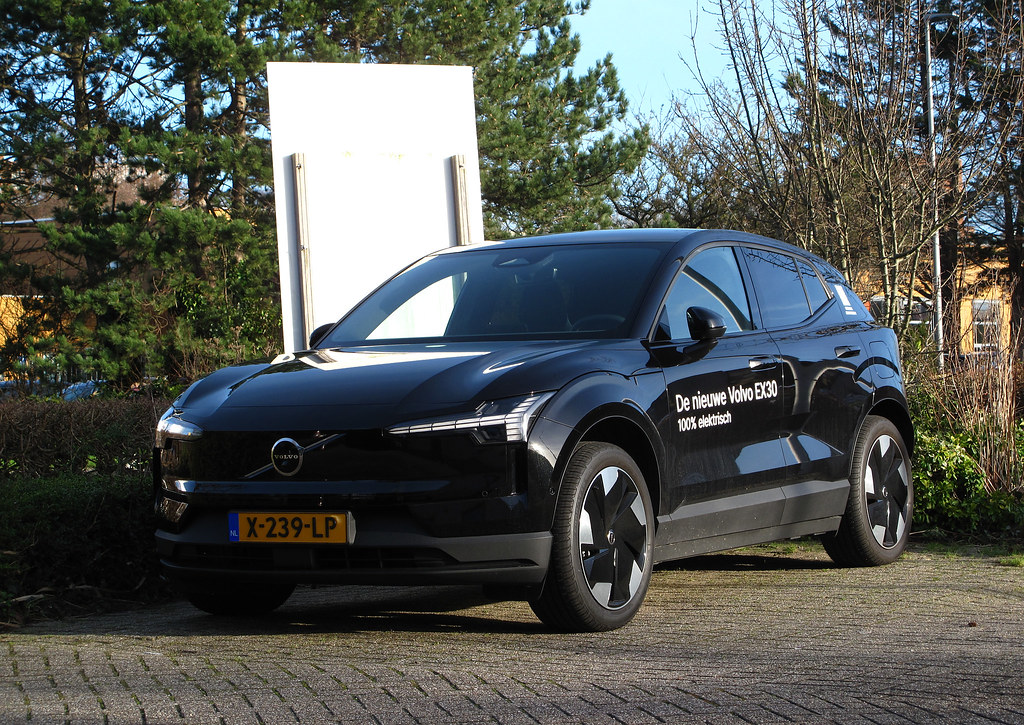
Volvo EX30 vs VW Tiguan 2.0 TSI: Which Should You Buy in 2025?
Considering switching to an EV? This comprehensive comparison between the Volvo EX30 and the VW Tiguan 2.0 TSI will help you make the right decision for your wallet and lifestyle in South Africa. The numbers reveal a clear winner on total cost, but the decision involves more than just rand and cents.
📊 Quick Comparison Overview
| Feature | Volvo EX30 | VW Tiguan 2.0 TSI |
|---|---|---|
| Purchase Price | R950,000 | R800,000 |
| 5-Year Fuel Cost | R55,523 | R124,200 |
| 5-Year Maintenance | R15,000 | R40,000 |
| Total Cost of Ownership | R1,020,523 | R964,200 |
| Winner | Tiguan wins by R56,323 | |
💰 The Real Cost: 5-Year Ownership Analysis
The numbers tell a straightforward story. While the Volvo EX30 costs R950,000 upfront compared to the VW Tiguan 2.0 TSI’s R800,000, the EV’s lower running costs help narrow the gap—but don’t close it over five years. The Tiguan remains R56,323 cheaper when you account for everything.
Fuel Costs Breakdown
- Volvo EX30 electricity cost: R11,105/year = R55,523 over 5 years (based on 15,000 km/year at approximately R2.22/kWh average municipal rate)
- VW Tiguan 2.0 TSI petrol cost: R24,840/year = R124,200 over 5 years (based on R22/litre and 8.5 L/100km consumption)
- Fuel savings with EV: R68,677 over 5 years
Maintenance Costs
- Volvo EX30: R15,000 (minimal—no oil changes, less brake wear thanks to regenerative braking)
- VW Tiguan 2.0 TSI: R40,000 (regular servicing, oil changes, filters, brake pads, etc.)
- Maintenance savings with EV: R25,000
The Purchase Price Gap
Despite saving R93,677 on fuel and maintenance over five years, the EX30’s R150,000 higher purchase price means the Tiguan still comes out R56,323 cheaper overall. That’s the reality of EV ownership in 2025—you’re paying a premium for environmental benefits and cutting-edge technology, not for immediate cost savings.
📈 Cost Per Kilometre: The Full Picture
Over 5 years of ownership (15,000 km/year = 75,000 km total):
- Cost per kilometre—VW Tiguan 2.0 TSI: R12.86 (R964,200 ÷ 75,000 km)
- Cost per kilometre—Volvo EX30: R13.61 (R1,020,523 ÷ 75,000 km)
- Difference: The Tiguan costs R0.75 less per kilometre
This R0.75/km difference adds up to R56,323 over 75,000 km—the exact total cost advantage the Tiguan holds. While the EX30 saves significantly on fuel and maintenance (R1,561/month combined), the higher purchase price means you’re still paying R939/month more overall when spread across 60 months of ownership.
🎯 Who Should Buy the VW Tiguan 2.0 TSI?
The VW Tiguan 2.0 TSI makes sense if:
- 💵 Total cost matters most: R56,323 cheaper over 5 years, with R150,000 less upfront
- ⛽ Long-distance flexibility: Refuel anywhere in 5 minutes with petrol stations on every corner
- 🚗 Heavy towing/off-road needs: 2.0L turbocharged engine provides proven capability for trailers and rough terrain
- 📍 Rural/remote areas: No charging infrastructure concerns—petrol stations remain ubiquitous
- 🔋 No home charging option: You rent, live in a complex without charging facilities, or lack dedicated parking
- 👴 Familiar technology preferred: Comfortable with traditional vehicle ownership and maintenance routines
- 🏔️ Frequent long trips: Regular drives exceeding 400 km where charging stops would add significant time
- 💰 Budget constraints: The lower purchase price and total cost make financial sense for your situation
🎯 Who Should Buy the Volvo EX30?
The Volvo EX30 is perfect for you if:
- 🌍 Environmental responsibility matters: Zero tailpipe emissions and significantly lower carbon footprint
- 🏠 Home charging available: Wake up to a “full tank” every morning for just R925/month in electricity costs
- 🌆 City/suburban driving: Perfect for the 480 km range on a single charge—ideal for daily commutes and weekend trips
- 🔧 Low maintenance priority: No oil changes, no exhaust systems, minimal brake wear due to regenerative braking
- ⚡ Modern technology enthusiast: Latest infotainment systems, over-the-air software updates, advanced driver-assistance features
- 💰 Can absorb higher total cost: You’re willing to pay R56,323 more over 5 years for environmental and technology benefits
- 🔌 Access to charging infrastructure: Either at home, work, or convenient public charging locations
- 🚗 Value the EV experience: Instant torque, near-silent operation, and smooth acceleration matter to you
💡 Key Decision Factors
Choose the VW Tiguan 2.0 TSI if you:
- ✅ Need to minimize both upfront cost (R150,000 less) and total ownership cost (R56,323 less over 5 years)
- ✅ Require maximum flexibility for long-distance travel without planning charging stops
- ✅ Don’t have reliable charging access at home or work
- ✅ Regularly drive more than 400 km in a single day
- ✅ Prefer the familiarity and convenience of petrol stations
- ✅ Live in an area with limited charging infrastructure
- ✅ Require proven towing capacity for caravans, trailers, or boats
- ✅ Want the lowest cost per kilometre (R12.86 vs R13.61)
Choose the Volvo EX30 if you:
- ✅ Drive less than 400 km per day on average
- ✅ Have access to home charging or workplace charging
- ✅ Want to save R1,561/month on fuel and maintenance (though total cost is still R939/month higher due to purchase price)
- ✅ Prioritize environmental impact over total cost
- ✅ Want zero tailpipe emissions and the latest EV technology
- ✅ Can manage paying R56,323 more over 5 years for the EV ownership experience
- ✅ Value the quieter, smoother driving experience of electric motors
- ✅ Believe petrol prices will rise significantly, improving the EV’s long-term value proposition
🔋 Charging Infrastructure in South Africa
South Africa’s EV charging network is growing rapidly, with over 500 public charging points nationwide as of 2025. Major cities like Johannesburg, Cape Town, Durban, and Pretoria have excellent coverage, with charging stations at shopping centres, hotels, and along major routes. According to GridCars, one of SA’s leading charging network providers, new stations are being added monthly.
Home charging is the game-changer: Installing a home charger (R15,000–R30,000 for equipment and installation) gives you a “full tank” every morning at a fraction of petrol costs. Most EV owners do 80–90% of their charging at home overnight, taking advantage of off-peak electricity rates where available.
However, load-shedding remains a consideration. While most modern EVs can still charge during Stage 1–2 load-shedding with proper planning, higher stages may require backup power solutions or reliance on public charging infrastructure. This is an important factor to consider when evaluating whether an EV fits your lifestyle.
🌍 Environmental Impact
By choosing the Volvo EX30 over the VW Tiguan 2.0 TSI, you’ll prevent approximately 12,474 kg of CO₂ from entering the atmosphere over 5 years—equivalent to planting roughly 570 trees. According to South Africa’s Department of Forestry, Fisheries and the Environment, transport accounts for approximately 10% of the country’s greenhouse gas emissions, making the switch to electric vehicles an important part of meeting climate commitments.
Even when accounting for South Africa’s coal-heavy electricity grid, EVs produce significantly fewer emissions over their lifetime compared to petrol vehicles. As the grid incorporates more renewable energy—with major solar and wind projects coming online—the environmental advantage will only grow. For environmentally conscious buyers, this 12.5-tonne CO₂ reduction may justify the R56,323 premium.
💰 Understanding the Monthly Cost Reality
Breaking down the costs on a monthly basis over 60 months helps clarify the financial picture:
Volvo EX30 Monthly Costs:
- Purchase price (amortized): R15,833/month (R950,000 ÷ 60 months)
- Electricity: R925/month (R11,105/year ÷ 12 months)
- Maintenance: R250/month (R15,000 ÷ 60 months)
- Total monthly cost: R17,008
VW Tiguan 2.0 TSI Monthly Costs:
- Purchase price (amortized): R13,333/month (R800,000 ÷ 60 months)
- Petrol: R2,070/month (R24,840/year ÷ 12 months)
- Maintenance: R667/month (R40,000 ÷ 60 months)
- Total monthly cost: R16,070
Monthly difference: The Tiguan costs R938/month less (rounds to R939/month). While the EX30 saves R1,561/month on fuel and maintenance combined, the R2,500/month higher purchase price amortization means you’re still paying more overall each month.
🏁 The Verdict
The Tiguan Wins on Total Cost—Here’s What That Means
The numbers are unambiguous: the VW Tiguan 2.0 TSI costs R56,323 less over 5 years (R939/month less, R0.75/km cheaper). If minimizing total expenditure is your primary goal, the Tiguan is the rational choice. You’ll save money both upfront (R150,000 less) and overall, while enjoying the convenience of South Africa’s extensive petrol station network and avoiding charging infrastructure concerns.
However, the Volvo EX30 offers compelling non-financial benefits that may justify the premium:
- Environmental impact: 12,474 kg less CO₂ over 5 years—a meaningful contribution to climate action
- Running cost advantage: R1,561/month lower fuel and maintenance costs (even though total cost is higher)
- Modern technology: Cutting-edge features, over-the-air updates, advanced safety systems
- Driving experience: Instant torque, near-silent operation, smooth acceleration
- Future-proofing: As charging infrastructure expands and petrol prices rise, the EV advantage grows
- Energy independence: With home solar, you can generate your own “fuel” and reduce grid dependence
Our recommendation: Choose the VW Tiguan 2.0 TSI if budget is your primary concern, if you lack reliable charging access, or if you frequently drive long distances. The R56,323 total savings and R150,000 lower purchase price make it the financially sensible choice. Choose the Volvo EX30 if you can absorb the higher total cost in exchange for environmental benefits, lower running costs, modern technology, and the superior EV driving experience. Both are excellent vehicles—your choice depends on whether you prioritize total cost or the broader benefits of EV ownership.
🔍 Important Considerations Before You Decide
Electricity Rate Variations
Our calculations use an average municipal rate of approximately R2.22/kWh, but actual rates vary significantly across South Africa. Eskom’s 2025 rates differ by municipality, time-of-use tariffs, and whether you have access to off-peak rates. City of Cape Town rates differ from City of Johannesburg, which differ from Ekurhuleni. If you have access to off-peak rates (often 50–60% cheaper), your EX30 running costs could drop significantly, narrowing the total cost gap with the Tiguan.
Petrol Price Volatility
Our Tiguan calculations assume R22/litre for petrol. However, fuel prices fluctuate with international oil markets and rand exchange rates. If petrol prices rise to R25/litre or higher during your ownership period, the Tiguan’s fuel costs increase proportionally, potentially closing or even reversing the total cost advantage. Conversely, if petrol prices remain stable or fall, the Tiguan’s advantage grows.
Resale Value Uncertainty
This comparison doesn’t factor in resale values after 5 years, which remain uncertain for EVs in the South African market. The Tiguan has established resale values, while the EX30’s residual value is harder to predict. Battery degradation concerns and the pace of EV technology advancement could affect the EX30’s resale value either positively or negatively.
💰 Calculate Your Own Savings
Want to see how much you could save or spend based on your specific driving habits and electricity rates? Use our EV Cost Savings Calculator to input your exact annual kilometres, local electricity rate, typical petrol consumption, and more. The calculator accounts for regional variations in electricity pricing and can help you make a decision based on your unique circumstances—whether you’re in Cape Town with City of Cape Town rates, Johannesburg with City Power rates, or anywhere else in South Africa.
🗺️ Find Charging Stations Near You
Concerned about charging infrastructure in your area? Check our live EV charging map to see real-time availability of charging stations across South Africa. The map includes locations, charging speeds, network providers (GridCars, Rubicon, Jaguar TechNIC, and others), and user reviews to help you plan your EV ownership with confidence. You can filter by province, city, charging speed, and network to find exactly what you need.
🚗 Ready to Make the Switch?
If you’ve decided the Volvo EX30 is right for you despite the higher total cost, the next step is setting up home charging to maximize your fuel savings. Need help installing a home charger for your new EV? Get a free quote for professional EV charger installation anywhere in South Africa. Our network of certified installers can assess your property, recommend the right equipment (7kW, 11kW, or 22kW depending on your needs), and handle the complete installation—from electrical compliance certificates to final testing and Certificate of Compliance (CoC).
Last updated: 2 December 2024
Continue Reading

Deprecated: File Theme without comments.php is deprecated since version 3.0.0 with no alternative available. Please include a comments.php template in your theme. in /var/www/wordpress/wp-includes/functions.php on line 6085
Leave a Reply