
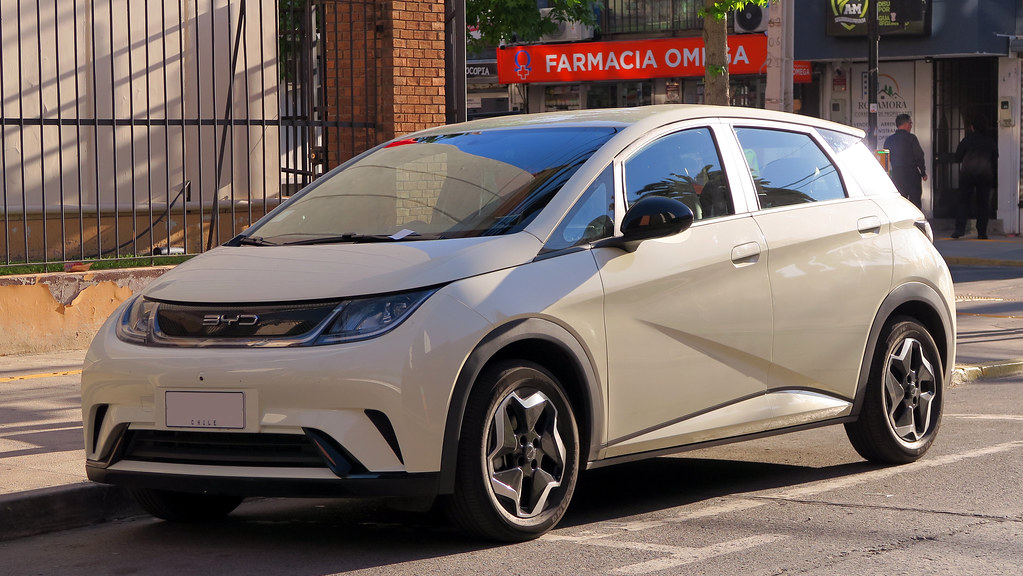
Introduction: Electric vs Petrol in South Africa’s Hatchback Market
Considering switching to an EV? This comprehensive comparison between the BYD Dolphin and the VW Polo 1.0 TSI will help you make the right decision for your wallet and lifestyle in South Africa. With petrol prices remaining volatile and EV technology becoming more accessible, understanding the true cost of ownership has never been more important.
The BYD Dolphin represents China’s push into the South African EV market with competitive pricing and impressive range, while the VW Polo 1.0 TSI remains one of the country’s best-selling hatchbacks. Both vehicles target similar buyers: urban commuters, small families, and cost-conscious drivers seeking reliable daily transport. But which one actually saves you money over the long term?
📊 Quick Comparison Overview
| Feature | BYD Dolphin | VW Polo 1.0 TSI |
|---|---|---|
| Purchase Price | R599,900 | R400,000 |
| 5-Year Fuel Cost | R54,636 | R81,075 |
| 5-Year Maintenance | R15,000 | R40,000 |
| Total Cost of Ownership | R669,536 | R521,075 |
| Winner | VW Polo 1.0 TSI saves R148,461 over 5 years | |
💰 The Real Cost: 5-Year Ownership Analysis
Here’s where the numbers get interesting. While the BYD Dolphin costs R599,900 upfront compared to the VW Polo 1.0 TSI’s R400,000, the running costs tell a different story.
Understanding the Total Cost Picture
The VW Polo 1.0 TSI comes out ahead in total cost of ownership over 5 years, saving you R148,461 compared to the Dolphin. However, this advantage comes entirely from the lower purchase price. The Dolphin’s higher upfront cost (R199,900 more) is only partially offset by lower running costs, resulting in the Polo maintaining a R148,461 advantage over the ownership period.
It’s crucial to understand what these figures mean: the Polo costs less overall by R148,461, but the Dolphin costs less to run by R51,439. Your choice depends on whether you prioritise minimising total expenditure or reducing ongoing monthly costs.
Fuel Costs Breakdown
- BYD Dolphin electricity cost: R10,927/year = R54,636 over 5 years
- VW Polo 1.0 TSI petrol cost: R16,215/year = R81,075 over 5 years
- Fuel savings with EV: R26,439 over 5 years (R440/month less)
Maintenance Costs
- BYD Dolphin: R15,000 (minimal – no oil changes, less brake wear)
- VW Polo 1.0 TSI: R40,000 (regular servicing, oil, filters, etc.)
- Maintenance savings with EV: R25,000 (R417/month less)
Cost Per Kilometre Analysis
When we look at total cost per kilometre, the Polo’s lower purchase price gives it a clear advantage:
- BYD Dolphin total cost per km: R8.93 (includes purchase price, fuel, maintenance)
- VW Polo 1.0 TSI total cost per km: R6.95 (includes purchase price, fuel, maintenance)
The Polo’s lower per-kilometre cost reflects its significantly lower purchase price. However, if we isolate just the running costs (fuel and maintenance), the picture changes:
- BYD Dolphin running cost per km: R0.93
- VW Polo 1.0 TSI running cost per km: R1.61
This means that once you’ve made the initial purchase, the Dolphin costs R857 less per month to run. Over 5 years, that’s R51,439 in running cost savings—though not enough to overcome the R199,900 higher purchase price within this timeframe.
🔋 Charging Infrastructure in South Africa
South Africa’s EV charging network is growing rapidly, with over 500 public charging points nationwide. Major cities like Johannesburg, Cape Town, Durban, and Pretoria have excellent coverage. Check our live EV charging map to find stations near you.
Home charging transforms the ownership experience: Installing a home charger (R15,000-R30,000) gives you a “full tank” every morning at a fraction of petrol costs. Most EV owners charge overnight during off-peak hours, making it even more economical. With Eskom’s time-of-use tariffs, overnight charging can cost as little as R0.90 per kWh in some municipalities, compared to R2.50-R3.00 during peak hours.
Public Charging Options
Beyond home charging, South Africa offers several public charging networks including GridCars, Jaguar Power, and independent operators at shopping centres and hotels. DC fast charging can add 100km of range in as little as 15 minutes, making longer trips increasingly practical. Most shopping centres in major metros now offer free AC charging while you shop, adding further value to EV ownership.
Load-Shedding Considerations
One concern many South Africans have about EVs is load-shedding. However, most EV owners report minimal disruption: with 427km of range, the Dolphin can go several days between charges for typical urban driving. Many owners install battery backup systems or simply charge during non-load-shedding windows. Petrol stations, by contrast, cannot operate during load-shedding without generators, creating their own fuel access challenges.
🎯 Who Should Buy the BYD Dolphin?
The BYD Dolphin is perfect for you if:
- 💰 Lower monthly running costs matter: Save R857/month on fuel and maintenance compared to the Polo
- 🏠 Home charging available: Wake up to a “full tank” every morning for just R911/month in electricity
- 🌆 City/suburban driving: Perfect for the 427km range on a single charge—covers most weekly driving without recharging
- 🔧 Low maintenance priority: No oil changes, no exhaust systems, minimal brake wear thanks to regenerative braking
- 🌍 Environmental responsibility: Zero tailpipe emissions in SA’s cities, reducing urban air pollution
- ⚡ Modern technology: Latest infotainment, over-the-air updates, advanced safety features including adaptive cruise control
- 💵 Can afford higher upfront cost: The R199,900 price premium is manageable for your budget, and you value lower ongoing expenses
- 📅 Long-term ownership planned: If you keep vehicles beyond 5-7 years, the running cost savings eventually overcome the purchase price difference
🎯 Who Should Buy the VW Polo 1.0 TSI?
The VW Polo 1.0 TSI makes sense if:
- 💵 Lower upfront cost needed: R199,900 cheaper to purchase—critical if you’re financing or have limited capital
- ⛽ Long-distance flexibility: Refuel anywhere in 5 minutes with petrol stations everywhere, ideal for regular road trips
- 🚗 Proven reliability: Established technology with widespread service network across South Africa
- 📍 Rural/remote areas: No charging infrastructure concerns—petrol stations remain ubiquitous
- 🔋 No home charging option: If you live in a flat or don’t have dedicated parking, petrol stations remain more accessible
- 👴 Familiar technology: Comfortable with traditional vehicle ownership and maintenance routines
- 💰 Total cost priority: R148,461 lower total cost of ownership over 5 years—the most economical choice for this timeframe
- 🚙 Shorter ownership cycle: If you typically trade in vehicles every 3-5 years, the Polo’s lower purchase price provides better value
🚗 Performance and Practicality Comparison
Daily Driving Experience
The BYD Dolphin offers instant torque from its electric motor, providing brisk acceleration that makes city driving and highway merging effortless. The VW Polo 1.0 TSI’s turbocharged three-cylinder engine delivers adequate performance for daily use, though it requires more gear changes and planning for overtaking.
Both vehicles seat five adults comfortably, with the Dolphin offering slightly more rear legroom. Boot space is comparable: the Dolphin provides 345 litres versus the Polo’s 351 litres. Neither vehicle is designed for towing or off-road use—both are purpose-built urban hatchbacks optimised for city and highway driving.
Range and Refuelling
The Dolphin’s 427km range covers most weekly driving for urban commuters. Charging from 20% to 80% takes approximately 30 minutes on a DC fast charger, or 6-8 hours on a home AC charger. The Polo’s 42-litre tank provides roughly 600km range, with refuelling taking 5 minutes at any petrol station.
For drivers covering more than 400km daily, the Polo’s quick refuelling and longer range provide clear advantages. For typical urban use (50-100km daily), the Dolphin’s home charging convenience eliminates petrol station visits entirely.
💡 Key Decision Factors
Choose the BYD Dolphin if you:
- ✅ Drive less than 350km per day on average (allowing safety margin on the 427km range)
- ✅ Have access to home charging or workplace charging
- ✅ Want to minimise monthly running expenses (R857/month less than the Polo)
- ✅ Prioritise environmental impact and modern technology
- ✅ Want zero tailpipe emissions and quieter operation
- ✅ Can manage the higher upfront cost of R599,900
- ✅ Plan to keep the vehicle for 7+ years (when total costs equalise)
- ✅ Value the convenience of home charging over petrol station visits
Choose the VW Polo 1.0 TSI if you:
- ✅ Need maximum flexibility for long-distance travel without charging stops
- ✅ Don’t have reliable charging access at home or work
- ✅ Regularly drive more than 350km in a single day
- ✅ Need to minimise upfront costs (R199,900 less than the Dolphin)
- ✅ Prefer the familiarity and convenience of petrol stations
- ✅ Live in an area with limited charging infrastructure
- ✅ Want the lowest total cost of ownership over 5 years (R148,461 less than the Dolphin)
- ✅ Typically trade in vehicles every 3-5 years
📈 Long-Term Value Comparison
Over 5 years of ownership (15,000km/year):
- VW Polo 1.0 TSI total cost advantage: R148,461 lower overall expenditure
- BYD Dolphin running cost advantage: R51,439 lower fuel and maintenance costs
- Monthly running cost difference: R857 less with the Dolphin (fuel + maintenance only)
- Total cost per kilometre – BYD Dolphin: R8.93
- Total cost per kilometre – VW Polo 1.0 TSI: R6.95
The key insight: if you’re keeping the vehicle beyond 5 years, the Dolphin’s lower running costs continue to narrow the gap. By year 8, the total cost of ownership would be roughly equal, and the Dolphin pulls ahead after that. This makes the Dolphin more attractive for buyers who typically keep vehicles for 8-10 years, while the Polo suits those who trade in more frequently.
Resale Value Considerations
The VW Polo benefits from strong brand recognition and an established used car market in South Africa. EV resale values remain less predictable, though early indicators suggest well-maintained EVs hold value reasonably well, particularly as petrol prices rise and charging infrastructure expands. Battery degradation is minimal on modern EVs—most retain 85-90% capacity after 8 years.
🌍 Environmental Impact
By choosing the BYD Dolphin over the VW Polo 1.0 TSI, you’ll prevent approximately 8,143kg of CO₂ from entering the atmosphere over 5 years. That’s equivalent to planting roughly 370 trees or taking a petrol car off the road for 6 months.
While South Africa’s electricity grid still relies heavily on coal, EVs remain cleaner than petrol vehicles even when accounting for generation emissions. As the grid transitions to renewable energy, your EV becomes progressively cleaner without any changes to the vehicle itself. If you install solar panels at home, your EV can run on 100% renewable energy, eliminating fossil fuel dependence entirely.
Urban Air Quality Benefits
Beyond carbon emissions, EVs produce zero tailpipe pollutants—no nitrogen oxides, particulate matter, or volatile organic compounds. In congested urban areas like Johannesburg and Cape Town, this translates to measurably cleaner air and reduced respiratory health impacts for residents.
🏁 The Verdict
The Numbers Tell a Clear Story
The VW Polo 1.0 TSI wins on total cost of ownership by R148,461 over 5 years, making it the more economical choice if upfront cost and total expenditure are your primary concerns. However, the BYD Dolphin offers R51,439 in running cost savings (R857/month less), which means significantly lower monthly expenses once you’ve made the initial purchase.
Your decision should be based on these key factors:
- Choose the VW Polo 1.0 TSI if you need to minimise upfront cost and total 5-year expenditure, lack reliable charging access, or regularly drive long distances requiring quick refuelling
- Choose the BYD Dolphin if you can afford the higher purchase price, have home charging, value lower monthly running costs, and plan to keep the vehicle for 7+ years
Both are solid choices at their respective price points, serving different buyer priorities effectively. The Polo remains South Africa’s practical, proven hatchback, while the Dolphin represents the future of urban mobility with lower running costs and zero emissions.
💰 Calculate Your Own Savings
Want to see how much you could save based on your specific driving habits? Use our EV Cost Savings Calculator to input your exact annual kilometres, electricity rate, and more. The calculator accounts for your unique situation and provides personalised cost projections, including the impact of solar panels, time-of-use tariffs, and different financing options.
🚗 Ready to Make the Switch?
Need help installing a home charger for your new EV? Get a free quote for professional EV charger installation anywhere in South Africa. Our certified installers can assess your property and recommend the best charging solution for your needs, including battery backup options for load-shedding resilience.
Last updated: December 2024
Continue Reading
Deprecated: File Theme without comments.php is deprecated since version 3.0.0 with no alternative available. Please include a comments.php template in your theme. in /var/www/wordpress/wp-includes/functions.php on line 6085
Leave a Reply