
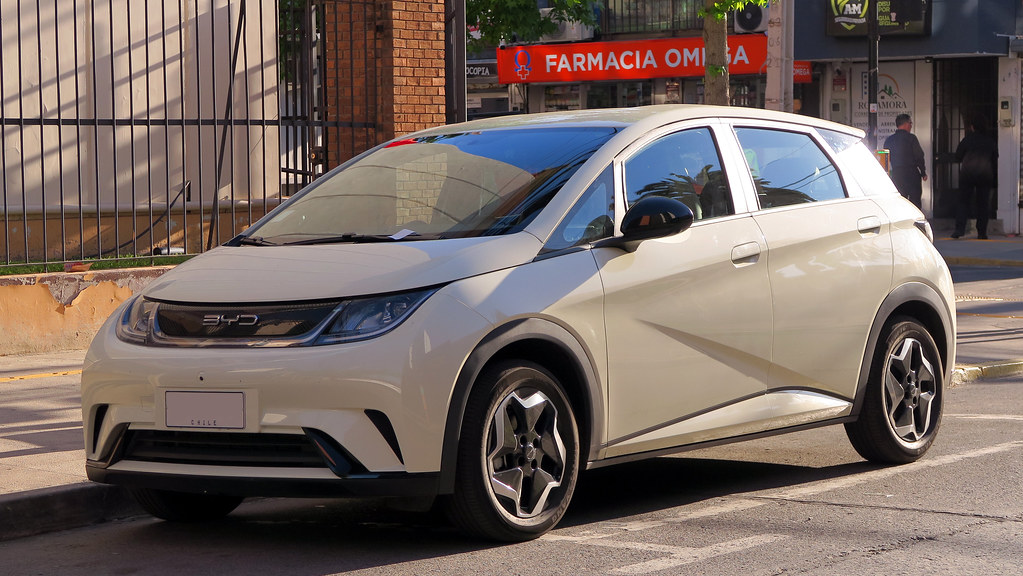
BYD Dolphin vs Toyota Starlet 1.4: Which Should You Buy in 2025?
The BYD Dolphin costs R239,836 more than the Toyota Starlet 1.4 over five years of ownership — despite saving R60,064 on fuel and maintenance combined. That R300,000 upfront price gap is the single biggest factor in this comparison, and it reshapes the entire value equation for South African buyers weighing their first EV purchase against a proven petrol hatchback.
Quick Comparison Overview
| Feature | BYD Dolphin | Toyota Starlet 1.4 |
|---|---|---|
| Purchase Price | R599,900 | R300,000 |
| 5-Year Fuel Cost | R54,636 | R89,700 |
| 5-Year Maintenance | R15,000 | R40,000 |
| Total Cost of Ownership | R669,536 | R429,700 |
| Winner | Petrol wins by R239,836 | |
The Real Cost: 5-Year Ownership Analysis
The numbers tell a clear story. While the BYD Dolphin costs R599,900 upfront compared to the Toyota Starlet 1.4’s R300,000, the total cost of ownership over five years reveals that the petrol option remains significantly cheaper for most buyers.
Purchase Price Reality
The upfront cost difference is substantial: R299,900 more for the BYD Dolphin. For context, that’s nearly the entire purchase price of the Starlet — a significant barrier for budget-conscious buyers. This R300,000 price gap represents approximately 80% of the Starlet’s total cost, making it a critical factor in the buying decision rather than a minor consideration.
Fuel Costs Breakdown
- BYD Dolphin electricity cost: R10,927/year = R54,636 over 5 years
- Toyota Starlet 1.4 petrol cost: R17,940/year = R89,700 over 5 years
- Fuel savings with EV: R35,064 over 5 years
At current electricity rates (averaging R2.50/kWh for home charging) and petrol prices (around R23/litre), the BYD Dolphin delivers meaningful fuel savings. However, these savings alone don’t offset the higher purchase price within the five-year ownership period.
Maintenance Costs
- BYD Dolphin: R15,000 (minimal — no oil changes, less brake wear)
- Toyota Starlet 1.4: R40,000 (regular servicing, oil, filters, etc.)
- Maintenance savings with EV: R25,000
Electric vehicles require significantly less maintenance. No oil changes, no exhaust system repairs, and regenerative braking means brake pads last much longer. Over five years, this adds up to real savings.
The Total Picture
Adding it all together:
- BYD Dolphin total 5-year cost: R669,536
- Toyota Starlet 1.4 total 5-year cost: R429,700
- Additional cost for the BYD: R239,836 more than the Starlet
Despite saving R60,064 on fuel and maintenance combined, the BYD Dolphin costs R239,836 more over five years due to its significantly higher purchase price. This means the Starlet delivers lower total ownership costs for buyers working within a five-year timeframe.
Who Should Buy the BYD Dolphin?
The BYD Dolphin is perfect for you if:
- Long-term ownership planned: The cost gap narrows after year five as fuel and maintenance savings continue to accumulate
- Home charging available: Wake up to a “full tank” every morning for just R911/month in electricity costs
- City/suburban driving: Perfect for the 427km range on a single charge — ideal for daily commutes
- Low maintenance priority: No oil changes, no exhaust systems, minimal brake wear means fewer trips to the workshop
- Environmental responsibility: Zero tailpipe emissions contribute to cleaner air in SA’s cities
- Modern technology enthusiast: Latest infotainment, over-the-air updates, and advanced safety features
- Higher upfront budget: You can comfortably afford the R599,900 purchase price and are willing to pay more initially for lower running costs
- Per-kilometre efficiency matters: Lower fuel costs per km driven, even though total 5-year ownership costs more
Who Should Buy the Toyota Starlet 1.4?
The Toyota Starlet 1.4 makes sense if:
- Lower upfront cost essential: R299,900 cheaper to purchase — nearly half the price of the BYD
- Long-distance flexibility needed: Refuel anywhere in 5 minutes with petrol stations on every corner
- Maximum versatility required: No range anxiety for spontaneous road trips or unexpected long journeys
- Rural/remote areas: No charging infrastructure concerns in areas where public chargers are scarce
- No home charging option: Petrol stations remain more accessible if you live in a flat or don’t have dedicated parking
- Familiar technology preferred: Comfortable with traditional vehicle ownership and maintenance routines
- Lower total cost priority: Pay R239,836 less over five years compared to the BYD option — a significant saving that represents 80% of the Starlet’s purchase price
- Five-year ownership horizon: If you typically trade in or sell vehicles within five years, the Starlet’s lower total cost makes financial sense
Key Decision Factors
Choose the BYD Dolphin if you:
- Drive less than 350km per day on average (allowing safety margin on the 427km range)
- Have access to home charging or workplace charging infrastructure
- Want to save R7,013/year on fuel costs (R584/month) compared to petrol
- Prioritise lower maintenance and running costs long-term
- Want zero tailpipe emissions and reduced environmental impact
- Can manage the higher upfront cost of R599,900
- Plan to keep the vehicle beyond five years to maximise running-cost savings
- Value the R60,064 in combined fuel and maintenance savings over 5 years, even though total ownership costs more
Choose the Toyota Starlet 1.4 if you:
- Need maximum flexibility for long-distance travel without planning charging stops
- Don’t have reliable charging access at home or work
- Frequently drive routes longer than 350km in a single day
- Need to minimise upfront costs — R300,000 vs R599,900
- Prefer the familiarity and convenience of petrol stations
- Live in an area with limited charging infrastructure
- Want the lowest total cost of ownership over five years — saving R239,836 compared to the BYD
- Prefer the lower per-kilometre cost of R5.73/km vs R8.93/km for the BYD
Charging Infrastructure in South Africa
South Africa’s EV charging network is growing rapidly, with over 500 public charging points nationwide according to PlugShare. Major cities like Johannesburg, Cape Town, Durban, and Pretoria have excellent coverage, with new stations opening monthly.
Home charging is the key advantage: Installing a home charger (R15,000–R30,000) gives you a “full tank” every morning at a fraction of petrol costs. Most BYD Dolphin owners charge overnight on off-peak electricity rates, reducing costs even further.
Public charging options include:
- GridCars: Extensive network across major routes and shopping centres
- Jaguar Land Rover charging stations: Available to all EV owners
- Hotel and restaurant chargers: Growing network at hospitality venues
However, charging infrastructure remains concentrated in urban areas. Rural and remote regions still have limited options, making petrol vehicles more practical for those locations.
Long-Term Value and Cost Per Kilometre
Over 5 years of ownership (15,000km/year):
- BYD Dolphin total cost: R669,536
- Toyota Starlet 1.4 total cost: R429,700
- Additional cost for BYD: R239,836 more than the Starlet
- Monthly cost difference: R3,997 more for the BYD
- Cost per kilometre — BYD Dolphin: R8.93
- Cost per kilometre — Toyota Starlet 1.4: R5.73
The per-kilometre cost reveals that despite lower running costs, the BYD’s higher purchase price means you’re paying R3.20 more per kilometre over the five-year period. This gap narrows significantly if you keep the vehicle longer, as the running cost savings continue to accumulate while the purchase price becomes a smaller factor in the total equation.
When Does the BYD Break Even?
Based on the R60,064 in combined fuel and maintenance savings over 5 years (R12,013/year), the BYD Dolphin would need approximately 20 years of ownership to offset its R299,900 higher purchase price through running-cost savings alone. However, this calculation doesn’t account for resale value, battery degradation, or changes in electricity and fuel prices over time.
The BYD becomes more financially attractive if:
- You drive significantly more than 15,000km annually (increasing fuel savings)
- Petrol prices rise faster than electricity rates
- You can access cheaper off-peak electricity rates or solar charging
- Government incentives or rebates reduce the purchase price gap
Environmental Impact
By choosing the BYD Dolphin over the Toyota Starlet 1.4, you’ll prevent approximately 9,009kg of CO₂ from entering the atmosphere over 5 years, based on data from the US Environmental Protection Agency.
This assumes South Africa’s current electricity grid mix. As the country transitions to more renewable energy sources — including increased solar and wind capacity — the environmental advantage of EVs will grow even stronger.
Beyond carbon emissions, electric vehicles eliminate:
- Tailpipe pollutants in urban areas (improving local air quality)
- Noise pollution (EVs are significantly quieter)
- Oil consumption and disposal environmental impact
For environmentally conscious buyers, the R239,836 additional cost over five years represents approximately R26,600 per tonne of CO₂ avoided — a premium some buyers are willing to pay for cleaner transportation.
Practical Considerations: Real-World Use Cases
Daily Commuting
For typical urban commuters driving 40-60km daily, both vehicles perform well. The BYD Dolphin offers the convenience of home charging and lower daily running costs (approximately R30/day for electricity vs R52/day for petrol). However, the Starlet’s lower total ownership cost means you’re still R3,997/month better off financially over the five-year period.
Weekend Road Trips
The Starlet excels for spontaneous long-distance travel. With a 5-minute refuel time and petrol stations nationwide, there’s no planning required. The BYD Dolphin’s 427km range handles most weekend trips, but requires charging infrastructure planning for destinations beyond 200km from home.
Load-Shedding Considerations
South Africa’s ongoing load-shedding presents unique challenges for EV owners without backup power. If you rely on grid charging and experience frequent power cuts, charging becomes unpredictable. Home solar systems with battery storage solve this problem but add R80,000-R150,000 to your initial investment. The Starlet faces no such complications — petrol stations operate on backup generators during load-shedding.
Urban vs Rural Living
City dwellers with secure parking and home charging access find the BYD Dolphin practical for daily use. Rural residents or those in areas with limited charging infrastructure will find the Starlet’s flexibility invaluable. The 1.4-litre engine provides adequate power for highway driving and light loads, though it’s not designed for heavy towing or serious off-road work — this is a budget city hatchback, not a workhorse vehicle.
The Verdict
The Toyota Starlet 1.4 Wins on Total Cost
The numbers are clear: the Toyota Starlet 1.4 costs R239,836 less over five years. For buyers prioritising affordability and total cost of ownership, the Starlet is the rational choice. This R240,000 saving represents 80% of the Starlet’s purchase price — a substantial amount that could fund years of petrol, maintenance, or other financial priorities.
However, the decision isn’t purely financial:
- Choose the BYD Dolphin if environmental impact, modern technology, and long-term ownership (well beyond 5 years) matter to you, and you can afford the higher upfront investment plus R3,997/month in additional costs over the first five years
- Choose the Toyota Starlet 1.4 if lower total cost, maximum flexibility, and proven petrol-vehicle convenience are priorities — you’ll save R239,836 over five years while enjoying refuelling simplicity
Both are solid choices at their respective price points. The Starlet offers unbeatable value for money with the lowest total cost of ownership, while the Dolphin represents the future of motoring with lower running costs that become more attractive the longer you own it — though it takes many years of ownership for those savings to offset the higher purchase price.
Beyond the Numbers: Lifestyle Considerations
Your daily routine matters more than spreadsheets. Consider these real-world scenarios:
The BYD Dolphin Excels When:
- Your daily commute is under 150km round-trip
- You have secure parking with charging access
- You rarely take spontaneous long-distance trips
- You value the latest technology and features
- You want to reduce your carbon footprint and are willing to pay a premium for it
- Lower monthly fuel bills (R584/month less than petrol) matter more than total ownership cost
- You plan to keep the vehicle for 10+ years to maximise running-cost advantages
The Toyota Starlet 1.4 Excels When:
- Your driving patterns are unpredictable
- You frequently travel to areas without charging infrastructure
- You need to minimise upfront costs and total ownership expenses
- You prefer the simplicity of refuelling at any petrol station
- You’re buying your first car or on a tight budget
- You typically trade in or sell vehicles within 5-7 years
- The R239,836 saving over five years represents significant value to your financial situation
Calculate Your Own Savings
Want to see how much you could save based on your specific driving habits? Use our EV Cost Savings Calculator to input your exact annual kilometres, electricity rate, and more. Get a personalised comparison based on your unique situation.
Find Charging Stations Near You
Considering the BYD Dolphin? Check our live EV charging map to see real-time availability of charging stations across South Africa. Filter by charger type, speed, and network to plan your routes with confidence.
Ready to Make the Switch?
Need help installing a home charger for your new EV? Get a free quote for professional EV charger installation anywhere in South Africa. Our certified installers can assess your property and recommend the best charging solution for your needs.
Last updated: December 2025. Prices and specifications subject to change. Fuel costs based on R23/litre petrol and R2.50/kWh electricity (average home rate). Calculations assume 15,000km annual driving. Consult dealerships for current pricing and official BYD specifications.
Continue Reading
Deprecated: File Theme without comments.php is deprecated since version 3.0.0 with no alternative available. Please include a comments.php template in your theme. in /var/www/wordpress/wp-includes/functions.php on line 6085
Leave a Reply