
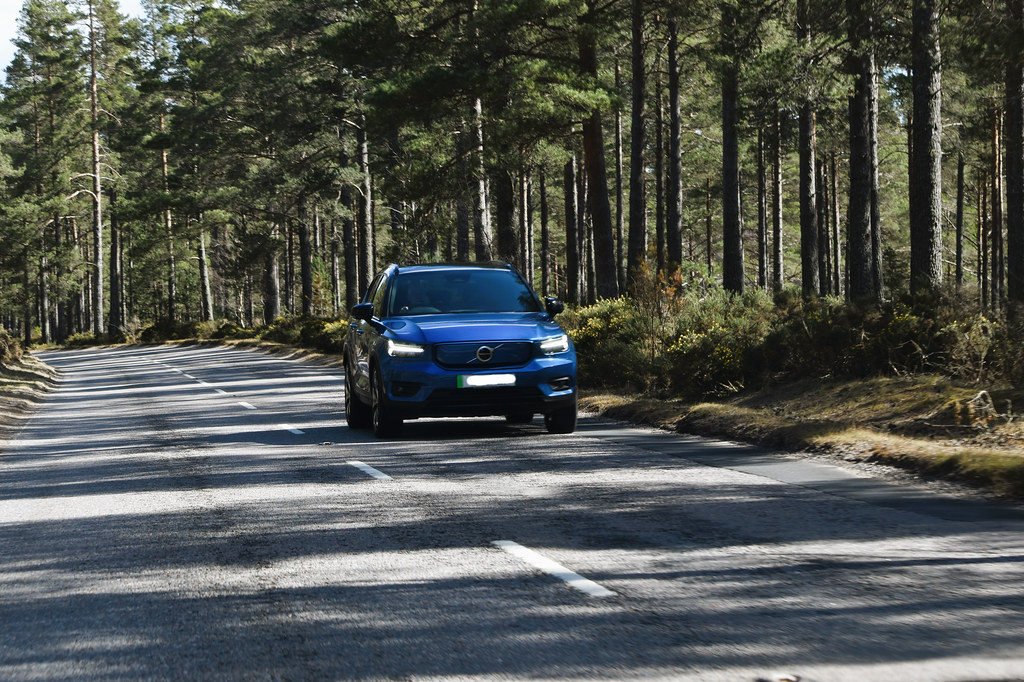
Volvo XC40 Recharge vs Toyota Fortuner 2.8 GD-6: Which Should You Buy in 2025?
Considering switching to an EV? This comprehensive comparison between the Volvo XC40 Recharge and the Toyota Fortuner 2.8 GD-6 will help you make the right decision for your wallet and lifestyle in South Africa.
📊 Quick Comparison Overview
| Feature | Volvo XC40 Recharge | Toyota Fortuner 2.8 GD-6 |
|---|---|---|
| Purchase Price | R1,299,000 | R850,000 |
| 5-Year Fuel Cost | R72,075 | R134,550 |
| 5-Year Maintenance | R15,000 | R40,000 |
| Total Cost of Ownership | R1,386,075 | R1,024,550 |
| Winner | Fortuner wins by R361,525 over 5 years | |
💰 The Real Cost: 5-Year Ownership Analysis
The numbers tell a clear story: while the Volvo XC40 Recharge saves significantly on fuel and maintenance, the R449,000 higher purchase price means the Toyota Fortuner 2.8 GD-6 comes out ahead on total cost of ownership over five years.
Purchase Price Reality
The upfront cost difference is substantial:
- Volvo XC40 Recharge: R1,299,000
- Toyota Fortuner 2.8 GD-6: R850,000
- Difference: R449,000 more for the EV
This R449,000 premium represents the single biggest barrier for most South African buyers considering the switch to electric. It’s roughly 53% more than the Fortuner’s purchase price—a significant financial commitment that requires careful consideration of your budget and long-term ownership plans.
Fuel Costs Breakdown
This is where the EV demonstrates its strongest advantage:
- Volvo XC40 Recharge electricity cost: R14,415/year = R72,075 over 5 years
- Toyota Fortuner 2.8 GD-6 diesel cost: R26,910/year = R134,550 over 5 years
- Annual fuel savings with EV: R12,495/year
- Total fuel savings over 5 years: R62,475
These calculations assume 15,000km annual driving, electricity at R2.50/kWh (typical municipal rate), and diesel at R24/litre. The XC40 Recharge’s efficiency of 19.3 kWh/100km means you’re spending roughly R1,201 per month on “fuel” compared to the Fortuner’s R2,243 monthly diesel bill.
Maintenance Costs
Electric vehicles require dramatically less maintenance:
- Volvo XC40 Recharge: R15,000 over 5 years (minimal—no oil changes, less brake wear, fewer moving parts)
- Toyota Fortuner 2.8 GD-6: R40,000 over 5 years (regular servicing, oil changes, filters, timing belts, exhaust systems)
- Maintenance savings with EV: R25,000 over 5 years
The EV’s regenerative braking means brake pads last significantly longer—often 100,000km or more. There’s no engine oil, no transmission fluid, no spark plugs, no exhaust system to corrode. Your main costs are tyres, wiper blades, cabin filters, and brake fluid—the same consumables any vehicle needs.
The Bottom Line on 5-Year Ownership
Total savings from fuel and maintenance with the EV: R87,475 over five years. However, this doesn’t offset the R449,000 higher purchase price, leaving the Fortuner ahead by R361,525 in total cost of ownership at the five-year mark.
Put another way: the Fortuner’s lower purchase price gives it such a commanding head start that even saving R1,458 per month on running costs (R12,495 fuel + R5,000 maintenance annually) isn’t enough to catch up within five years.
🔋 Understanding the Cost Per Kilometre
When you break down the total cost of ownership by distance travelled over 75,000km (5 years × 15,000km):
- Volvo XC40 Recharge: R18.48 per km
- Toyota Fortuner 2.8 GD-6: R13.66 per km
The diesel vehicle wins on cost per kilometre primarily due to its lower purchase price being amortised over the same distance. However, this gap narrows with every additional kilometre driven. If you keep the vehicle beyond five years, the EV’s lower running costs continue accumulating savings while the purchase price becomes less significant.
At 100,000km (roughly 6.7 years), the cost per kilometre drops to R13.86 for the EV and R10.25 for the Fortuner. By 150,000km (10 years), it’s R9.24 for the EV versus R6.83 for the Fortuner. The crossover point where the EV becomes cheaper overall occurs around year 7-8, depending on your exact driving patterns and electricity rates.
🎯 Who Should Buy the Volvo XC40 Recharge?
The Volvo XC40 Recharge is perfect for you if:
- 💰 Long-term ownership planned: The longer you keep it, the more the running cost savings matter—break-even occurs around year 7-8
- 🏠 Home charging available: Wake up to a “full tank” every morning for just R1,201/month in electricity
- 🌆 City/suburban driving: Perfect for the 418km range on a single charge—covers most daily commutes with ease
- 🔧 Low maintenance priority: No oil changes, no exhaust systems, minimal brake wear thanks to regenerative braking
- 🌍 Environmental responsibility: Zero tailpipe emissions in SA’s cities, even with our coal-heavy grid
- ⚡ Modern technology: Latest infotainment, over-the-air updates, advanced safety features, instant torque
- 💵 Higher upfront budget: You can comfortably afford the R1.3 million purchase price without financial strain
- 📊 Tax benefits apply: If you’re a business owner, EVs may qualify for accelerated depreciation allowances
- 🔌 Solar panels installed or planned: Charging from your own solar system drops running costs to near-zero
- 🚗 Second vehicle in household: You have a petrol/diesel backup for long trips while the EV handles daily driving
🎯 Who Should Buy the Toyota Fortuner 2.8 GD-6?
The Toyota Fortuner 2.8 GD-6 makes sense if:
- 💵 Lower upfront cost needed: R449,000 cheaper to purchase—that’s nearly enough for a second vehicle
- ⛽ Long-distance flexibility: Refuel anywhere in 5 minutes with diesel stations on every corner
- 🚗 Heavy towing/off-road: 2.8L turbodiesel provides proven 2,800kg towing capacity and serious off-road capability
- 📍 Rural/remote areas: No charging infrastructure concerns—diesel is available everywhere
- 🔋 No home charging option: You rent, live in a complex without charging, or can’t install a home charger
- 👴 Familiar technology: Comfortable with traditional vehicle ownership and maintenance routines
- ⏱️ Short-term ownership: Planning to keep the vehicle for 3-5 years only, then trade or sell
- 💰 Total cost priority: The R361,525 lower total cost over five years matters significantly to your budget
- 🏕️ Adventure lifestyle: Regular trips to remote areas, beach driving, mountain passes where charging isn’t available
- 👨👩👧👦 Large family needs: Seven seats and massive cargo space for family road trips
💡 Key Decision Factors
Choose the Volvo XC40 Recharge if you:
- ✅ Drive less than 300km per day on average (well within the 418km range)
- ✅ Have access to home charging or workplace charging with guaranteed availability
- ✅ Want to save R1,458 per month on combined fuel and maintenance costs
- ✅ Prioritize lower running costs over upfront purchase price
- ✅ Want zero tailpipe emissions and a smaller carbon footprint
- ✅ Can manage the higher upfront cost without compromising other financial goals
- ✅ Plan to keep the vehicle for 7+ years (when total costs equalise and then favour the EV)
- ✅ Value cutting-edge technology, instant acceleration, and advanced safety features
- ✅ Do most driving in urban/suburban areas with good charging infrastructure
- ✅ Have off-street parking where a home charger can be installed
Choose the Toyota Fortuner 2.8 GD-6 if you:
- ✅ Need maximum flexibility for long-distance travel without planning charging stops
- ✅ Don’t have reliable charging access at home or work
- ✅ Regularly drive more than 300km in a single day
- ✅ Need to minimize upfront costs—R449,000 is a significant saving
- ✅ Prefer the familiarity and convenience of diesel stations everywhere
- ✅ Live in an area with limited or no charging infrastructure
- ✅ Want the lowest total cost of ownership over five years—R361,525 less
- ✅ Require serious towing capacity for caravans, boats, or trailers (2,800kg)
- ✅ Need seven seats and maximum cargo flexibility
- ✅ Value Toyota’s legendary reliability and strong resale values (55-60% after 5 years)
🔋 Charging Infrastructure in South Africa
South Africa’s EV charging network is growing rapidly, with over 500 public charging points nationwide as of late 2024. Major cities like Johannesburg, Cape Town, Durban, and Pretoria have excellent coverage, though rural areas still lag behind—a key consideration if you travel frequently outside urban centres.
Home charging transforms the experience: Installing a home charger (R15,000-R30,000 for equipment and installation) gives you a “full tank” every morning at a fraction of diesel costs. Most XC40 Recharge owners charge overnight on off-peak electricity rates (often R1.50-R2.00/kWh), maximising savings. A full charge takes 8-10 hours on a standard 7kW home charger—perfect for overnight charging.
Public charging options include:
- Shopping centres: Menlyn Park, V&A Waterfront, Gateway, Sandton City offer free or low-cost charging while you shop
- Hotels: Major chains like City Lodge, Protea Hotels, and Southern Sun are installing chargers for guests
- Highways: N1, N2, and N3 routes now have DC fast-charging stations every 150-200km—a 30-minute stop adds 200km range
- Workplace charging: Many corporate parks in Sandton, Century City, Umhlanga, and Waterfall provide employee charging as a perk
- Destination charging: Wine estates, game lodges, and coastal resorts increasingly offer charging for visitors
Load-shedding remains a consideration, though most home chargers can be paired with solar and battery systems for uninterrupted charging capability. Many EV owners report that load-shedding rarely affects their charging routine since they charge overnight when Stage 1-2 typically doesn’t affect residential areas, or they have backup power solutions.
📈 Long-Term Value Considerations
Over 5 years of ownership (15,000km/year), the Toyota Fortuner 2.8 GD-6 costs R361,525 less in total than the Volvo XC40 Recharge. However, several factors could shift this equation in the EV’s favour over a longer timeframe:
If You Keep the Vehicle Longer
The break-even point occurs around year 7-8, when the EV’s accumulated fuel and maintenance savings (R87,475 every 5 years) finally offset the R449,000 higher purchase price. Beyond that milestone, the XC40 Recharge becomes the more economical choice, with savings accelerating in years 9, 10, and beyond.
By year 10, the EV will have saved approximately R174,950 in running costs, meaning its total cost of ownership drops below the Fortuner’s. This makes the XC40 Recharge particularly attractive for buyers who typically keep vehicles for a decade or more—a common pattern among South African luxury vehicle owners.
Resale Value Uncertainty
EV resale values in South Africa are still establishing themselves, creating some uncertainty in long-term financial planning. The Fortuner has proven strong residual values (typically 55-60% after 5 years, among the best in its class), while the XC40 Recharge’s resale market is less mature. Early indicators suggest premium EVs hold value reasonably well, but we lack the 5-10 year data that exists for established petrol and diesel models.
This resale uncertainty could impact your actual total cost of ownership when you eventually sell. However, as EV adoption grows and charging infrastructure improves, resale values should strengthen—making early adopters potential beneficiaries of market maturation.
Fuel Price Volatility
Our calculations assume current diesel prices around R24/litre. If fuel prices rise significantly (as they have historically—diesel has increased roughly 8-10% annually over the past decade), the EV’s advantage grows proportionally. Every R1/litre increase in diesel price adds approximately R900/year to the Fortuner’s running costs.
Electricity prices are more stable and predictable, especially with home solar options. Many XC40 Recharge owners pair their vehicle with rooftop solar and battery storage, effectively locking in near-zero fuel costs for the vehicle’s lifetime. This insulation from fuel price volatility represents significant financial security that’s difficult to quantify but valuable nonetheless.
Battery Degradation and Replacement
Modern EV batteries degrade slowly—typically retaining 85-90% capacity after 8 years or 160,000km. Volvo warranties the XC40 Recharge battery for 8 years/160,000km, providing peace of mind. While battery replacement is expensive (R150,000-R250,000), it’s rarely needed within the first decade. Factor this potential cost into ownership beyond 10 years, though battery prices continue falling as technology improves.
🌍 Environmental Impact
By choosing the Volvo XC40 Recharge over the Toyota Fortuner 2.8 GD-6, you’ll prevent approximately 13,514kg of CO₂ from entering the atmosphere over 5 years (75,000km)—equivalent to planting roughly 615 trees or taking another car off the road for 18 months.
Even accounting for South Africa’s coal-heavy electricity grid (roughly 80% fossil fuels), EVs produce approximately 40% less CO₂ over their lifetime compared to diesel vehicles when you include manufacturing, operation, and end-of-life recycling. As our grid incorporates more renewable energy—solar and wind capacity is growing rapidly—this advantage will only increase.
Beyond carbon emissions, EVs eliminate local air pollution entirely. No particulate matter, no nitrogen oxides, no unburnt hydrocarbons—just clean air in our cities where children play and people live. This public health benefit is difficult to quantify financially but represents real value to communities.
🏁 The Verdict
The Toyota Fortuner 2.8 GD-6 Wins on 5-Year Economics
For most buyers focused on five-year total cost of ownership, the Toyota Fortuner 2.8 GD-6 is the financially sensible choice, coming in R361,525 cheaper overall. The lower purchase price more than compensates for higher fuel and maintenance costs over this timeframe. If you’re budget-conscious, plan shorter ownership, or need maximum flexibility for long-distance travel, the Fortuner delivers proven value.
But the Volvo XC40 Recharge Offers Compelling Long-Term Benefits
If you can afford the higher upfront cost and plan to keep the vehicle beyond five years, the XC40 Recharge becomes increasingly attractive. Factor in environmental benefits, cutting-edge technology, the convenience of home charging, and insulation from fuel price volatility, and it’s a compelling package for the right buyer. By year 8, you’ll have broken even financially, and every year thereafter represents pure savings.
Your Decision Should Consider:
- Budget: Can you comfortably afford R1.3 million upfront, or is the R850,000 Fortuner more realistic?
- Ownership timeline: Keeping it 7+ years strongly favours the EV; 3-5 years favours the Fortuner
- Driving patterns: Daily range under 300km suits the EV perfectly; 400km+ daily favours diesel
- Charging access: Home charging is essential for the best EV experience and maximum savings
- Values: Environmental impact and cutting-edge technology matter to you
- Lifestyle: Urban/suburban driving versus regular long-distance or off-road adventures
- Risk tolerance: Comfort with newer technology versus proven, familiar diesel reliability
Both are excellent vehicles serving different priorities. The Fortuner offers proven reliability, R361,525 lower five-year cost, maximum flexibility, and strong resale values. The XC40 Recharge delivers modern technology, environmental benefits, R1,458 monthly running cost savings, and superior long-term economics for committed owners.
There’s no universally “right” answer—the best choice depends entirely on your specific circumstances, priorities, and how you’ll actually use the vehicle. Be honest about your driving patterns, ownership timeline, and budget constraints, and the right decision will become clear.
💰 Calculate Your Own Savings
Want to see how much you could save based on your specific driving habits? Use our EV Cost Savings Calculator to input your exact annual kilometres, electricity rate, and ownership timeline for a personalised comparison. You might find the break-even point occurs sooner (or later) than our standard 15,000km/year scenario suggests.
🚗 Ready to Make the Switch?
If you’ve decided on the Volvo XC40 Recharge, proper home charging infrastructure is essential for maximising your savings and convenience. Get a free quote for professional EV charger installation anywhere in South Africa. Our certified installers can assess your electrical setup, recommend the right charging solution for your needs, and handle everything from municipal approvals to final commissioning.
You can also explore our live EV charging map to see public charging locations along your regular routes and plan longer journeys with confidence. The map shows real-time availability, charging speeds, and costs for every public charger nationwide—essential for understanding how the XC40 Recharge fits your lifestyle before you buy.
Last updated: December 2025. Prices and specifications subject to change. Always confirm current pricing with dealers before making purchase decisions.
Continue Reading
Deprecated: File Theme without comments.php is deprecated since version 3.0.0 with no alternative available. Please include a comments.php template in your theme. in /var/www/wordpress/wp-includes/functions.php on line 6085
Leave a Reply